Chargeback evidence: which disputes packing video can support, and which need CE 3.0


On this page
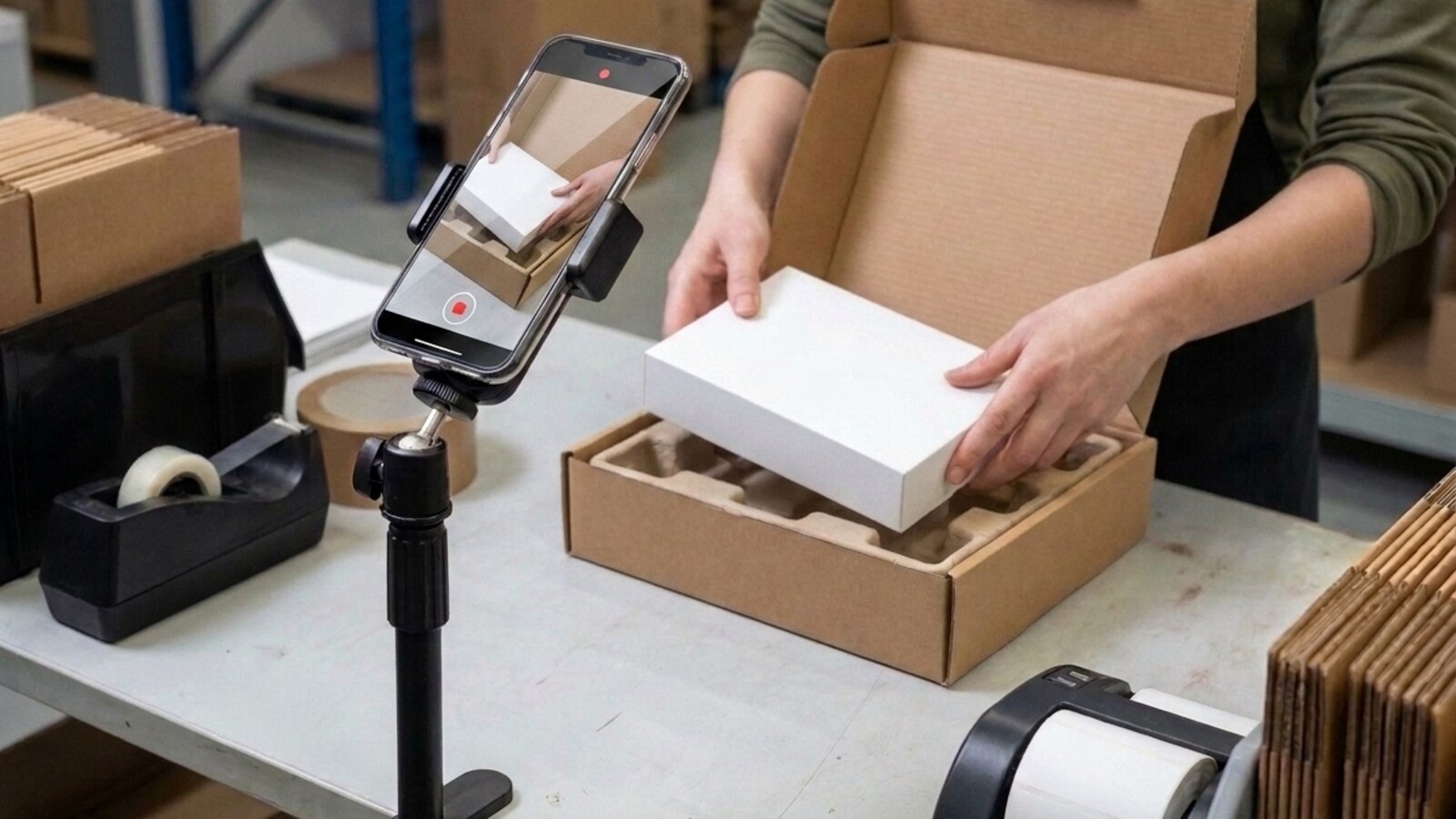
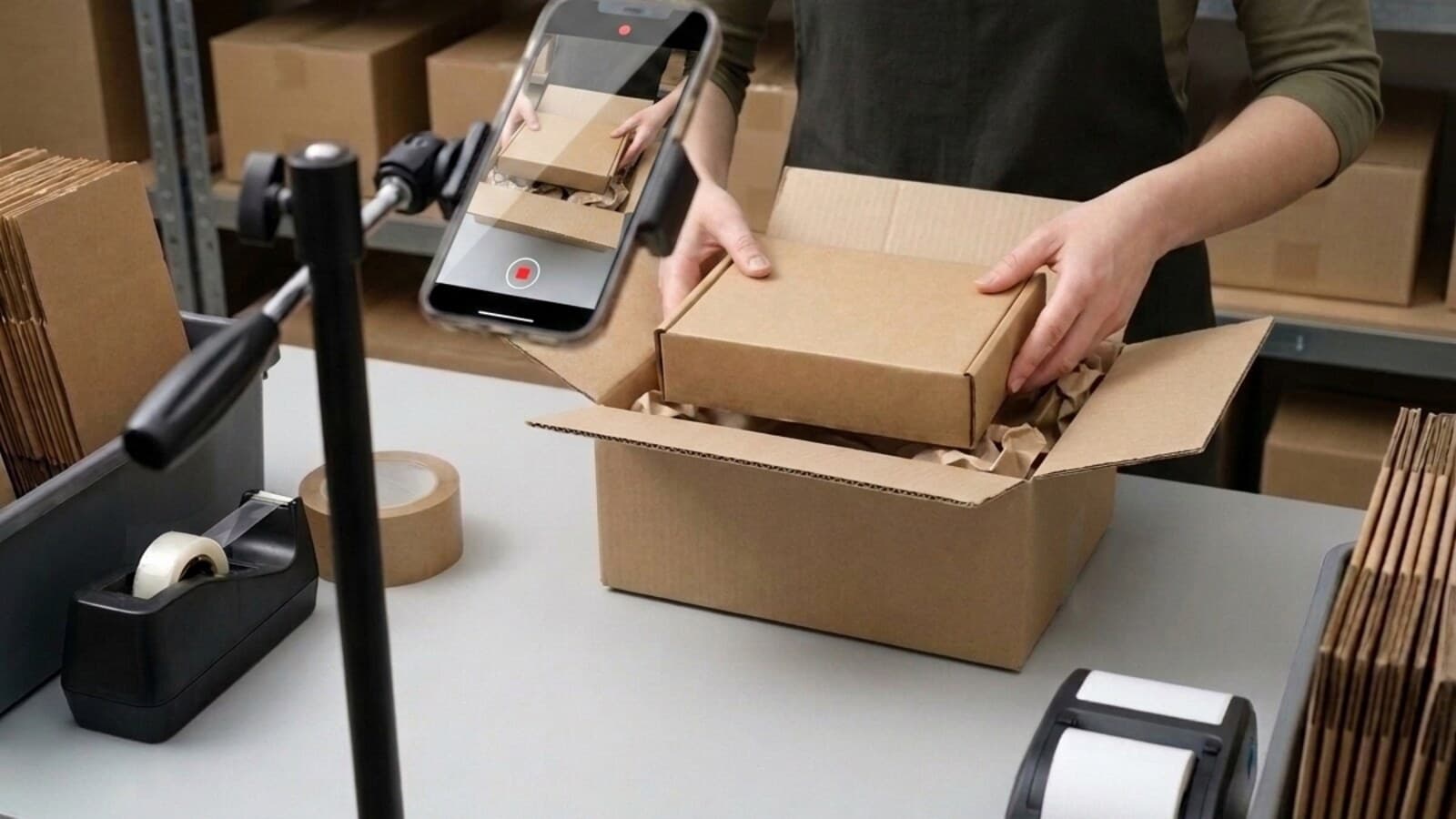
Almost every packing video product markets itself on chargebacks. Most of them are half right, and the half they get wrong costs merchants real money — not because the recording is worthless, but because it gets filed into disputes it was never going to answer.
A chargeback is a question asked by a bank. There are two questions, and they need two different answers.
The two families, and why mixing them loses cases
Goods disputes ask: did the merchant send what they said they sent? The cardholder agrees they made the purchase. They are disputing what arrived, or that anything arrived at all.
Fraud disputes ask: did the cardholder make this purchase? Nobody is arguing about the contents of the box. The claim is that the transaction itself was unauthorised.
A recording of your packing bench is direct evidence for the first and no evidence at all for the second. This is not a limitation anyone can engineer away: the recording proves what left the building, and a fraud dispute is not about what left the building.
| Network | Code | What it means | Family | Does a recording help? |
|---|---|---|---|---|
| Visa | 13.1 | Merchandise or services not received | Goods | Yes — directly |
| Visa | 13.3 | Not as described or defective | Goods | Yes — directly |
| Visa | 10.4 | Other fraud, card-absent environment | Fraud | No |
| Mastercard | 4855 | Goods or services not provided | Goods | Yes — directly |
| Mastercard | 4853 | Cardholder dispute | Goods | Yes — directly |
| Mastercard | 4837 | No cardholder authorisation | Fraud | No |
The practical failure looks like this: a 10.4 lands, the merchant attaches their best packing recording, the issuer reads a document that never addresses authorisation, and the case is lost on a technicality that had nothing to do with the merchant's diligence. We build a packing proof product and we would rather say this plainly than let you find out from a lost case.
What a recording actually answers
For the goods family, a recording is unusually strong evidence because it is contemporaneous. It was made before anyone was arguing, which is the property that written statements and after-the-fact photographs can never have.
To be usable it has to close two questions a stranger can check:
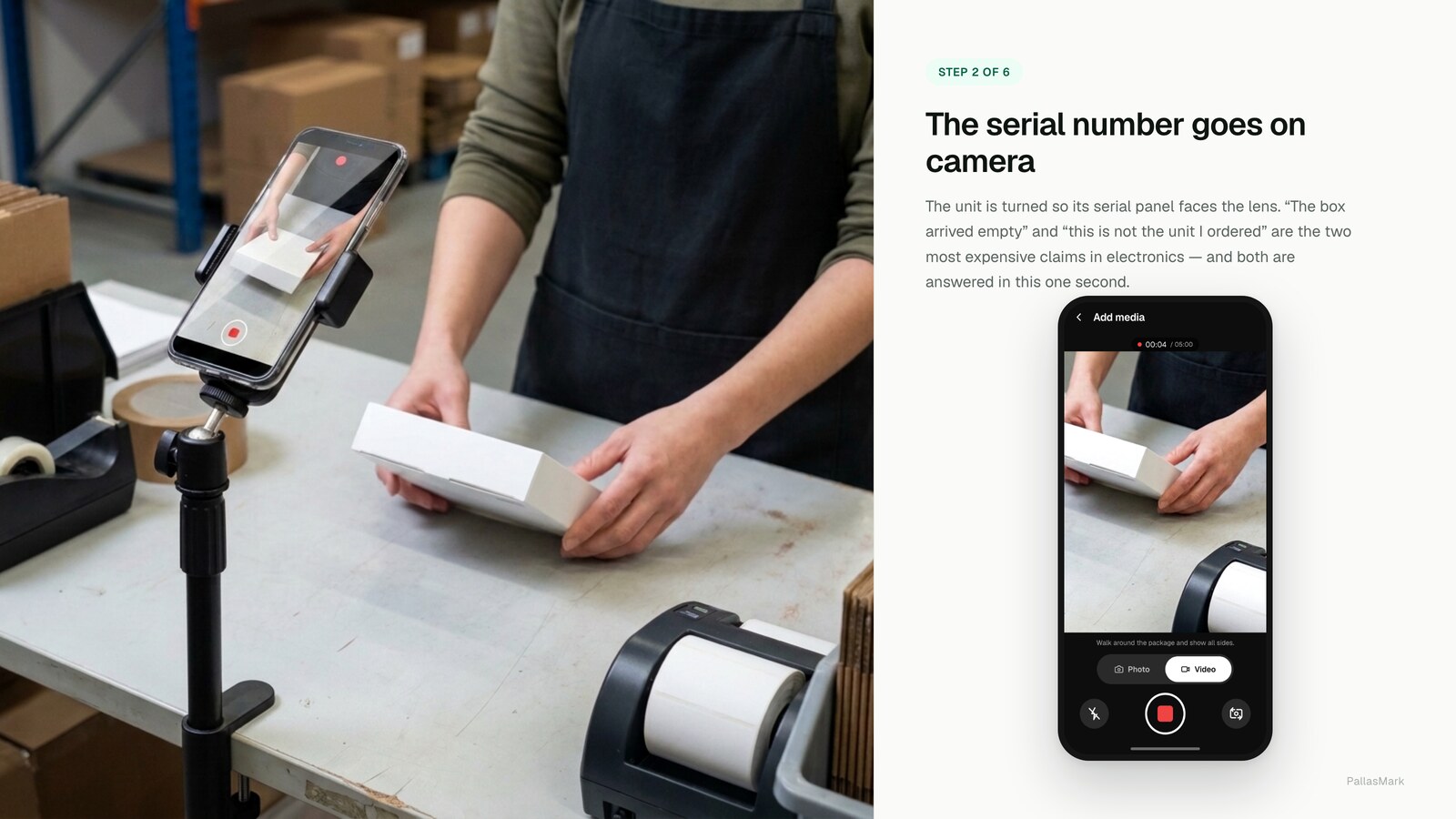
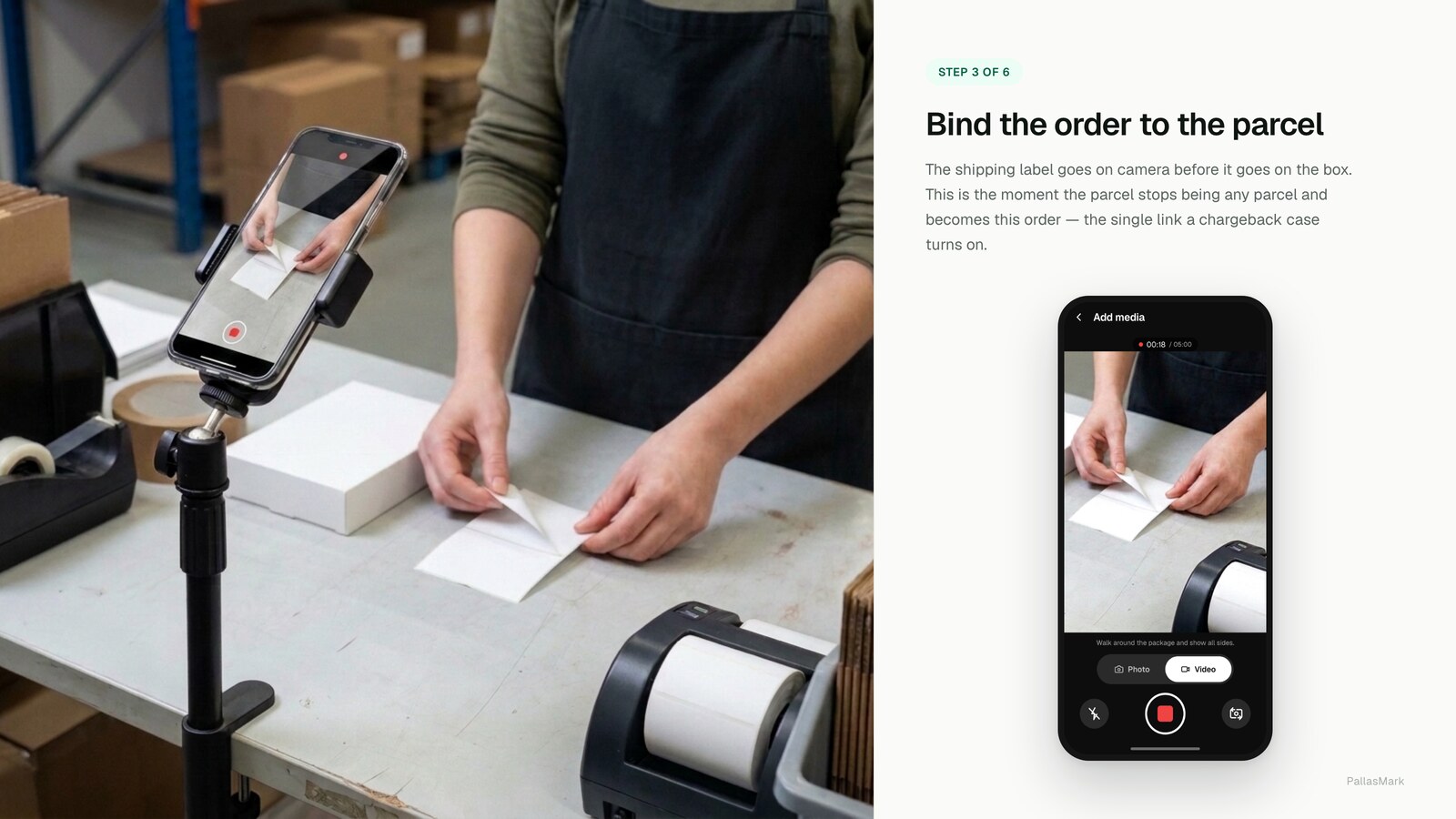
Which order does this belong to? Not according to you — according to something that could not have been typed in afterwards. The order reference has to be inside the frame, and the file has to be bound to the order in a system that recorded when that binding happened. A filename is not an answer. A folder named after the order is not an answer.
Has the file been altered since? A watermark does not answer this. What does is a fingerprint of the original bytes taken at upload and published alongside the playable copy, so a reviewer can recompute it against what they are looking at. How to record packing video that actually counts as evidence covers the capture side in detail.
Visa Compelling Evidence 3.0, precisely
For the fraud family, Visa opened a different route in April 2023. CE 3.0 lets you defend a 10.4 with transaction history instead of proof of delivery, on the argument that a cardholder who has been quietly buying from you for a year is not the victim of a stranger's fraud.
The requirements are specific, and every one of them is a hard gate:
- Two previous undisputed transactions made with the same payment credential.
- Both dated between 120 and 365 days before the dispute date.
- Either the IP address or the device ID/fingerprint must match across all three transactions — the two historical ones and the disputed one.
- At least one more element must also match across all three, from: IP address, device ID/fingerprint, user ID, or shipping address.
- Neither prior transaction may have been reported as fraud.
If Visa accepts it, liability shifts to the issuer and — this is the part merchants underrate — the dispute is not counted in your fraud monitoring ratios. Visa publishes the rules directly in its merchant readiness guide and its merchant FAQ; network rules change, so check those before you build against them.
Mastercard has moved in the same direction with its First-Party Trust programme, which likewise matches a disputed transaction against two historical ones using device and identity data, and likewise shifts liability when the evidence validates.
The gate most merchants fail
Read requirement 3 again. It is not a documentation requirement — it is a data retention requirement, and it is retroactive in the worst way. If your checkout does not store the device fingerprint and IP address on every order, then a year from now, when the dispute lands, the data does not exist and cannot be reconstructed. The mechanism is simply unavailable to you, no matter how legitimate the transaction was.
This is worth checking today rather than during a dispute:
- Does every order record store a device ID or fingerprint?
- Does it store the IP address the order was placed from?
- If you have accounts, is the login ID stored on the order, not just joined to it?
- Is the shipping address stored as submitted, not overwritten by later edits?
Two of those four have to match, and one of them has to be device or IP. If you can only produce shipping address and user ID, you do not qualify.
CE 3.0 also cannot help a first-time customer — there is no history to point at. That is structural. For new customers, the money is in screening at checkout, not in dispute response.
What to send, by family
Goods dispute. Start with the evidence requested for that reason code. For an item-not-received claim, use the carrier and delivery records the response form requests; a packing recording only documents an earlier step. For a missing-item or wrong-item complaint, footage may help an internal investigation or a response where the platform accepts it. Shopify's current chargeback instructions say not to include video files or external links, so do not submit a PallasMark share link there. Chargeback evidence covers how evidence should match the dispute.
Fraud dispute. Do not attach the recording at all. Supply the two qualifying prior transactions with their dates, the matching device or IP values across all three, and the second matching element. Your acquirer or gateway may submit this for you automatically if it participates in CE 3.0 — worth asking, because automated submission generally beats manual assembly at volume.
Where the two actually combine
There is one case where both matter, and it is the common one for repeat customers: a dispute filed under a fraud code that is really a goods complaint, or a customer who claims fraud after a delivery they are unhappy about. Networks call this first-party misuse; most people call it friendly fraud.
Here the recording does not win the case by itself — the code still governs the evidence — but it changes what happens around the case. A merchant who can show, immediately and without argument, exactly what was packed and sealed can often resolve the complaint before it becomes a chargeback at all. That is the cheapest possible outcome: a dispute that never gets filed costs you nothing, wins no fees, and touches no monitoring ratio.
That is also the honest case for recording every order rather than the high-value ones. The value is not concentrated in the cases you win. It is in the arguments that end early.
What this does not fix
Three things worth saying plainly, because the category tends not to:
- It does not stop the fee. Most chargeback fees are charged when the dispute is filed, not when it is decided. Winning gets the transaction amount back, not the fee.
- It does not lower your dispute ratio by itself. Ratios are driven by disputes filed. Only prevention — clearer listings, better delivery communication, faster refunds on genuine problems — moves that number.
- It is not legal advice, and network rules move. The reason codes and thresholds here were checked in August 2026 against the sources linked above. Confirm against current rules before you build a process on them.
Setting it up
The capture side is the easy half and takes an afternoon: mount or hold a phone at the bench, open the order, and record the visible packing step. Keep the file available for internal review and check each claim system's current submission rules before sharing it. Recording packing video on Shopify and on WooCommerce walk through platform-specific workflows.
The CE 3.0 half is a conversation with whoever owns your checkout, and it is worth having this quarter rather than after your first 10.4: the data has to be captured now to be usable a year from now.
Frequently asked questions
Does packing video prevent chargebacks?
A recording may help document what was visible during packing for a goods-related complaint, if the reviewer accepts that evidence format. It does not prove carrier delivery or cardholder authorisation, and it cannot guarantee a chargeback result. Shopify's current chargeback instructions say not to include video files or links to external resources. Any vendor promising that packing video wins chargebacks is overselling.
What is Visa Compelling Evidence 3.0?
It is a Visa rule, effective April 2023, that lets a merchant defend a card-absent fraud dispute (reason code 10.4) with transaction history rather than proof of delivery. You supply two previous undisputed transactions made with the same payment credential, dated between 120 and 365 days before the dispute, where either the IP address or the device ID matches across all three transactions plus at least one more element from IP address, device ID, user ID or shipping address. If it is accepted, liability shifts to the issuer and the dispute is not counted against your fraud monitoring ratios.
Can I use CE 3.0 for a first-time customer?
No. The mechanism is built on transaction history: it needs two prior undisputed purchases on the same credential in the 120 to 365 day window. A first order has no history to point at, so CE 3.0 does not apply. That is a structural limit, not a paperwork problem, and it is why fraud screening at checkout still matters more than dispute response for new customers.
Which chargeback reason codes does a packing recording actually help with?
A recording can document the visible packing step in a wrong-item, condition, or missing-item investigation. It does not establish that a parcel was delivered, and the relevant platform may not accept video or external links at all. For card-not-present fraud, the question is authorisation, which packing footage does not answer. Check the exact reason code and current submission rules before responding.
Do I need both a packing video and CE 3.0 data?
If you sell physical goods online, yes, because you will receive both kinds of dispute. They are not alternatives; they answer different questions and are gathered by different parts of your stack. The recording comes from the packing bench. The CE 3.0 elements — device ID, IP address, login ID, shipping address — come from your checkout and have to be stored at order time, because you cannot reconstruct them a year later.
Does a watermark on the video make it stronger evidence?
Not meaningfully. A watermark makes a file identifiable, not verifiable: it can be recreated, and it tells a reviewer nothing about whether the file was edited after it was recorded. What a reviewer can act on is an independent check — a fingerprint of the original bytes, taken at upload and published, that anyone can recompute against the file they are looking at.
- chargebacks
- compelling evidence
- CE 3.0
- disputes
- packing video