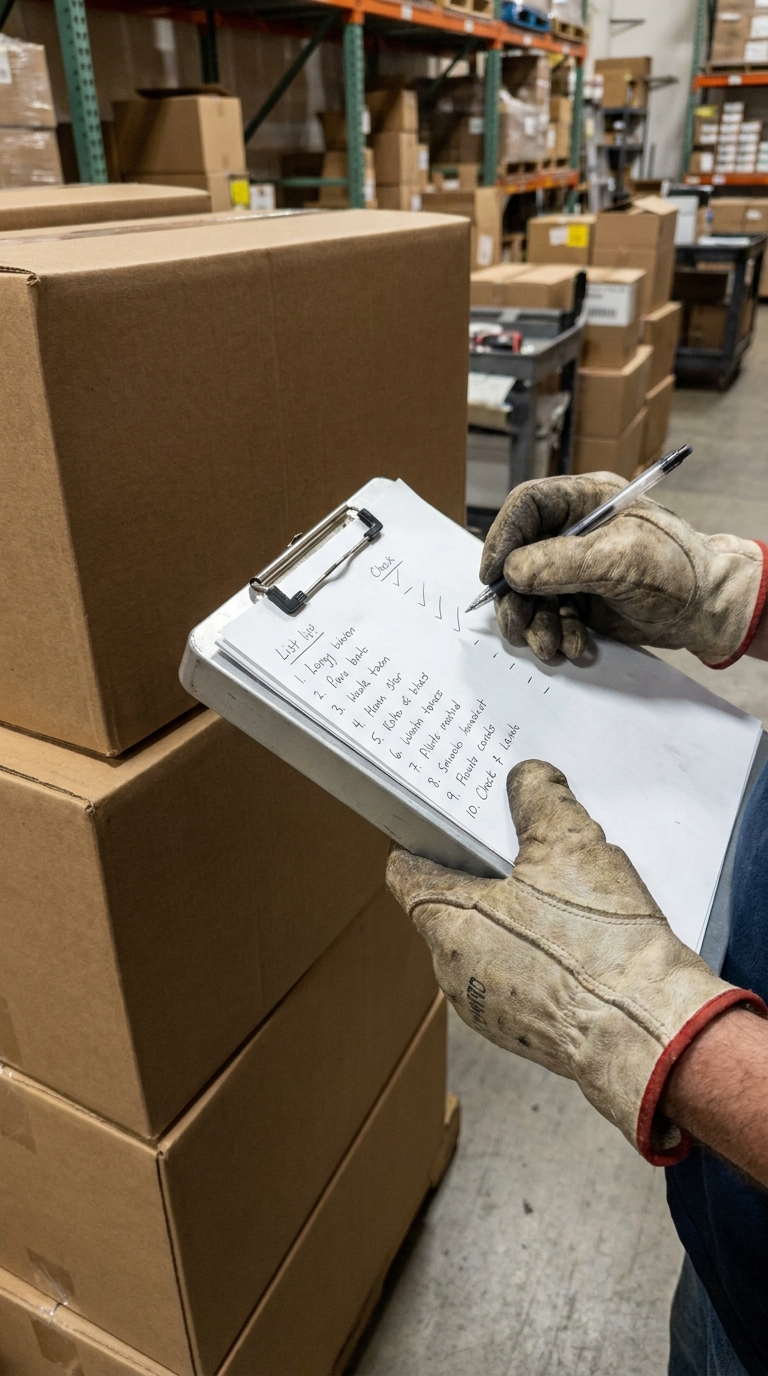
Counted on camera01
Every carton and pallet, counted before it leaves
The team films the contents and count as they pack, under the order or pallet reference.
Use case · B2B shipments
Film the count and labels of every carton and pallet. When a shortage is reported, everyone starts from the same record.
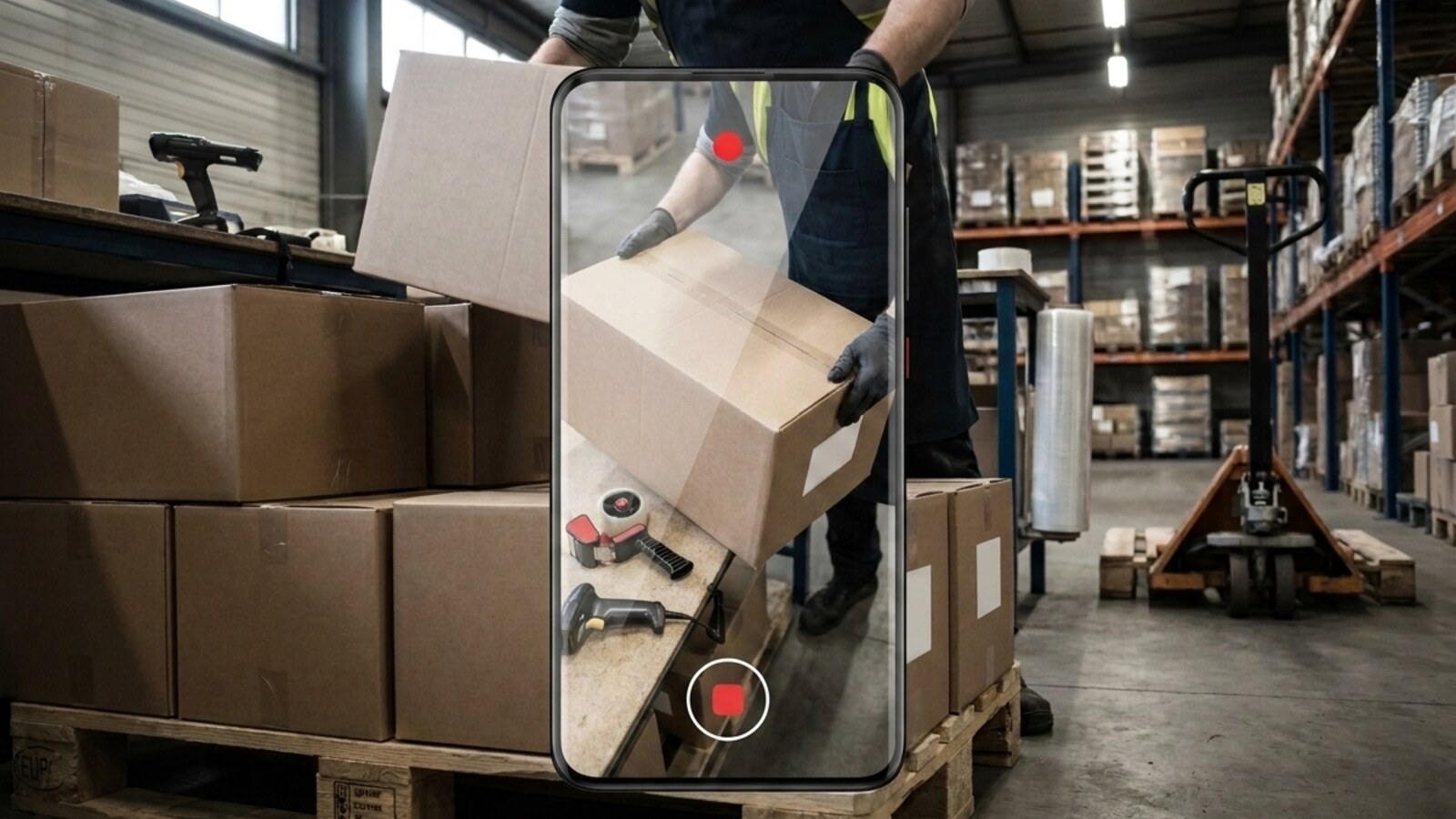
What changes for wholesale shipments
The team films the contents and count as they pack, under the order or pallet reference.
Search by the order or shipment reference and the dispatch footage is there, with time and operator.
Send the customer a link to that shipment's record. They open it in a browser without an account.
02 — The record
Nothing here is a mock-up: every screen is the app as it ships, and every frame is the same warehouse floor, in order.
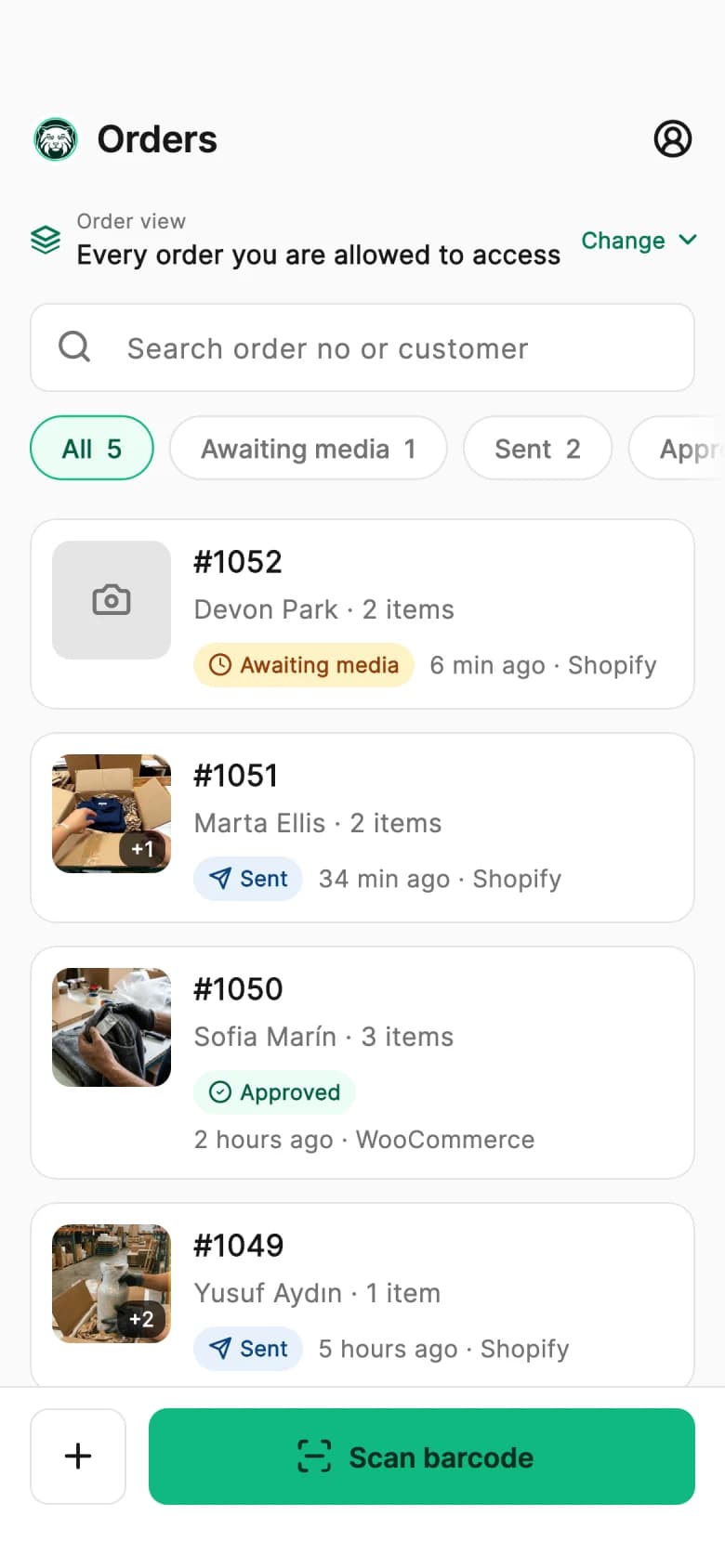
Warehouse and wholesale shipments sync in from your WMS, ERP or store the same way retail orders do, and the ones still waiting for a recording are marked. Nobody retypes a PO number at the pallet.
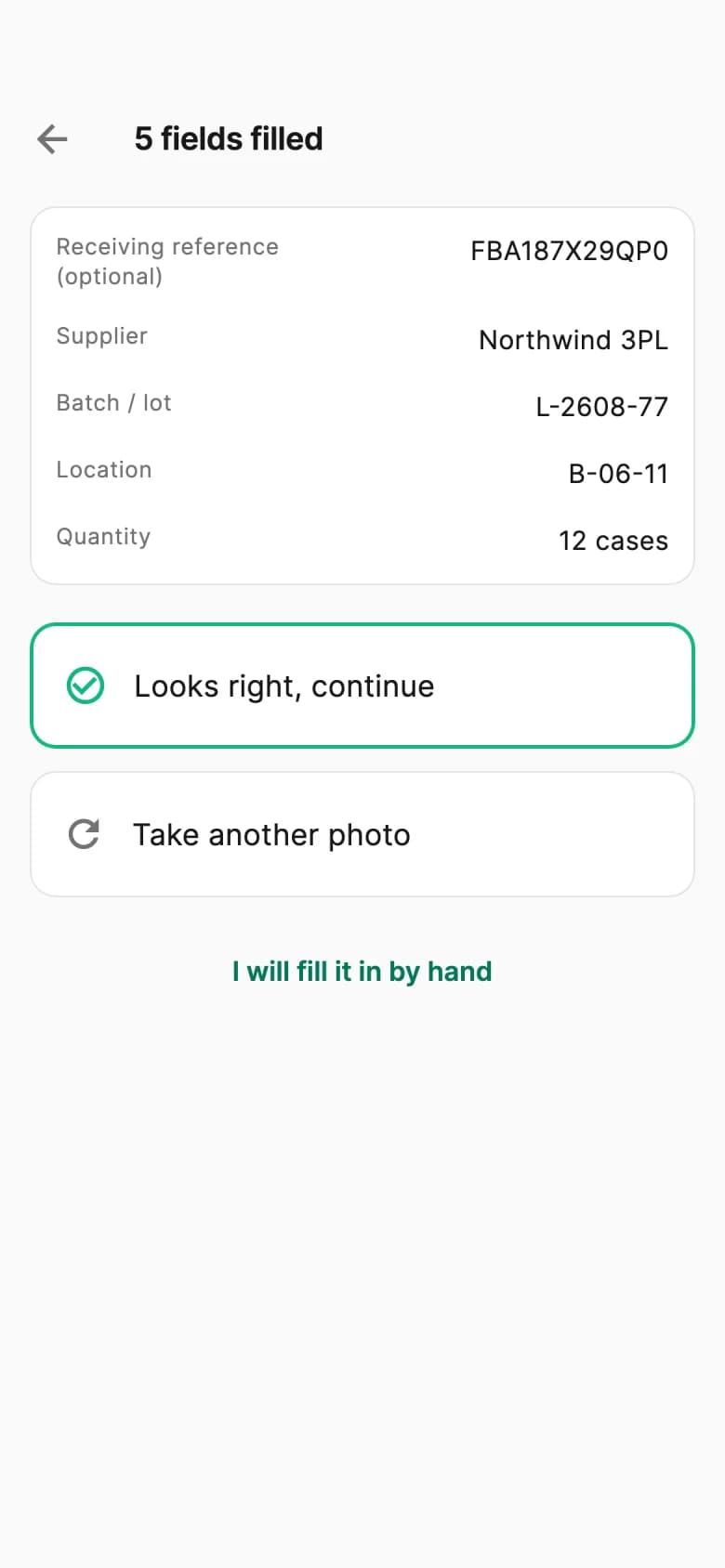
Most 3PL and wholesale shipments have no retail order behind them at all. Scan the pallet label instead and the record fills itself — supplier, batch, quantity, warehouse and location come off the label. Every field is shown for review before anything is saved.
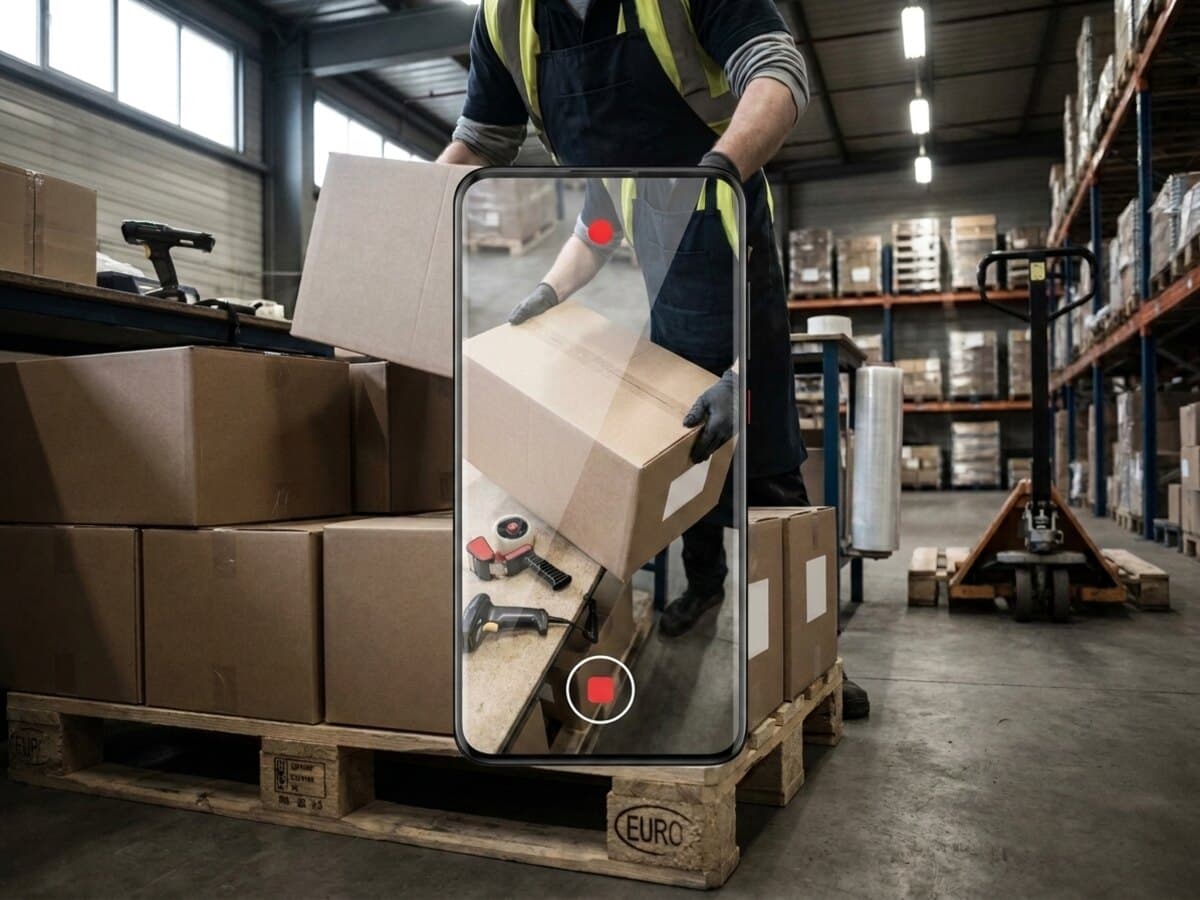
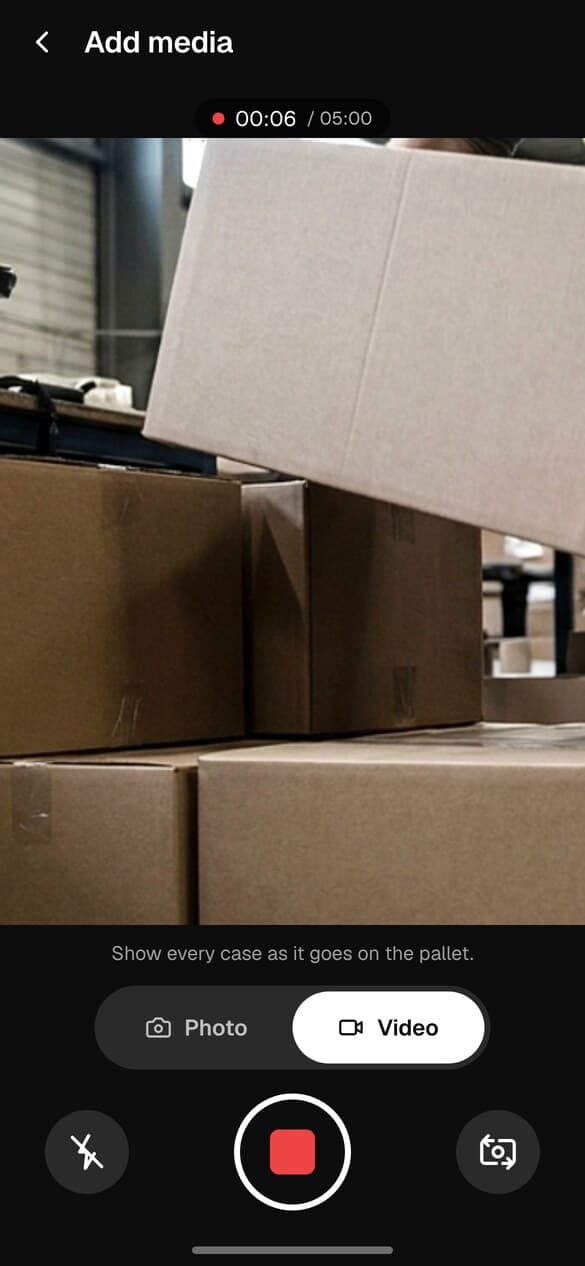
The case goes on camera on its own — which SKU, how many, what condition — while it is still countable, before it disappears into the stack. When a 3PL and a brand disagree about what left the dock, this is the record that predates the argument.
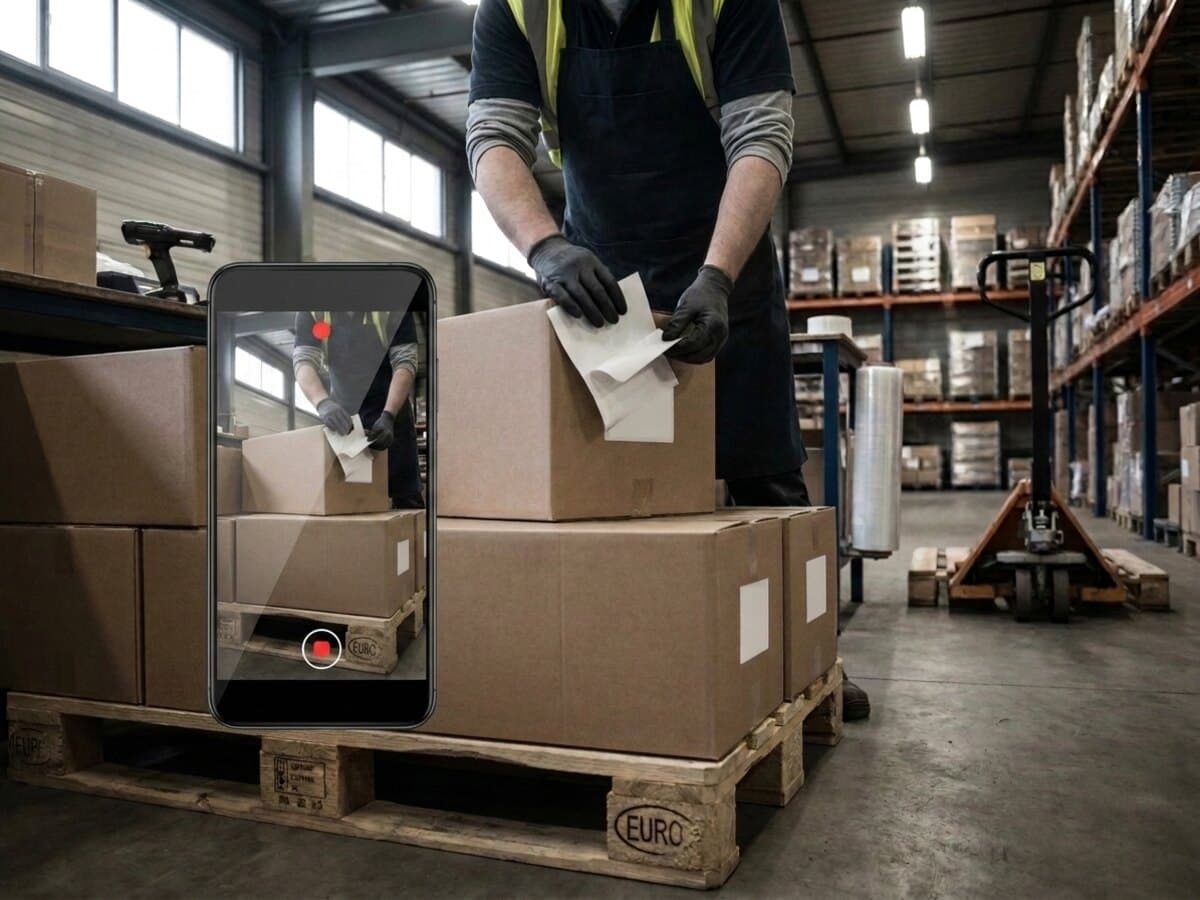
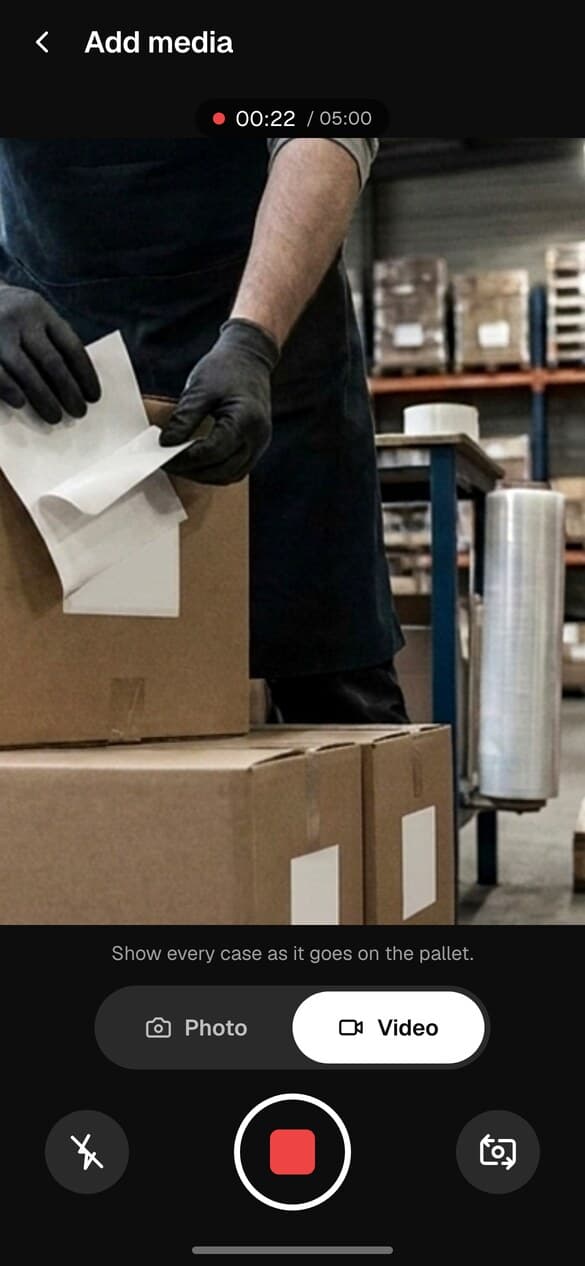
The label goes on camera before it goes on the wrap. From this frame on, the stack is not a stack — it is this shipment, on this date, from this facility.
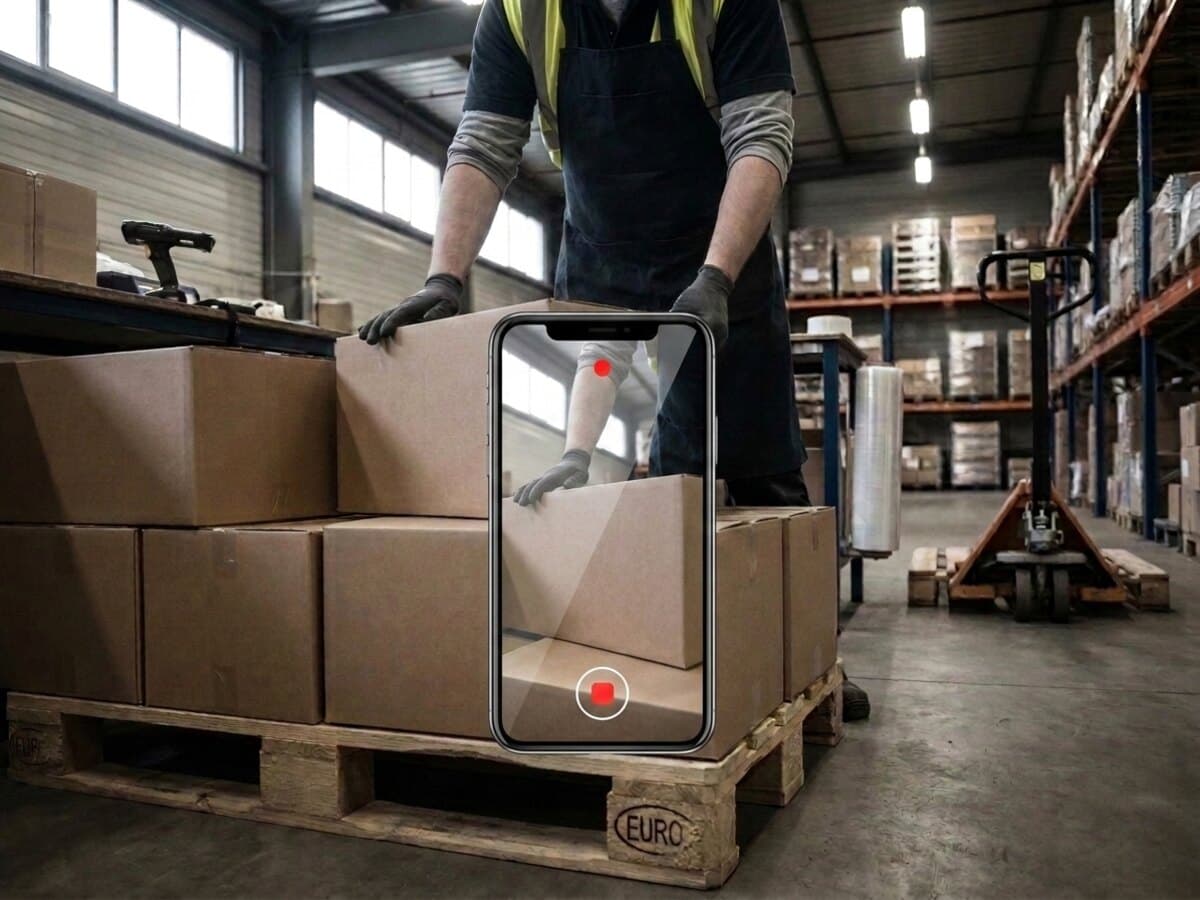
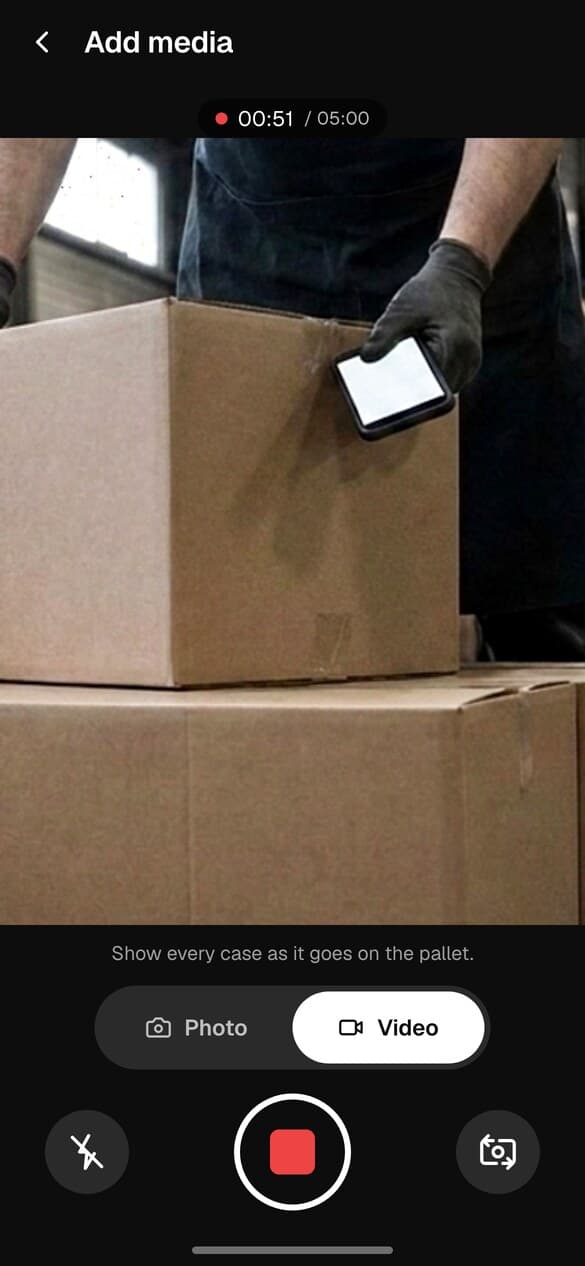
Layer by layer, squared and counted, inside the same unbroken take. A short-count claim two weeks later has to argue with the footage, not with your memory.
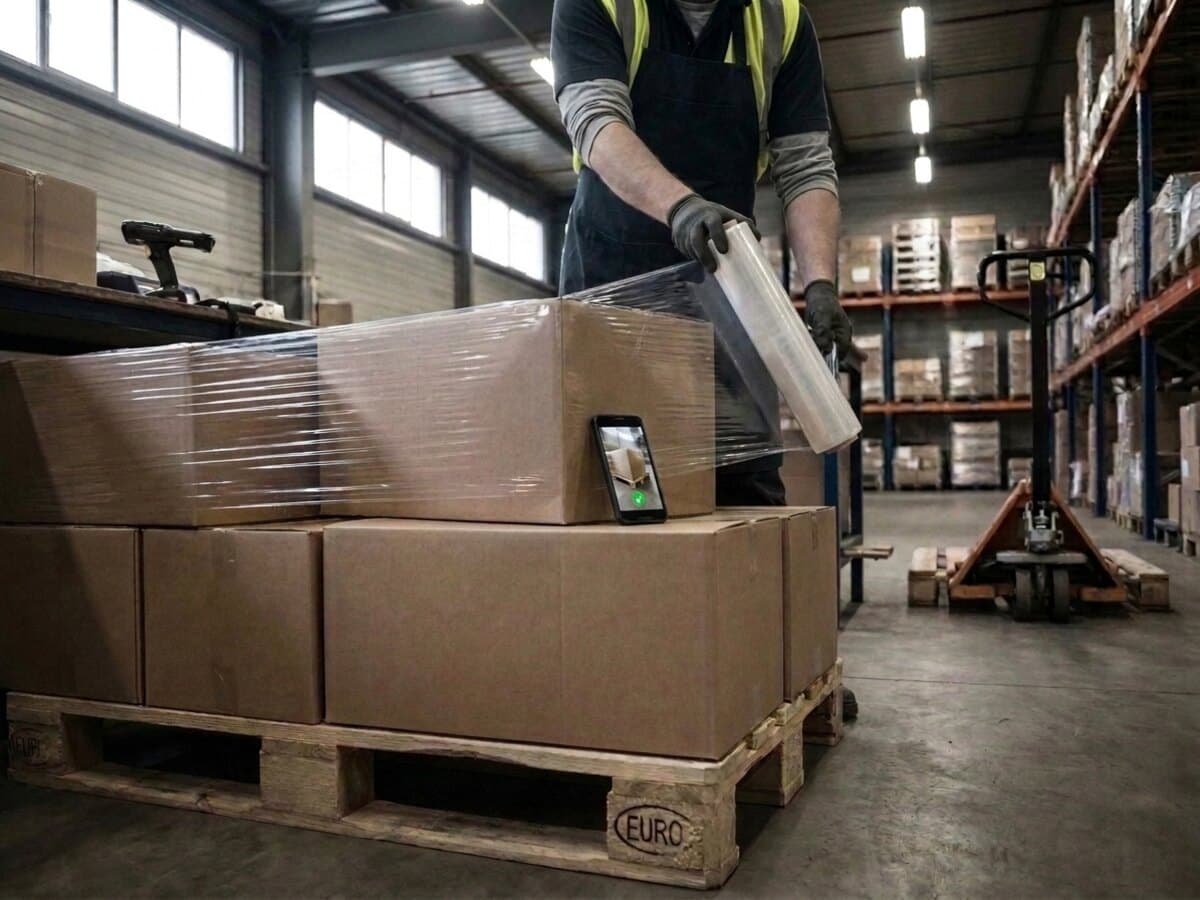
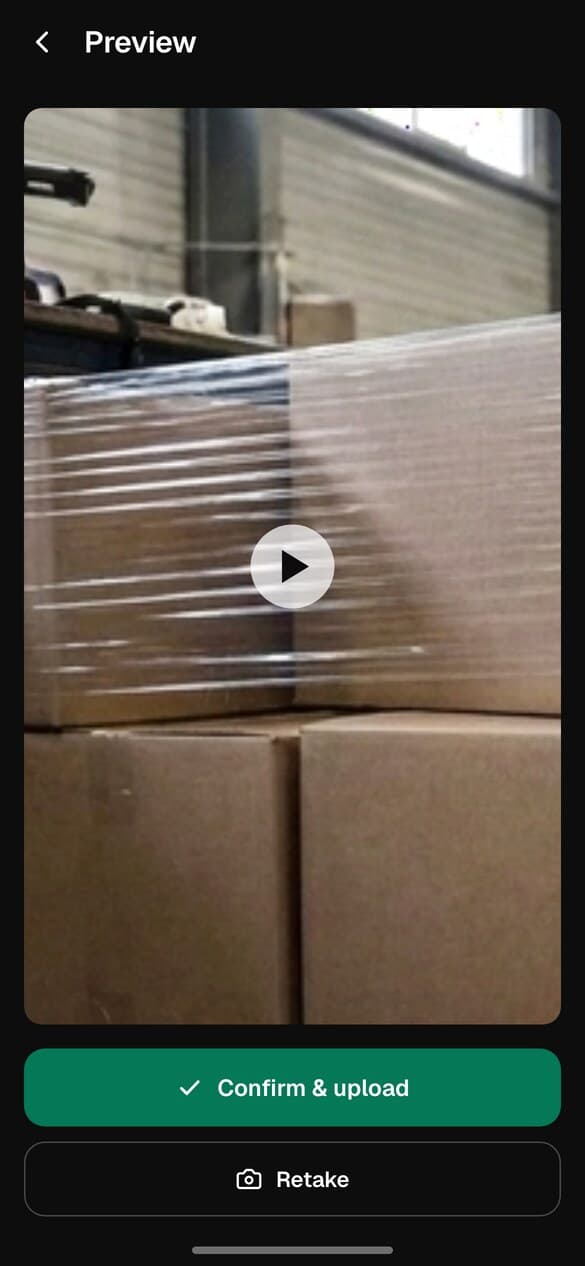
The take ends when the wrap does. One look at what was captured, one tap, and the file is uploading — it finishes on its own even on a warehouse Wi-Fi.
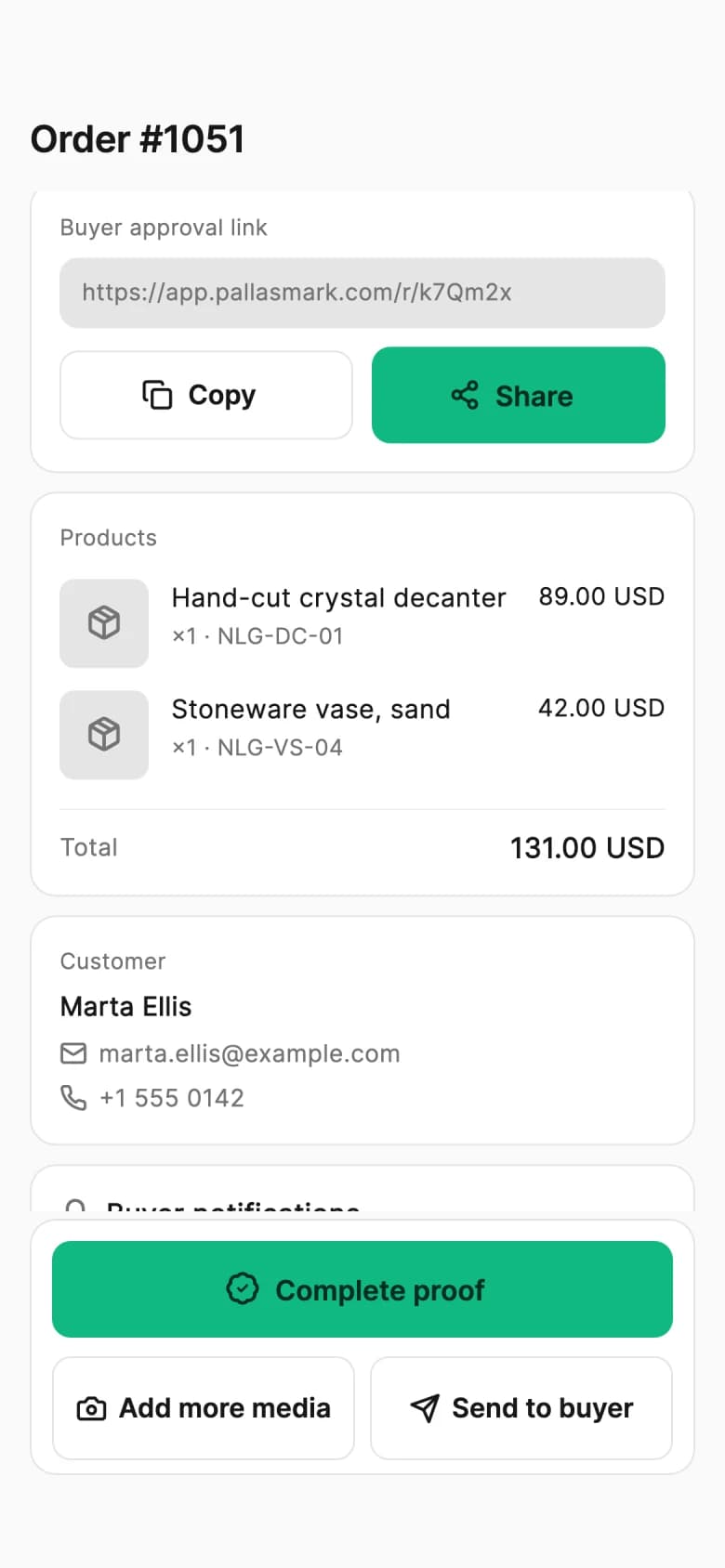
The recording lands on the shipment record itself, with who added it and when. Your 3PL or buyer gets a link that opens with no account.
Not a sample and not a video of the product — your own clip, through the real pipeline, ending on a real verification page you can send to anyone.
Takes about a minute. Nothing is installed and no card is involved.
02 — The seal
The recording becomes a single proof file and locks: no one can change it afterward, not even you. Anyone who opens the link sees exactly the same record.
Once sealed, the link always opens the same record — so the buyer can trust what they see.
Is it valid?
04 — The outcome
This is the moment you open the file and show it: the item, the process and the sealed package, all in one place.
05 — The math
Every upheld short-claim is the value of the goods you sent. See it with your own numbers.
Short-claim loss
$3,600 /mo
Recovered (est.)
$1,440 /mo
Loss = shipments x value x dispute rate x unfair share
Estimate — enter your own numbers; rates are assumptions.
Prevent your monthly loss with proof
Start free, no card required06 — Setup
Setting up the same flow in your own store takes four simple steps.


Connect your store
Shopify or WooCommerce, takes just a few minutes.
Set your rule
Require the record on the orders that matter most.
Create the first record
Film the item and its packing right before it ships.
Invite your team
Your shipping team captures the record as part of their own flow.
07 — Coverage
Not just pallets — the same flow works for every wholesale shipment.
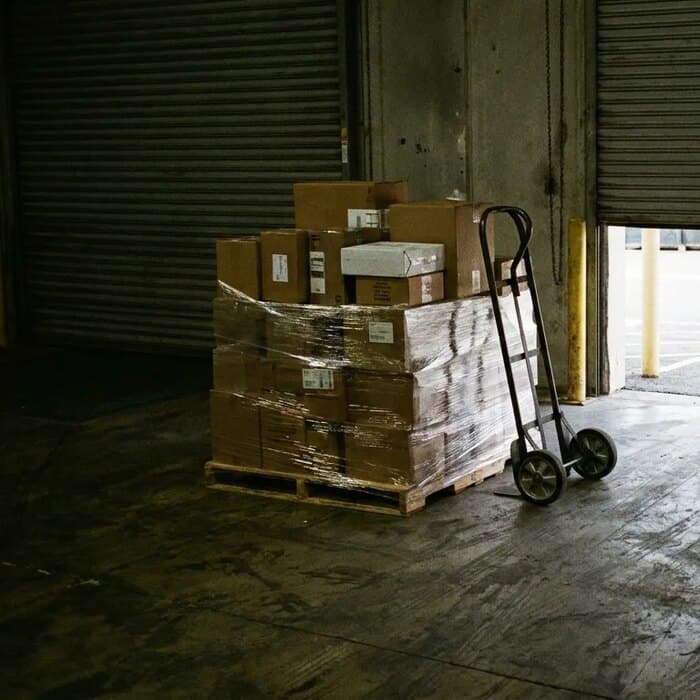
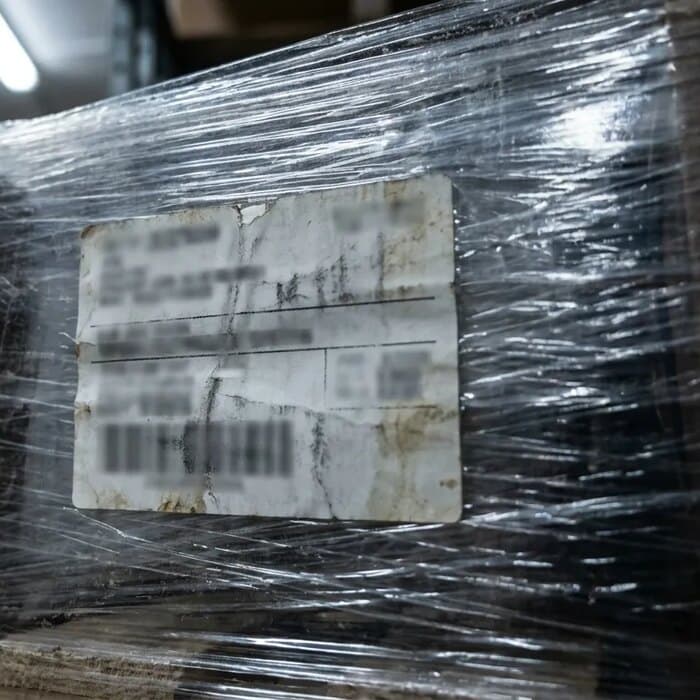
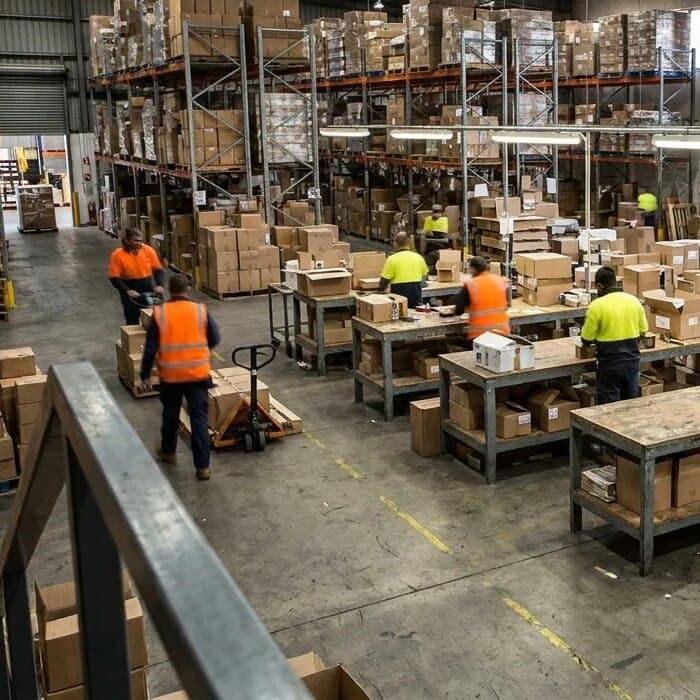
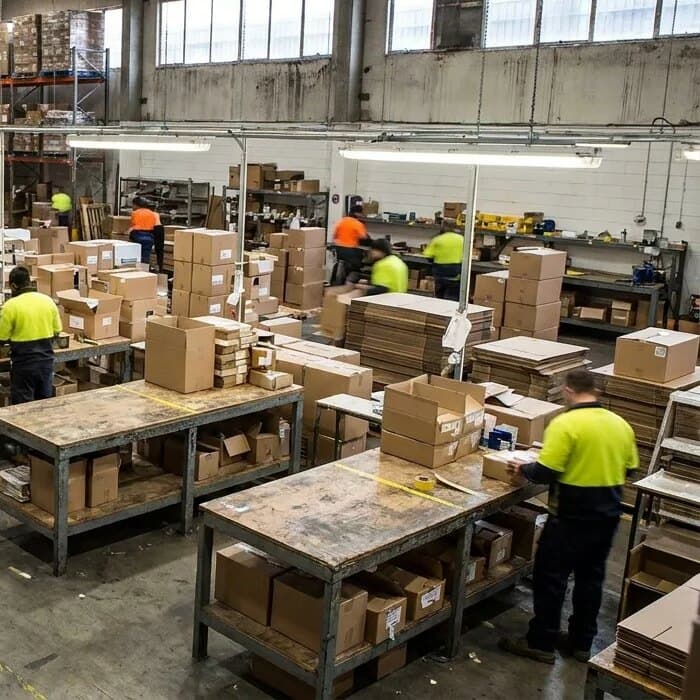
You film the shipment in one pass; items and the count are visible.
A clear contents record greatly weakens a short-claim.
You do not film the whole build. The useful record is short: each case shown as it joins the stack, the pallet label going on, and the finished wrapped stack. That is a couple of minutes, not an hour, and it covers the two things a short claim actually disputes — how many and which.
Contractually it depends on your agreement; practically it depends on who can show what left the dock. This is why the recording matters more in a 3PL relationship, not less: when the brand and the operator disagree about a count, the only useful record is the one made before the argument started.
Yes. Operator is a separate role: it can capture and attach evidence without changing order data or seeing billing. Each operator uses one team seat, so every recording remains tied to an individual account and audit trail.
It complements them rather than replacing them. A packing list states what should be in the shipment; the recording shows what went in. A dispute is usually the gap between those two documents, and the recording is the only one of them made at the moment the goods moved.
How to Document Freight Damage at Warehouse Receiving
A warehouse-ready guide to documenting freight damage, shortages and concealed damage with clear photos, shipment-linked notes and clear next steps.
How a warehouse records packing proof: pallets, phones and label reading
Recording one order is easy. Recording every pallet across shifts, benches and languages is a process problem. Here is what solving it looks like.
Customer says you sent the wrong item: how to prove which unit went in the box
Wrong item, wrong variant, missing unit, 'not authentic' — every version is about identity, not condition. The evidence that actually answers it.
Buyer approval
The buyer sees the packing video before dispatch and approves or reports a problem — on record.
Warehouse & pallet proof
Scan the pallet label, record its condition and share one link — AI label reading on Scale.
API & webhooks
Scoped keys and HMAC-signed webhooks so your WMS or ERP can read and write proof safely.
How order-linked packing video proof works
Set up in 5 minutes and record your first shipment.
Start free, no card required