Before it left01
Show the item was intact when it shipped
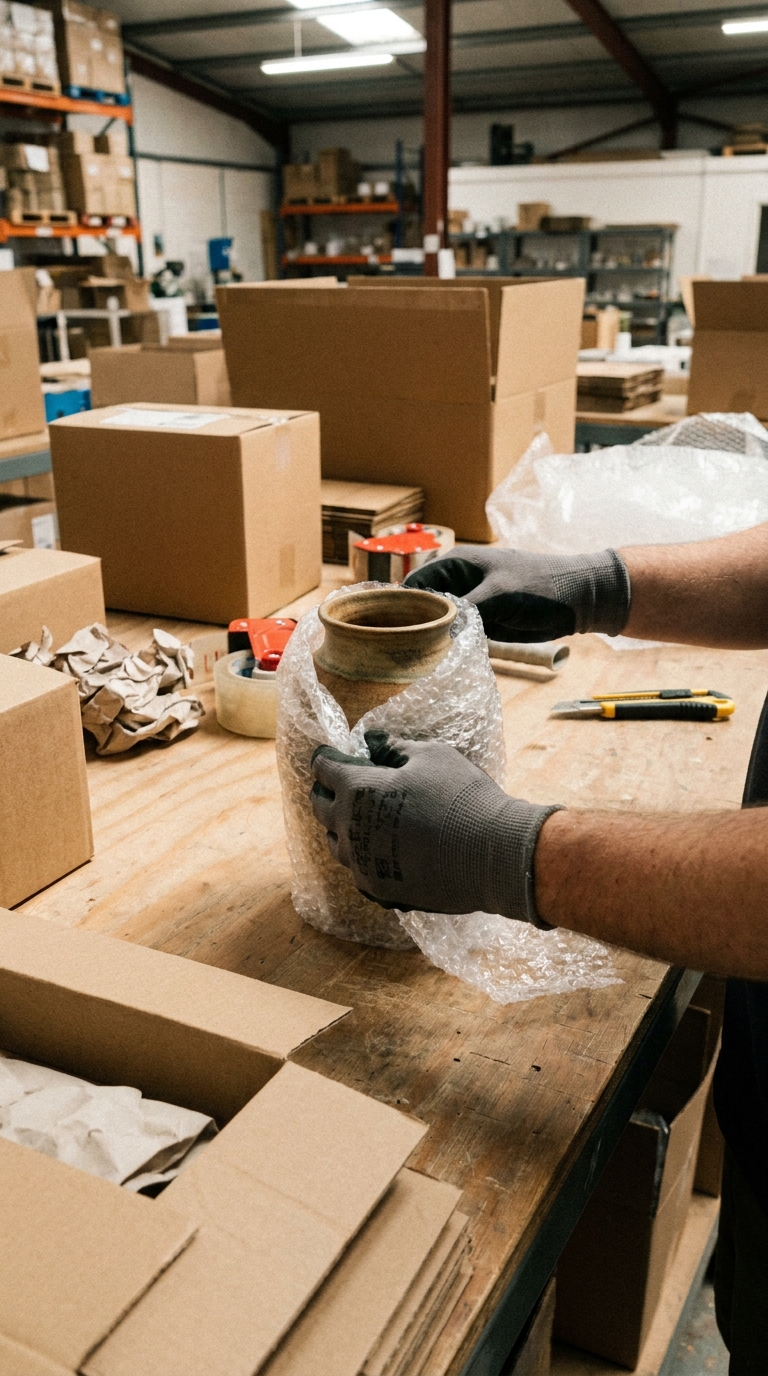
Every fragile order is filmed at the bench, so the claim starts with clear footage of the item and its padding before handover.
Use case · Carrier & insurance
Film the item's condition before the carrier collects it. When it arrives broken, your claim goes in with proof, not just your word.
What changes for your damage claims
Every fragile order is filmed at the bench, so the claim starts with clear footage of the item and its padding before handover.
The file is fingerprinted when it is stored, and a public link lets the insurer check it has not been changed.
Recording, time, tracking number and frames from the video go into one PDF you attach to the claim.
02 — The record
Nothing here is a mock-up: every screen is the app as it ships, and every frame is the same bench, in order.
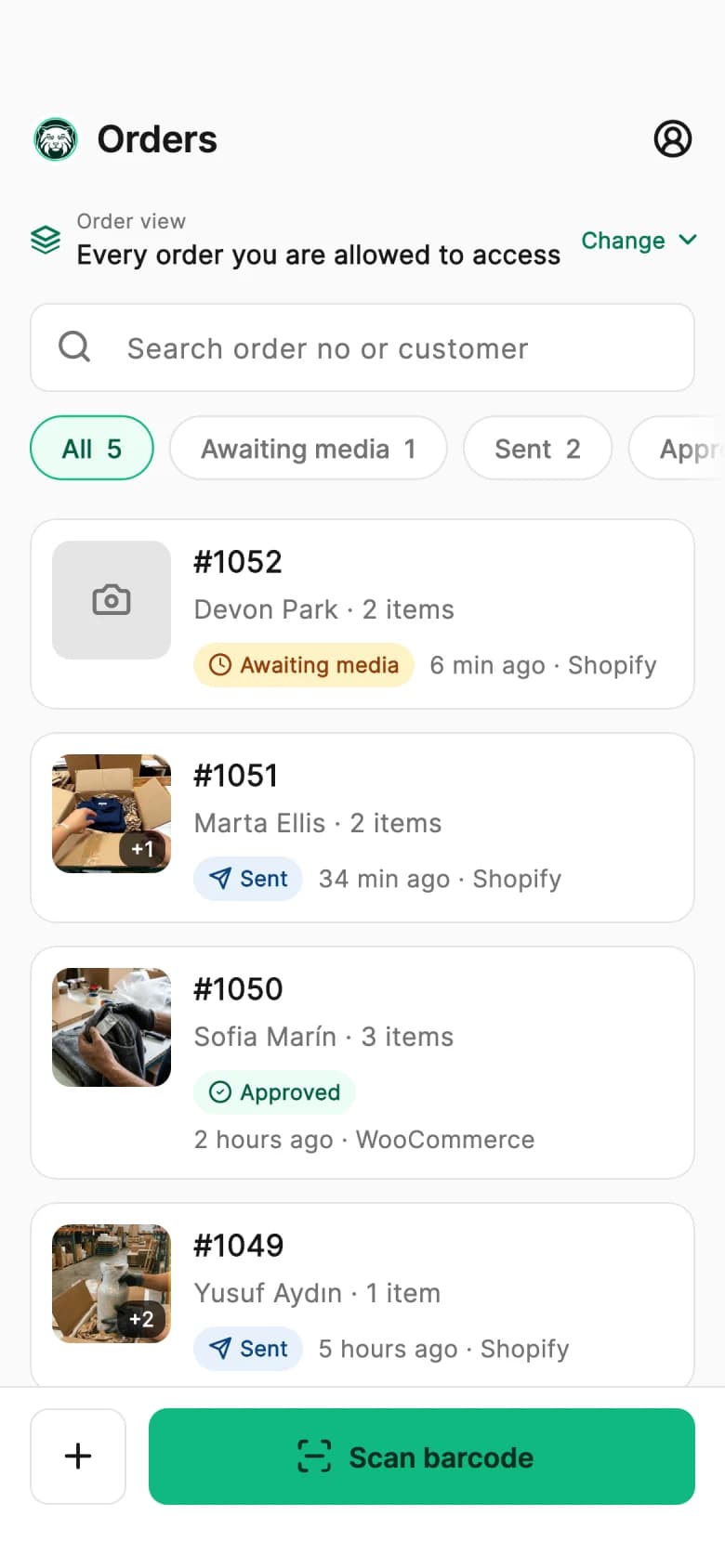
Orders come in from Shopify or WooCommerce and land in the list, with the ones still waiting for a recording marked. Nobody retypes an order number at the bench.
The barcode on the slip opens the right order directly. That is the moment the recording is bound to an order — before anything is filmed, not after.
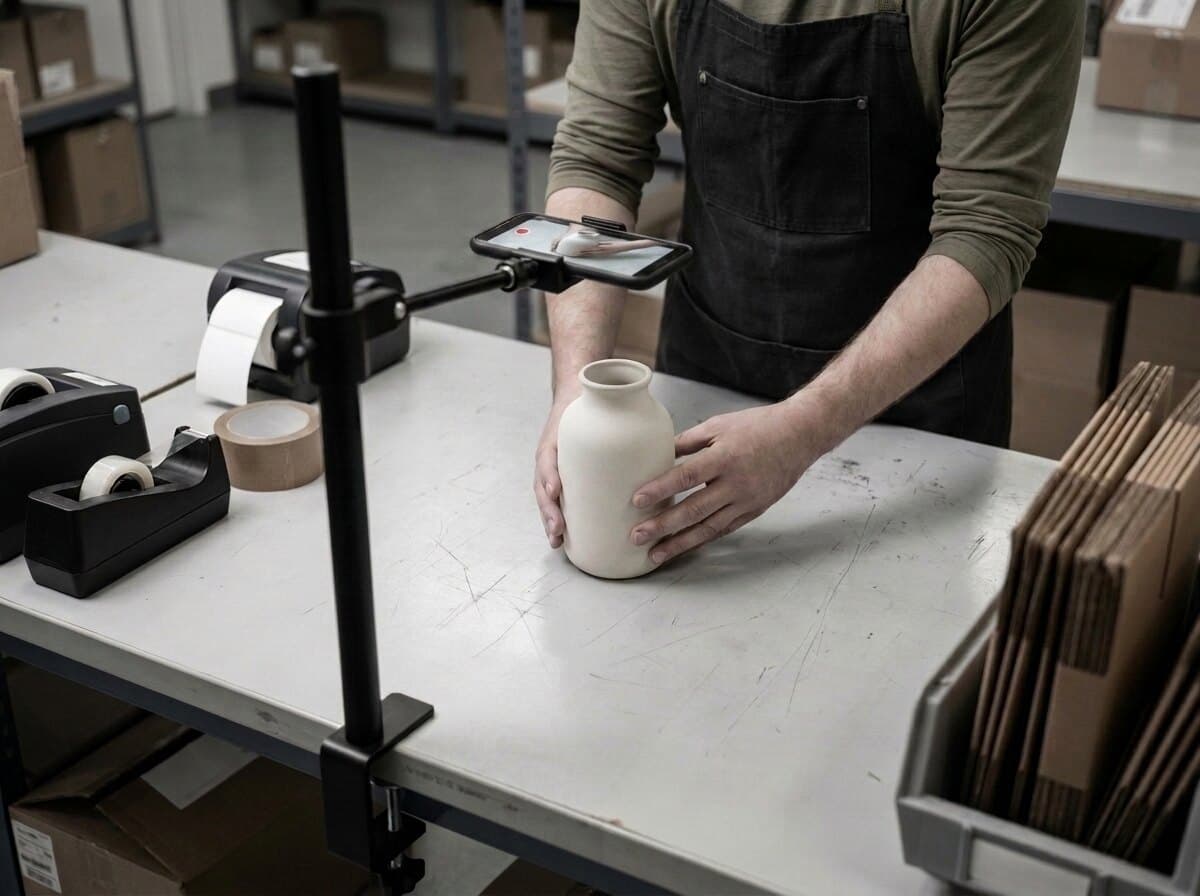
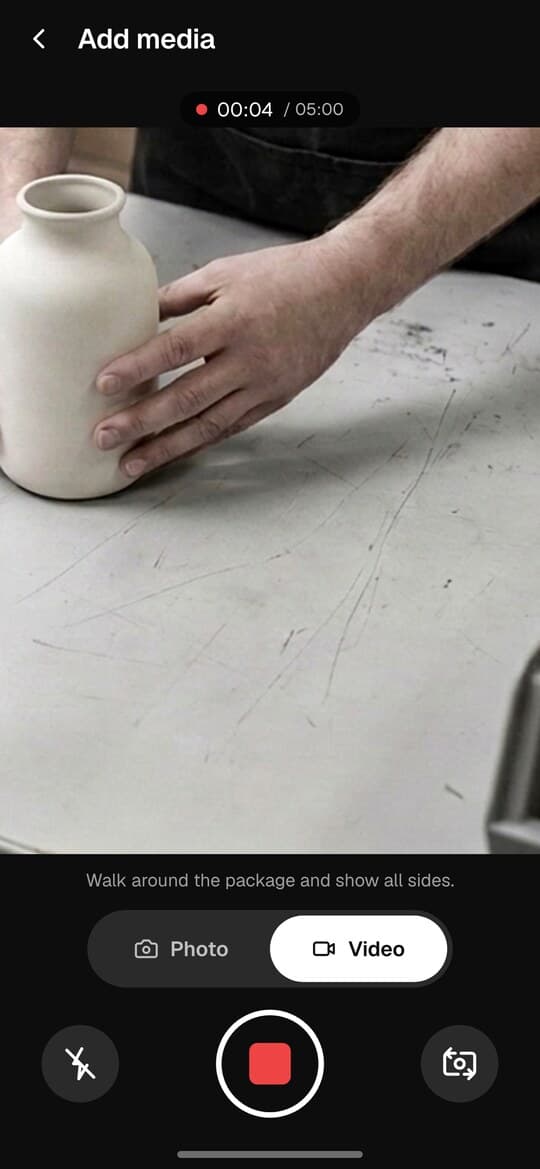
The take opens on the item itself: what it is, what condition it is in, that it is the right one. The phone is already in the room; there is no camera to mount.
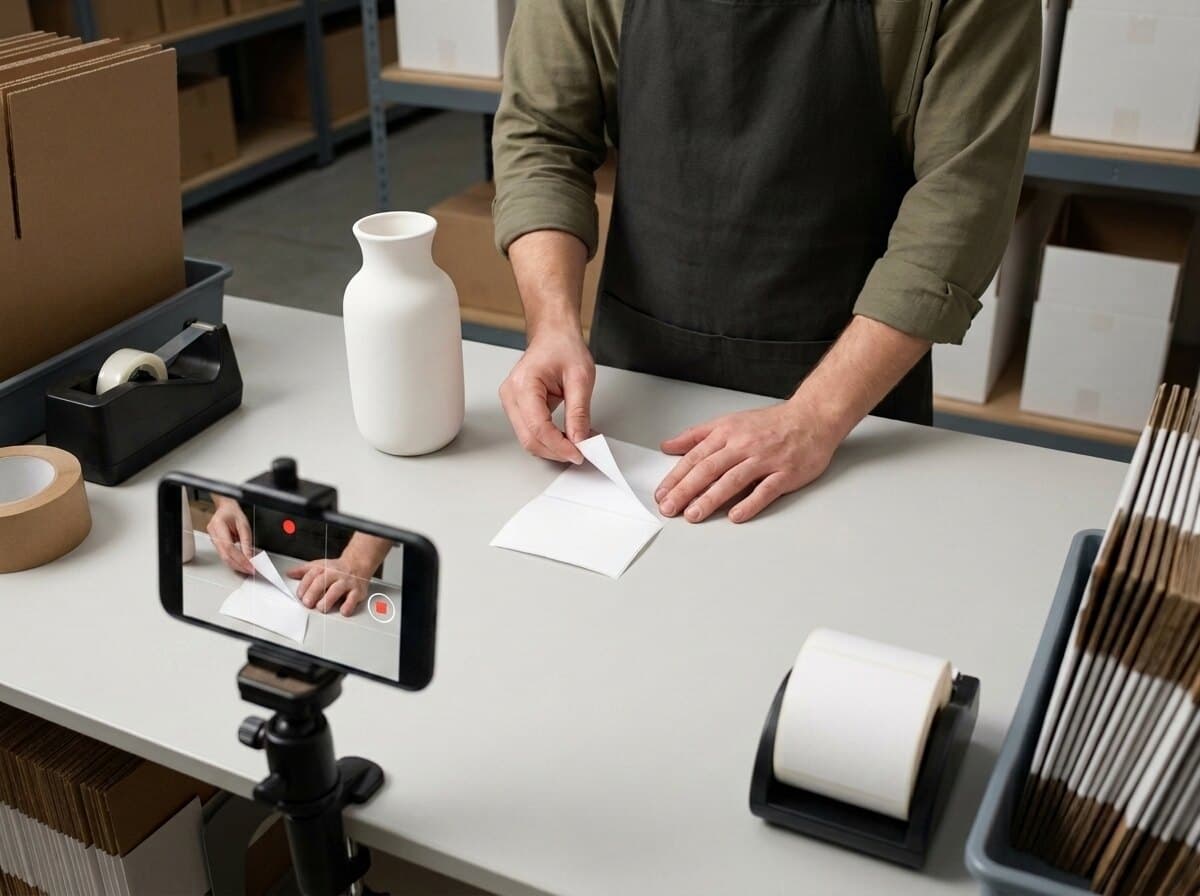
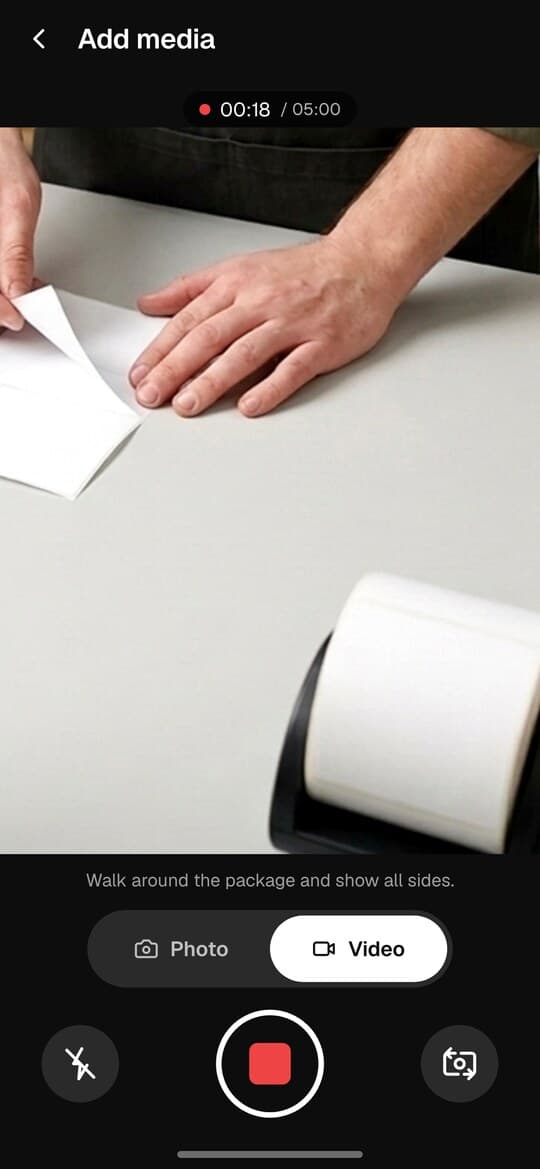
The label goes on camera before it goes on the box. From this frame on the parcel is not any parcel — it is this order, and that link is what a dispute turns on.
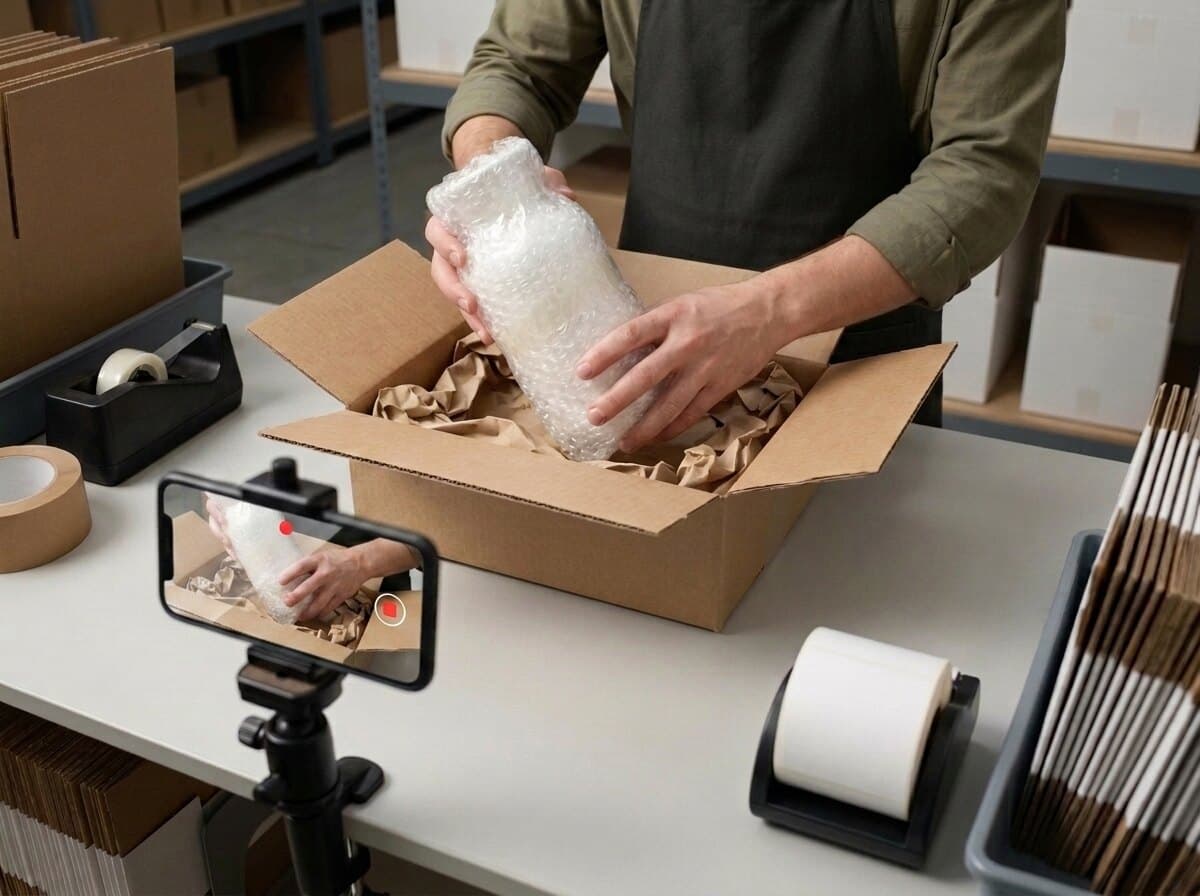
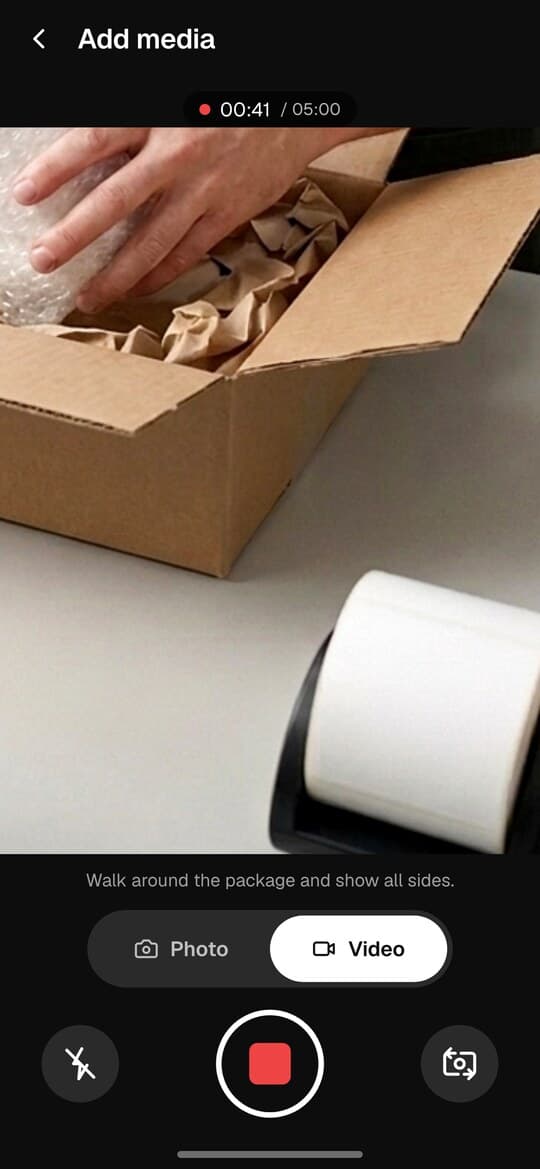
Padding, placement, the inner box closing — all inside the same unbroken take. A cut is a place a reviewer can imagine something happening off camera.
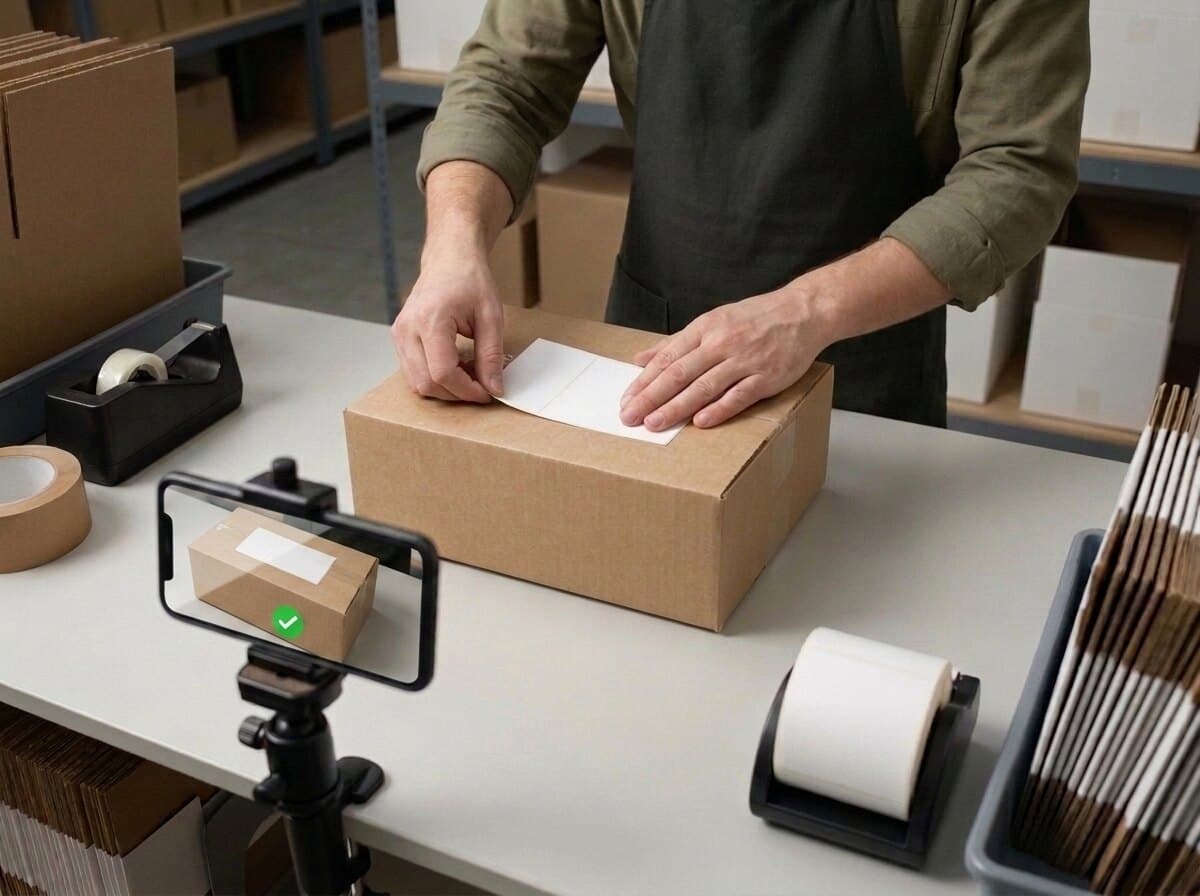
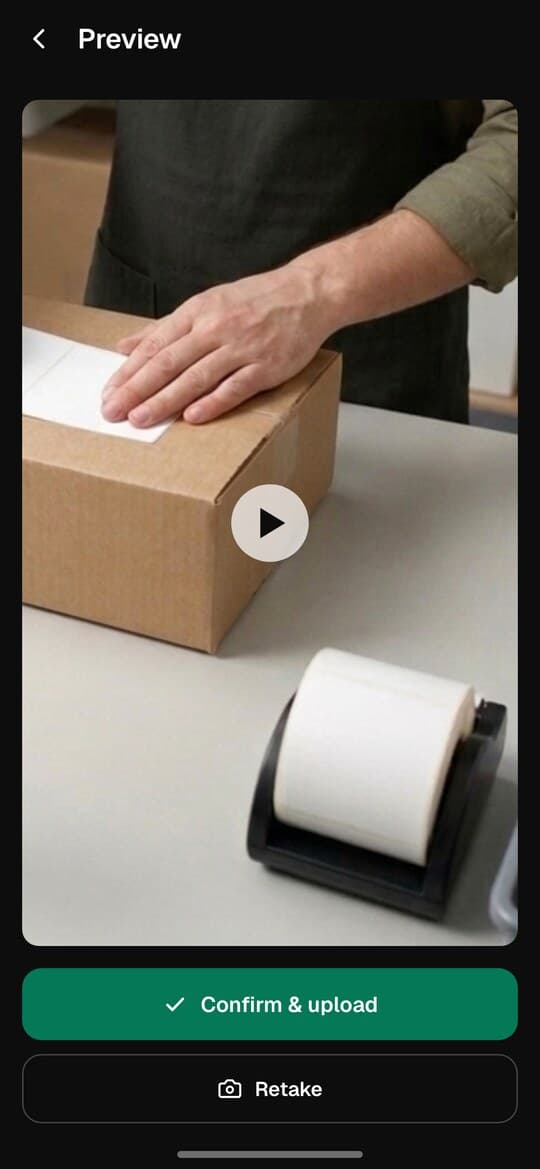
The take ends when the parcel does. One look at what was captured, one tap, and the file is uploading — it finishes on its own even if the signal drops.
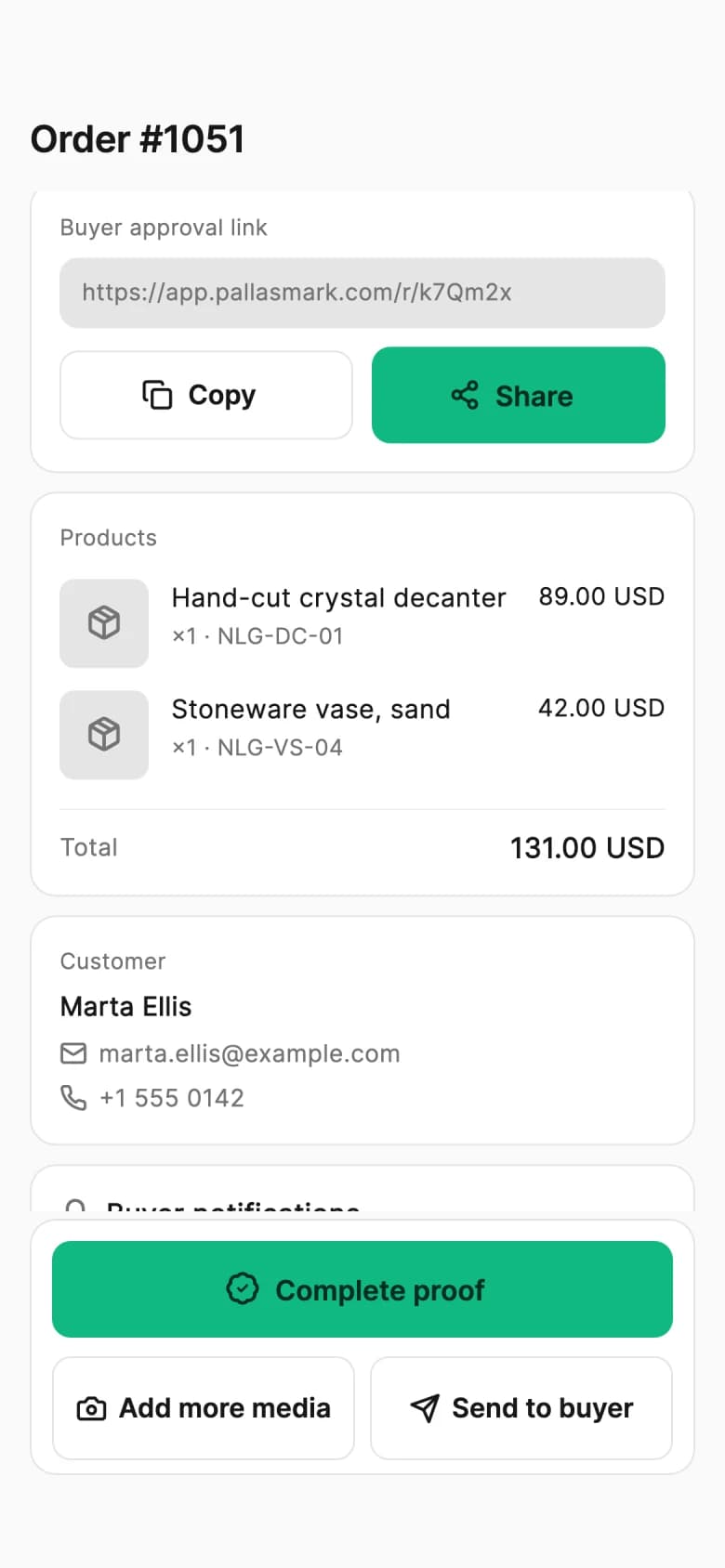
The recording lands on the order itself, beside the customer and the items, with who added it and when. The buyer gets a link that opens with no account.
Not a sample and not a video of the product — your own clip, through the real pipeline, ending on a real verification page you can send to anyone.
Takes about a minute. Nothing is installed and no card is involved.
02 — The seal
The recording becomes a single proof file and locks: no one can change it afterward, not even you. Anyone who opens the link sees exactly the same record.
Once sealed, the link always opens the same record — so the buyer can trust what they see.
Is it valid?
04 — The outcome
This is the moment you open the file and show it: the item, the process and the sealed package, all in one place.
05 — The math
Carriers reject most damage claims for 'no proof' and you eat the loss. See it with your own numbers.
Uncovered damage loss
$864 /mo
Recovered (est.)
$346 /mo
Loss = shipments x value x damage rate x denied share
Estimate — enter your own numbers; rates are assumptions.
Prevent your monthly loss with proof
Start free, no card required06 — Setup
Setting up the same flow in your own store takes four simple steps.


Connect your store
Shopify or WooCommerce, takes just a few minutes.
Set your rule
Require the record on the orders that matter most.
Create the first record
Film the item and its packing right before it ships.
Invite your team
Your shipping team captures the record as part of their own flow.
07 — Coverage
Not just glassware — the same flow works for every fragile or heavy shipment.
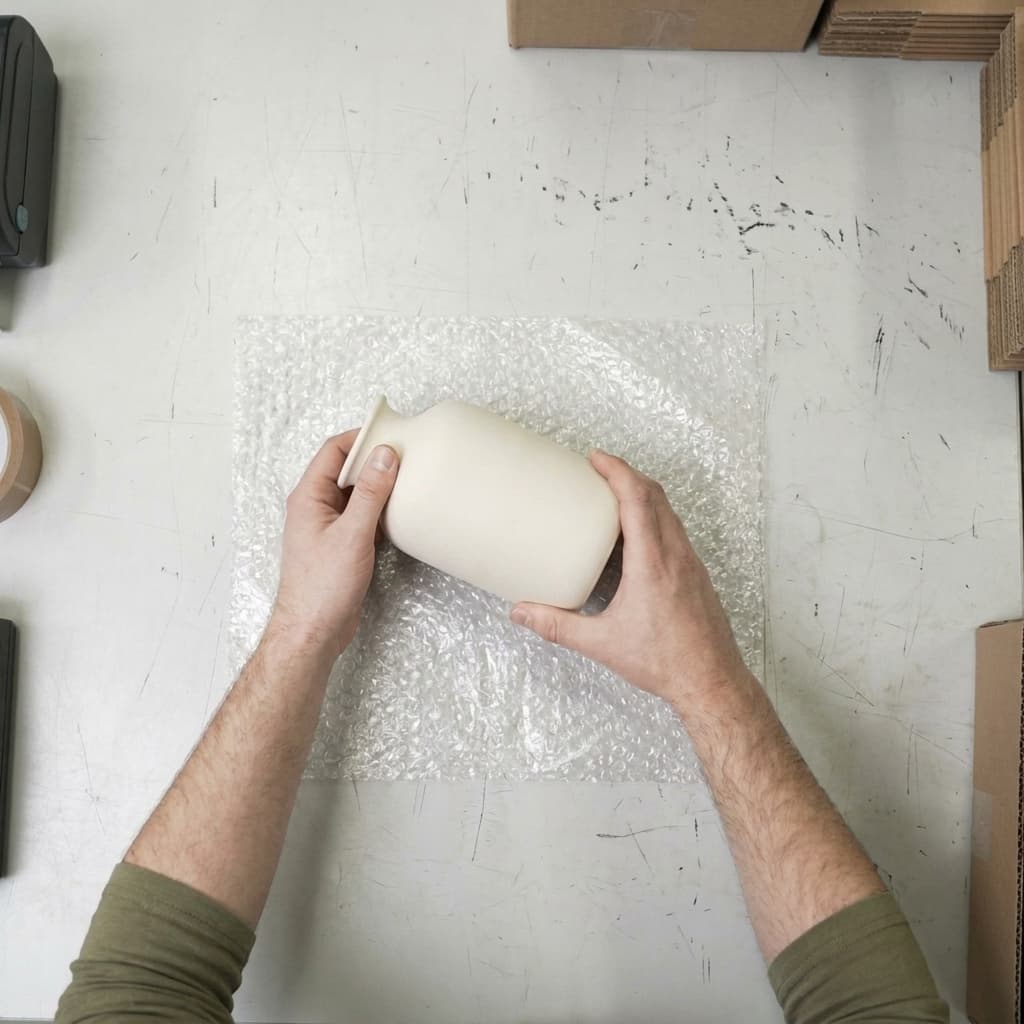
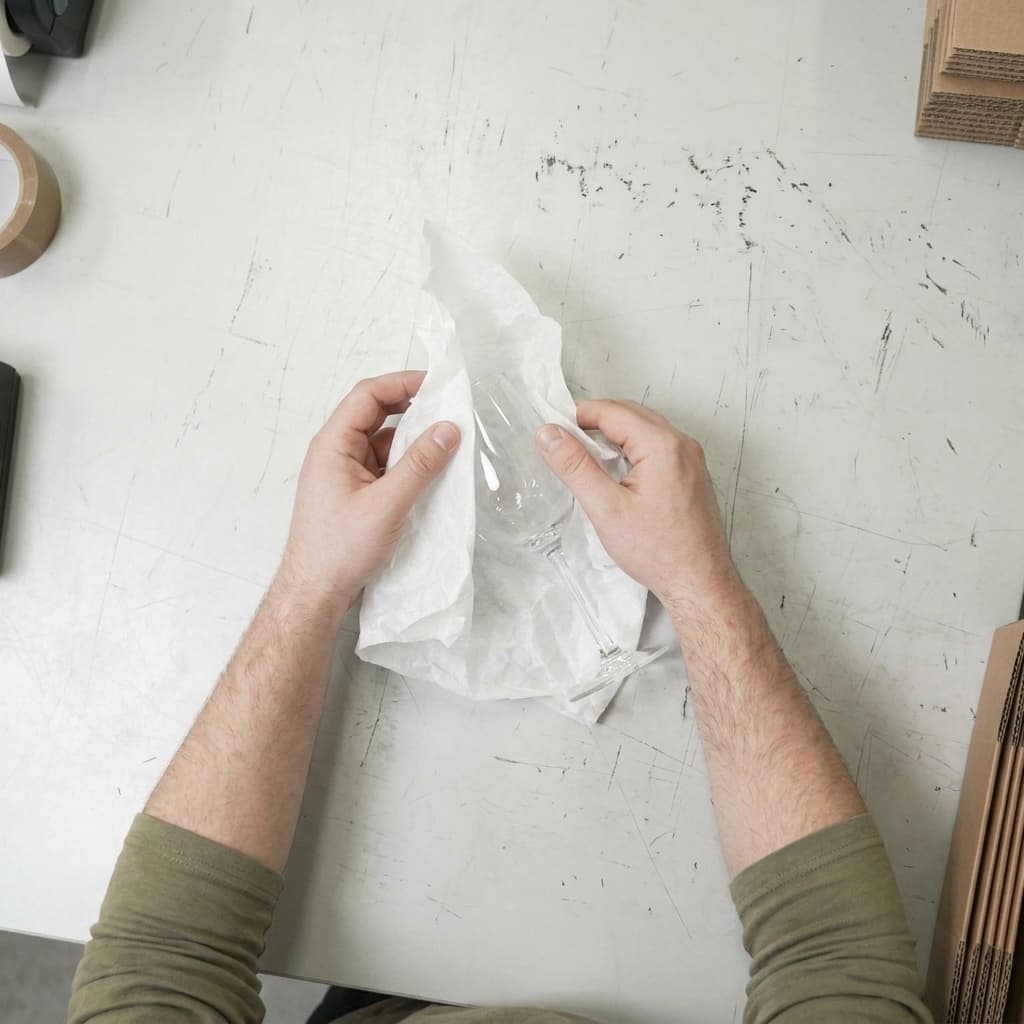
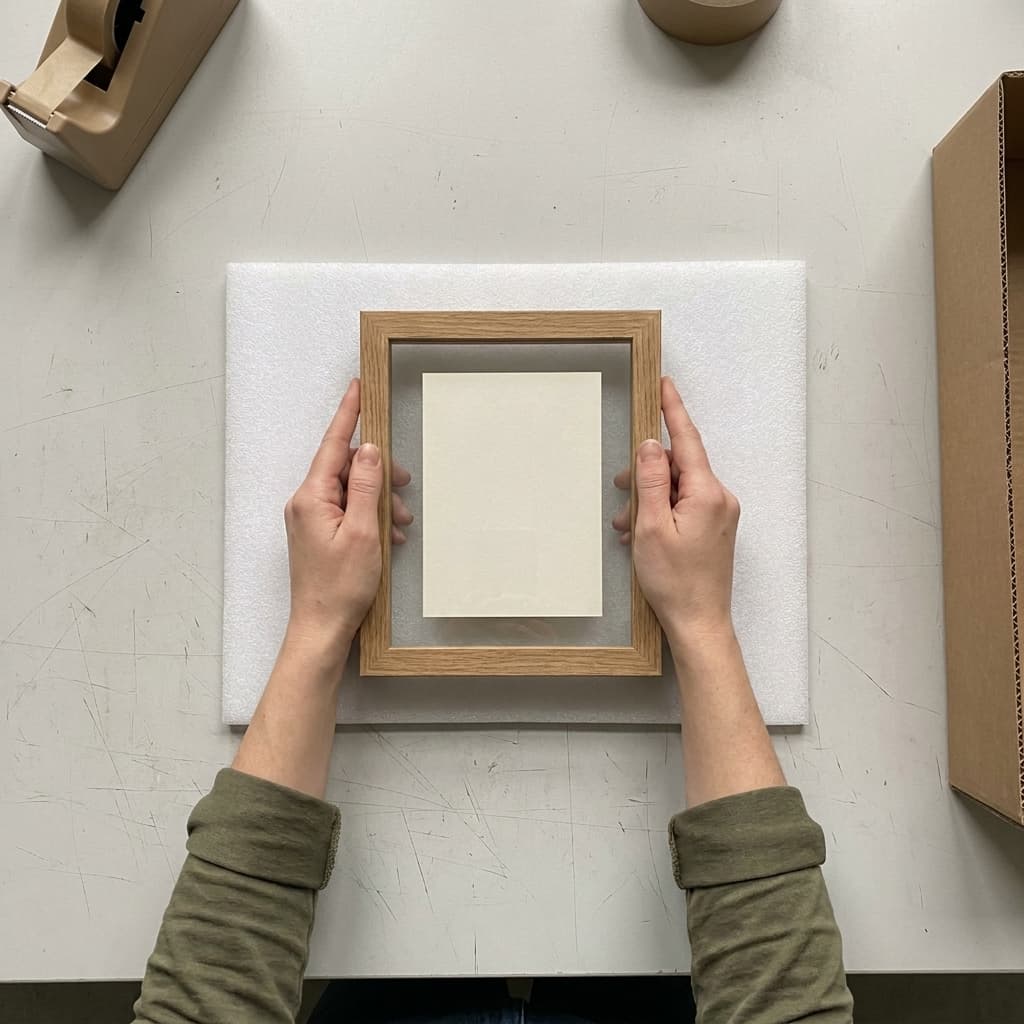
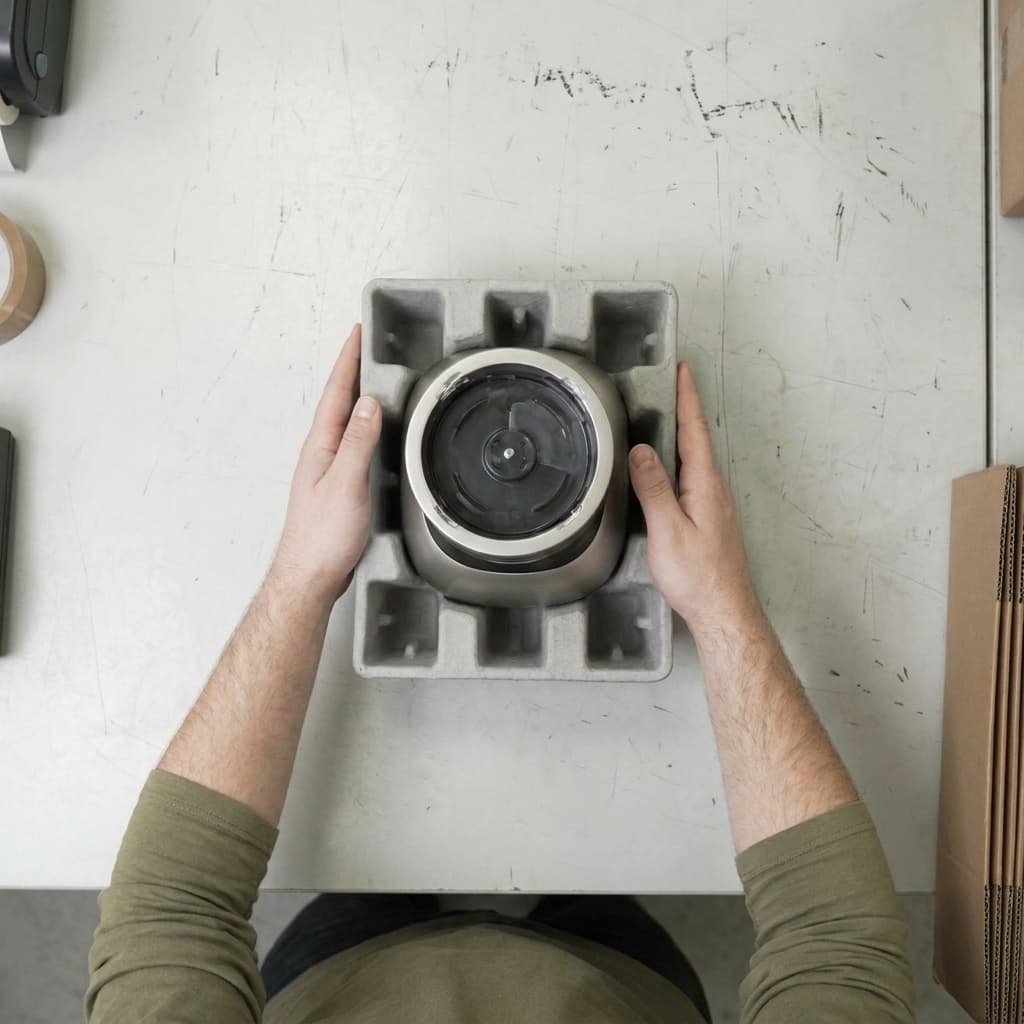
A few seconds; or only fragile and high-value items.
A ship-time record is your strongest basis; the decision rests with the carrier and insurer.
This is the single most common reason a damage claim is declined, and it is the one a recording answers directly. The take shows the void fill, the wrap, how the item was bedded and how the box was closed. A reviewer looking at that is deciding on what they can see rather than on your description of it.
It varies by carrier and by service, and the window in your contract is usually shorter than you expect — often measured in days for visible damage. Two practical rules: read the window in your own contract rather than assuming, and keep recordings longer than that window so the file still exists when the claim is filed.
No. Insurance covers the loss; evidence decides whether the claim is paid. They solve different halves of the same problem, and a recording is most valuable exactly where insurance is most often declined: disputes about whether the item left you intact and adequately packed.
Then the recording still does its job, just in your favour rather than the carrier's: it shows the state the parcel was in when it left. What happens after delivery is outside any packing record, which is why a delivery photo and the carrier's own scan data matter alongside it.
How to Document Freight Damage at Warehouse Receiving
A warehouse-ready guide to documenting freight damage, shortages and concealed damage with clear photos, shipment-linked notes and clear next steps.
Chargeback evidence: which disputes packing video can support, and which need CE 3.0
Which goods-related disputes packing video can support, which fraud cases need other data, and how Visa Compelling Evidence 3.0 applies.
Customer says it arrived damaged: what packing evidence can show
How a packing record documents item condition and protective materials before handoff, and why delivery photos and carrier scans are still needed.
The customer says the box was empty: what packing evidence can show
Record the item, order reference and sealing, then pair that footage with package weight, carrier and delivery records. No single record guarantees an outcome.
How to record packing video that actually counts as evidence
Seven checks that link a packing recording to its order: show the item and label, record continuously, keep the seal visible and retain shipment records.
How order-linked packing video proof works
Set up in 5 minutes and record your first shipment.
Start free, no card required