Packing quality control: See how every order was packed, and fix mistakes at the source
Every order is recorded at the packing station, under its order number, with who packed it and when. When something is wrong or missing, you watch what happened instead of guessing.

- Runs on your phones or any USB webcam
- Every recording bound to its order
- Who, when and where on every file
“A packing error you can watch is a process you can fix.”
How can a warehouse find out why packing errors happen?
By being able to replay the order that went wrong. PallasMark records every order at the packing station against its order number, with the team member, the time, the device and the station's facility, and seals each file with a SHA-256 fingerprint. When a mis-pick or a missing item is reported, a supervisor opens that order's recording, sees the cause, a look-alike SKU, a double scan, the wrong tote, and coaches with the real clip. And when the order was packed correctly, the same recording shows the customer exactly that.
Last reviewed
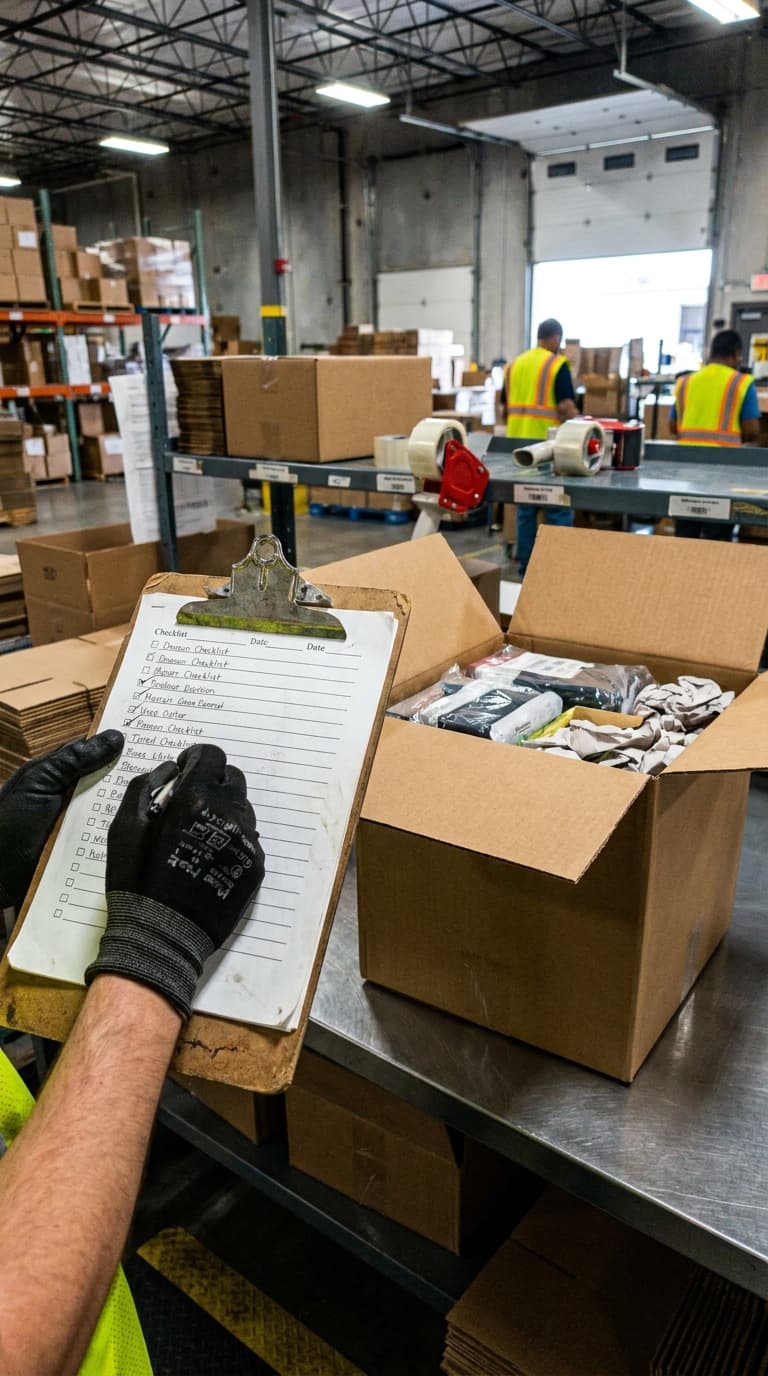
Three things packing QA needs from a recording
A camera on the bench is not a QA process. A recording becomes one when it can answer three questions about any single order.
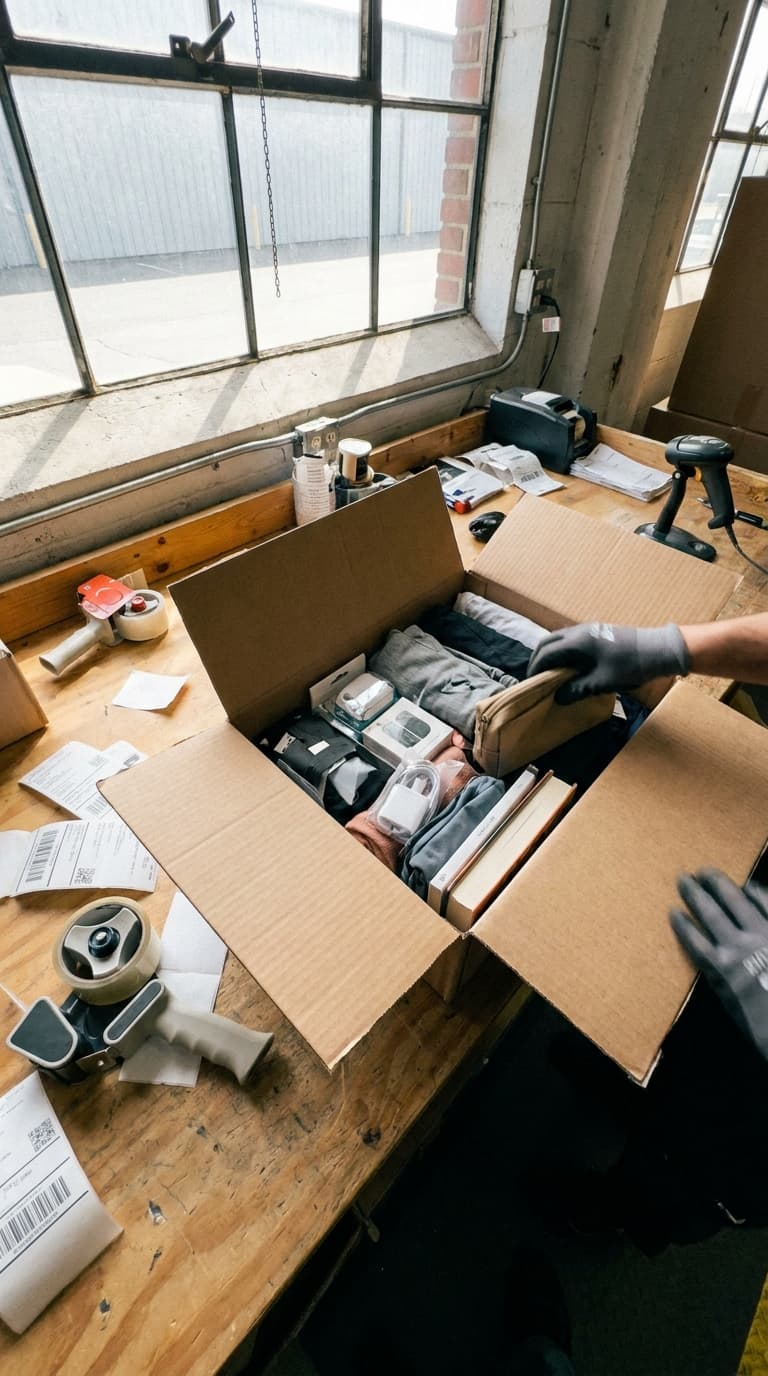
Which order is this, exactly?
Bound to the order
The order barcode is scanned before filming, so every recording belongs to one order and can be found by it.
The recording app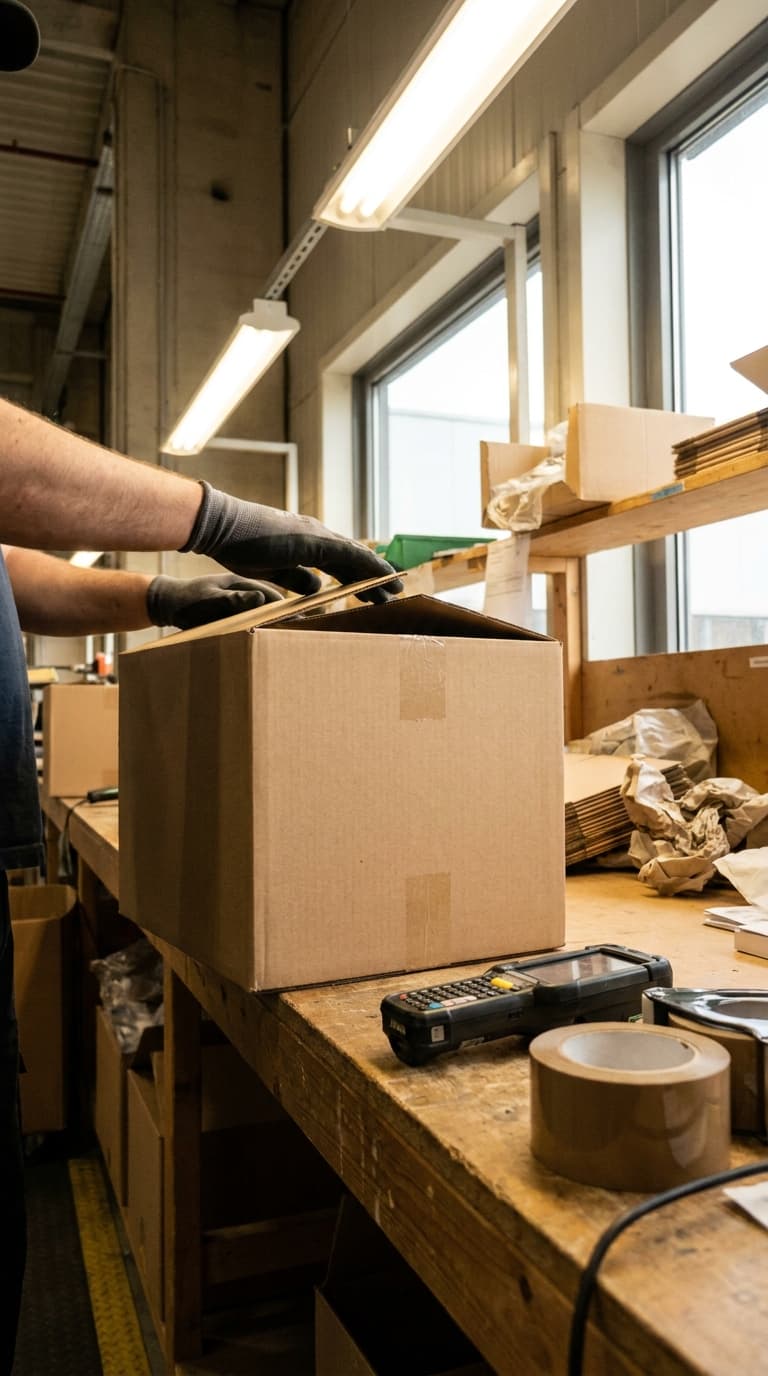
Who packed it, and when?
Capture context
Team member, recording and upload time, device and the station's facility are stored with every file.
Tamper-proof videoCan you show it to a customer?
Sealed and shareable
Each file is SHA-256 fingerprinted and can be shared as a link, so the clip that coaches the team also answers the claim.
Evidence file

From the order list to the root cause
Four steps that fit the station your team already works at. The recording happens as part of packing, not as an extra job after it.
Orders arrive at the station on their own
Store integrationsOrders from Shopify and WooCommerce, or brought in from Amazon, ShipStation and ShipHero, appear in the app with the ones still waiting for a recording marked. Nobody types an order number.
Every station records the same way
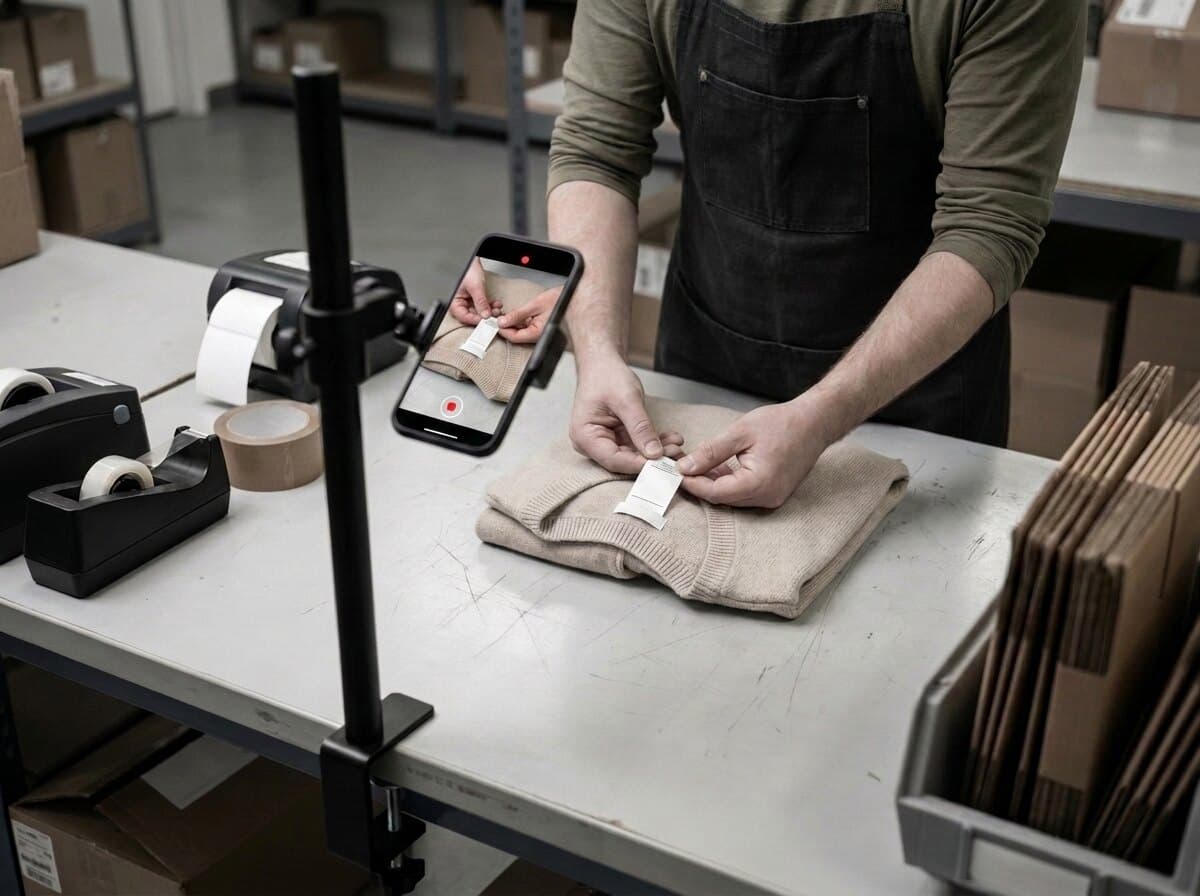
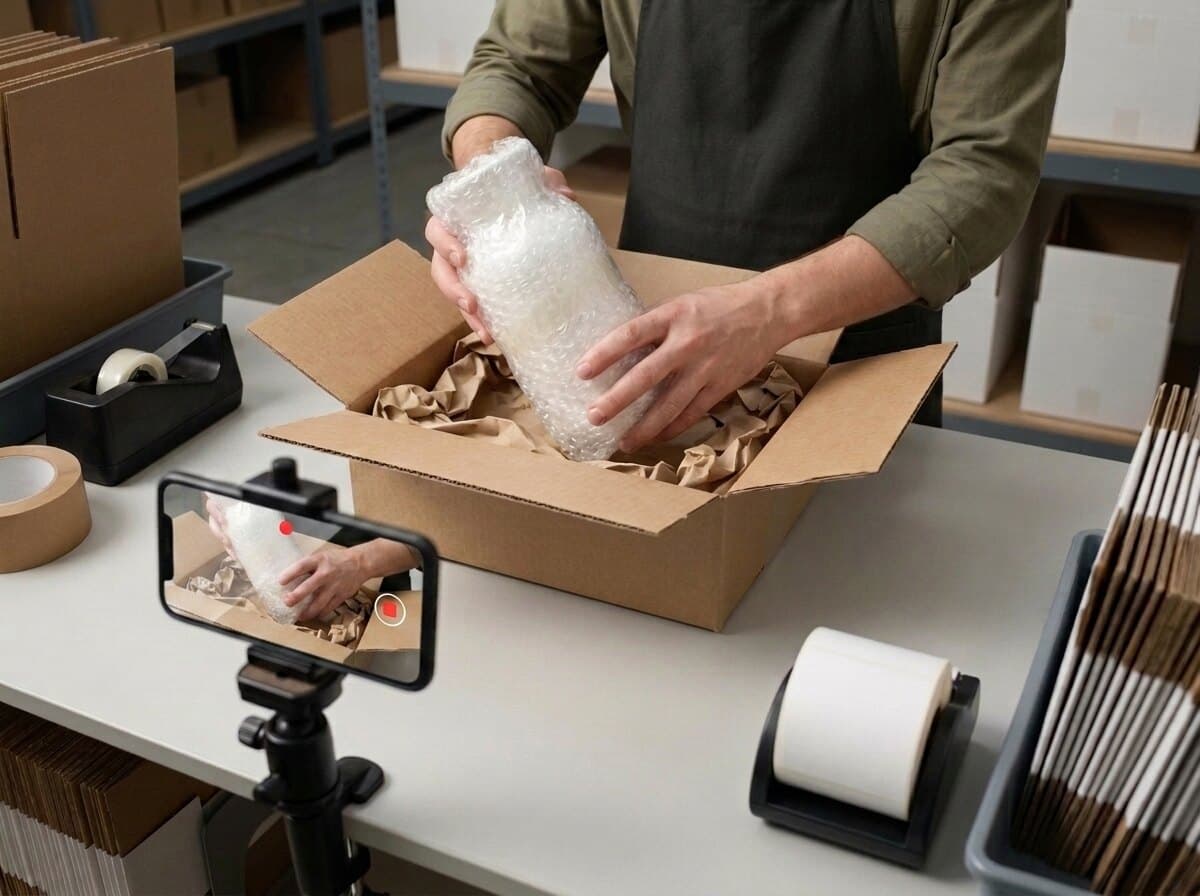
Scan the order and film the items going into the box, on a phone on a stand or a webcam above the table. Every packer follows the same take, so every recording can be compared with every other.
- Nothing to wire or install
- Uploads in the background, queues when offline
- The same flow on iOS, Android and in the browser
Every recording says who packed it, and when
Tamper-proof videoThe team member, the recording and upload time, the device and the facility check are stored with the file on the order. Nobody has to remember who was on which bench.
Replay any order, find the cause, coach with the clip
Search the recordings by order, filter by date, and open the packing take for the order that went wrong. The clip shows the cause; the same clip coaches the team and answers the customer.
- Recordings grouped per order, with who uploaded them
- Search and date range across every station
- Share one record as a link when a customer asks
The packing standard every station follows
A take is only useful for QA if every packer records the same things in the same order. This is that standard, filmed at one bench.
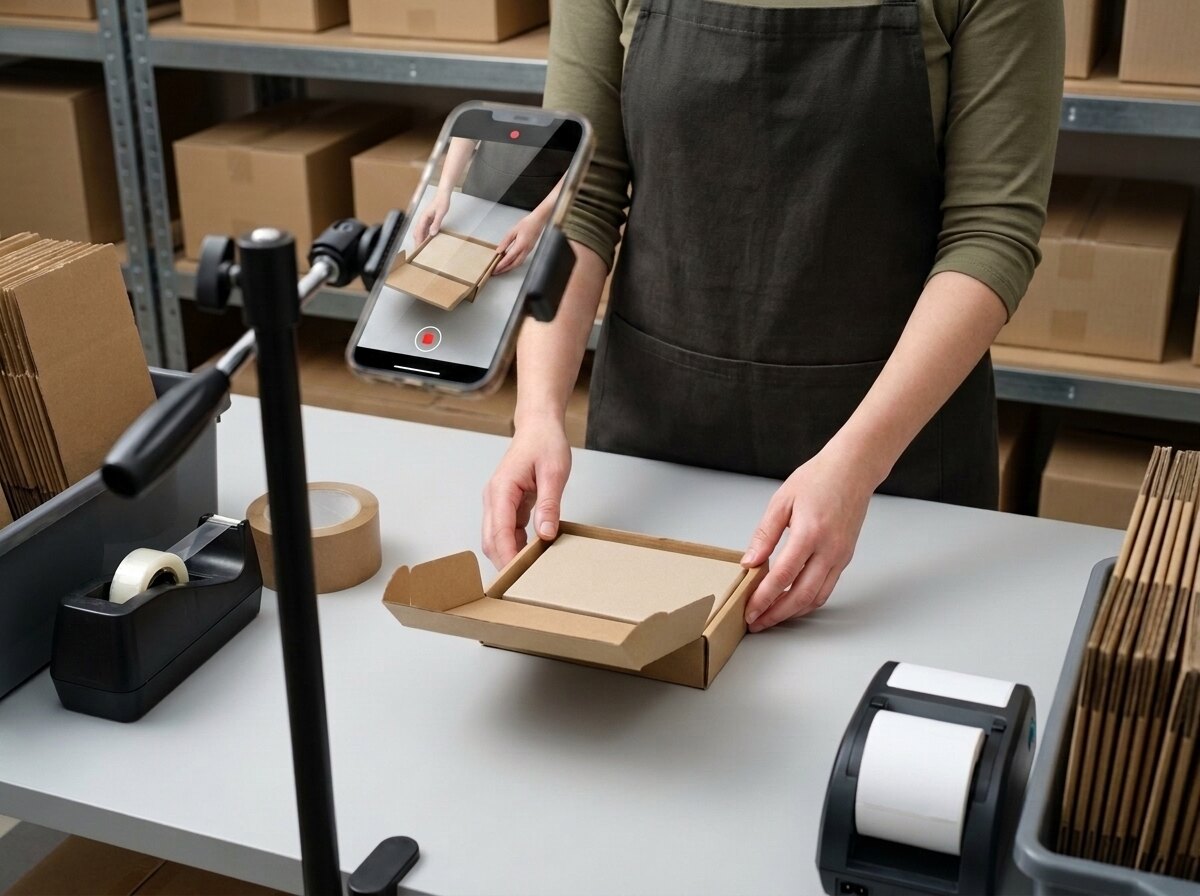
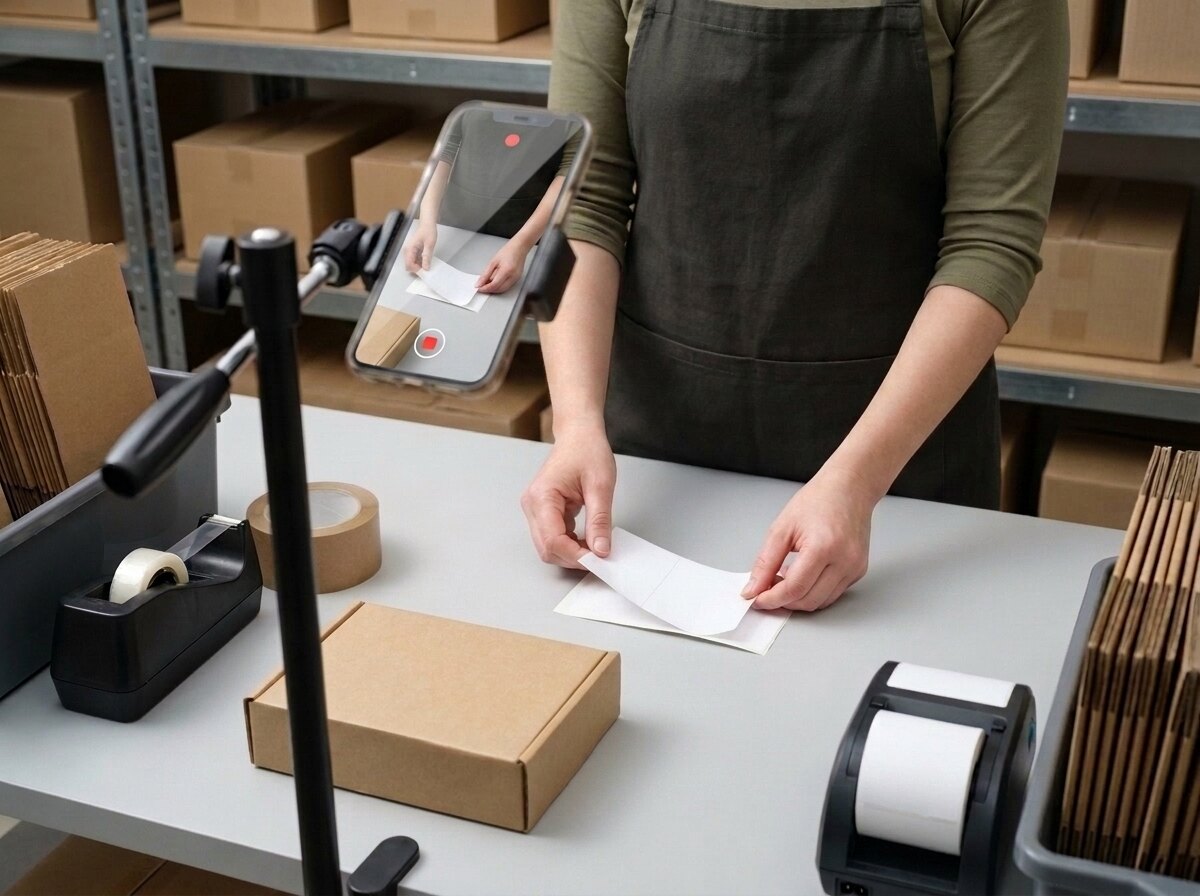
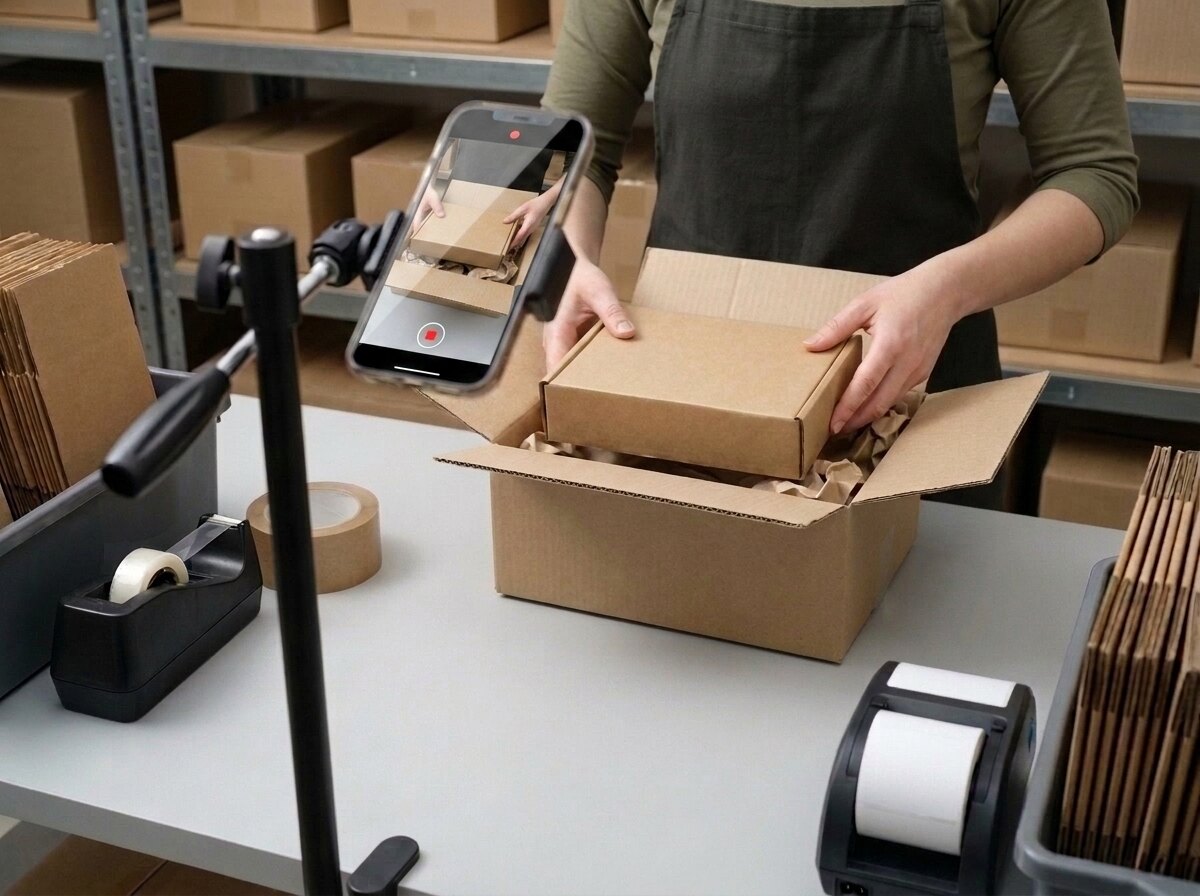
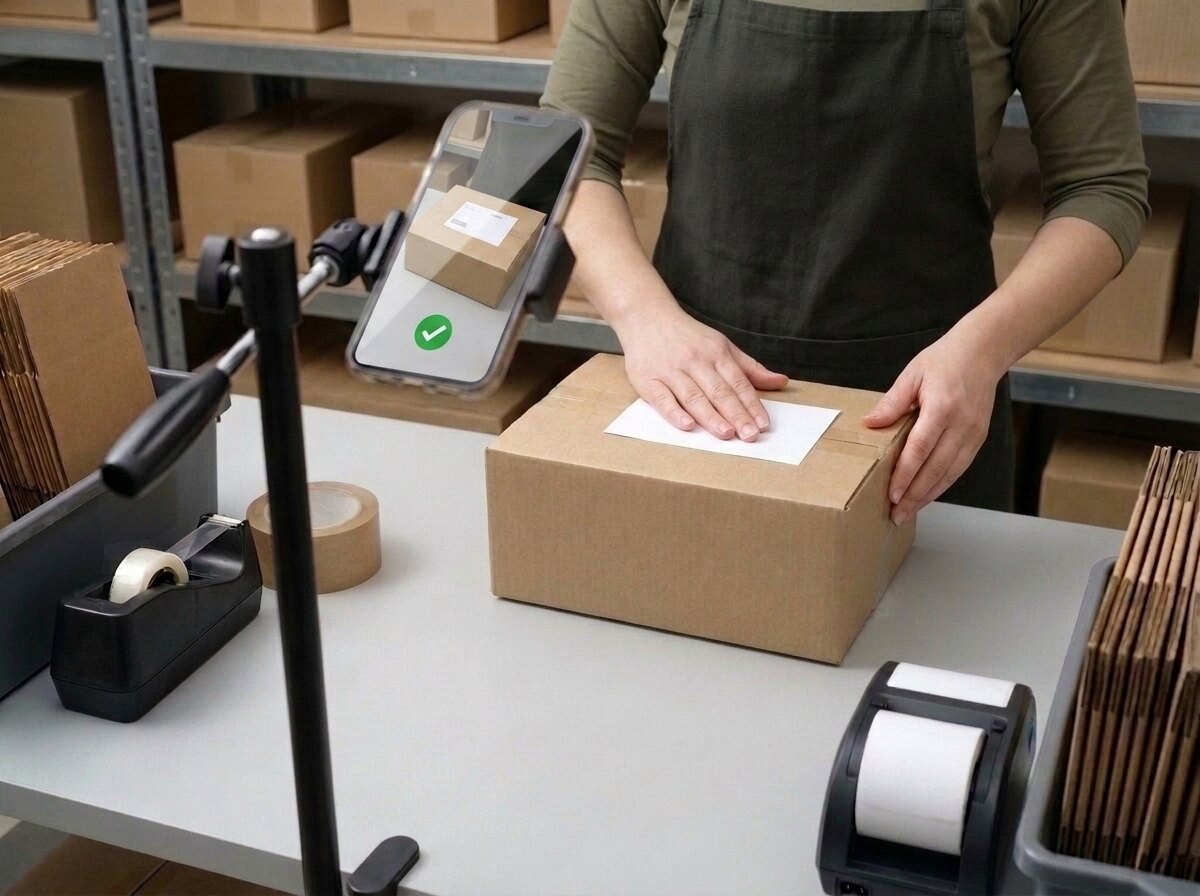 0:04
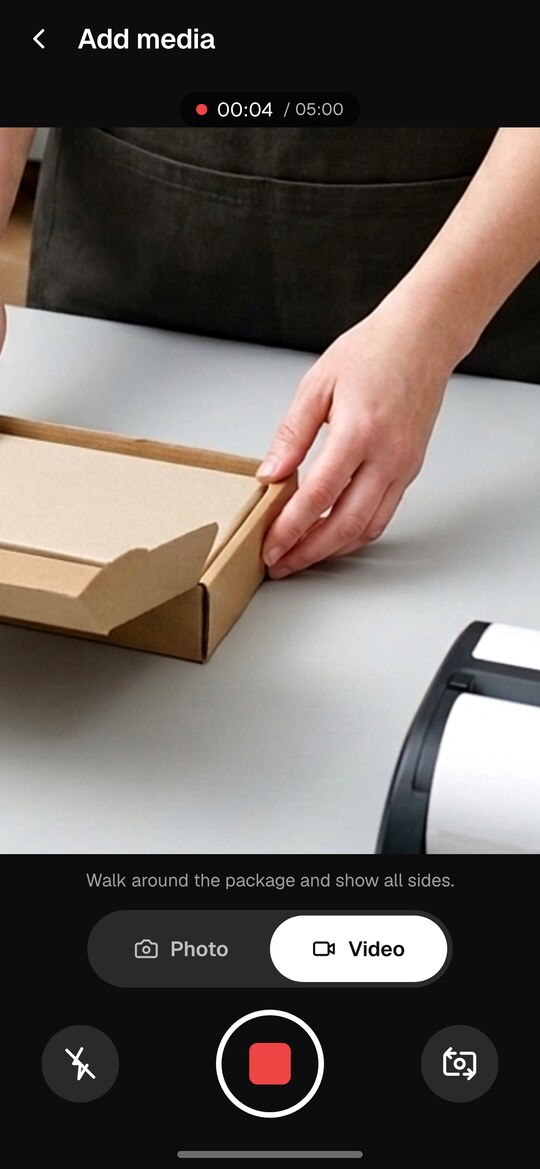
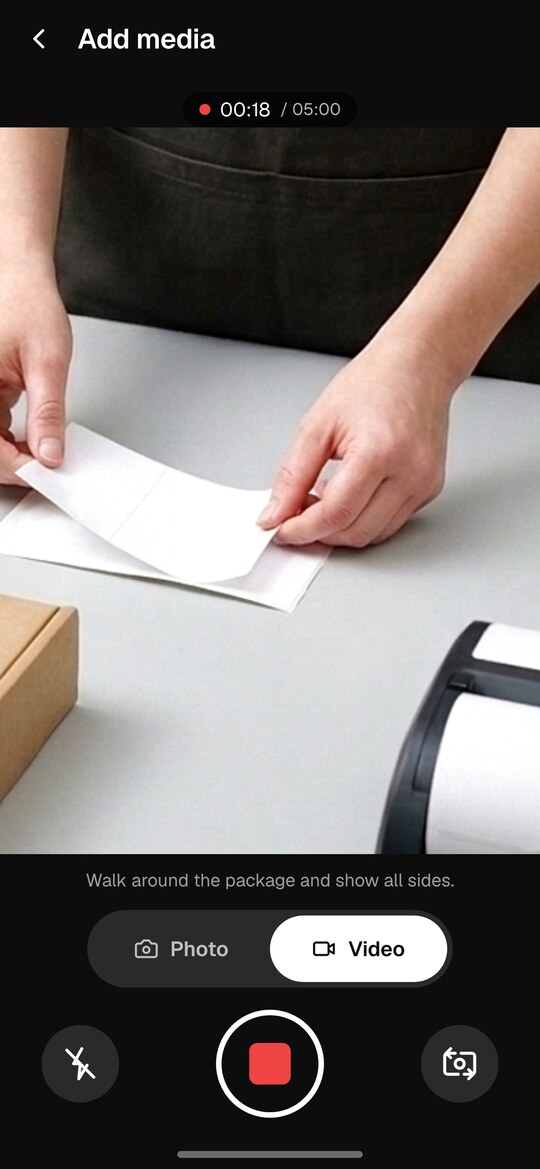
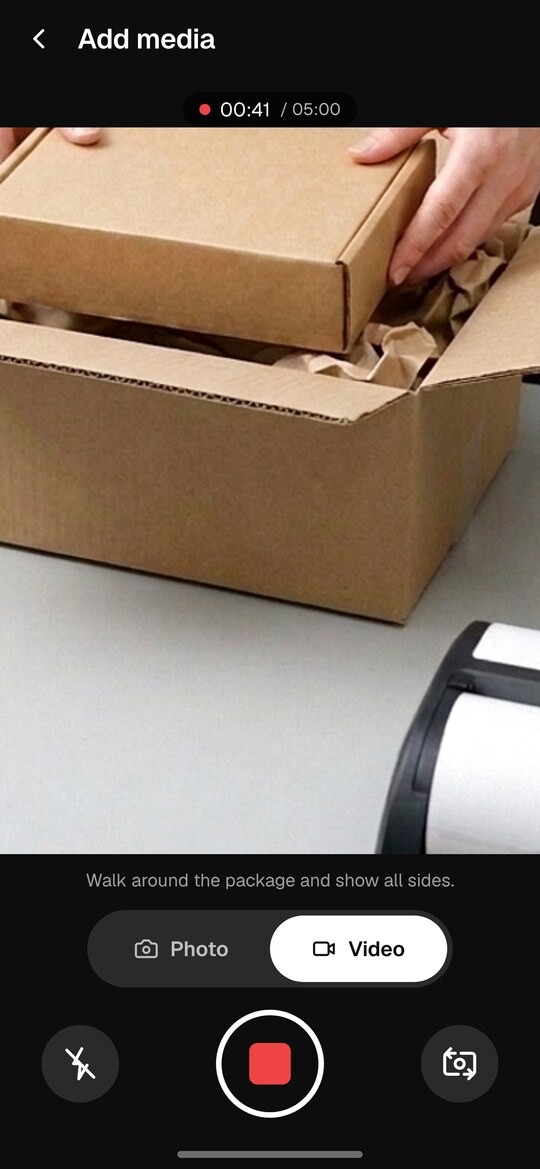
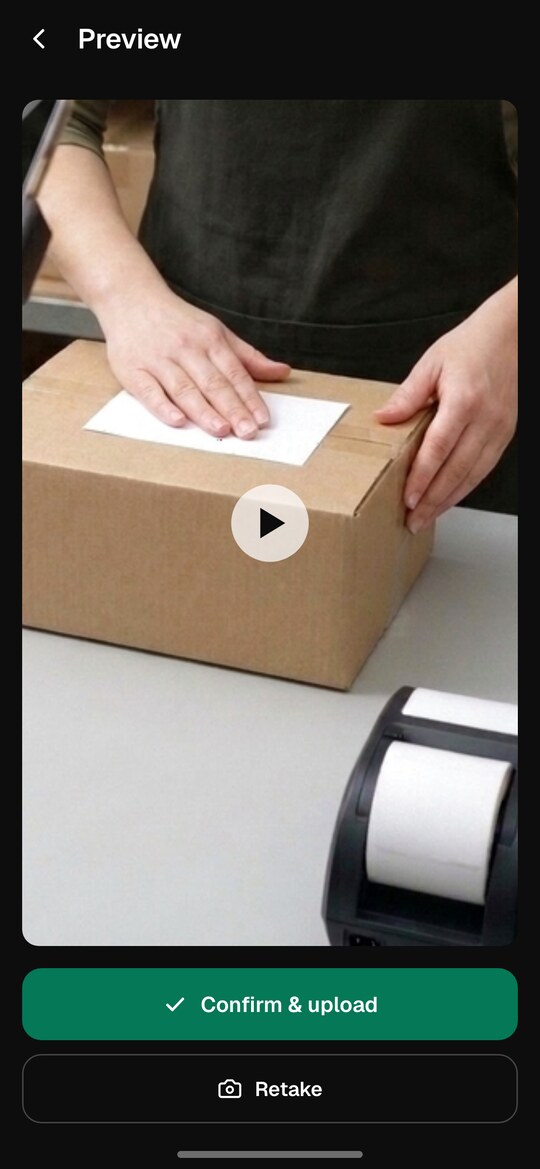
Each item to the camera before it goes in: the right SKU, the right variant, the right count.
“My order was missing an item”, with and without a record
A customer reports a missing serum from a three-item skincare kit. Somebody at the packing station knows what happened. Whether you find out depends on the record.
Without a record
Cause unknown- Support asks the warehouse. Nobody remembers that order among hundreds.
- You reship the item and refund the shipping to keep the customer.
- The same look-alike SKU is mis-picked again next week.
- The cost repeats, because the cause was never seen.
With PallasMark
Cause found and fixed- The supervisor opens the order and plays its packing recording.
- Two serums from neighbouring bins look alike; the wrong one went in.
- The clip is used to coach the packer and the bins are separated.
- If the customer was wrong, the same clip shows the item going in.
What a packing station record contains
Stored with every order automatically. Supervisors find it by order; customers can be sent it as a link.
- Packing video and photos
- One take per order, recorded in the PallasMark app against the scanned order number.
- Team member and time
- Who recorded it, the recording time and the upload time, on every file.
- Device and facility
- Device model and operating system, and a facility check of inside, outside or not checked.
- SHA-256 fingerprint
- Of every stored file, plus the original upload; re-checkable on a public page.
- Order and items
- The order's line items from your store, next to the recording that shows them going in.
- Sharing
- A verification link for any file, or the order's evidence file as a PDF or expiring link.
The numbers and rules packing QA runs on
Two benchmarks to measure against, and three rules for recording people at work, from the bodies that set them.
Best-in-class picking accuracy: 99.68%
WERC 2025 DC Measures, via Yale's metrics summaryIn the 2025 WERC DC Measures report, best-in-class distribution centres reach order-picking accuracy of at least 99.68%, measured on errors that can still be caught before shipment.
Perfect orders compound
APQC on perfect order performance, IndustryWeekAPQC's perfect order index multiplies four rates: complete, on time, damage-free and correctly documented. Even 99% on each gives 96% perfect orders, so small packing errors add up.
Tell your team, choose the basis
ICO, monitoring workersThe UK ICO says employers must tell workers about monitoring, and that consent is generally not an appropriate lawful basis at work; legitimate interests with a documented assessment usually is.
Target the bench, switch audio off
ICO, monitoring methodsICO guidance says video monitoring should target areas of particular risk, and audio recording is more intrusive and should be off by default. A camera on the box and hands fits both.
State the purposes up front
EDPB Guidelines 3/2019 on video devicesThe EDPB asks for video purposes to be documented before use. Collecting evidence for civil claims is named as a valid purpose; using footage to monitor employee performance must be declared, not added later.
Packing QA, defined
- Mis-pick
- The wrong item, variant or quantity taken from a location for an order. Mis-pick rate = mis-picks ÷ total picks × 100.
- Mis-pack
- A correct pick that is packed wrongly: an item left out, an insert missing, or a product placed in another order's box.
- Order picking accuracy
- Orders picked correctly ÷ total orders picked × 100. WERC measures it on errors that can still be caught before shipment.
- Perfect order rate
- The share of orders delivered complete, on time, undamaged and with correct documents. APQC multiplies the four rates.
- Root cause
- Why an error happened, not just that it did: look-alike SKUs stored together, skipped scans, rushing at peak, a confusing station layout.
- Packing station recording
- A video of each order as it is packed, bound to the order number, so any order can be replayed later.
The details packing mistakes hide in
The errors that reach customers are small and specific. Each one has a moment in the take where it is visible.
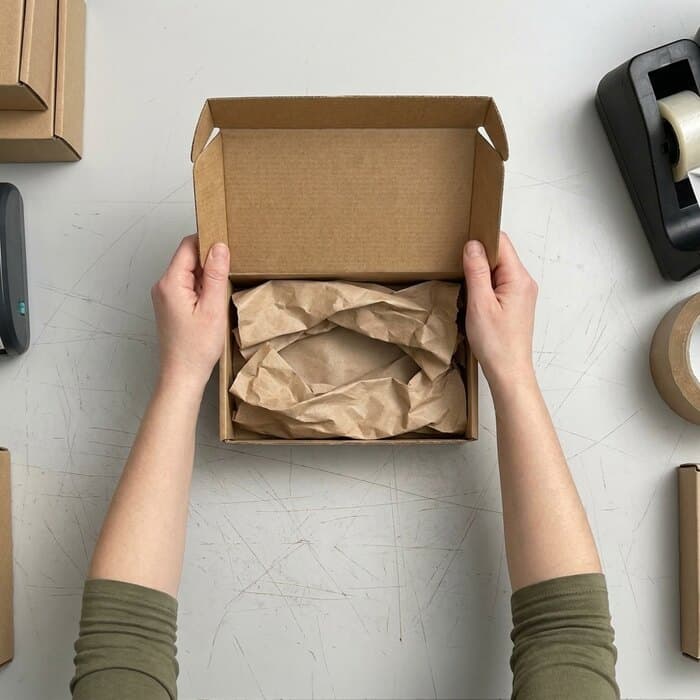
Cartons
The right box for the order, with fill that keeps items from moving.

Sizes
Box size and stacking, so a two-carton order is not shipped as one.

Picking slips
The slip on camera next to the items, so the count can be checked.
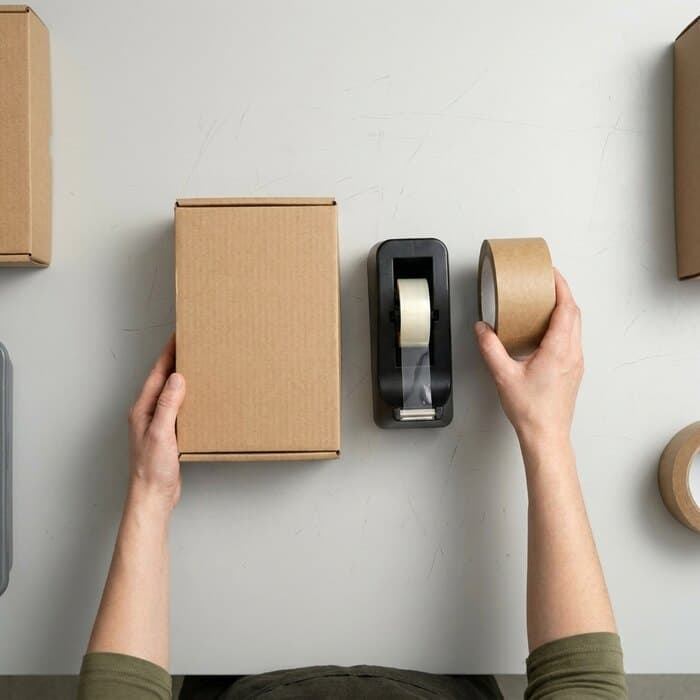
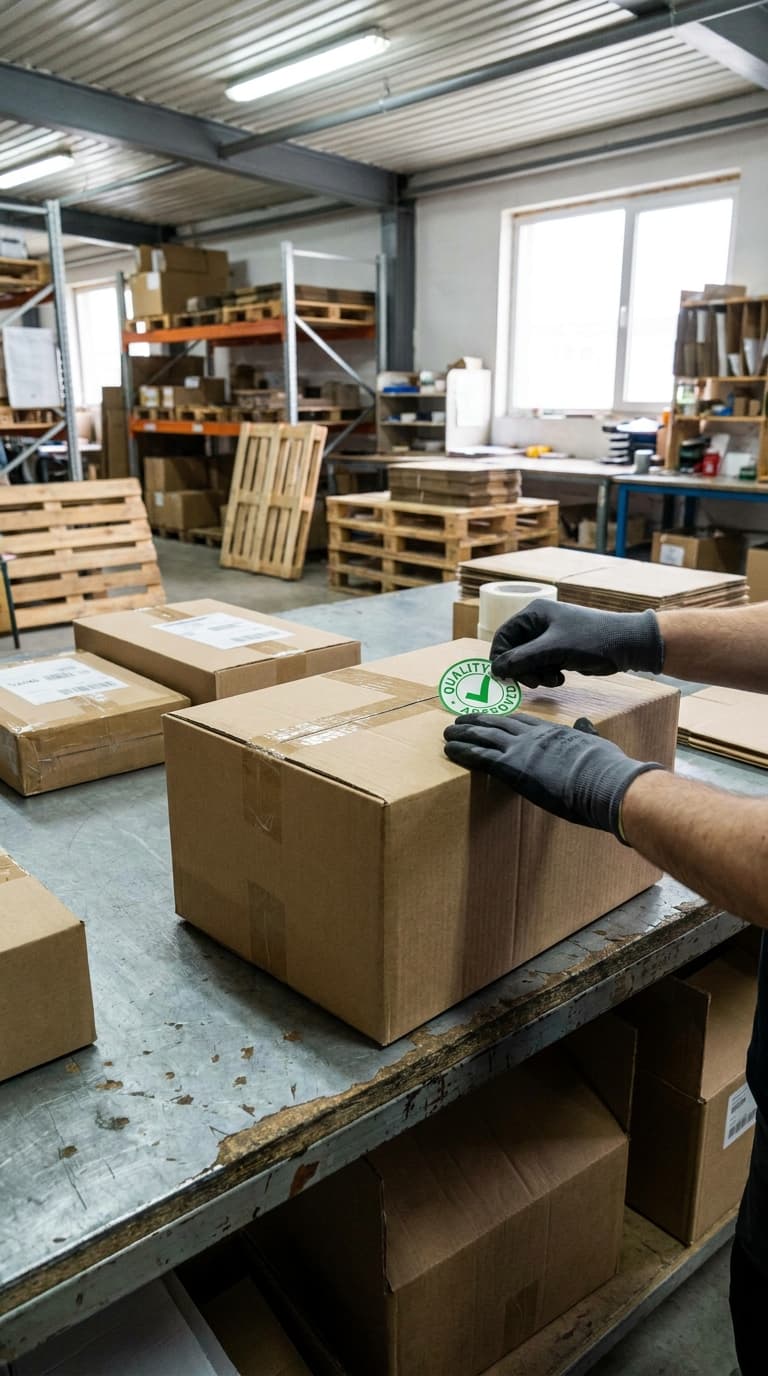
Sealing
Tape and label on camera at the end of the take, closing the record.


Record one yourself, right now
Try the take on your own phone. The clip goes through the real pipeline and ends on a real verification page.
- Scan the code that appears and the recording screen opens on your phone.
- Film anything you have on hand for a few seconds.
- You get the sealed record and its public verification link.
Takes about a minute. Nothing to install and no card needed.


Packing quality control, answered
What is a good order picking accuracy rate?
The 2025 WERC DC Measures report puts best-in-class order-picking accuracy at 99.68% or higher, measured on errors that can still be caught before shipment. Errors that reach the customer are a separate measurement, which is why many warehouses also track the perfect order rate: complete, on time, undamaged and correctly documented.
How do you calculate mis-pick rate?
Mis-pick rate is the number of mis-picks divided by the total number of picks, multiplied by 100. Order picking accuracy is the number of orders picked correctly divided by the total orders picked, multiplied by 100. A packing recording helps with both by showing whether an error came from the pick or from the pack.
What are the most common packing errors?
A wrong SKU or variant, a missing item or insert, a wrong quantity (scanned twice, packed once), an item placed in another order's box, and packaging that does not protect the item. The usual causes are look-alike products stored together, skipped scans, rushing at peak and a confusing station layout, and each of them is visible in a replay.
Do we need a security camera at the packing station?
No. A phone on a stand, or any USB webcam at the browser packing station, records the same view of the bench, reads the order barcode and binds the recording to the order, which a security camera can usually only do with extra software. There is nothing to wire or install.
Is it legal to record staff at packing stations in the UK or EU?
Generally yes, with the basics in place. The UK ICO says workers must be told about monitoring and that consent is usually not the right lawful basis; legitimate interests with a documented assessment usually is. ICO guidance also says audio should be off by default. The EDPB asks for the purposes to be documented before recording starts. This is guidance, not legal advice; check your local rules and any works agreement.
How do you use packing video to coach without it feeling like surveillance?
Frame the camera on the box and hands rather than faces, keep audio off, tell the team what the recordings are for, including coaching, before you start, and use clips to fix processes as much as people. The EDPB guidance is explicit that performance monitoring has to be declared as a purpose up front.
How do supervisors find the recording for a reported error?
By the order. Recordings are grouped per order with who uploaded them, and can be searched and filtered by date across every station. Open the order, play its take, and share it as a link if the customer needs to see it.
Does recording slow the packers down?
Not much, because the recording is the packing. The packer scans the order and packs as usual in front of the phone; the take ends when the box is sealed, and the upload runs in the background.
Find out why the next mistake happened
Connect your store, put a phone at one station and replay the first order that comes back wrong.
Other claims the same recording answers
One packing video per order covers every one of these. What changes is which part of it you show, and to whom.
 ReturnsCompare your packing video with the buyer's return video before you refund.
 Carrier and insuranceShow the carrier and insurer how the item left you: intact and properly packed.
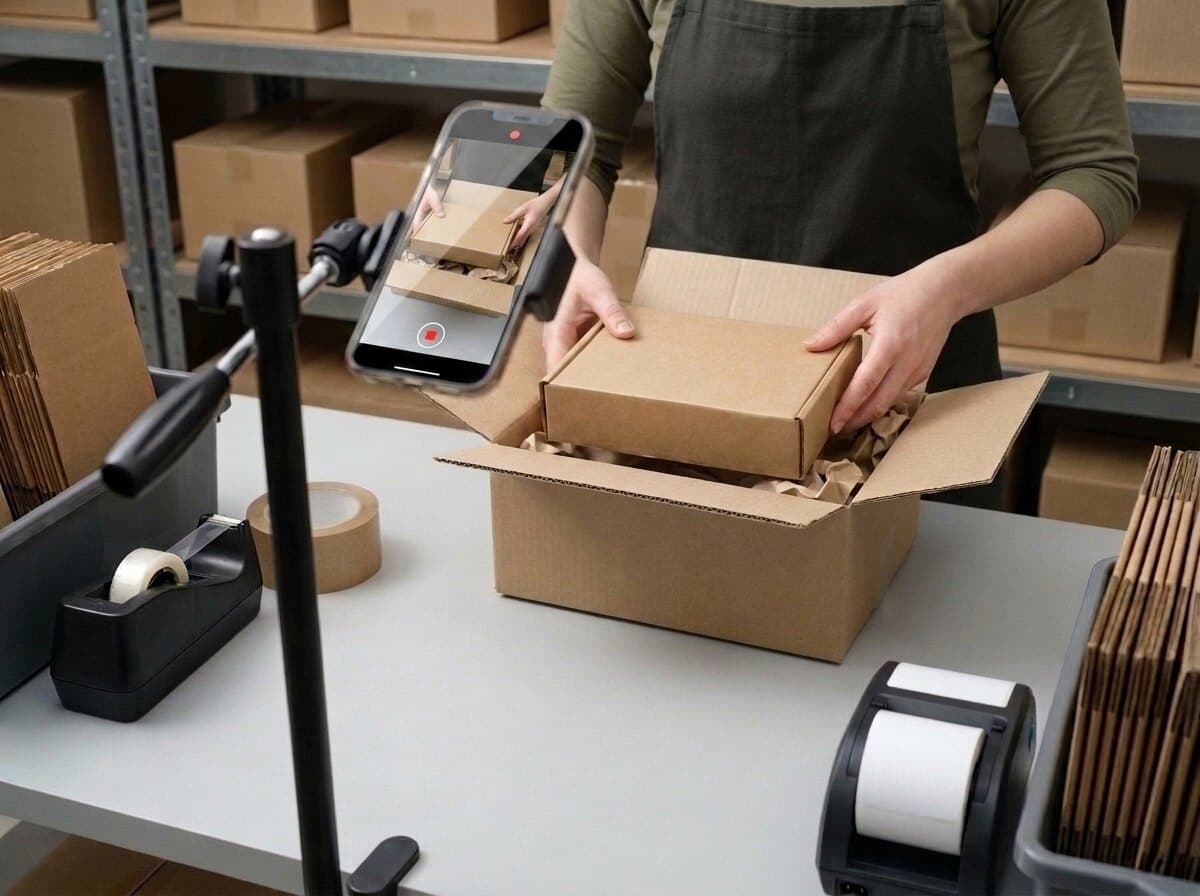 Buyer trustShow buyers who do not know you their own order being packed, before it ships.
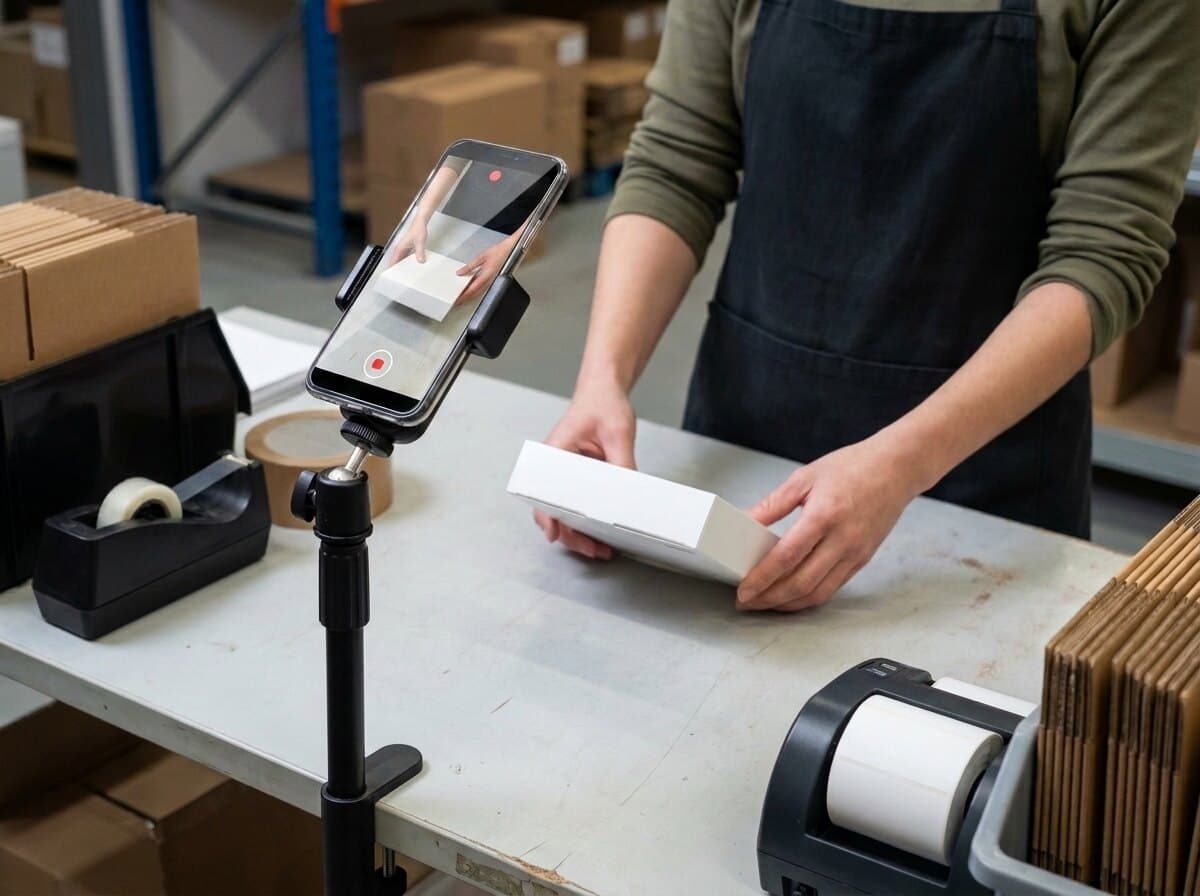 Authenticity and warrantyFilm the serial number, seals and condition of branded items before they ship.
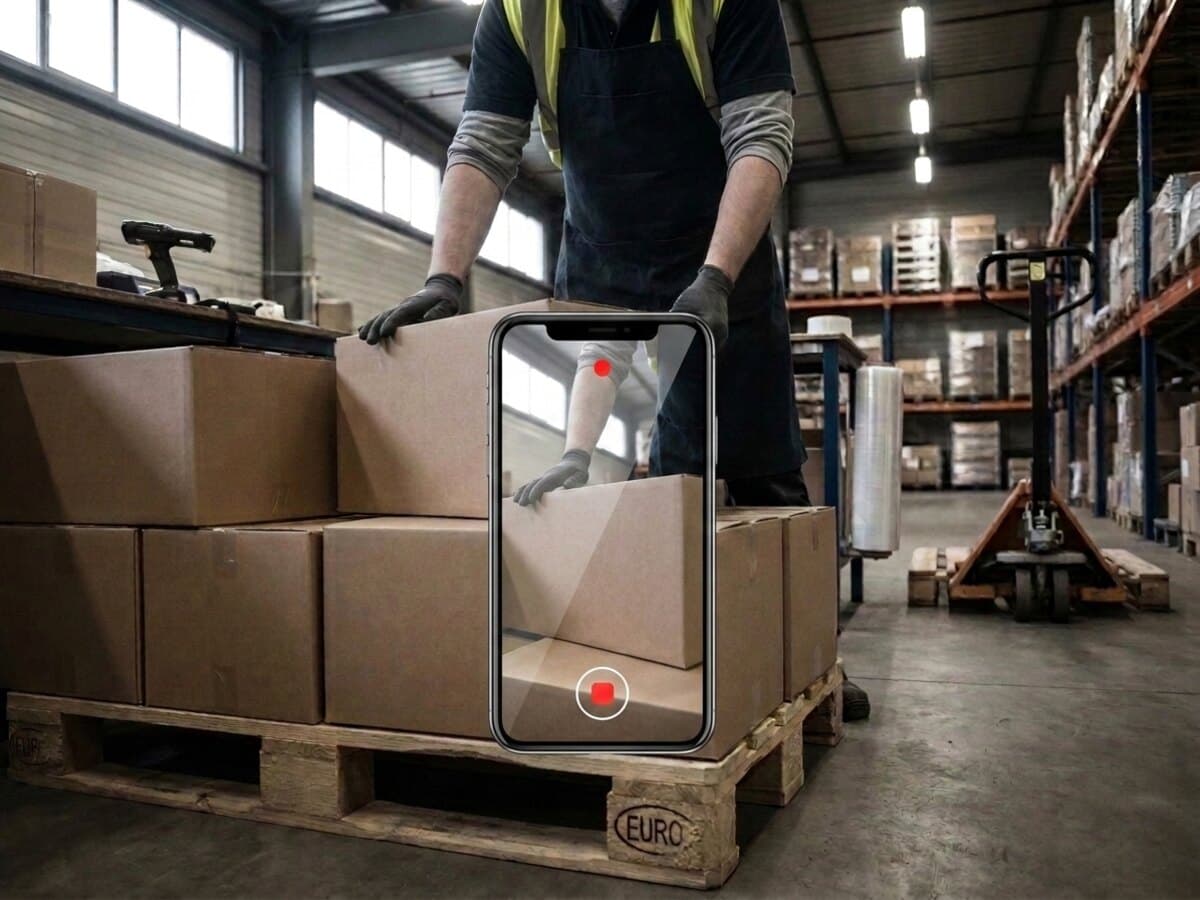 B2B shipmentsFilm the count and labels of every carton and pallet against shortage claims.
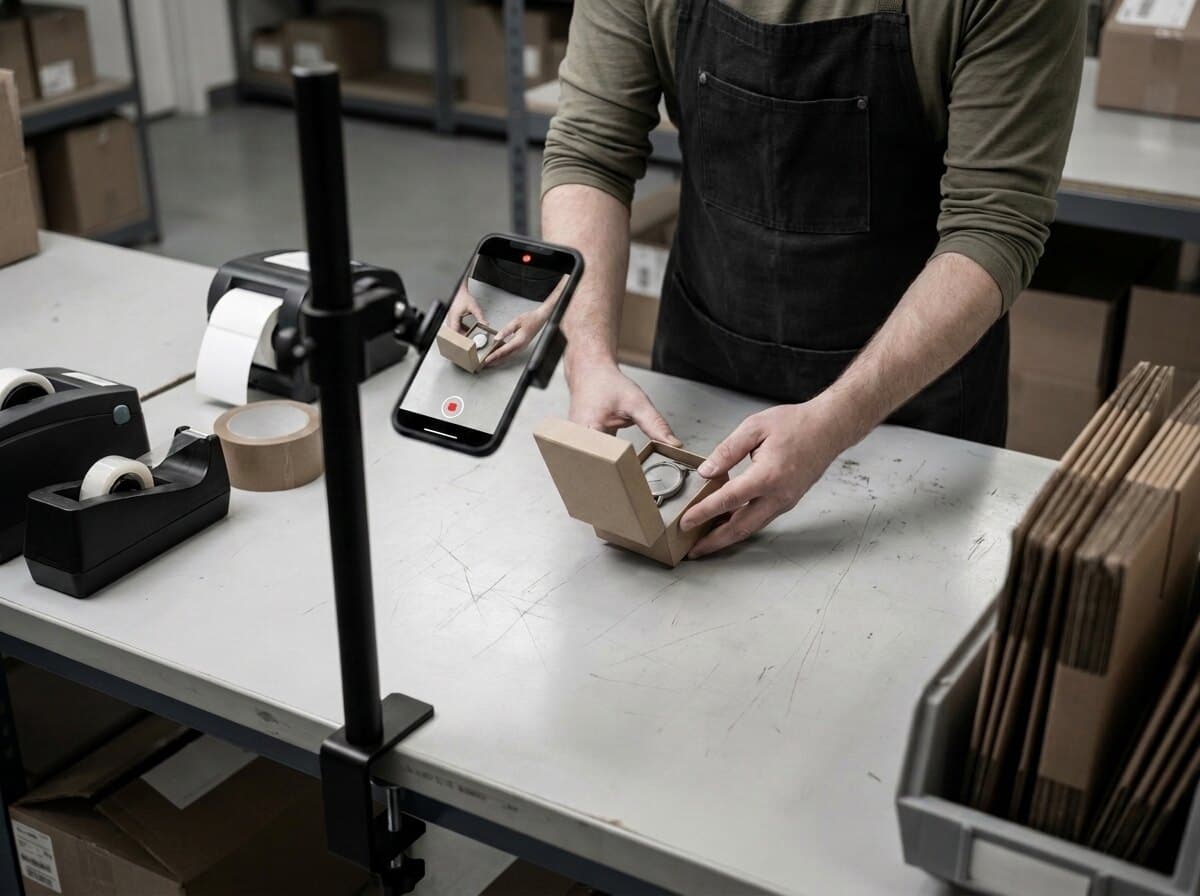 Jewelry and diamondsFilm the piece, its certificate and the parcel in one take for high-value orders.
What makes it work
- Tamper-proof videoEvery recording gets a SHA-256 fingerprint and a public link anyone can use to check it.
- Evidence rulesBuyer review above an order value, return evidence for the reasons you choose, sector templates.
- Store integrationsOrders arrive on their own, and the proof link goes back into the store order you already use.
- Warehouse & pallet proofScan the pallet label, record its condition and share one link — AI label reading on Scale.
- API & webhooksScoped keys and HMAC-signed webhooks so your WMS or ERP can read and write proof safely.
Guides
- Packing video proof: how a recording becomes evidence
- 3PL Evidence Playbook: Proof of Fulfillment From Dock to Dock
- What is proof of packing? Definition, three tests and how to create it
- Packing video software compared: what each tool actually records, and what it proves
- Blimp alternative: warehouse photo proof that clients can verify
- Pick and pack quality control checklist with per-order proof
- Packing station camera setup: webcam, security camera or phone?
- 3PL Mispick Dispute Evidence: Settle 'Items Missing' Claims per Order
- AI label reading: capture serial numbers, lots and seals from a photo