How a warehouse records packing proof: pallets, phones and label reading

On this page
There is a version of this article that would tell you to buy a camera, mount it above a bench, and feel prepared. It is a comfortable answer and it does not survive a busy week.
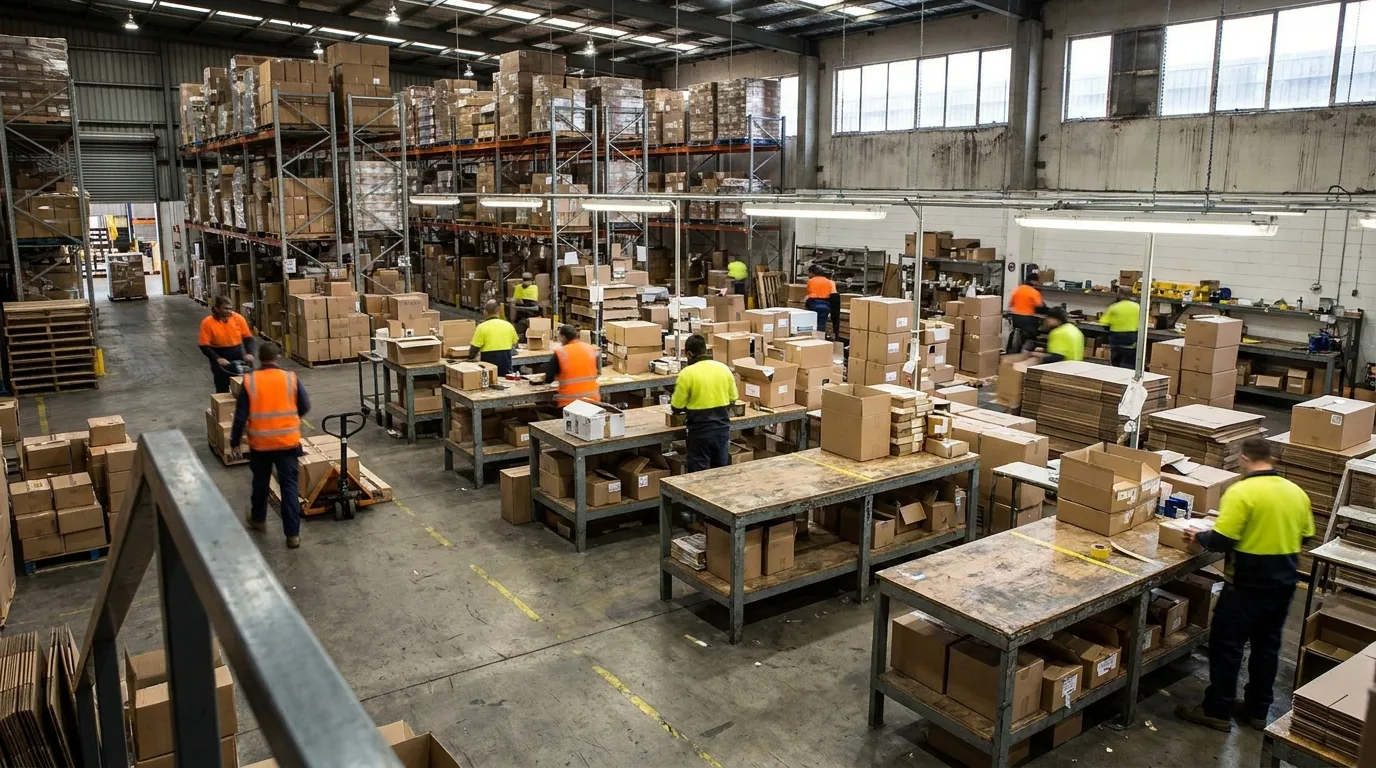
The reason is not the camera. It is that a warehouse is not one bench. It is four benches on a normal day and seven in November, plus an overflow area that exists for three weeks a year, plus the corner where oversized items get handled because they do not fit anywhere else. A process anchored to a fixed position covers the bench it was bought for and silently misses everything else — and the pallets that end up in dispute are disproportionately the awkward ones that were packed somewhere unusual.
So the question worth answering is not "how do I record packing". It is: what does a recording process look like that a tired person will actually complete, on the fourth pallet of the afternoon, without being supervised?
What actually breaks, and it is not the filming
Filming is the easy part. Everyone gets that right. Three other things break, and they break quietly.
The reference gets typed wrong. A warehouse job carries a pallet id, often a client reference, sometimes a batch or lot number, and these are long strings designed for scanners rather than for humans. Ask someone to key RBD00061AA;260128N64;1000;CN04951900 into a phone at the end of a shift and a proportion of those entries will be wrong. A recording attached to the wrong job is worse than no recording, because you will only find out at the moment you needed it.
The record never gets finalised. Any process with a "finish" step at the end will have jobs sitting half-finished, because the moment a packer is free to press finish is exactly the moment someone calls them to do something else.
The process only works for some of the shift. If the interface is in one language and the floor speaks four, the recording rate will quietly track who can read it. Nobody will report this. It shows up months later as a gap in exactly the records you needed.
Each of these is a design problem rather than a discipline problem. Telling people to be more careful does not fix any of them.
The shape of a process that holds

Five steps, of which the operator is only present for three.
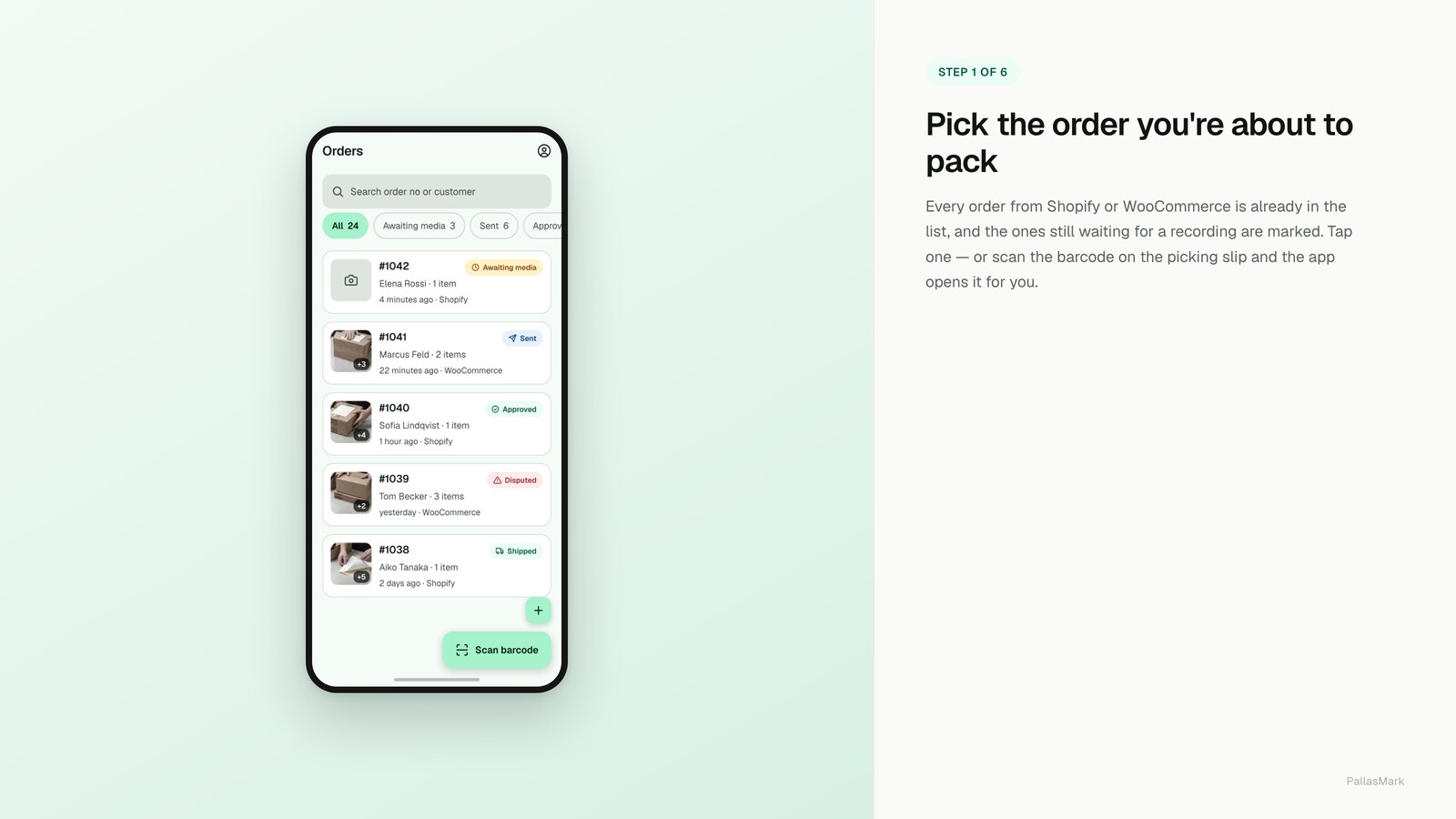
1. The job opens on the device already in their hand
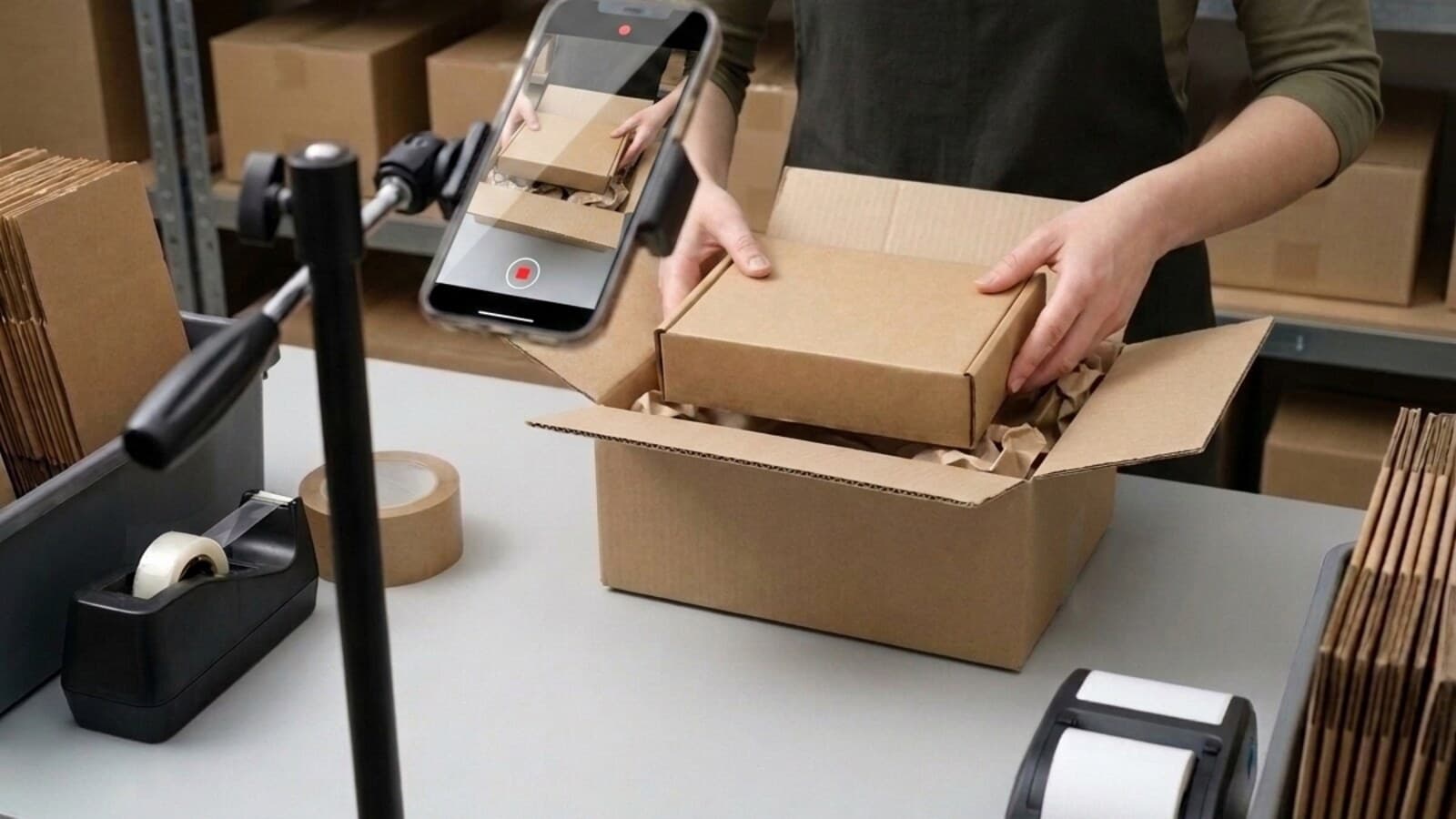
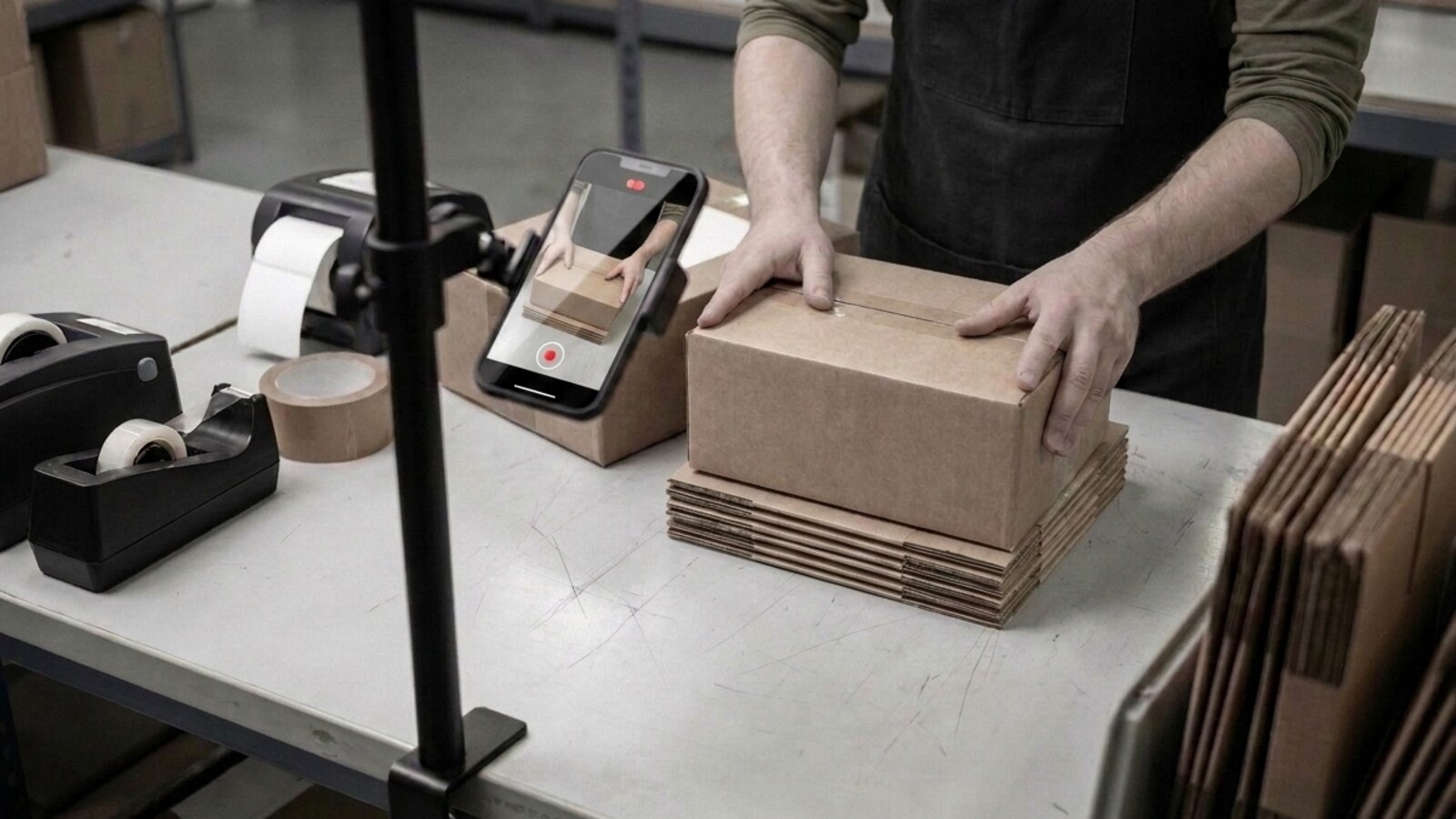
Not a terminal at the end of the aisle, not a shared tablet on a charging dock, not a kiosk login that three people know the password to. The phone the packer is carrying, with the job open on it.
This sounds like a small thing and it is the whole difference between a process people follow and one they route around. Every extra step — walking to a station, waiting for a login, finding the job in a list — is a place where a busy person makes the reasonable decision to skip it just this once.
There is a second reason, less obvious. A shared kiosk login destroys attribution. If every recording is made by "warehouse", you cannot answer the question a client will eventually ask, which is not "was this packed correctly" but "who packed it, and did they do the same thing on the other four jobs that went wrong". Individual operators, with their own access, is what makes the record answer that.
That is also why operators get their own narrow role rather than a shared account: they can record and attach evidence without seeing billing or touching order data. Each operator uses one team seat, the same count as everyone else, so there is a single number to plan around — and a named person behind every recording. A shared login would take the attribution with it, and the process would lose.
2. The label gets read, not typed
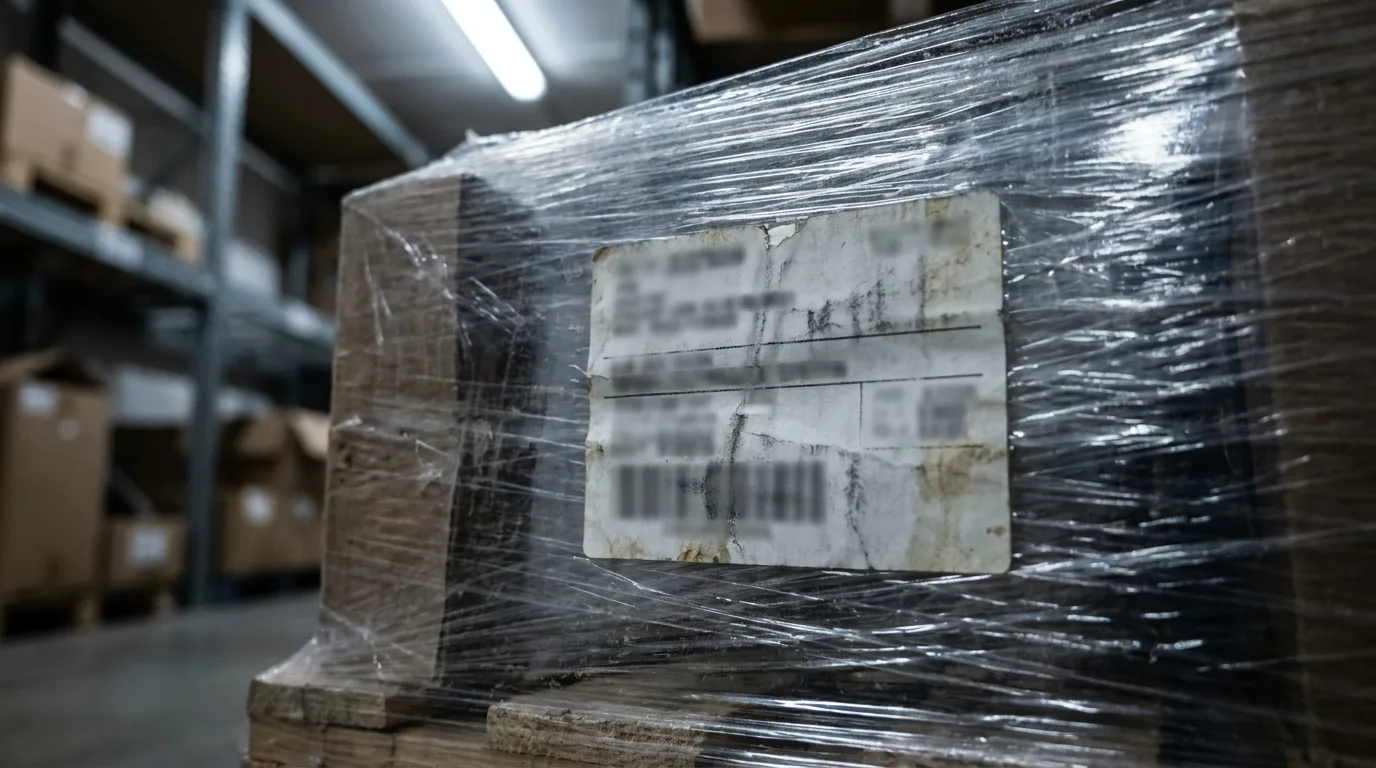
This is where automated extraction earns its place, and it is worth being precise about what it does and does not do.
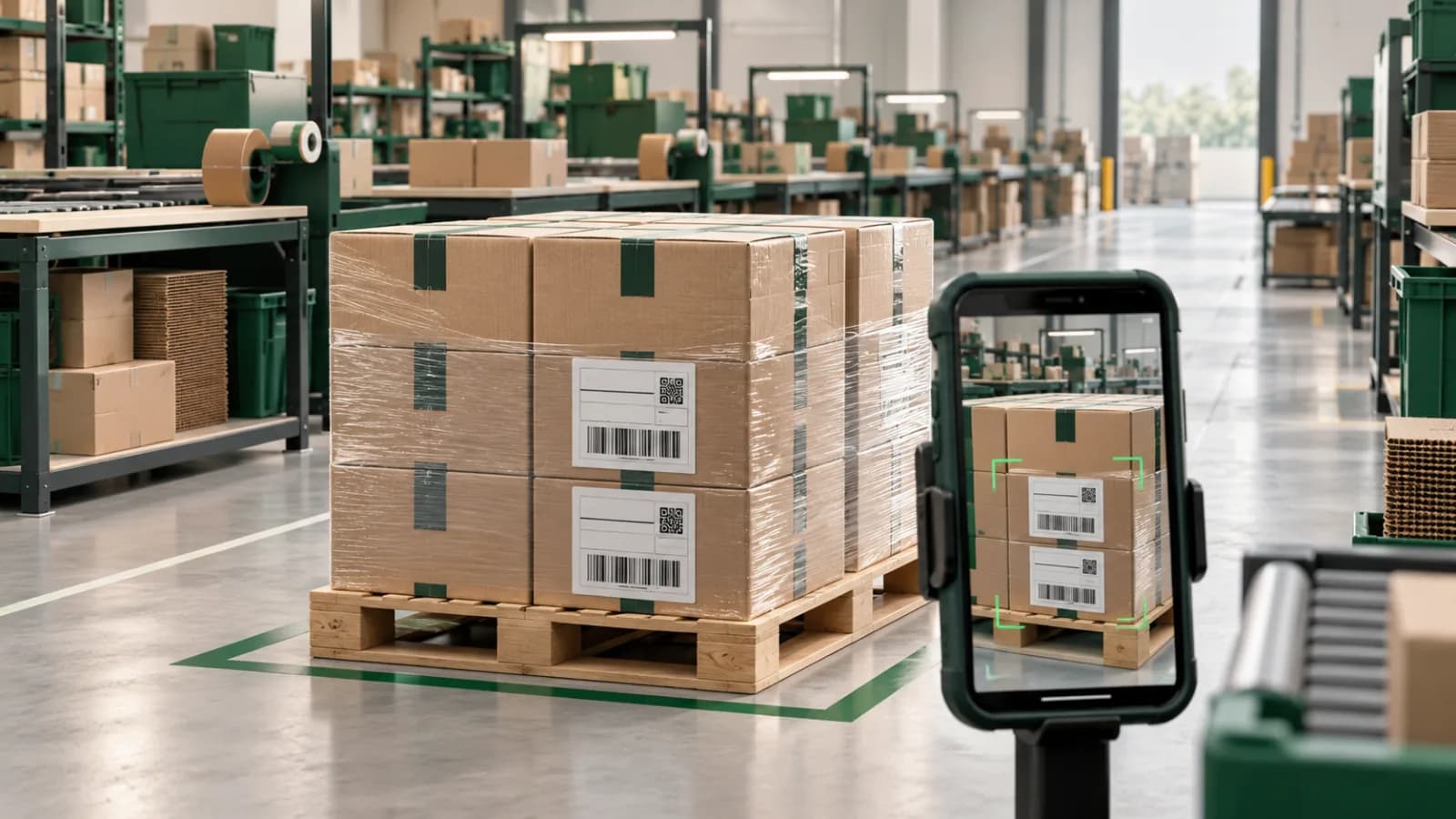
The operator photographs the label. The image goes to a model that reads it and returns values for the fields you have defined — pallet reference, client, destination, batch, whatever your operation actually tracks. Those values appear on screen next to the label, and the operator confirms or corrects them before the record is written.
Three things are true about that, and skipping any of them produces a worse system:
It removes typing, which is where the errors were. Not "reduces". The specific failure mode — a transposed character in a twenty-character reference, discovered four months later — mostly disappears, because nobody is transcribing anything.
It is a first draft, not an authority. Warehouse labels are scuffed, wrapped in plastic, photographed at an angle in bad light. Some will be read wrong. The confirmation step is the accuracy control; the model is just a faster way to fill the boxes. Any vendor telling you their extraction does not need checking is describing a demo, not a warehouse.
The fields are yours. Extraction is only useful if it fills the things you actually track, which is why the field definitions are yours to set — including a hint per field describing what it looks like on your labels. A generic "reads shipping labels" feature that returns a generic shape is a demo feature.
One honest note on availability: warehouse recording is included in every plan, including the free one. Automated label reading is not — it is a contract-tier entitlement, because each scan carries a real cost. If your volume makes it worth having, that is a conversation rather than a checkbox.
3. The wrap is filmed in one take
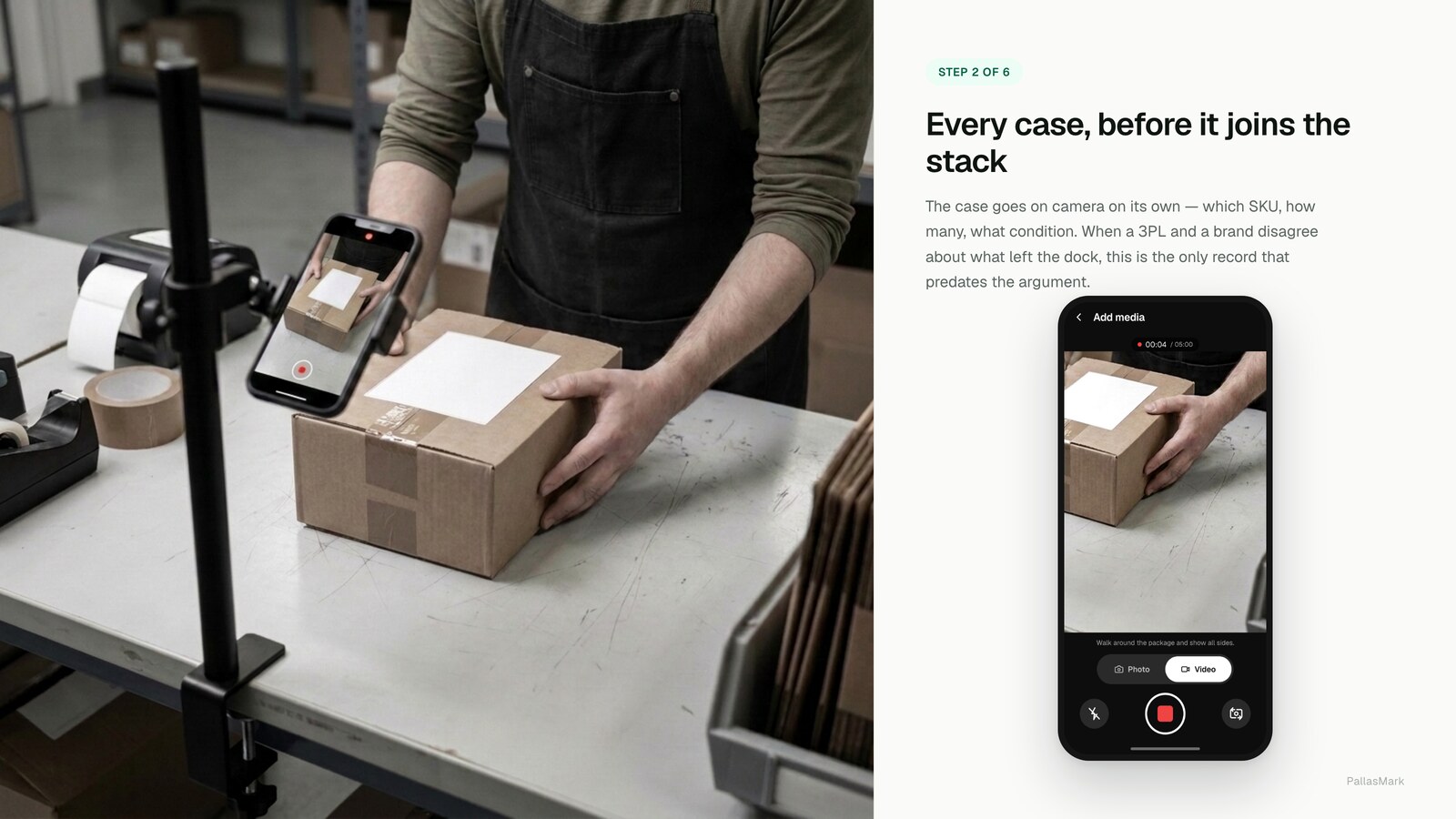
The recording itself should be identical every time, because a routine that varies is a routine that gets shortened under pressure.
Contents visible. Condition visible — turn the items so the faces that get disputed are in shot. The label readable in the same frame as the goods, which is what ties this recording to this job in a way a filename cannot. Then the wrap or the seal going on, so the recording covers the transition from open to closed.
One take. No cuts. A cut is not evidence of wrongdoing, but it is a place where a reviewer can imagine something happening off camera, and you will not argue them out of that afterwards.
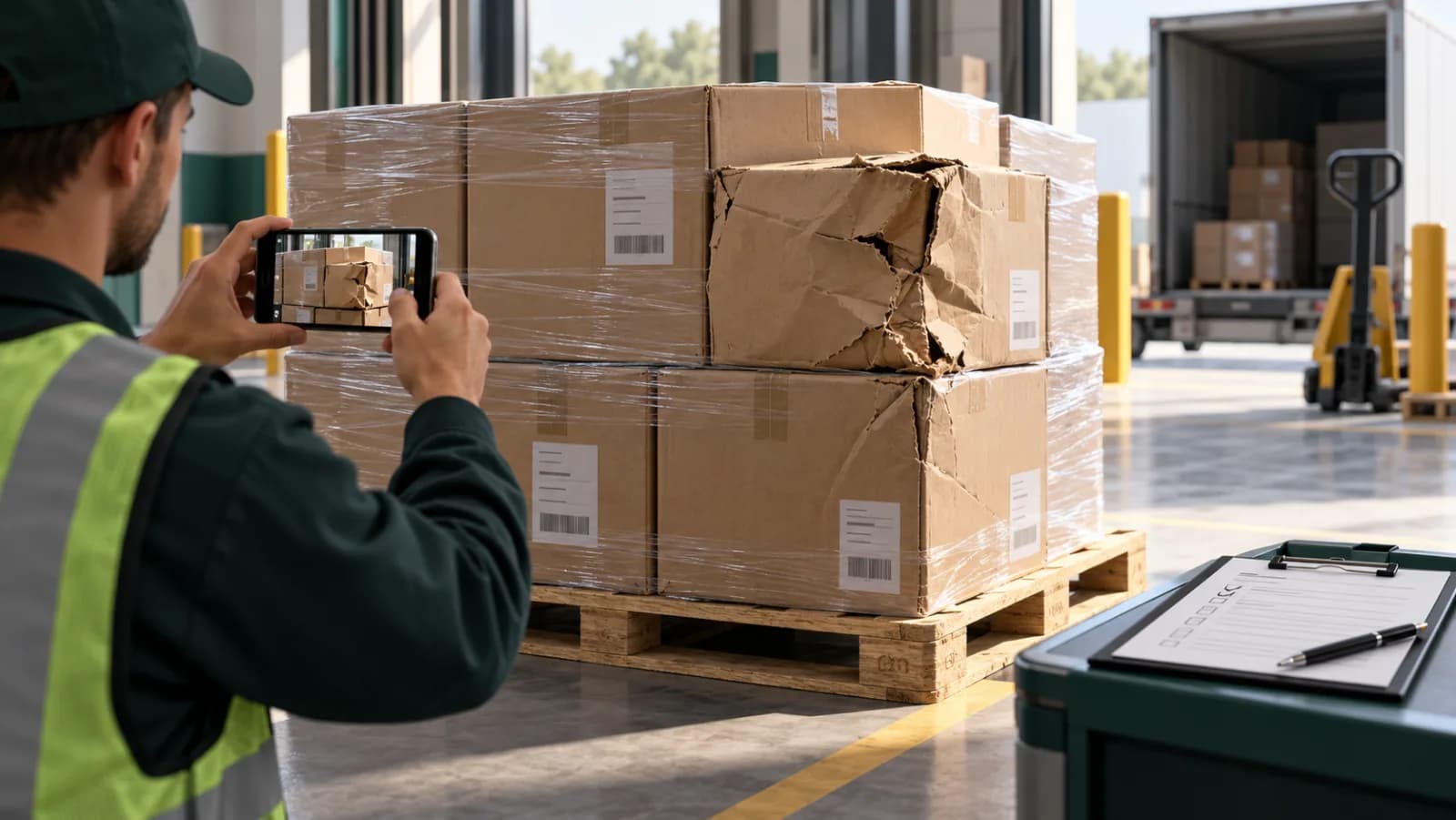
For pallets specifically, film the wrap going round rather than the finished pallet. A wrapped pallet photographed at rest tells you a pallet existed. A pallet filmed being wrapped tells you what was inside it when it was closed, which is the thing under dispute.
4. It seals itself
The recording is fingerprinted over the exact bytes that arrived — a hash, taken at upload, stored with the record. Change one frame afterwards and the fingerprint no longer matches, which is what lets someone who has no reason to trust you check the file independently.
The important design point is that the operator does nothing. There is no finalise button, no "submit evidence" step, nothing to forget when someone calls them away. The step that must never be skipped is the one that does not depend on a person.
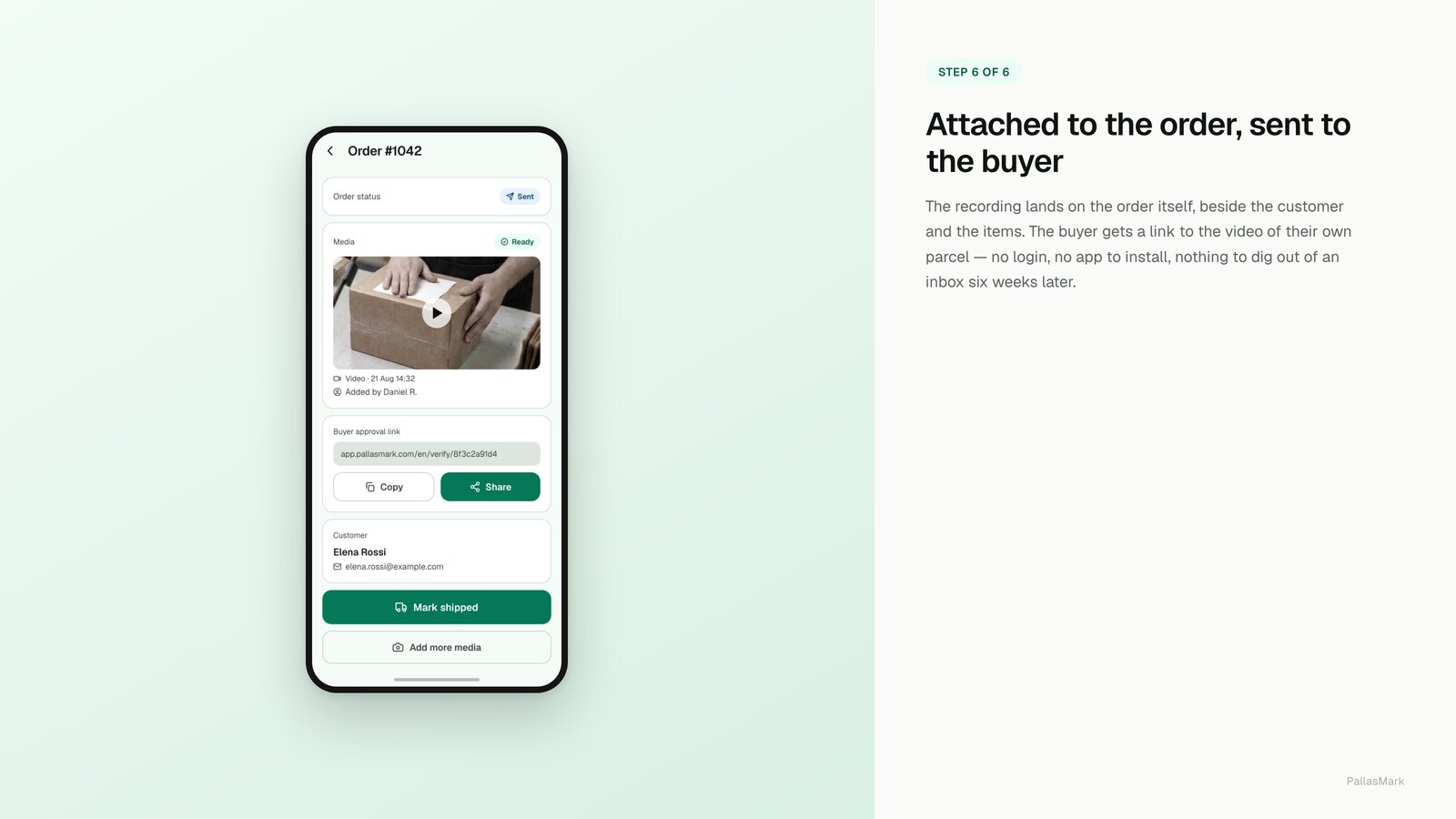
5. One link answers the claim
Months later a client says a pallet arrived short, or an insurer wants to know what was inside before it was wrapped. You send one link.
Whoever opens it sees whether that recording is sealed, when it was made, and the fingerprint that proves it has not changed since — with no account, no software and no request to you for the original file. That last part matters more than it sounds: a process where the evidence only exists inside your own system requires the other party to trust your system, and a party in dispute with you is precisely the party who will not.
A worked example
A 3PL packs 40 outbound pallets a day for eleven clients. One client, a homewares importer, disputes two pallets a month: items missing on arrival.
Before. The warehouse takes photos on a shared phone and drops them in a dated folder on a shared drive. When a claim comes in, someone spends twenty minutes finding the right folder, and about a third of the time the photos are ambiguous — a wrapped pallet that could be any pallet, or a shot taken before the last two cartons went on. The client is not being unreasonable in rejecting them; the photos genuinely do not show what they need to show. The 3PL credits the claim.
After. Each pallet is opened as a job on the packer's phone. The label is photographed and the reference fills itself. The wrap is filmed in one take, ninety seconds. The record seals on upload.
The next disputed pallet takes four minutes to answer: find the job by its reference, send the link. The client opens it, sees the cartons going on and the count, and withdraws.
The second-order effect is the interesting one. After two withdrawn claims, that client's claim rate drops — not because they were dishonest, but because "we think it was short" stops being a cheap thing to say when it is going to be checked. The recordings that pay for the process are the ones you never have to send.
Multi-site, and the thing location does not prove
Once you run more than one site, every record needs to answer which facility it came from, and it is tempting to reach for GPS.
Be careful here, because this is where the category oversells. Where a location is available, it can be compared against the facility's boundary and recorded as match, mismatch or unknown. That is a supporting signal and nothing more. Indoor GPS drifts by tens of metres and often fails entirely inside a steel-framed building, so "unknown" is a completely normal result for a pallet packed in the middle of a warehouse, and a "mismatch" is a prompt to look rather than an accusation.
Recording it honestly in three states, including the one that admits ignorance, is the difference between a signal you can use in a dispute and one that gets torn apart the first time someone checks it.
What it costs you to run
The three questions worth asking before committing a floor to this:
How long does it add per job? Realistically thirty to ninety seconds, most of which is the filming you would arguably want anyway. If a vendor's process adds three minutes, it will not be followed and the honest thing is to notice that before rollout rather than after.
Where does the capacity go? A warehouse record consumes the same monthly allowance as an order, counted from its first proof. That is worth knowing while sizing a plan, because a 3PL's volume is pallets rather than retail orders and the arithmetic is different.
How long do you keep them? Longer than the claim window your clients actually use — for freight and B2B that is often months rather than weeks. PallasMark keeps recordings for 90 days by default on every plan, and a Scale contract sets a longer retention to match that window. Retention runs from each job's own date, so a quiet January does not take last November's evidence with it, and anything with an open dispute or return is exempt from scheduled deletion.
Where to start
Do not roll it out across the floor on day one. Pick the client who disputes most, record only their jobs for a month, and count two things: how many claims arrived, and how many survived being answered with a link.
That number is the business case, and it is specific to your operation in a way that no vendor's estimate can be.
If you want the underlying practice rather than the warehouse version, packing video proof covers what makes a recording count as evidence at all, and the seven-point checklist is the shorter read. For the claim side — what to send when a client says a pallet arrived short or damaged — proving what you shipped when the box was empty works the same way at pallet scale.
Frequently asked questions
Does this need a fixed camera at each packing station?
No, and a fixed camera is usually the wrong answer for a warehouse. It works for one high-volume bench and stops working the moment packing moves — a second bench during a peak week, an overflow area, a different site. Recording on the device the packer is already holding is what survives that, because the process moves with the person rather than with the furniture.
Our warehouse staff do not all speak the same language. Is that a problem?
It is the problem, and it is why the mobile app ships in English, Turkish, Spanish, French, Arabic, Hindi and Chinese. A packing process that only works for people who read the account owner's language is a process that quietly gets skipped by half the shift.
Does every warehouse worker need their own seat?
Yes, and that is deliberate. Operators are a narrow role — they record and attach evidence without seeing billing or changing order data — but each one uses a team seat like everyone else. One seat count keeps the question "how many people can I add" answerable, and individual logins keep the attribution that makes the record worth anything: a shared login would erase who packed what.
How accurate is label reading, and what happens when it is wrong?
Treat it as a first draft that removes typing, not as an authority. Warehouse labels are scuffed, wrapped in plastic and photographed at an angle under bad light, and some of them will be read wrong. That is why the values appear for the operator to confirm before the record is written — the confirmation step is the accuracy control, not the model.
Is AI label reading included in every plan?
No. Warehouse recording itself is included in every plan, including the free one. Automated label reading is a contract-tier entitlement rather than a standard feature, because it carries a real per-scan cost. If you are evaluating it for a specific volume, that is a conversation rather than a checkbox.
Does location prove the pallet was packed at our facility?
No, and anyone claiming otherwise is overselling. Where a location is available it is compared against the facility's boundary and recorded honestly as match, mismatch or unknown. Indoor GPS drifts by tens of metres, so a mismatch is a prompt to look rather than an accusation, and unknown is a normal result inside a steel building.
How long do warehouse recordings need to be kept?
Longer than the claim window your clients actually use, which for freight and B2B is often months rather than weeks. PallasMark keeps recordings for 90 days by default on every plan; a Scale contract sets a longer retention to match your clients' window. Retention runs from each job's own date rather than a single account-wide cutoff, and jobs with an open dispute or return are never purged on schedule.
- warehouse
- 3pl
- packing video
- pallets
- evidence