They wore it, then returned it: what you can actually do about wardrobing

On this page

A dress comes back after the weekend it was bought for. A camera lens returns the day after a wedding. A power tool arrives back with dust in the vents. Nothing about the transaction was fake, the return is inside your stated window, and the buyer has said nothing untrue in writing. This is wardrobing, and it is a different problem from every other return dispute, because the argument is not about what you shipped. It is about what happened to it afterwards.
What wardrobing actually is
Wardrobing is buying, using, and returning for a full refund as though the item were untouched. The name comes from apparel, where it is most visible, but the pattern is not limited to clothing:
- Occasion wear, worn once and returned the following week
- Tools and equipment, bought for a single job and returned after it
- Cameras, lenses and drones, bought before a trip and returned after it
- Electronics, bought for one event, one match, one deadline
- Party and seasonal goods, returned in the days immediately after the date they were needed
According to the National Retail Federation's 2025 Retail Returns Landscape, total returns reached a projected $849.9 billion in 2025, with 19.3% of online sales returned and 9% of all returns found to be fraudulent. The same research reports that 45% of shoppers say it is acceptable to bend the rules when returning items, which is closer to the heart of wardrobing than the fraud figure is. Most wardrobing is not done by people who consider themselves fraudsters. It is done by people who consider the return policy to be the policy, and treat using the item as within it.
That matters for how you respond. A tone that treats every worn return as theft will be wrong most of the time and will cost you customers who would have bought again.
Why this is the hardest return claim to challenge
Every other dispute in this family has something objective to point at. A wrong item has a different SKU. A damaged item has a crushed box. An empty box has a weight discrepancy. Wardrobing has a judgement call: is this item used, or does it just look handled?
Three things make that judgement hard to win.
Condition is a spectrum, not a fact. Faint creasing, a slight scent, a loosened seam, dust in a vent: none of these are binary. Two reasonable people will disagree, and a platform reviewer with sixty seconds and two photographs is not going to adjudicate fabric wear.
You have no before. This is the actual problem. You can photograph a returned garment in forensic detail and still not have answered the only question that matters, which is whether it looked like that when you sent it. A reviewer weighing your photograph has to consider an alternative explanation: that the item left your warehouse in that condition. Absent evidence, that explanation is as available as yours.
The clock works against you. Platform windows for contesting a return are short, and the return often sits in a receiving area for days before anyone inspects it closely. By the time someone notices, the item has been handled by your own staff, which weakens whatever you photograph next.
What actually settles it
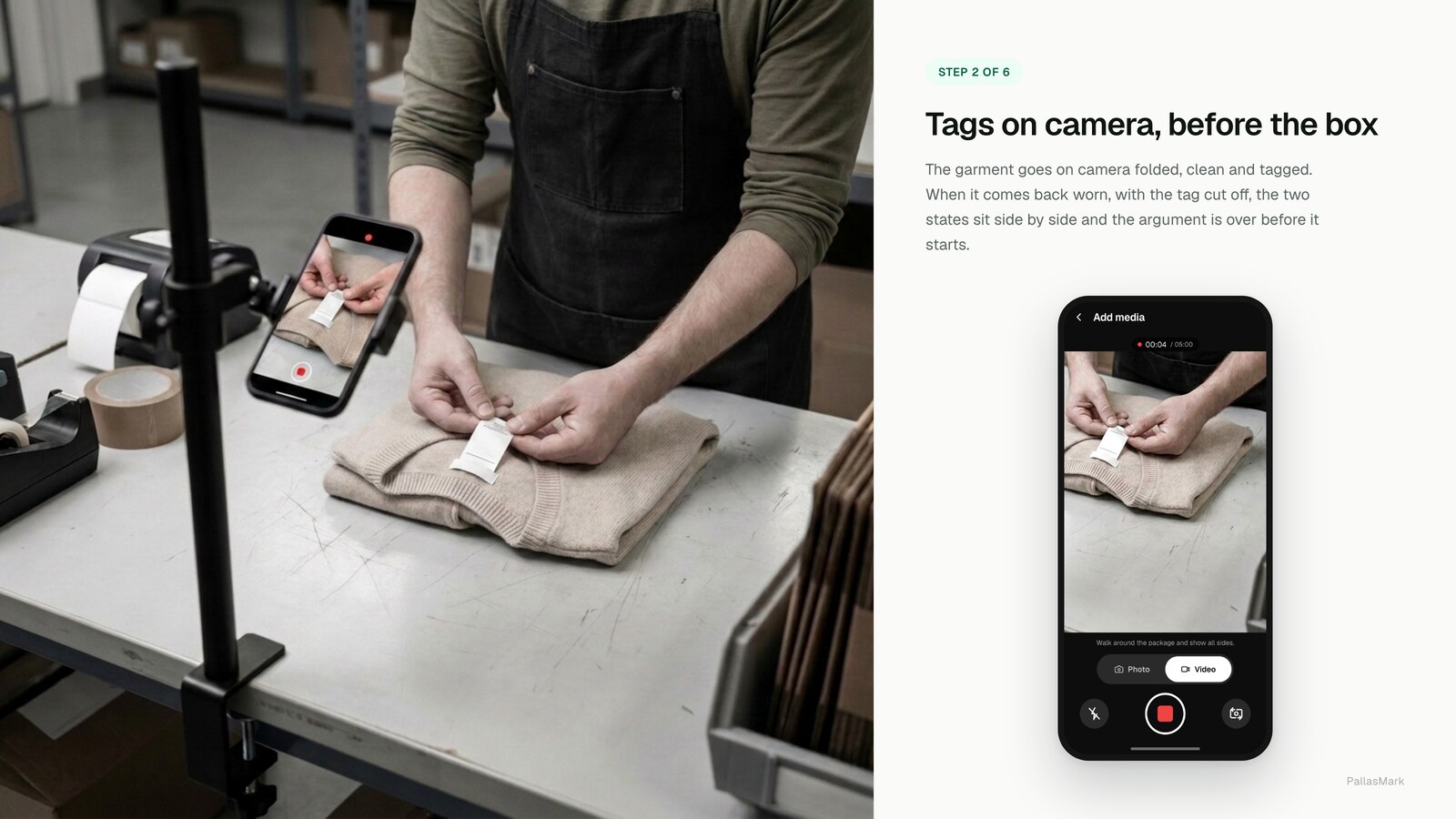
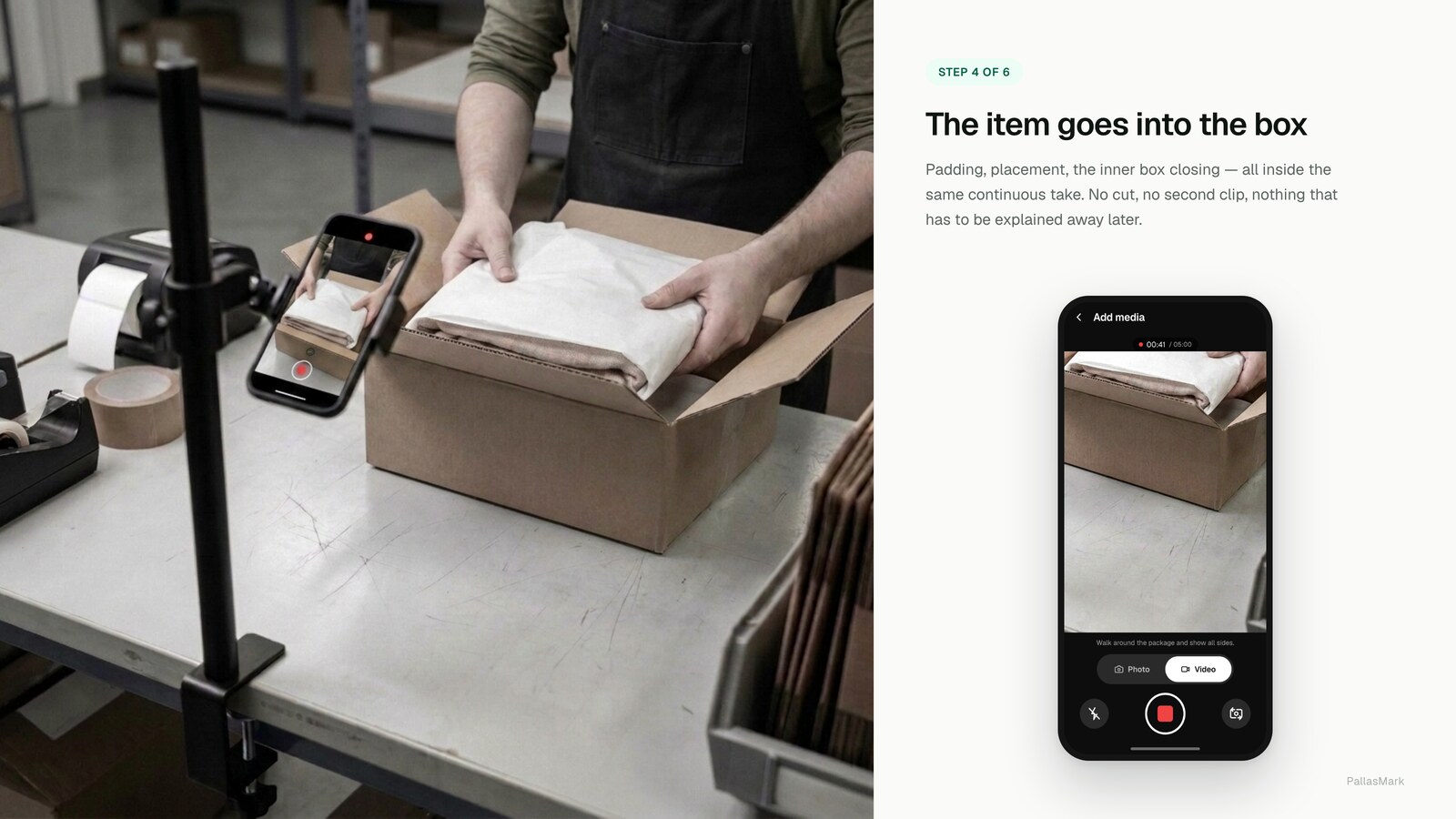
The evidence that changes a wardrobing dispute is a record of the item's condition at dispatch, tied to that order. Not a stock photo, not a photograph of an identical unit, and not a general description of your quality process. The specific unit, on the specific order, before it was sealed.
That record does two things. It removes your own handling as an explanation for the wear, and it converts a subjective disagreement into a comparison. A reviewer looking at two images taken weeks apart does not have to form an opinion about textiles. They only have to see that something changed.
What to capture, by product type:
| Product type | What the dispatch record needs to show |
|---|---|
| Apparel | Tags attached and intact, seams and hems, any area that shows wear first (cuffs, underarms, soles) |
| Footwear | Soles, especially the heel and toe, plus the box and any inserts |
| Electronics | Screen powered on, serial number, ports, and the state of the seals |
| Cameras and lenses | Serial number, glass surfaces, mount, shutter count if the body reports it |
| Tools | Blades and bits, vents, and the condition of the case |
| Jewellery | Clasps, stone settings, hallmarks, and any protective film still in place |
What each platform actually allows
Knowing the route matters more than knowing your rights. Each platform has a specific process for a return that arrives in a different condition, and using the wrong channel gets a valid claim rejected on procedure.
| Platform | What you can do | What it requires |
|---|---|---|
| Amazon | Charge a restocking fee, commonly 20%, and up to 50% where the item is returned used, damaged or with signs of use | A photo of the item uploaded to the return. Amazon requires this documentation at 20% and above, and the buyer can escalate with an A-to-z claim |
| eBay | Deduct from the refund for loss in value under the condition of returned items policy, up to 50% | Seller eligibility conditions apply, and eBay expects photographic evidence of the condition difference |
| Shopify (own store) | Whatever your published policy says, since you set the terms | Your policy must have said it before the sale, and your payment provider's chargeback rules still override it |
| Etsy | Case-by-case through Etsy's case system | Documentation of the difference in condition; Etsy weighs seller policy heavily |
| Card chargeback | Contest the dispute with evidence | The card network's own timelines and evidence format, not the platform's |
The pattern across all of them: a documented partial deduction is a supported action, and a flat refusal usually is not. Sellers who refuse a worn return outright tend to end up in a chargeback, where they are defending a bigger question with the same evidence.
The restocking fee route, and where it goes wrong
Charging a restocking fee feels like the obvious answer, and it is often the right one. Three things sink it.
No photograph at the moment of receipt. Both Amazon and eBay expect documentation, and a photograph taken a week later after the item has been handled is weak. Photograph the return before it is refolded, cleaned, or moved.
No policy in place before the sale. On your own store especially, a deduction that was not in your published terms at the time of purchase is very hard to defend in a chargeback. The policy has to pre-date the order.
Overreaching on the percentage. A 50% deduction on an item with faint creasing invites escalation. A deduction proportionate to actual loss in resale value is far more likely to survive review, and far less likely to trigger a claim.
Deterrents that work before the dispute exists
Evidence wins arguments. Deterrence avoids them, and it is considerably cheaper.

The tag deserves its own note. Its value is not that it physically prevents wearing, because it does not. Its value is evidentiary: a photograph showing a detached tag is unambiguous in a way that a photograph of a slightly creased garment never is. It moves the dispute to ground where you can win it.
How to respond, step by step
- Photograph the return before anything touches it. The item as it emerged, the return packaging, the tags attached or not, and the specific signs of use in close-up.
- Pull the dispatch record for that order number. If you have one, this is your case. If you do not, be honest with yourself about the strength of your position before you commit to contesting.
- Decide: contest or deduct. Deducting inside the platform's process is the lower-risk route in most cases. Contesting outright is for clear-cut cases with strong documentation.
- File through the condition-specific process. Not a general message to the buyer, and not a support ticket. Marketplaces treat these as different claim types.
- Write it factually. State what your record shows, state what arrived, and stop. Do not characterise the buyer's intent.
Response templates
Six mistakes that lose a winnable case
- Inspecting late. Once your own staff have handled, refolded, or steamed the item, your photographs are contaminated.
- Accusing the buyer of fraud. Reviewers cannot verify intent and will not try. Show the discrepancy; do not name a motive.
- Applying a deduction with no photograph. This is the fastest route from a defensible position to a lost claim.
- Relying on a policy written after the sale. It has to have been in force when the order was placed.
- Using the wrong claim type. A condition dispute filed as a general complaint does not get treated as a condition dispute.
- Fighting every case. Wardrobing disputes cost time. Fight the ones with documentation and value behind them; absorb the rest and fix the process.
What this does not fix
A dispatch record shows the condition an item was in when it left you. It cannot show what the buyer did with it, and no seller-side evidence can. If a buyer wears an item carefully and returns it with tags intact and no visible wear, no amount of recording will surface that, and the return is functionally indistinguishable from a legitimate one.
It also does not override a platform's decision. Marketplaces weigh buyer experience heavily, and a well-documented seller still loses cases. What good evidence changes is the rate, not the outcome of any single dispute.
And it does not resolve a card-not-present fraud chargeback, where the question is whether the cardholder authorised the purchase at all. That is a different dispute with a different answer, and evidence about condition does not speak to it.
Where PallasMark fits
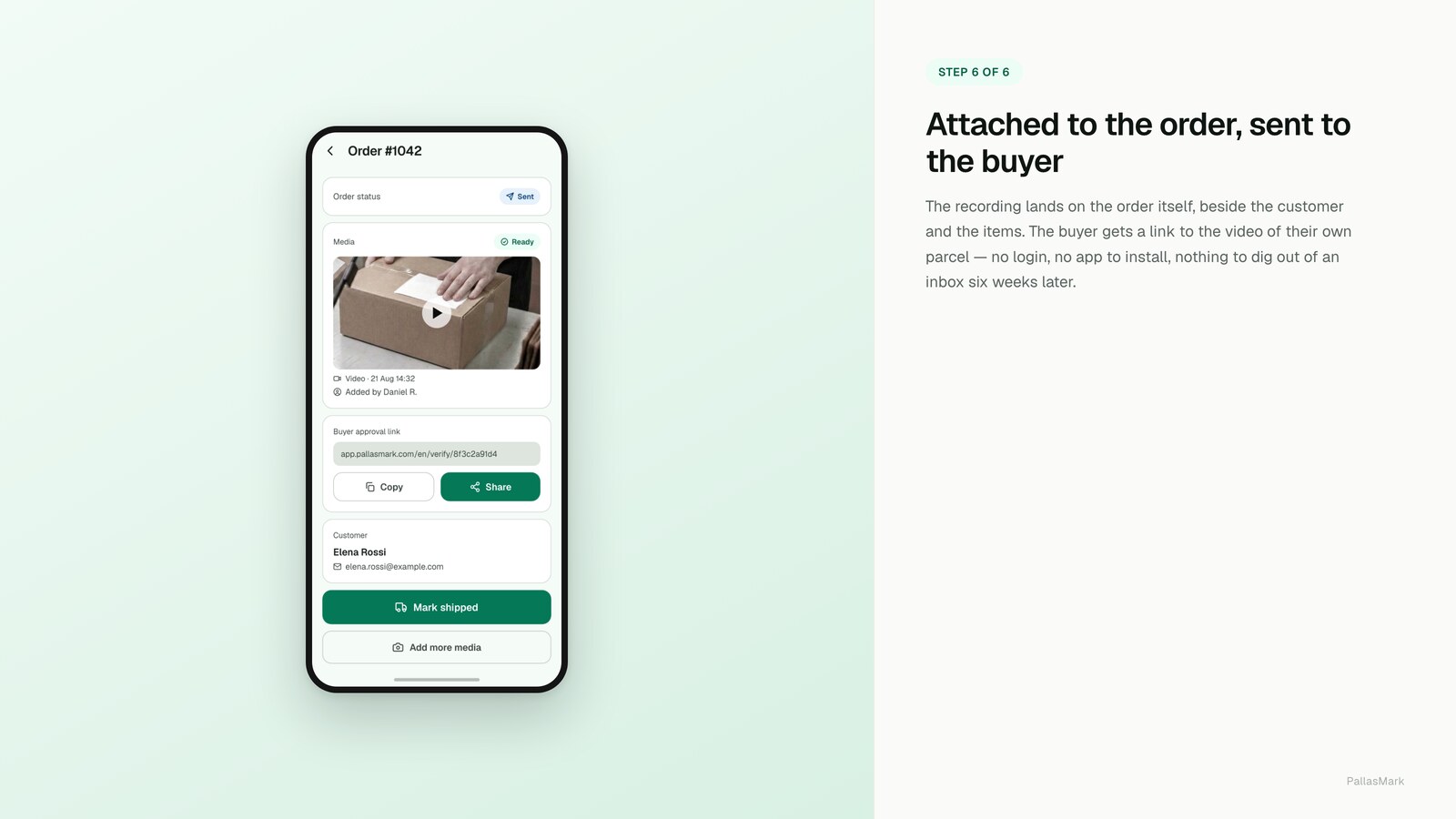
PallasMark records the condition of an order before it is sealed, ties that recording to the order it belongs to, and seals it so that any later change to the file is detectable. When a return arrives worn, you have a dated record of how the item looked at dispatch, at a link the platform or the card issuer can open without an account.
That is the specific gap in a wardrobing dispute: not proving what the buyer did, but removing your own handling as the explanation, so that the only remaining account of the wear is the one that happened after delivery.
If you do not yet have a pre-shipment record for every order, that is the gap to close first — packing video proof explains what makes such a record hold up rather than just exist. If the claim is that the wrong item arrived rather than a used one, that is a different evidence problem: see how to prove which unit went in the box. If the box arrived with nothing in it at all, see proving what you shipped when the box was empty. For the underlying recording practice, the seven-point packing video checklist covers what makes a recording count as evidence rather than a claim.
More on the commercial side of this: return fraud evidence and packing quality control.
Frequently asked questions
What is wardrobing?
Wardrobing is buying an item, using or wearing it, then returning it for a full refund as though it were unused. It is most associated with clothing, especially occasion wear, but the same pattern covers tools bought for one job, electronics bought for one event, and cameras or lenses bought for one trip. It sits in a grey zone: the purchase is real, the return is inside policy, and only the condition of the item on its way back reveals what happened.
Can I refuse a return because the item was worn?
Sometimes, but it is the highest-risk route. On most marketplaces, refusing outright pushes the buyer straight to a platform claim or a card chargeback, where you are then defending both the refusal and the original transaction. A documented partial refund or restocking fee, taken through the platform's own condition process, usually holds up better than a refusal, because you are working inside the rules rather than against them.
Do return tags actually stop wardrobing?
They reduce it, and more importantly they turn a subjective argument into a factual one. A tag that cannot be reattached once removed converts 'this looks worn' into 'this tag was removed', which is a much easier thing for a reviewer to see in a photo. Tags do not stop a determined buyer, but they change what the dispute is about.
How is wardrobing different from bracketing?
Bracketing is ordering several sizes or colours intending to keep one and return the rest, and it is not fraud: the returned items come back unworn and resellable, and many retailers price it in. Wardrobing means the item was used before it came back. The distinction matters because they need different responses. Bracketing is a margin and logistics problem; wardrobing is an evidence problem.
What evidence do platforms accept for a worn-return claim?
Photographs are the baseline, and every major platform asks for them when a seller claims an item came back in a different condition. What separates a strong claim from a weak one is whether you can also show the condition the item was in when it shipped. Photographs of the return alone show a worn item; they do not show who wore it.
Does a pre-shipment recording prove the buyer wore the item?
No, and it is worth being precise about this. It proves the condition the item was in when it left you, tied to that order. It does not show what happened between delivery and return, and no seller-side evidence can. What it does is remove the seller's own handling as an explanation, which is usually the only alternative explanation a reviewer has to weigh.
- wardrobing
- return fraud
- returns
- evidence