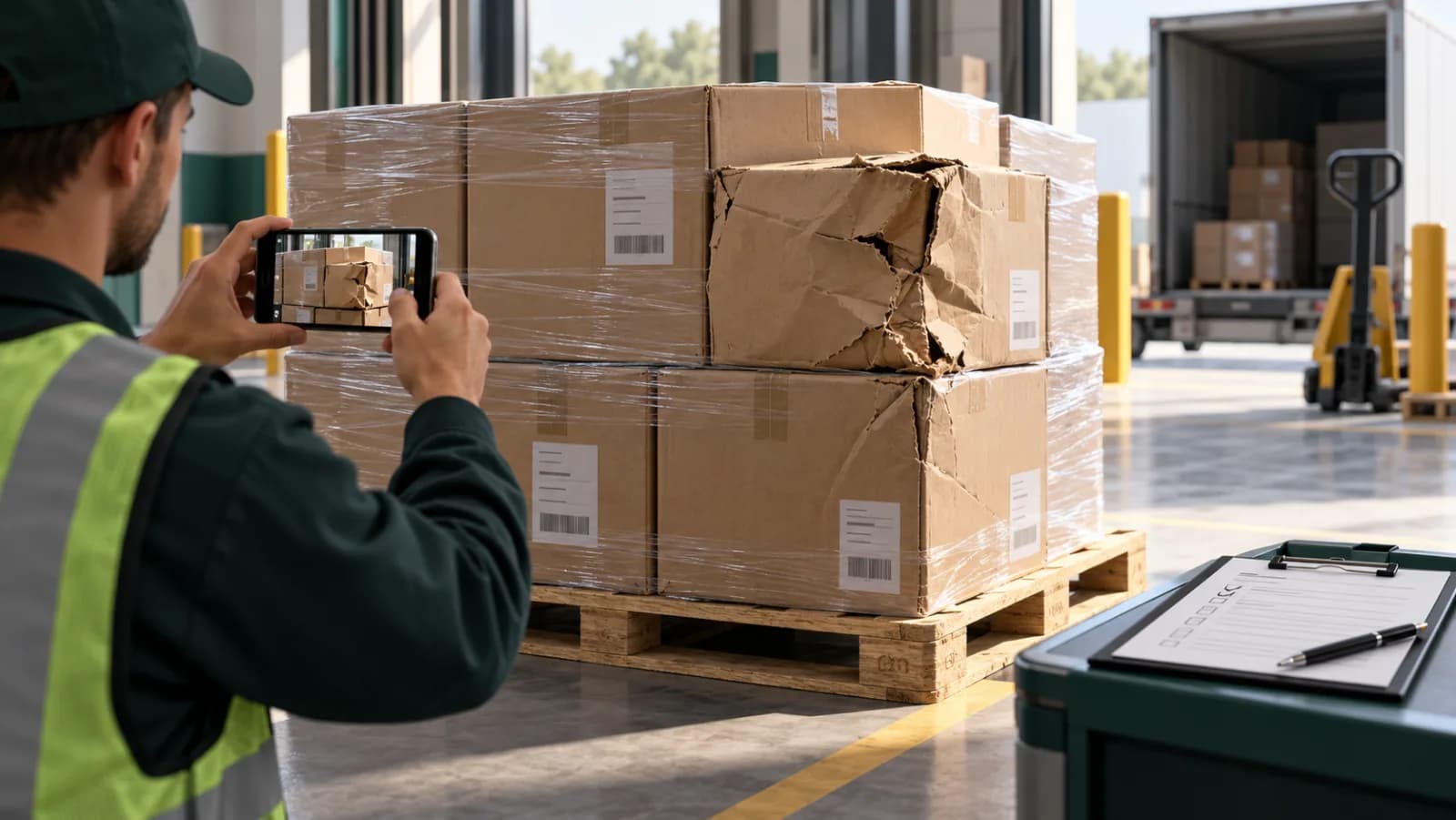
Customer says it arrived damaged: what packing evidence can show


On this page
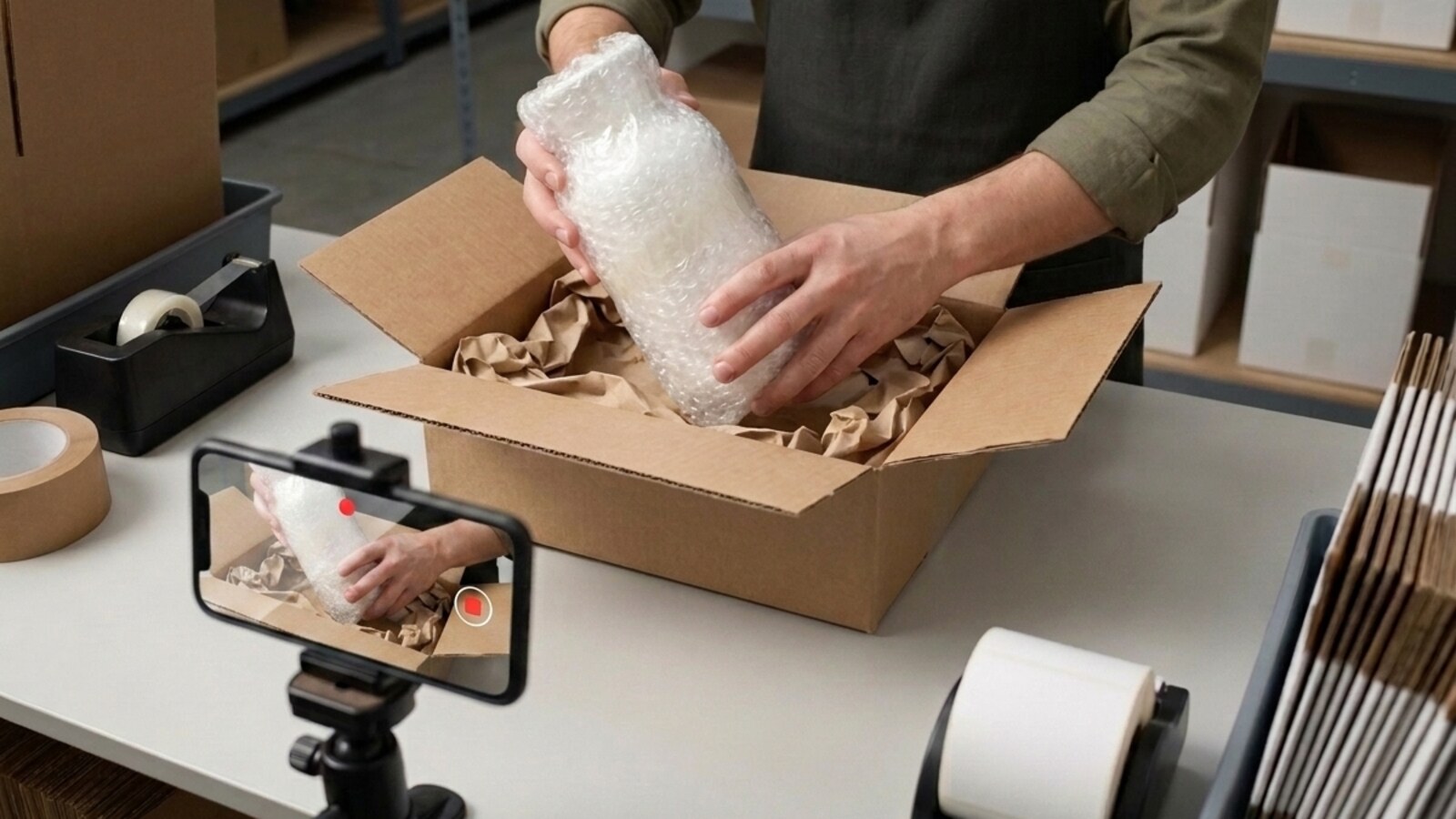
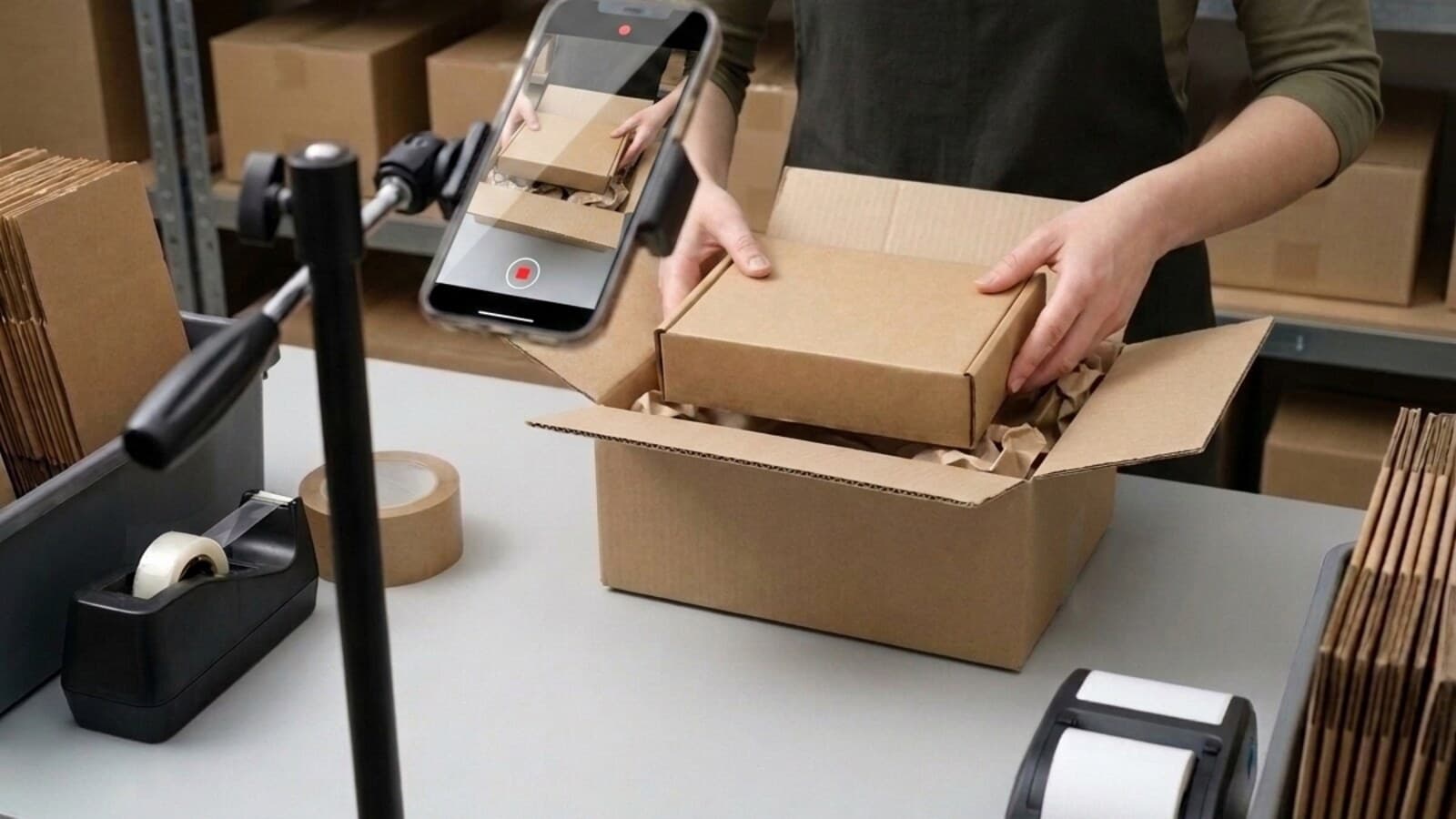
This is written for the seller side of a shipping damage claim: what you owe the buyer, what you can recover from the carrier, and exactly what evidence each of them accepts. If you are looking at this because you keep losing these claims and want the underlying fix rather than a one-off answer, that fix is packing video proof: the record of condition at the moment you sealed the box, which is the one fact every party here is actually arguing about.
Who is actually liable for shipping damage
Three parties, two separate questions, and mixing them up is the first mistake.
Between you and the buyer, you are responsible. Marketplace policies and consumer-protection rules put the obligation to deliver goods in acceptable condition on the seller, not on the carrier the seller chose. Telling a buyer to take it up with the carrier is not an answer any platform will back.
Between you and the carrier is where the money moves. Carriers accept liability for transit damage, but nearly every refusal comes down to one of two tests:
Both tests are decided by evidence created before the parcel shipped. That is precisely why this problem is hard: the moment that decides it is the one moment nobody films.
Between you and your insurance, if you bought declared value or third-party cover, the same two tests still apply. Coverage sets how much you can recover, not whether you qualify.
Concealed damage: when the box looks fine
A buyer sends a photo of a cracked item sitting in a perfectly clean box. The industry term for this is concealed damage, and it is the version carriers scrutinise hardest, because there is no external sign of mishandling to point at.
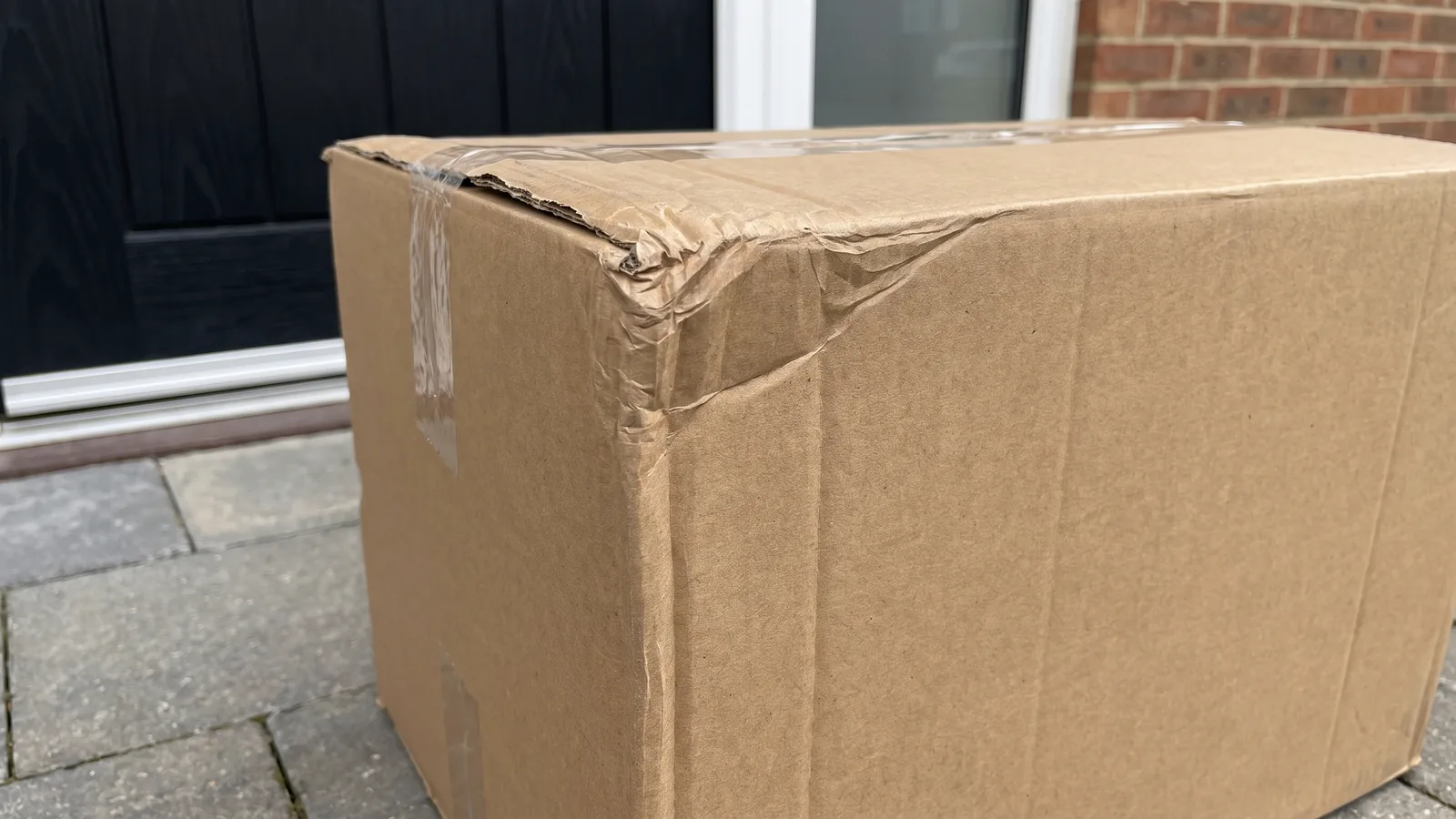
It means one of three things, and only evidence separates them:
| Explanation | Who carries it | What proves it |
|---|---|---|
| Packing too thin to absorb normal handling | You | Your record shows the cushioning, or the lack of it |
| Damage after delivery | Buyer | Delivery timing, the buyer's own photos, condition of the seal |
| Item was already damaged when packed | You | Only a pre-shipment record can rule this out |
Without a pre-shipment record a reviewer cannot exclude the third, so they assume it. With one, the argument narrows to the first two, and the packing footage answers the first.
Why tracking cannot answer any of this
Tracking tells you a parcel moved and was delivered. It says nothing about contents or condition. Your invoice shows what was ordered, not what was packed. Your listing photos show a product in studio conditions, not the unit you shipped.
So when the buyer's photo arrives, the reviewer chooses between two unevidenced stories: it broke in transit, or it shipped that way. Absent proof, consumer-protection policy resolves that for the buyer.
What the carrier needs
Every major carrier asks for a similar pack, and every one of them publishes its own filing deadline. Deadlines and requirements change, so treat the figures below as a starting point and confirm on the carrier's own page before you rely on them.
| Carrier | Where to file | Typically required |
|---|---|---|
| USPS | usps.com/help/claims | Proof of value, evidence of insurance, photos of item and packaging |
| FedEx | fedex.com claims | Tracking number, proof of value, photos of damage and packaging |
| UPS | UPS claims portal | Tracking number, proof of value, damage photos; inspection may be requested |
| DHL | DHL claims form | Waybill, invoice, damage photos, packaging photos |
What the platform needs
The dispute in front of the buyer is a separate process with its own clock.
| Platform | Where it appears | What moves the decision |
|---|---|---|
| eBay | Payment dispute or return request | Pre-shipment condition evidence, tracking, listing as it stood |
| Amazon | A-to-z claim in Seller Central | Documented condition at dispatch, packaging description, buyer messages |
| Shopify | Chargeback via the payment provider | Evidence pack uploaded once; you rarely get a second attempt |
| PayPal | Item Not As Described case | Proof of what shipped and its condition, plus delivery confirmation |
| Etsy | Case in the Resolution Centre | Order photos, packaging, messages kept on-platform |
One pre-shipment record satisfies all of them. That is why it is worth creating before you need it, on every order you would hate to lose.
The first 48 hours
Damage claims are won or lost on sequence more than on argument.
Refunding the buyer first is fine, and it is often the right customer decision. But do it after you have the photos, not before. Once the buyer is refunded, their motivation to photograph a box drops to zero, and the carrier claim goes with it.
Your evidence pack, in one list
What "adequate packaging" means to a claims reviewer
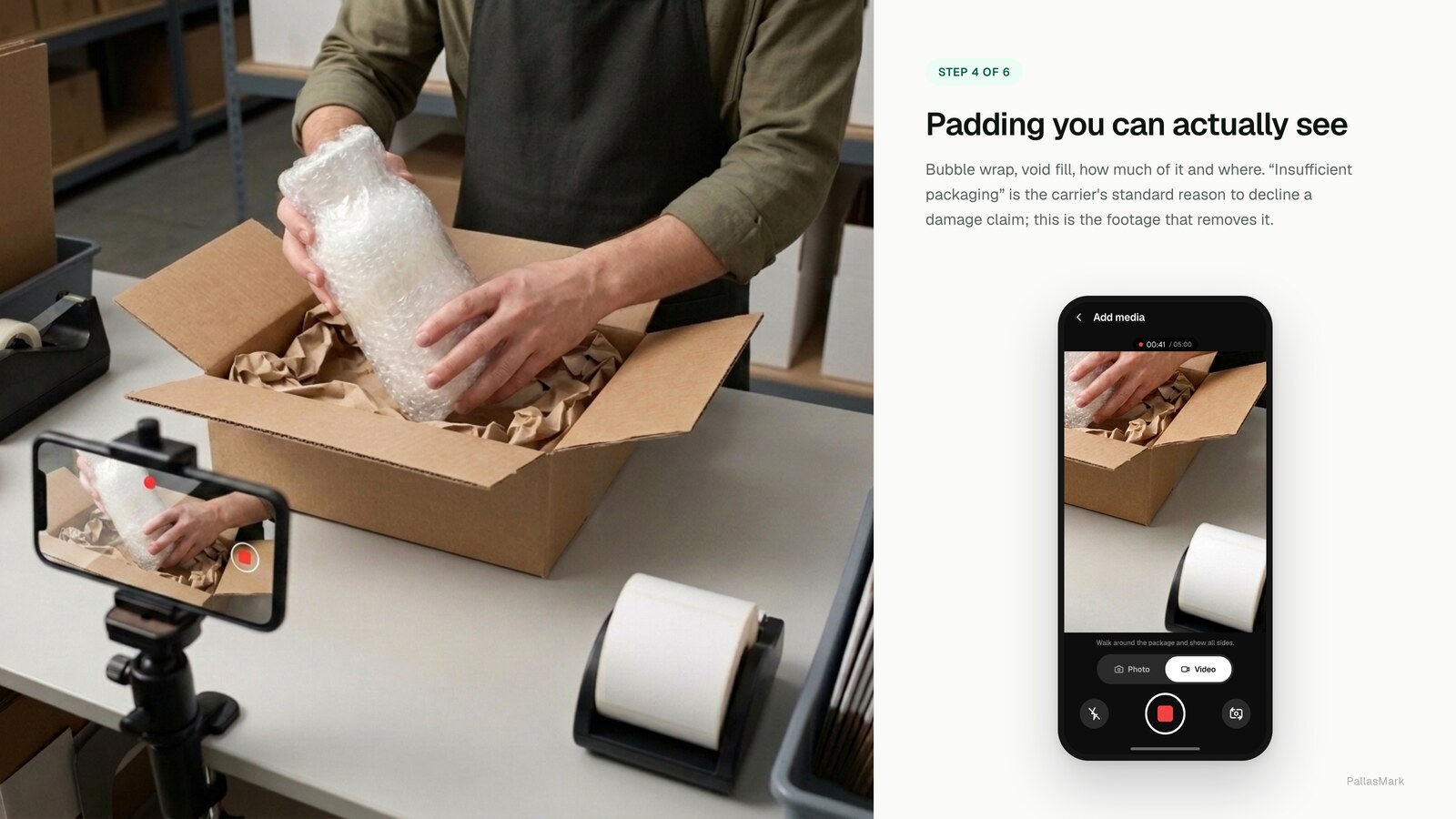
This is the test most sellers fail without knowing it existed. Reviewers look for four things, and your record either shows them or it does not:
- Cushioning on every side, including underneath. An item touching the carton wall has no protection at that point.
- No movement. If contents shift when the box is tilted, the packing is treated as insufficient.
- The right box for the weight. A heavy item in a thin single-wall carton fails on the box, not on the padding.
- A properly sealed parcel. Tape across every seam, with the seal visible in your record.
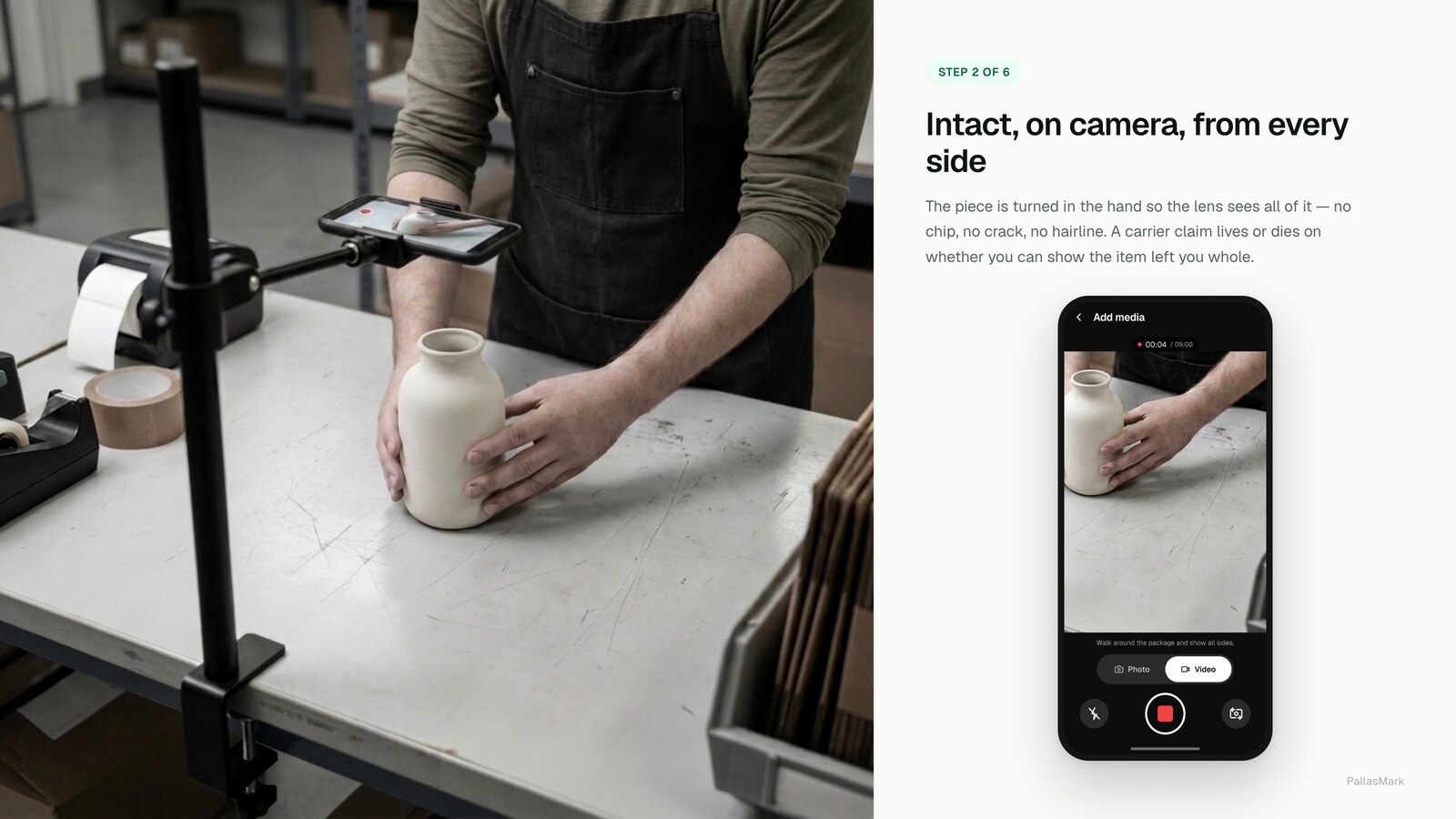
A recording that shows the padding going in and the box closing answers all four at once. A photo of the finished, taped box answers none of them.
What "adequate" looks like by product type
| Product | The failure mode | What a reviewer wants to see |
|---|---|---|
| Glass, ceramics | Corner and edge impact | Double-wall box, each piece wrapped separately, 5 cm of fill on all sides |
| Electronics | Shock and screen pressure | Original retail box inside a shipping box, no direct contact with walls |
| Apparel, soft goods | Water, tearing, scuffing | Sealed poly inner, then outer bag or box; rarely a damage claim, often a "condition" claim |
| Jewellery, watches | Movement inside the box, loss | Item fixed in place, box inside a box, discreet outer with no brand marks |
| Liquids, cosmetics | Leakage | Sealed bag around the bottle, absorbent layer, upright orientation marked |
| Heavy or bulky | Box failure, not padding failure | Weight-rated carton, reinforced base, edge protection |
If one SKU produces most of your claims, the answer is usually in this table rather than in better evidence.
Photos or video?
Both work; they answer different questions.
| Photos | Continuous video | |
|---|---|---|
| Item condition | ✅ | ✅ |
| Order identity in the same frame | ✅ if composed for it | ✅ |
| Packing method and cushioning | partly | ✅ |
| Sequence: nothing swapped between shots | ❌ | ✅ |
| Time to capture | seconds | 30–60 seconds |
| Storage cost | low | higher |
For low-value orders, photos are proportionate. For fragile, high-value or repeatedly disputed items, the sequence is what removes the gap a reviewer would otherwise fill with an assumption. The full standard is in what makes a packing video count as evidence.
Response templates
Adapt the wording, keep the structure, and keep every message on the platform's own record.
That last framing matters. Contesting everything reads as obstruction. Contesting the one thing your evidence actually establishes reads as credible.
Six mistakes that void an otherwise winnable claim
Preventing the next one
Damage claims cluster: the same product, the same box size, the same lane. Three habits close most of the gap.
- Record the orders you would hate to lose, not all of them: fragile, high-value, and anything with a history of claims.
- Capture the padding, not just the product. The packaging test is the one carriers actually apply.
- Track which SKUs generate claims. If one item accounts for most of them, change the box before you change the evidence.
Terms you will see on a claim form
- Concealed damage — damage to contents with no visible damage to the outer packaging.
- Declared value — the amount you told the carrier the shipment was worth, above their default liability cap. Not the same as insurance, though it functions similarly.
- Proof of value — an invoice, order record or receipt establishing what the goods were worth.
- Salvage — the carrier's right to inspect, collect or dispose of the damaged goods as part of settling a claim.
- Inspection request — the carrier asking to see the item and packaging in person. Why the buyer must keep the box.
- Representment — submitting evidence to contest a chargeback with the card scheme.
What this does not fix
A record of condition at handover says nothing about what happened in the truck, and it will not rescue a claim filed after the deadline. It does not settle liability where the packaging was genuinely inadequate; it will show that plainly. And it is no help when the real dispute is whether the cardholder authorised the purchase; that is a different question with different evidence.
What it does is remove one accusation permanently: that you shipped a damaged item. That is the accusation that costs sellers the most, because it is the only one they can never answer after the fact.
Where PallasMark fits
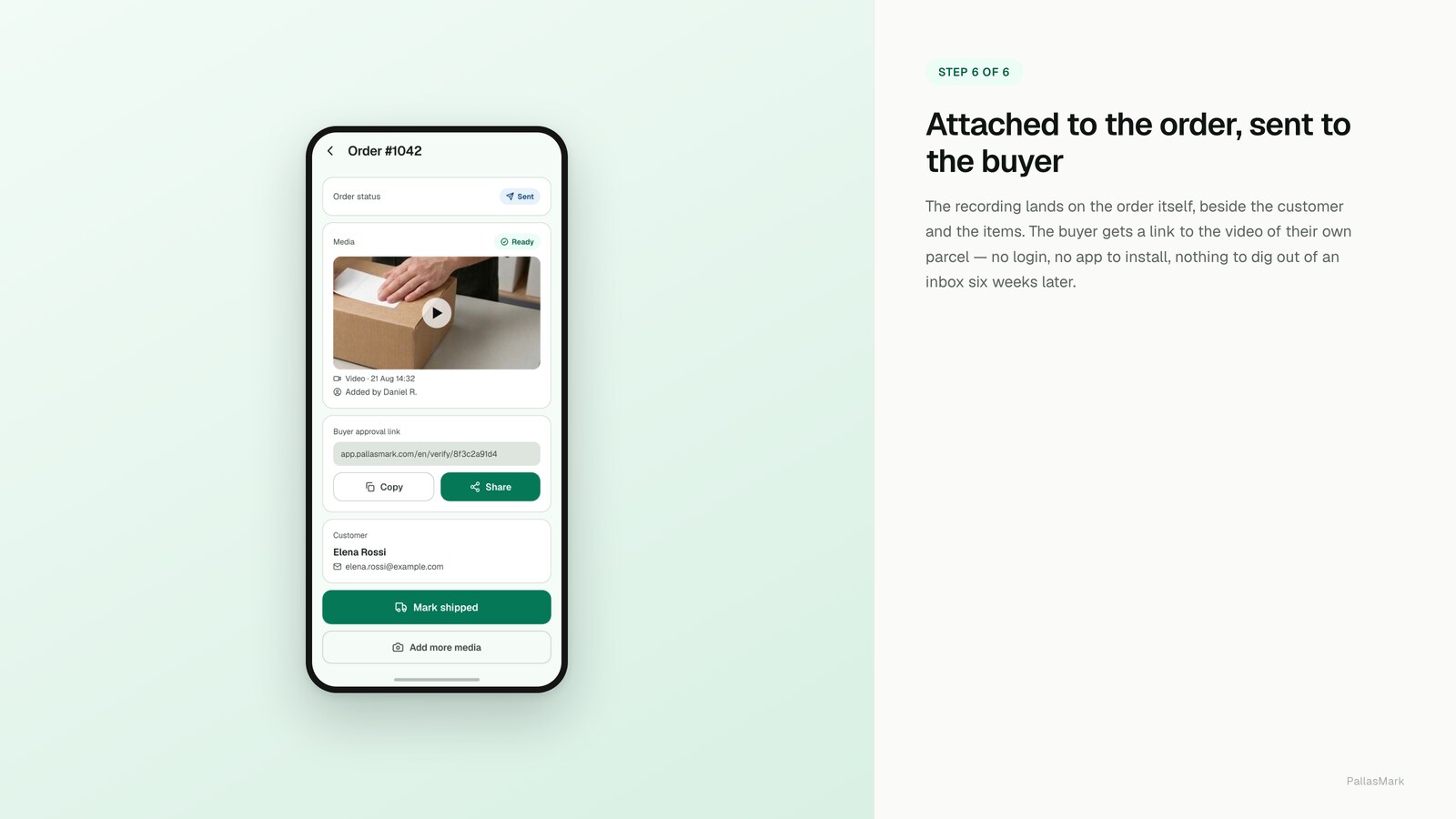
PallasMark records each order as it is packed, seals the file at capture so any later edit is detectable, ties it to the order, and produces a link a buyer, a platform reviewer or a carrier's claims desk can open and verify without an account. That is the carrier and insurance claim workflow in one place, and the same record answers the packing quality question the carrier asks next. If the claim you get most often is about which item shipped rather than its condition, start with proving which unit went in the box.
Frequently asked questions
Who is responsible when a package arrives damaged?
To the buyer, you are. Consumer-protection rules and marketplace policies put the obligation to deliver goods in acceptable condition on the seller, not on the carrier the seller chose. Whether you can recover that cost from the carrier is a separate question, and it turns on two things you must evidence: that the item was intact when you handed it over, and that it was packed well enough for normal transit.
The item is damaged but the outer box looks fine. What does that mean?
That is called concealed damage. It usually means one of three things: the packing was too thin to absorb normal handling, the damage happened after delivery, or the item was already damaged when packed. Carriers scrutinise these claims hardest because there is no external sign of mishandling. A pre-shipment record rules out the third possibility, which is the one a reviewer otherwise assumes.
Does a packing video actually help with a damage claim?
Yes, for the specific question of condition before sealing. A recording that shows the item intact, the padding used and the box closing is the only record of the moment the parcel left you. It does not prove what happened in transit, and it does not decide fault on its own. It removes the possibility that you shipped a damaged item, which is the accusation you otherwise cannot answer.
Are photos enough, or do I need video?
Photos answer condition. Video answers condition plus sequence: that this item, for this order, went into this box with this padding, in one unbroken take. For low-value orders photos are usually proportionate; for fragile, high-value or frequently disputed items, the sequence is what closes the gap a reviewer would otherwise fill with trust.
The buyer refuses to send photos. What then?
Every major carrier requires damage photos to process a claim, so a buyer who will not provide them has blocked the claim they filed. State that plainly and politely, in writing, on the platform's own message record rather than by email.
Should I tell the buyer to keep the damaged packaging?
Yes, immediately and in writing. Carriers can require an inspection and will refuse a claim if the packaging has been discarded. Ask in your first reply, before the buyer tidies up. It is the single most common way a winnable claim is lost.
Will insurance cover it?
Only up to the carrier's default liability unless you bought declared value or third-party coverage for that shipment, and only if the claim survives the packaging test. Insurance does not remove the evidence requirement; it sets how much you can recover once the evidence has done its job.
How long do I have to file a carrier claim?
Days, not months, and each carrier publishes its own window, commonly around 60 days for domestic parcels and shorter for international, but you should confirm the current figure on your carrier's own claims page rather than relying on any article. Start as soon as you have the buyer's photos: more claims are refused for missing the deadline than for weak evidence.
- shipping damage
- carrier claims
- disputes
- evidence