How to Document Freight Damage at Warehouse Receiving

On this page
A crushed carton at the dock creates an immediate operations question: can the load be unloaded, inspected or accepted safely? It can also create a later documentation question: what did the team see when the shipment arrived, and which records belong to that load?
Those questions are connected, but they are not the same. Receiving and quality procedures govern safe handling, counts and acceptance decisions. A condition record helps colleagues, suppliers, 3PL clients, carriers or insurers review the event. It cannot determine who caused the damage by itself.

Inspection and evidence answer different questions
A receiving inspection asks whether the delivery matches the purchase order, advance ship notice, specification or site procedure. It may include counts, lot checks, sampling, measurements, temperature checks or a quality decision.
A condition record asks what was visible at a particular moment and which shipment it was associated with. It can document packaging, labels, damage and the sequence in which an authorized inspection took place. It does not replace the receiving report, a quality nonconformance record, or a carrier claim.
| Workstream | Main question | Typical owner | Useful record |
|---|---|---|---|
| Receiving | Did the load arrive, and do the references and quantities match? | Receiving team | BOL, PO or ASN match, count, receiving report |
| Quality inspection | Does the item or lot meet the applicable specification? | Quality team | Inspection plan, measurements, nonconformance or disposition |
| Condition documentation | What could the team see before the load was moved or opened? | Receiver or assigned operator | Shipment-linked photos or video, time and location, observations |
| Claim handling | What notice and supporting material does the carrier, supplier or insurer require? | Claims, procurement or logistics | Claim file, correspondence, invoices and requested supporting documents |
A single pallet may need entries in several systems. Keep each system's job clear, and use a shared shipment reference so the records can be found together later.
A practical freight-damage workflow at the receiving dock
Treat the sequence below as a starting point for a site SOP. Adapt it to your dock-safety rules, product risks, customer agreements and carrier instructions.
1. Make the scene safe before documenting it
Follow local procedures for dock plates, unstable loads, hazardous materials, leaks, exposed machinery and damaged containers. Stop work and escalate if the pallet is leaning, the packaging is wet or leaking, a load could shift, or the contents may create a hazard.
Do not move, climb on or open an unsafe load to improve a photo. Safety controls and trained handling take priority over evidence capture. If the scene must be changed for safety, record why and what changed through the normal incident process.
2. Identify the shipment before paperwork and freight separate
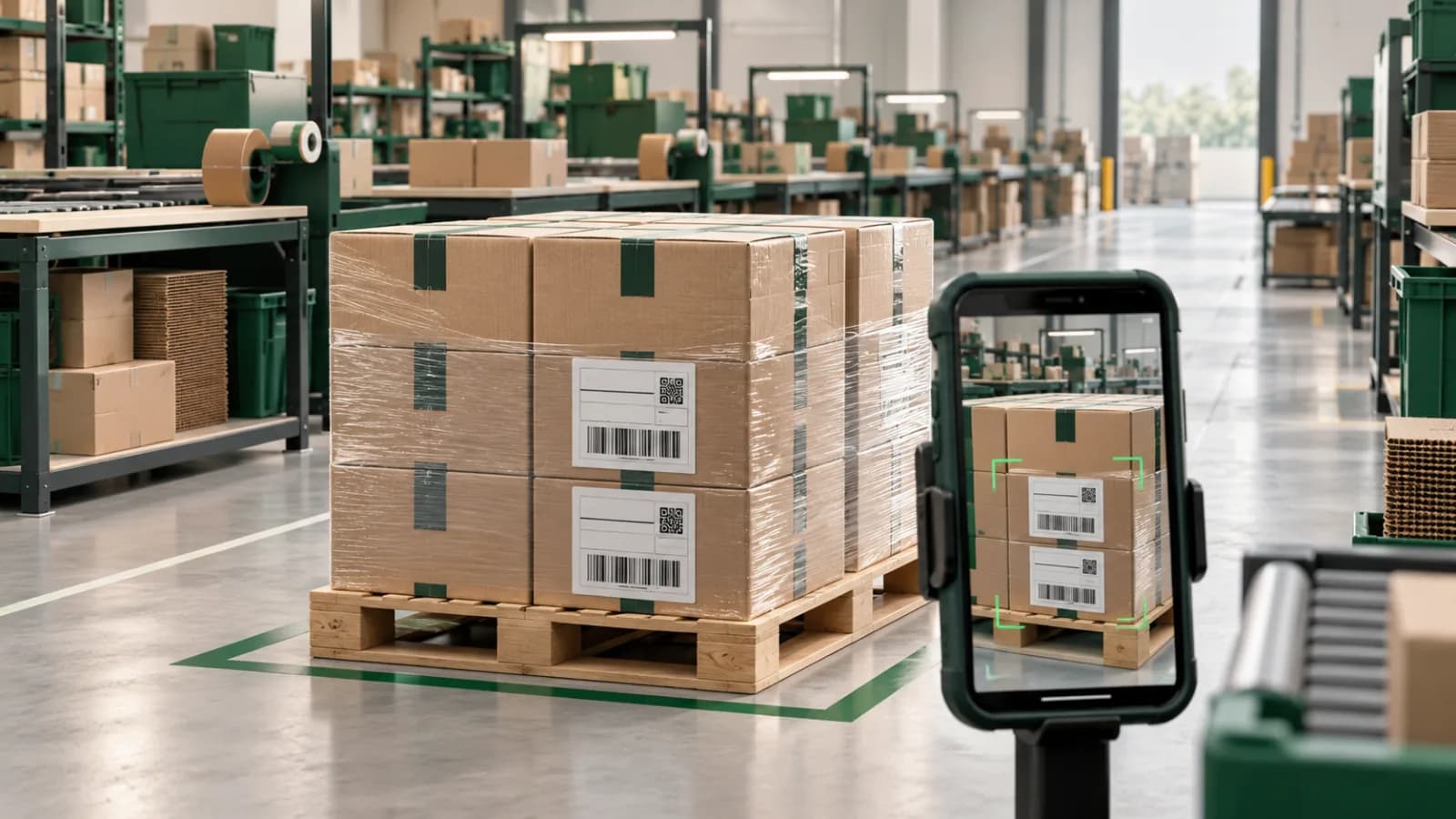
Match what arrived to the references used at your site. Depending on the lane, that may include the bill of lading (BOL), purchase order (PO), advance ship notice (ASN), delivery receipt, PRO number, parcel tracking number, trailer or container reference, and seal number.
Record the receiving date and time, facility or dock, carrier, and the pallet or carton identifiers relevant to the exception. If your process captures expected quantities, write down the expected count before comparing it with the count on the dock.
Shipment identity matters because a clear photograph without a traceable BOL, PO, label or pallet reference can be difficult to connect to the correct receiving or claim file.
3. Record the outside condition before unloading or opening
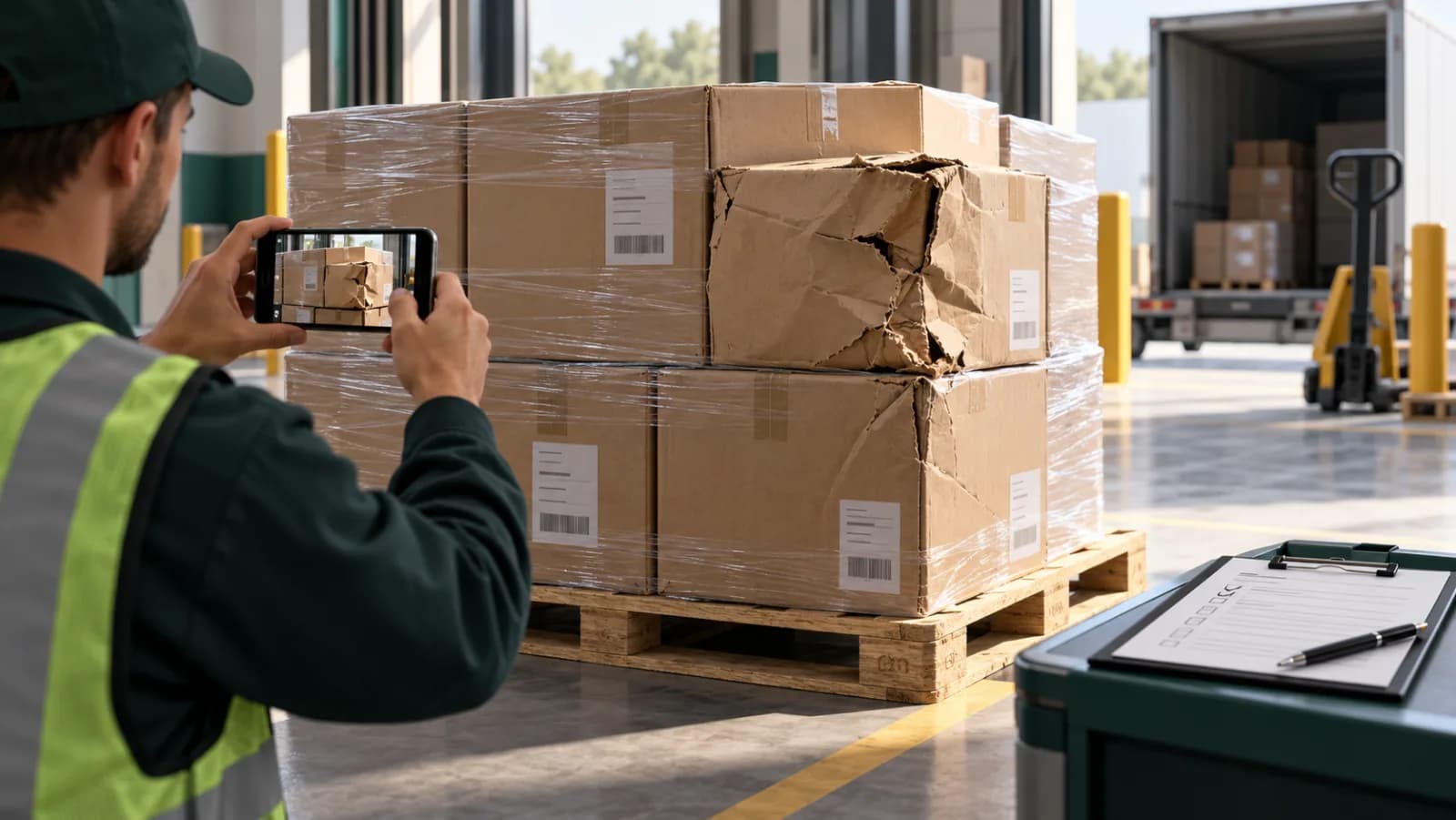
If it is safe and allowed by site procedure, begin with a wide view that shows the pallet or package in context. Then capture the shipping label or other identifier, each affected side, and close-ups of the visible damage. Include enough undamaged packaging in a close-up to show where the damage is located.
For a palletized load, useful views may include the full pallet, stretch wrap, pallet base, top and sides, damaged cartons, visible product, labels, and any load position that helps explain the observation. Record what you see in neutral terms: “carton 4, lower-right corner crushed; inner foam visible” is more specific than “carrier mishandled the load.”
A photograph can show a condition. It may not show whether that condition existed before transit, arose during unloading, or was caused earlier in the supplier's facility. Keep observation and attribution separate.
4. Use receiving documents to note visible exceptions
Follow the delivery-receipt process for your shipment and location. If site procedure or carrier instructions call for an exception notation before signature, describe the specific visible issue and retain the copy or record produced by that process.
Do not assume a delivery note, BOL notation or receiving report is itself a formal claim. For claims within the scope of 49 CFR Part 370, § 370.3 sets minimum written-claim elements: a communication filed with the proper carrier within the applicable time, facts identifying the shipment, an assertion of liability, and a specified or determinable amount of money. It also says damage notations and inspection reports standing alone do not meet those minimum filing requirements. See the current eCFR text of 49 CFR Part 370.
That rule applies to the claims described by the regulation; other shipments may be governed by different laws, modes, contracts or tariff terms. Check the documents and qualified claims guidance for the shipment in front of you.
5. Inspect and unpack under the correct procedure
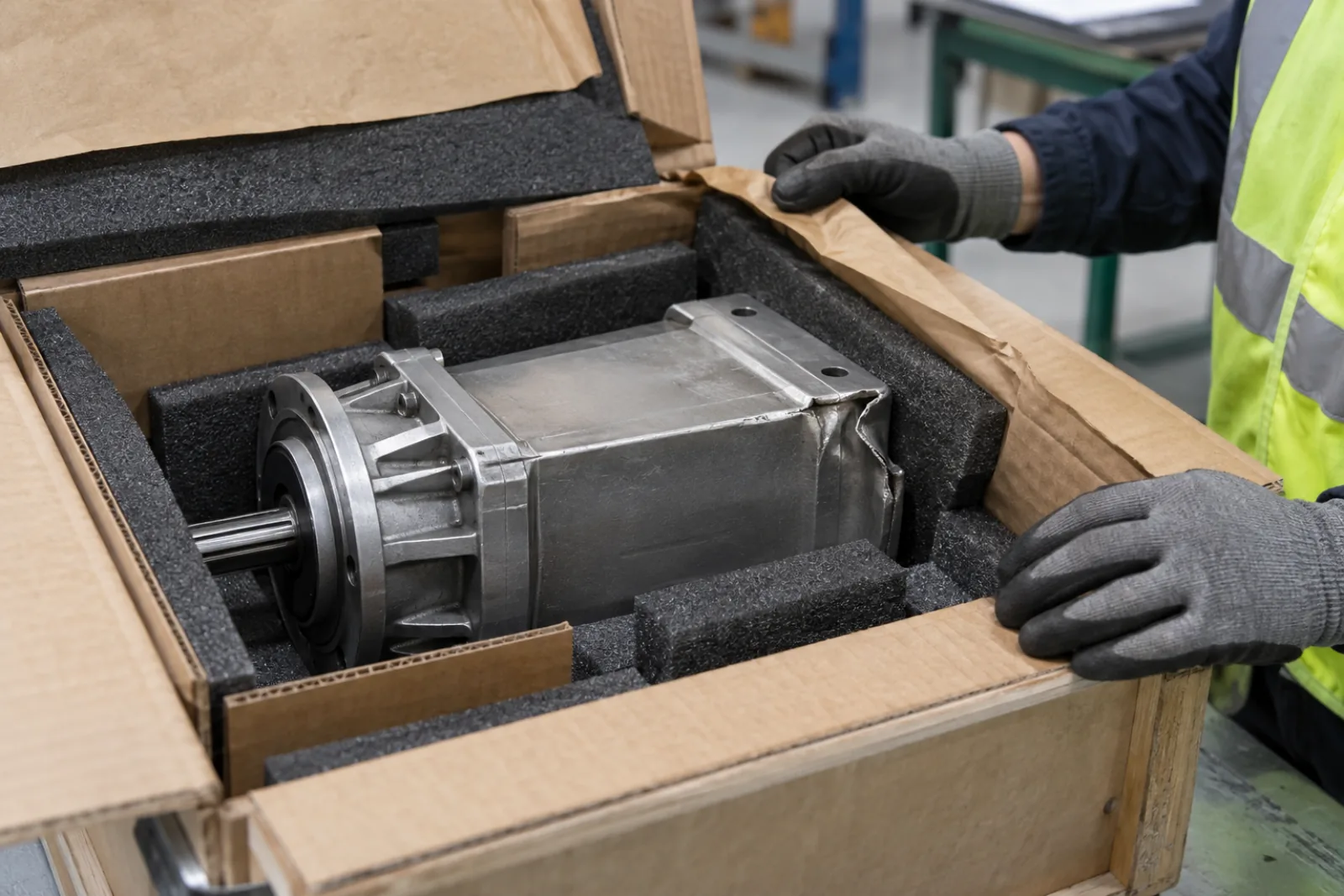
Once the load is in a safe inspection area, use the applicable receiving or quality procedure. If opening is authorized, preserve the sequence where practical:
- Record the exterior, label and visible package condition.
- Show the package being opened, if a video is useful and permitted.
- Photograph internal bracing, foam, wrap or other protective material.
- Record the product, part number, lot or serial number and the observed condition.
- Keep measurements, sampling results and pass/fail decisions in the quality system.
This helps a reviewer understand what was observed as the package changed. It still does not prove exactly when damage occurred. A visual record also cannot determine whether a machined component is within tolerance or whether a lot meets a specification; those decisions belong to the authorized quality process.
6. Separate damage from quantity and identity discrepancies
OS&D means overage, shortage and damage. Teams may use it as a broad receiving or freight category, but keep each finding concrete and distinct in the record:
- Damage: identify the package or item and describe the visible defect.
- Shortage: record expected and counted pallets, cartons or units, plus the list used for comparison.
- Overage: identify extra packages or units and keep them separate from the expected quantity.
- Wrong item or lot: capture the label, part/SKU, lot or serial reference and the expected record.
- Seal or package discrepancy: record the seal condition or number and the shipment reference under site procedure.
A count helps reconcile a shipment, but a photo alone may not establish the dispatch count. A label image may identify an item, but the PO or ASN usually supplies the comparison. Pair the evidence with the record that answers the same question.
7. Record what happened after arrival
The state of the load can change during unloading, staging, unpacking, inspection, repacking or internal transport. If damage is first noticed after one of those actions, record when and where it was found, who handled the load under your process, and what had already happened.
This is not a reason to assign blame prematurely. It gives the investigation a more useful timeline and helps separate damage visible at arrival from damage discovered later in the warehouse.
8. Escalate and preserve the relevant material
Route the exception to the receiving lead and whichever team owns the next decision: quality, procurement, logistics, the supplier, a 3PL client, carrier or insurer. Use the communication channels and timing in your contract and internal process.
Keep damaged goods, packaging, labels and related records available if inspection may be requested. Do not repair, discard, return or salvage material until the responsible parties and site procedure confirm the next step, unless safety or law requires immediate action. Record any required safety disposal or movement.
What a useful receiving damage record contains
A practical record connects the observation to the shipment, describes what was visible and points to the related operational record.
| Field | Example or guidance |
|---|---|
| Shipment reference | BOL, tracking or PRO number, PO, ASN or delivery reference |
| Arrival context | Date and time, facility, dock, carrier and trailer/container reference when available |
| Load identity | Pallet/carton number, SKU or part, lot/serial number, seal reference if used |
| Expected vs. observed | Expected and actual counts; note the source of the expected quantity |
| Condition observed | Exact location and visible condition, without guessing at cause |
| Evidence references | Photo/video filenames or record links; keep each file tied to the shipment |
| Process stage | Before unloading, after staging, during opening, after inspection or another named point |
| Disposition | Hold, quarantine, accept with exception, inspect further or other action under site authority |
| Notifications | Internal owner and external party notified, channel, date/time and reference |
| Supporting material | Receiving report, delivery receipt, packing list, photos, invoice or requested documents |
If you need a starting format, use a short description such as:
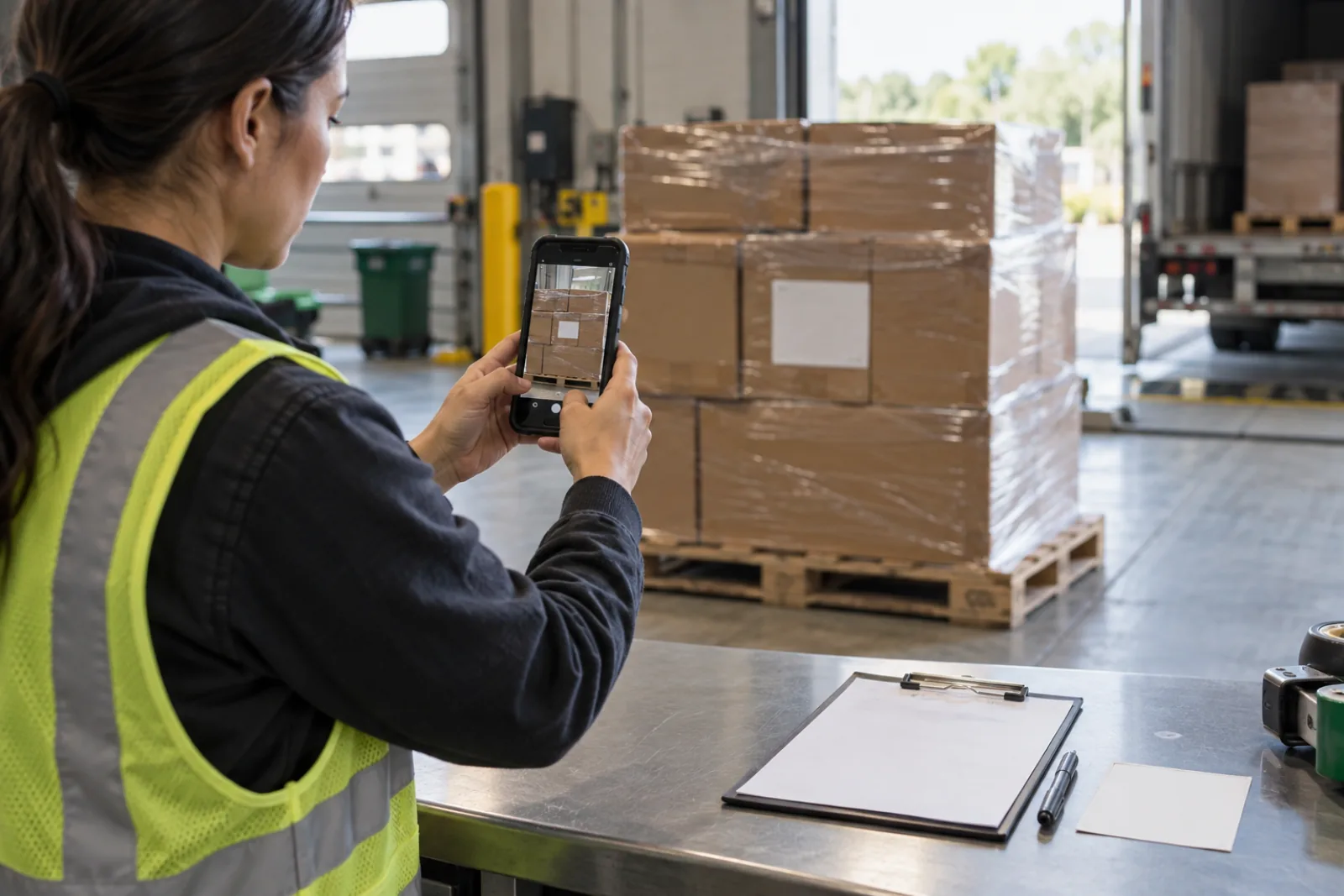
Photo or video: choose the format for the question
Start with the carrier's current instructions. A carrier may request particular still photos or documents even when your team also has a video.
| Still photos are useful for | Video can add context when |
|---|---|
| A sharp close-up of a damaged edge, torn wrap or wet carton is needed. | A sequence matters, such as an authorized opening from exterior condition to inner packaging. |
| A shipping label, tracking number, part number or serial number must be legible. | The receiver needs to show the order in which several visible steps took place. |
| The reviewer needs to compare separate sides, labels or items. | A broader view of how a package was handled or inspected is useful. |
Video can be harder to review for small details; a still image can make a label or defect easier to inspect. Photos show selected moments, while a continuous recording may provide more sequence. Neither format is automatically accepted by every carrier, and neither automatically proves cause or liability. Use the media types the relevant carrier, customer or claims process requests.
For example, UPS's current U.S. damage-claim guidance calls for a photo of the damaged item and its packaging, a close-up of the shipping label and tracking number, and a view of the outside of the package showing damage. It also asks for package dimensions and says a UPS-approved physical inspection may be needed. Those are UPS instructions, not universal requirements for every carrier or freight mode. Check UPS supporting documents for claims for the current details.
Preserve useful context without overstating what a file proves
A record is easier to review when the original files stay associated with the shipment and the receiving event. Use a naming or record-linking approach that lets another person find the files later. Keep the original media; if a close-up or annotation helps, retain it as a separate working copy rather than replacing the source.
Record the capture stage and the reference that ties it to the load. Follow your company's retention and access rules, and avoid including unrelated customer, employee or shipment data in a frame.
Metadata or a file-integrity check can help with organization or reveal whether a file changed after capture, depending on the system. Neither alone proves the physical scene, the capture time, or the party responsible. A clear process and consistent records are more useful than a claim that one photo or video settles a dispute.
Download the printable receiving damage record
Use this two-page worksheet to keep shipment identity, observed condition, quantities, evidence references and notifications together while your team follows its own receiving and claim procedures.
Printable resource
Warehouse Receiving Damage Record
A two-page worksheet for shipment identity, observed condition, quantity checks, evidence references and notifications.
An operational note-taking aid only. It is not a carrier form, claim submission, or substitute for the instructions and deadlines that apply to your shipment.
Print one copy per affected shipment or use it to define the fields in your digital receiving workflow. It is an operational note-taking aid, not a carrier form, claim submission or substitute for contract-specific instructions.
Where PallasMark fits in a receiving workflow
PallasMark can give a team a place to capture photos or video in pallet and facility context, associate a record with operational references and share that record with the appropriate people. That makes a receiving event easier to retrieve and review alongside the team's normal process.
It is a visual documentation layer. It does not replace a WMS, ERP, quality management system or claims department; measure a part against a specification; reconcile a manifest; decide acceptance or quarantine; determine who caused damage; or file and resolve a carrier claim.
See PallasMark for warehouses and Warehouse Proof for the product workflow. For the related carrier and insurance use case, see recording damage evidence in a warehouse. For outbound warehouse capture, see warehouse packing video proof.
Sources and scope
- 49 CFR Part 370, including § 370.3 — U.S. motor-carrier claim processing scope and minimum claim communication elements.
- UPS supporting documents for claims — current UPS U.S. examples of requested damage-claim photos, dimensions and possible inspection.
Carrier requirements, deadlines, laws and contracts can change and vary by route and mode. Check current governing documents for the shipment. This article is operational information, not legal advice.
Frequently asked questions
What should a warehouse do when a shipment arrives damaged?
First make the area safe. If safe, record the shipment identifiers and visible condition before moving or opening the load, note specific exceptions through your receiving process, count and describe discrepancies, then notify the appropriate internal team, carrier or supplier under the terms that apply.
Is a note on the delivery receipt enough to file a freight claim?
Not by itself for claims within the scope of 49 CFR Part 370. Section 370.3 lists minimum written-claim elements and says damage notations or inspection reports standing alone are not sufficient. Check the law, bill of lading and contract that apply to your shipment.
What photos should I take for freight damage?
Start with the carrier's current instructions. A useful general record includes the full load, the label or tracking reference, each damaged area in context, close-up detail and the packaging. Carriers may ask for specific views, documents or an inspection.
Should I take photos or video of concealed damage?
Follow the carrier's requirements first. Photos make labels and small defects easier to review. A continuous video can add sequence to an authorized unpacking, while still photos can capture details. Neither format by itself proves when damage happened or who caused it.
How quickly must concealed damage be reported?
There is no single deadline for every shipment. The period and notice process can depend on the carrier, transport mode, contract, route and applicable law. Check the governing documents and current carrier instructions as soon as the damage is discovered.
Does a receiving photo prove that the carrier caused the damage?
No. It records what was visible at a particular point in the receiving process. By itself it does not establish when, where or by whom the damage occurred.
- warehouse receiving
- freight damage
- receiving inspection
- OS&D
- shipment evidence