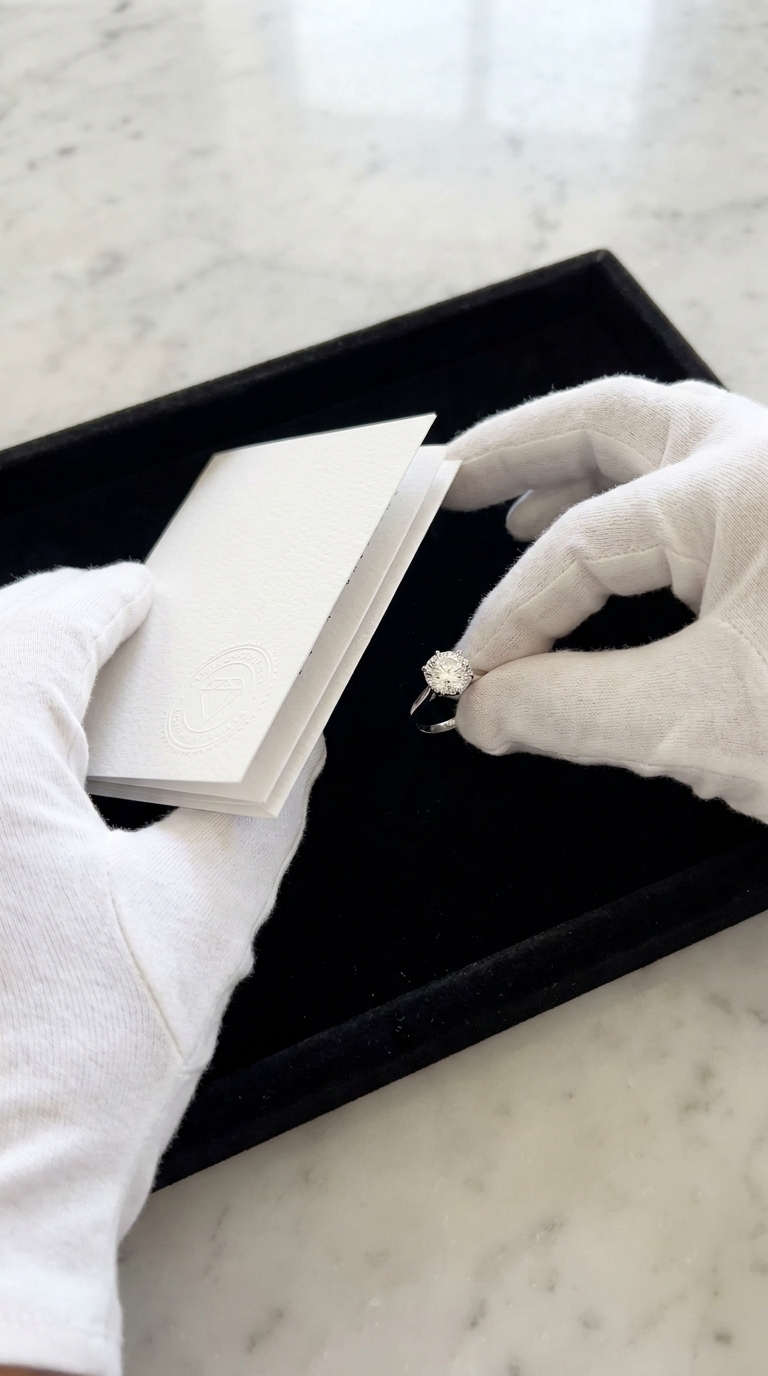
Piece and paperwork together01
The certificate and the piece, in one recording
Show the certificate number next to the piece, then the box and insured packaging, so “certificate does not match” has a clear answer.
Use case · Jewelry and diamonds
Film the piece, its certificate and the packing in one take. When a four-figure order is disputed, show exactly what left your hands.
What changes for high-value orders
Show the certificate number next to the piece, then the box and insured packaging, so “certificate does not match” has a clear answer.
Send the packing video for approval before dispatch, and keep their answer, time and device with the order.
Frames from the video, the approval and the delivery tracking go into a single PDF you upload with your response.
02 — The record
Nothing here is a mock-up: every screen is the app as it ships, and every frame is the same bench, in order.
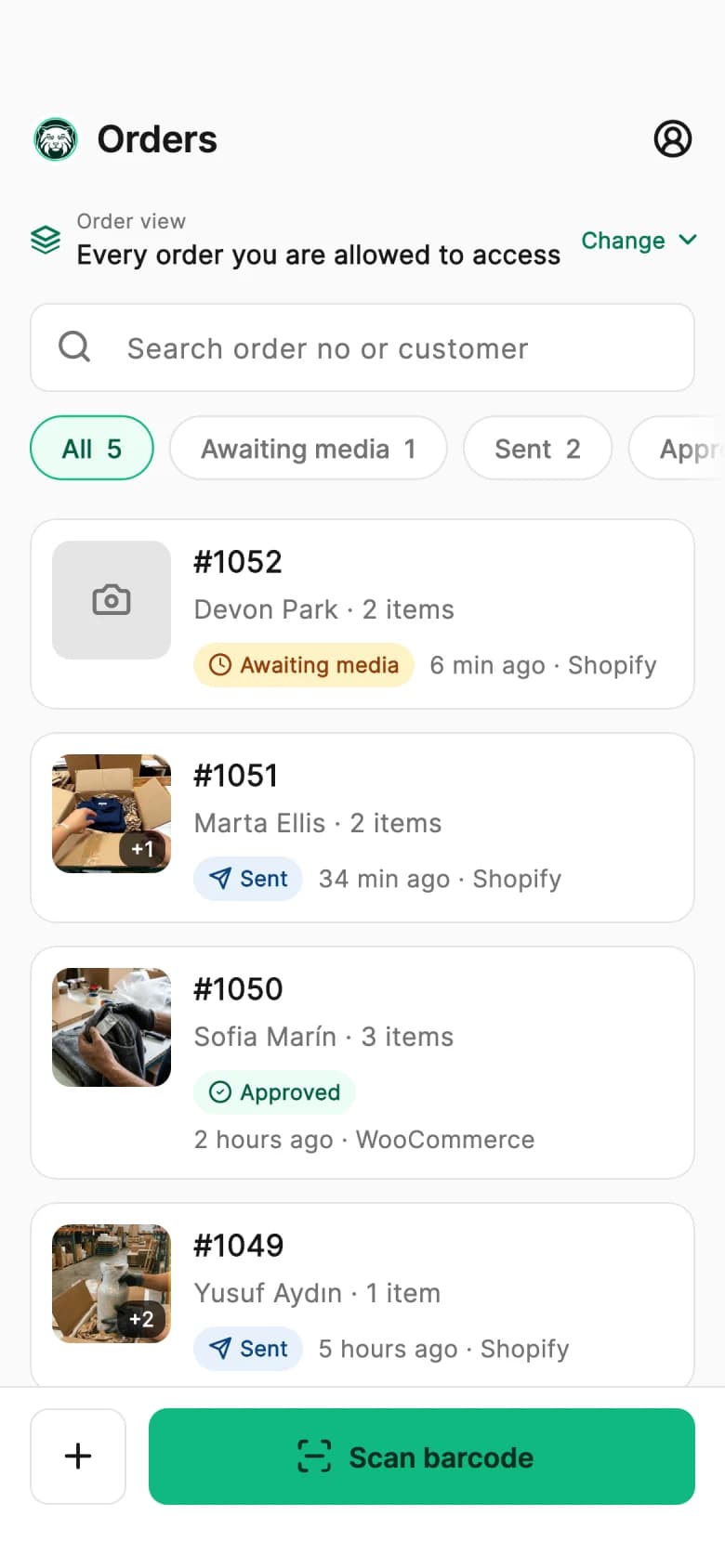
Orders come in from Shopify or WooCommerce and land in the list, with the ones still waiting for a recording marked. Nobody retypes an order number at the bench.
The barcode on the slip opens the right order directly. That is the moment the recording is bound to an order — before anything is filmed, not after.
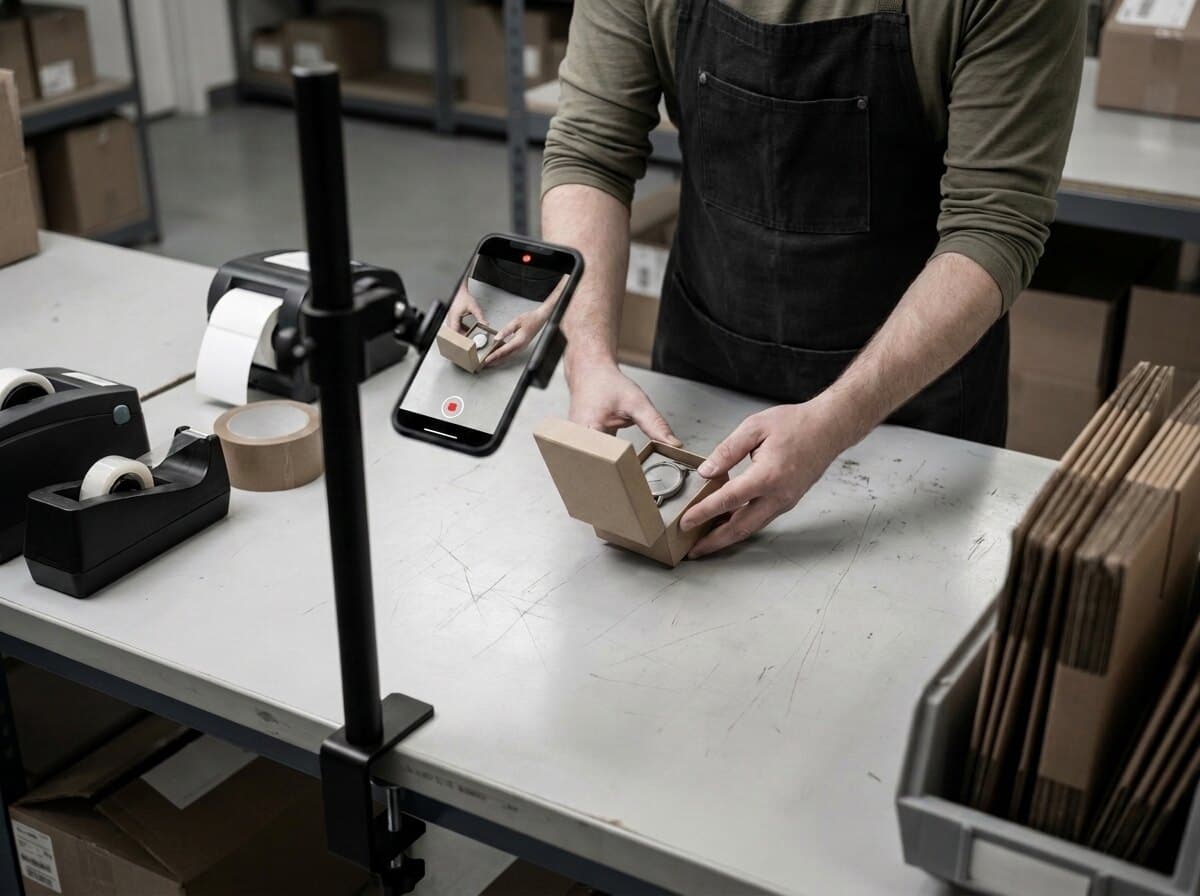
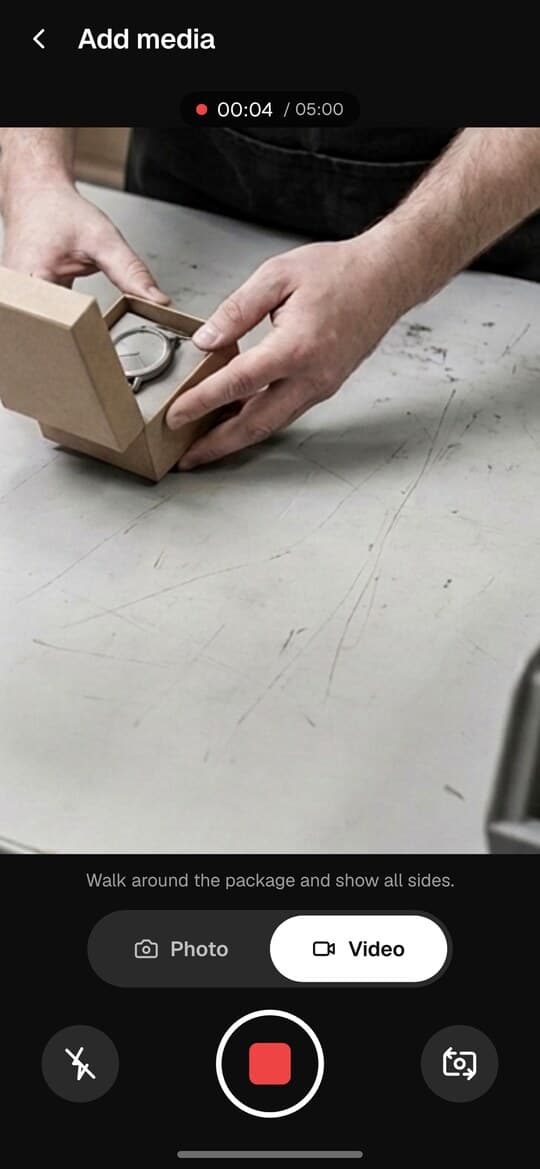
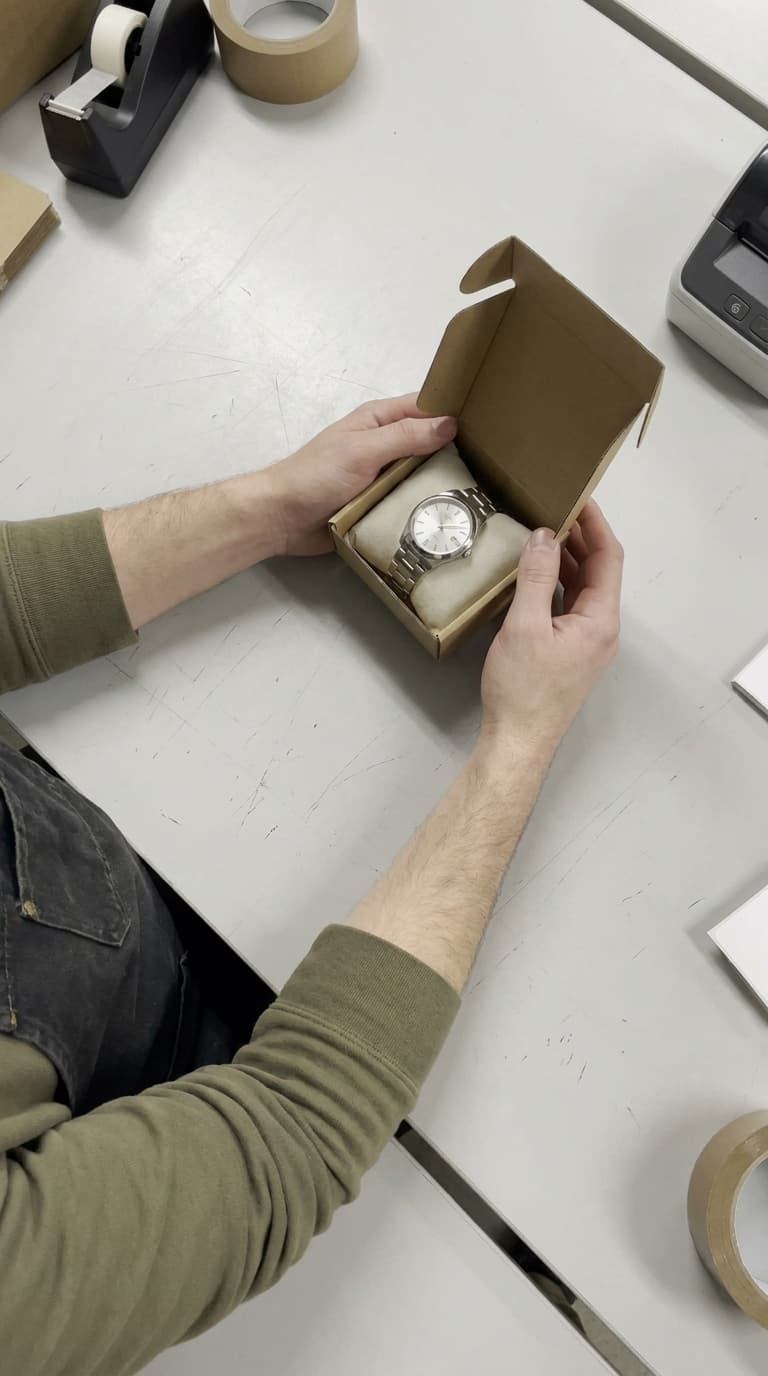
The take opens on the item itself: what it is, what condition it is in, that it is the right one. The phone is already in the room; there is no camera to mount.
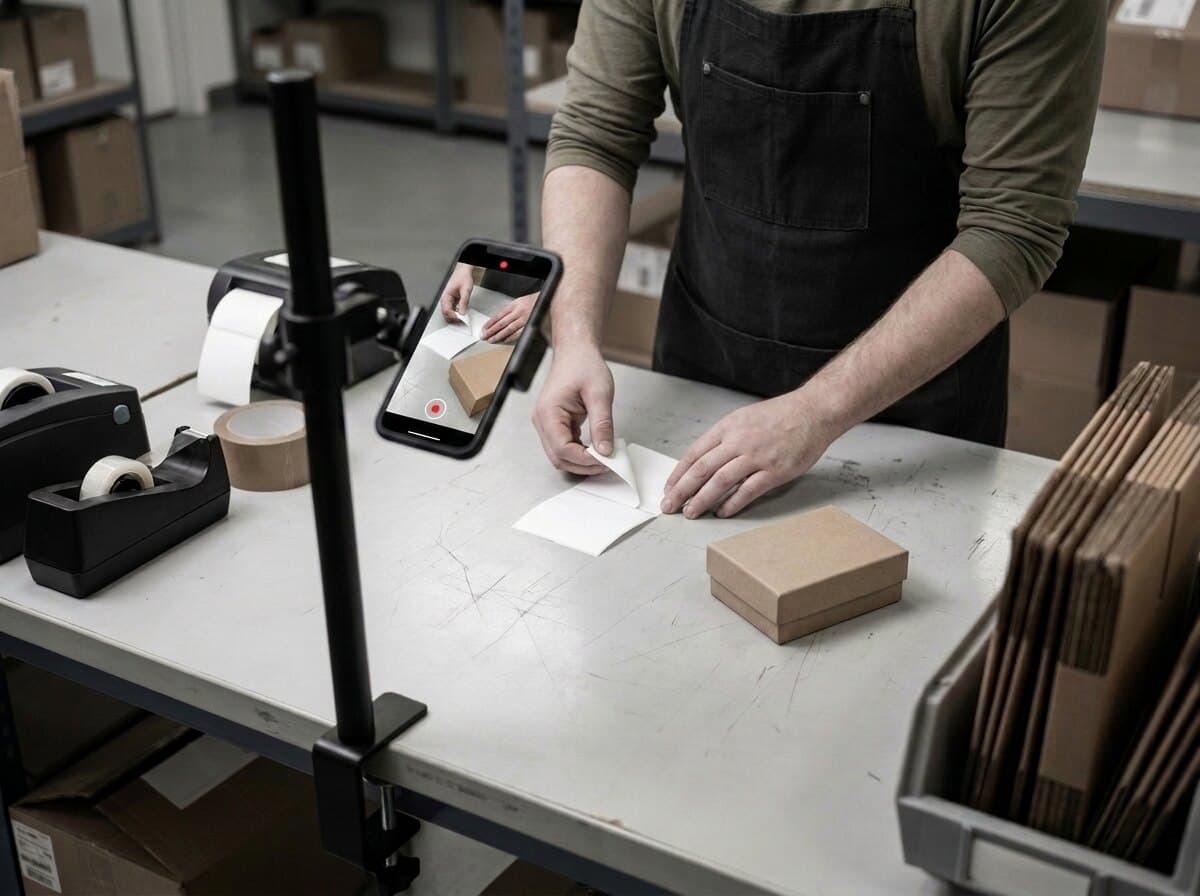
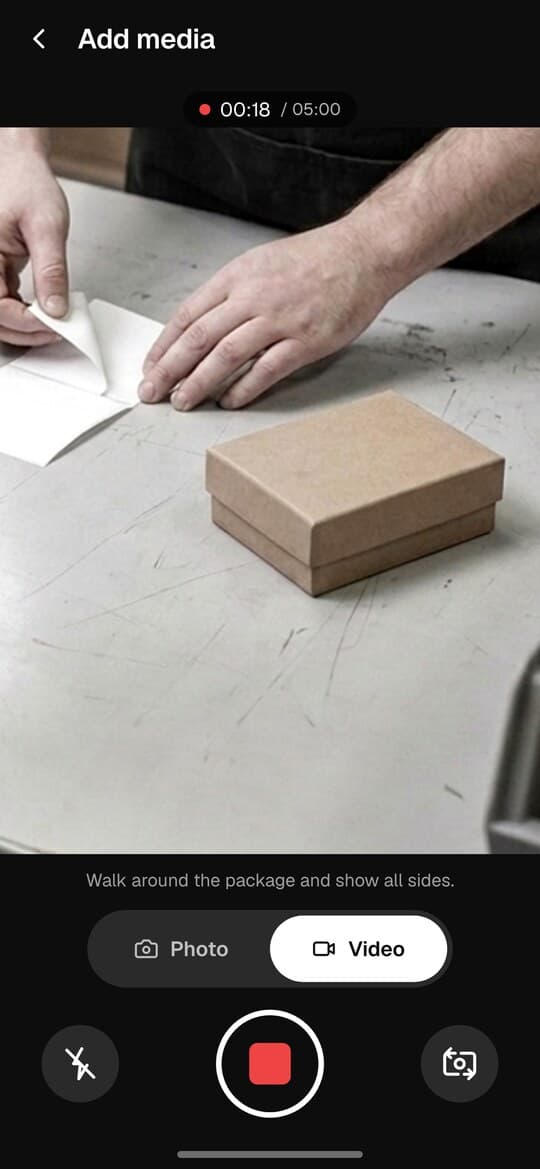
The label goes on camera before it goes on the box. From this frame on the parcel is not any parcel — it is this order, and that link is what a dispute turns on.
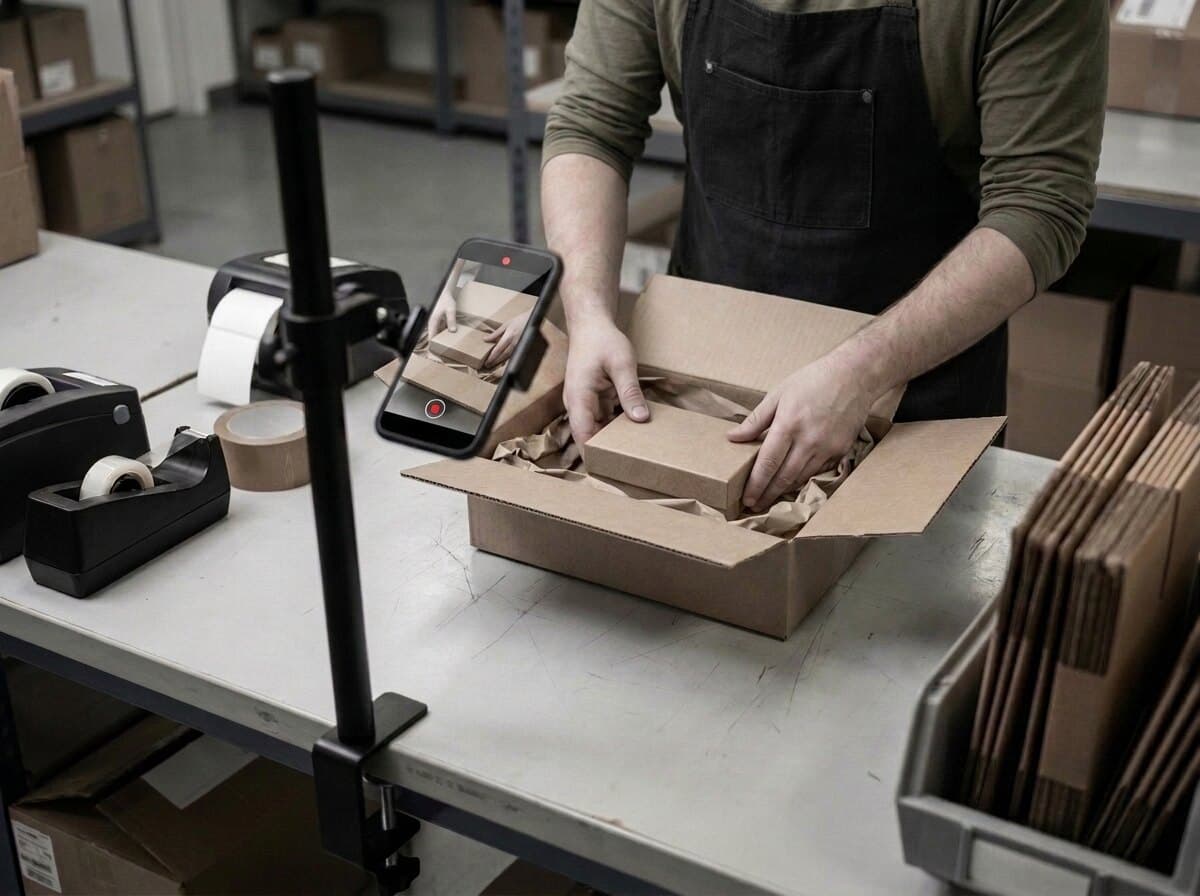
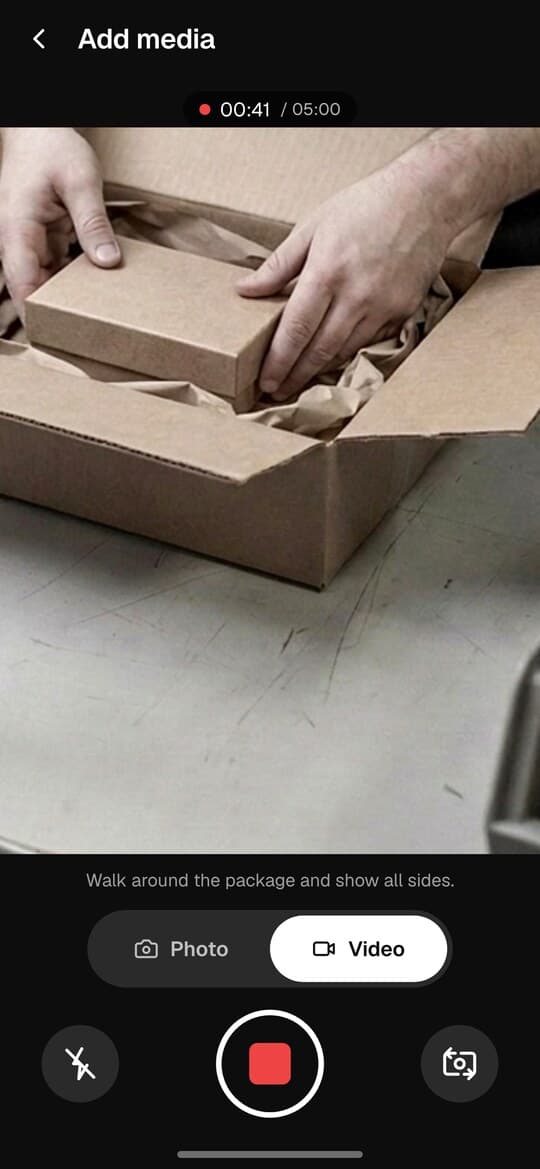
Padding, placement, the inner box closing — all inside the same unbroken take. A cut is a place a reviewer can imagine something happening off camera.
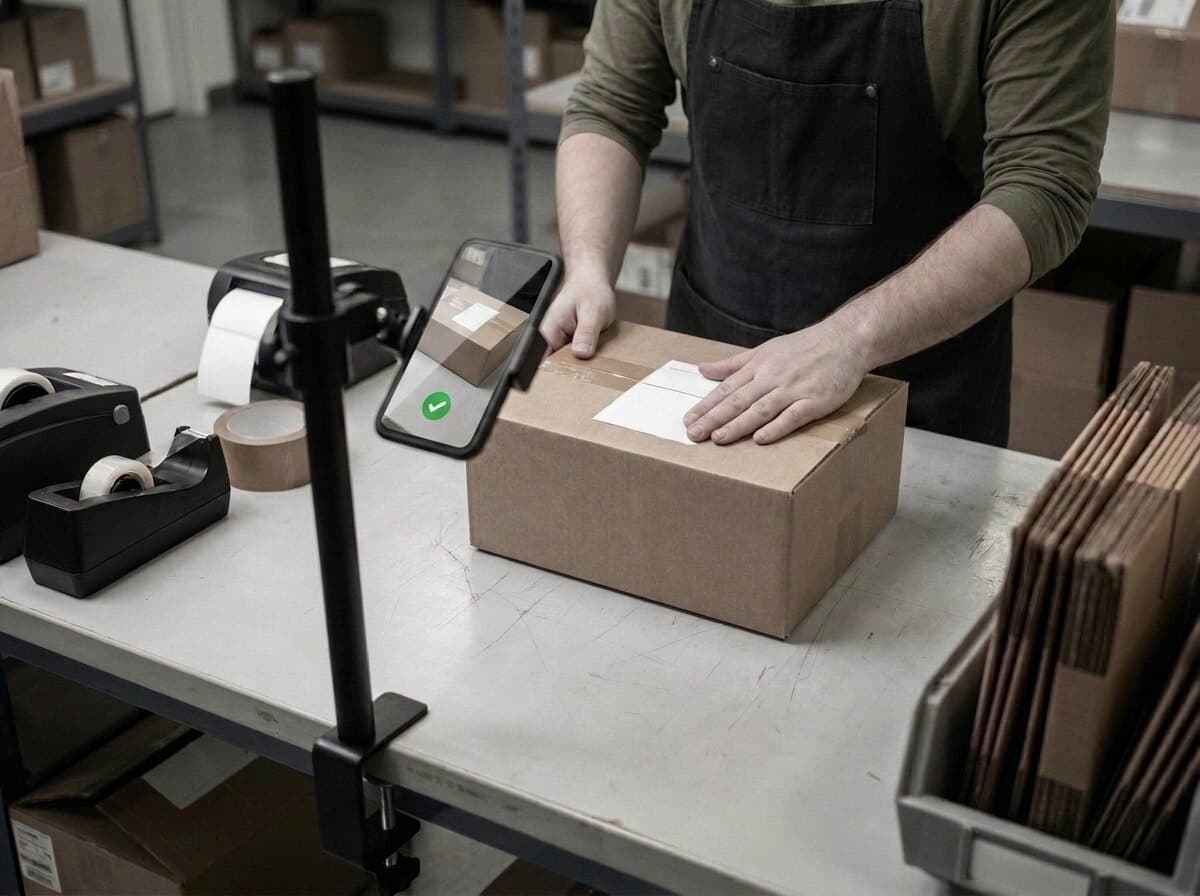
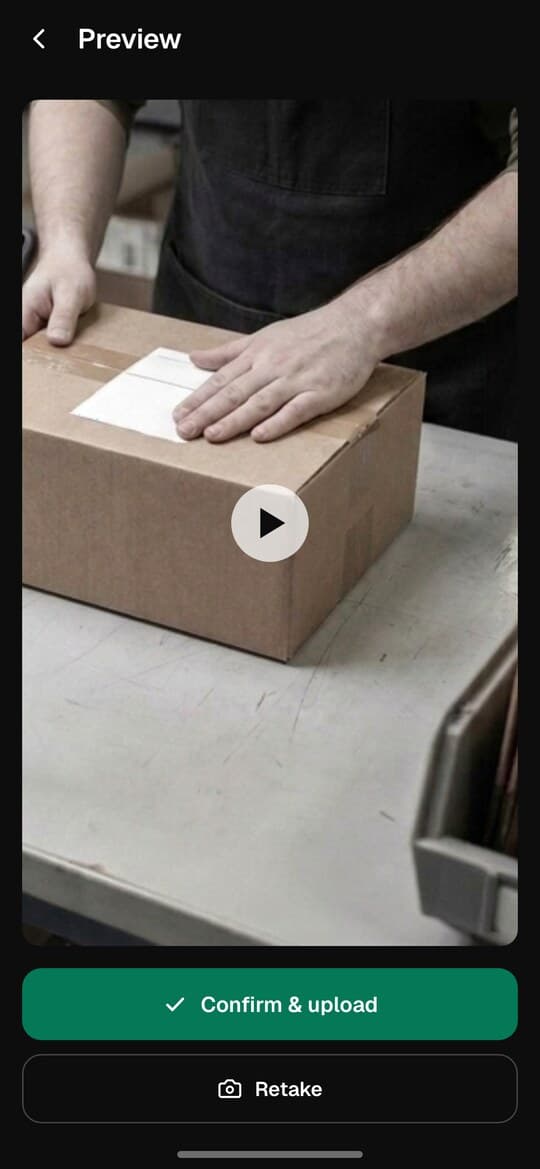
The take ends when the parcel does. One look at what was captured, one tap, and the file is uploading — it finishes on its own even if the signal drops.
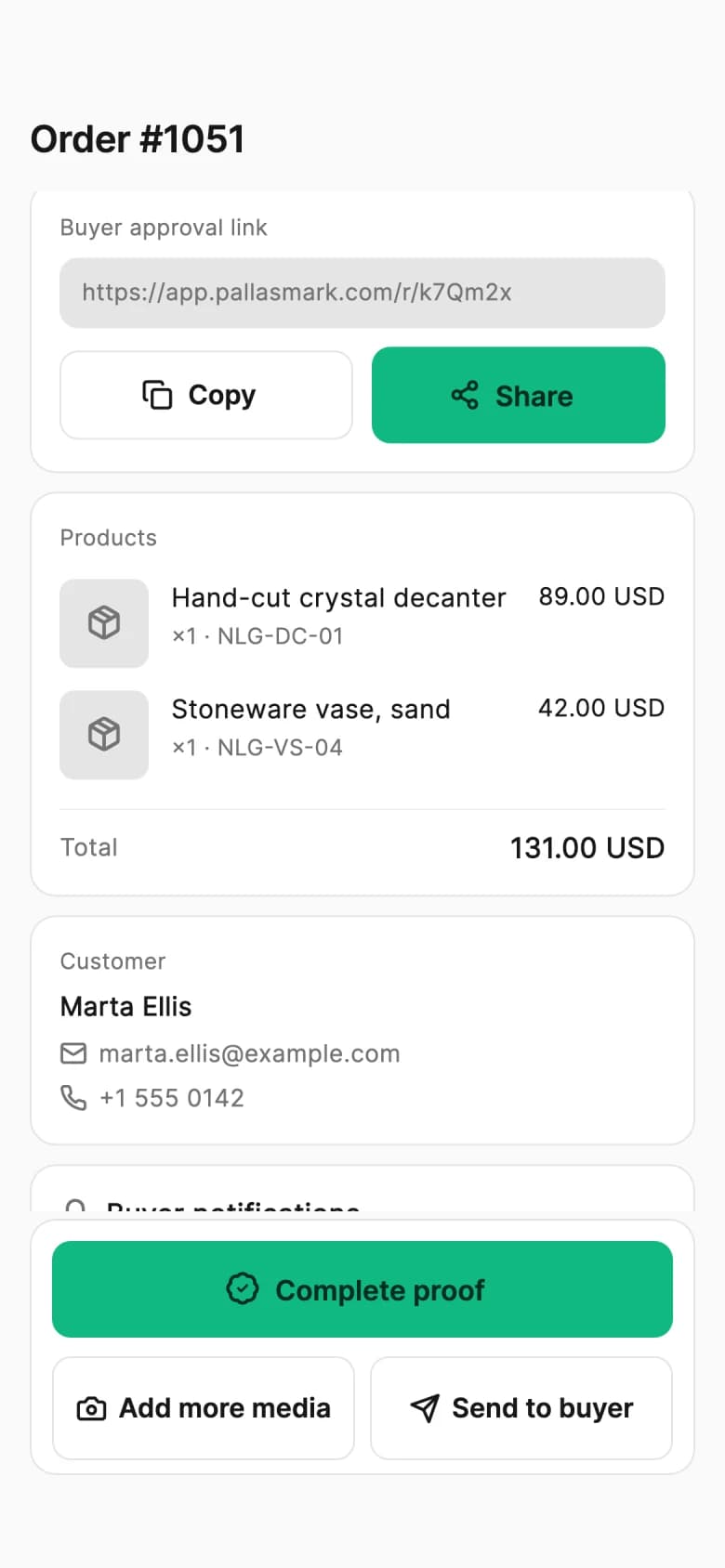
The recording lands on the order itself, beside the customer and the items, with who added it and when. The buyer gets a link that opens with no account.
Not a sample and not a video of the product — your own clip, through the real pipeline, ending on a real verification page you can send to anyone.
Takes about a minute. Nothing is installed and no card is involved.
02 — The seal
The recording becomes a single proof file and locks: no one can change it afterward, not even you. Anyone who opens the link sees exactly the same record.
Once sealed, the link always opens the same record — so the buyer can trust what they see.
What's locked in this file
03 — Dispute day
Nine days after delivery, the buyer files a dispute. Your answer is a single link: the sealed record.
Customer · Order #4172
online
The item isn't what I expected — a different stone arrived.
2:32 PM
Hello — I'm sharing the record we filmed before shipping. The item, certificate and packing are all in one file.
 Proof file · #4172pallasmark.com/v/9f2a
2:41 PM
Two possible endings
The only difference: whether you have this record or not.
Without proof
The dispute goes to the buyer; you lose both the item and the money.
With proof
You present the record and give the dispute a clear answer.
04 — The outcome
This is the moment you open the file and show it: the item, the process and the sealed package, all in one place.
05 — The math
On a high-value order, claims like 'wrong item', 'stone was loose', 'certificate does not match' or transit damage can put the full item value at risk. See it with your own numbers.
At-risk order loss
$2,400 /mo
Recovered (est.)
$840 /mo
Loss = orders x value x dispute rate x unfair/unsupported share
Estimate — rates are assumptions; final acceptance depends on the bank, marketplace, carrier or insurer.
Prevent your monthly loss with proof
Start free, no card required06 — Setup
Setting up the same flow in your own store takes four simple steps.


Connect your store
Shopify or WooCommerce, takes just a few minutes.
Set your rule
Require the record on the orders that matter most.
Create the first record
Film the item and its packing right before it ships.
Invite your team
Your shipping team captures the record as part of their own flow.
07 — Coverage
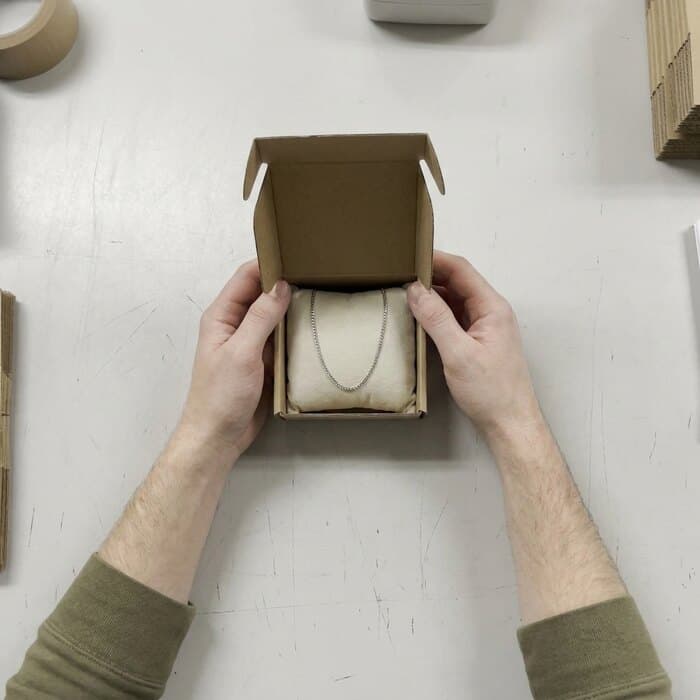
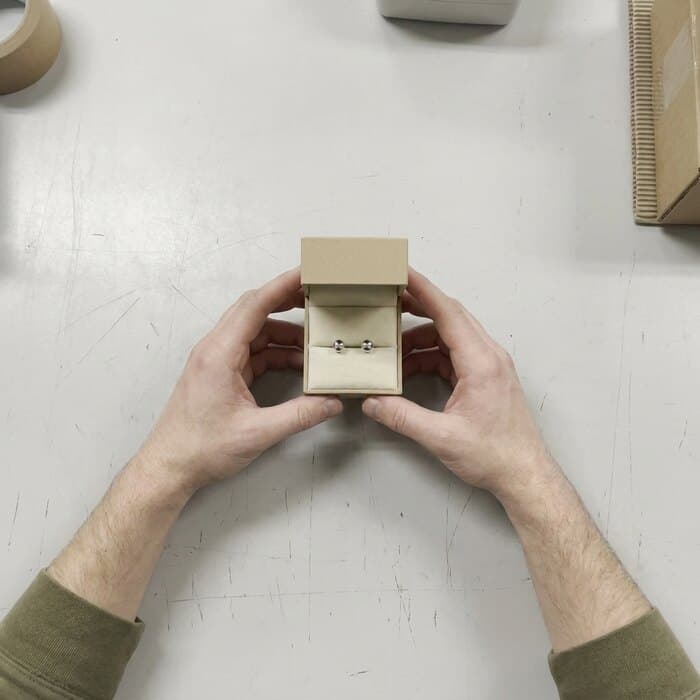
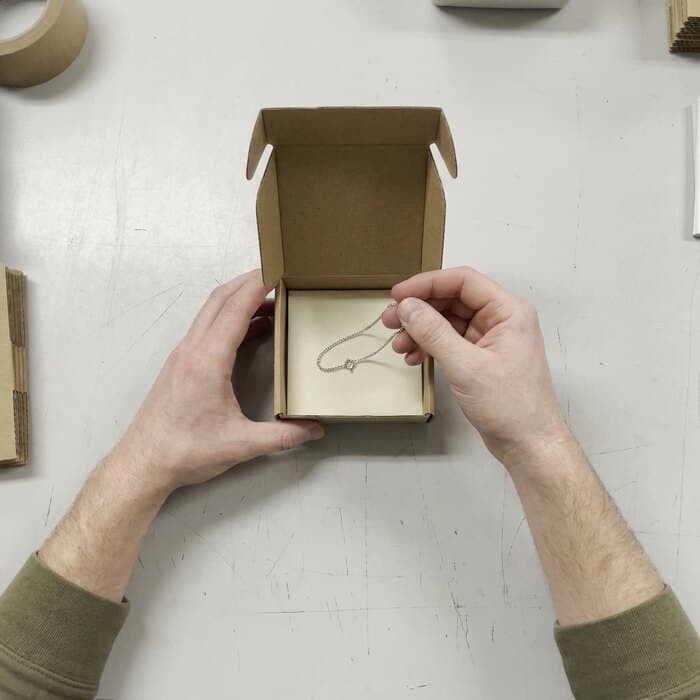
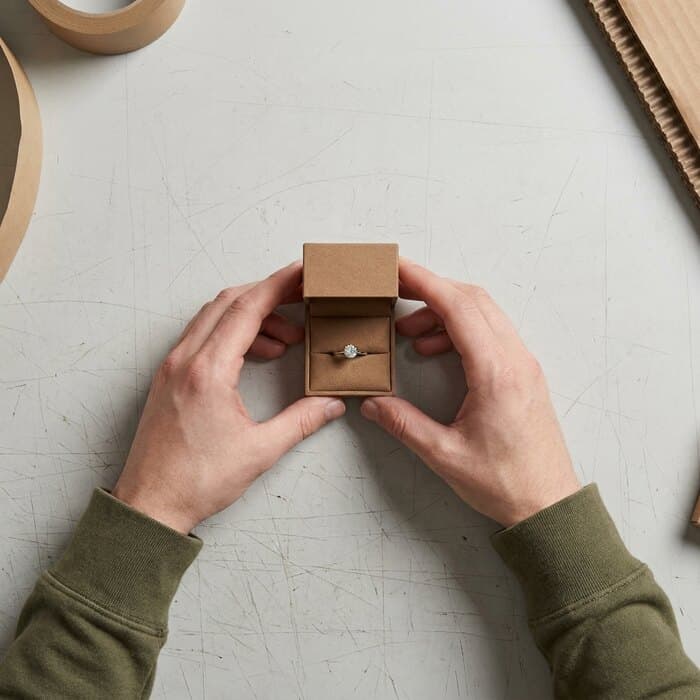
You can require it only above a value threshold or for certified products instead of every order.
There is no guaranteed acceptance claim; the record gives you a verifiable basis for how the item left your store.
It can be positioned the other way: 'Your order is protected with item, certificate and packing proof' reassures high-value buyers.
This is the claim that costs the most and it turns on identification. A recording that shows the piece clearly enough to see the setting, the stone and any hallmark, immediately before the box was closed, identifies the item that left you. A returned piece that differs is then a factual comparison rather than an argument.
Yes, and in the same unbroken take. A certificate filmed separately is a second file that has to be tied to the first; a certificate and piece in one frame are tied to each other by the recording itself. It is also the frame most often asked for in a dispute.
It helps with the part insurers query most: whether the item was what you say it was and left in the condition you say it did. It does not replace declared-value cover or a specie policy, and it does not decide whether a loss in transit is covered. Read your policy for that; use the recording for the identification question.
Longer is better here, and this is the one category where we would say so. On a four-figure order the extra thirty seconds spent turning the piece, showing the hallmark and filming the certificate costs nothing and closes the questions that actually get asked.
Tamper-proof video
Every recording gets a SHA-256 fingerprint and a public link anyone can use to check it.
Buyer approval
The buyer sees the packing video before dispatch and approves or reports a problem — on record.
Evidence rules
Buyer review above an order value, return evidence for the reasons you choose, sector templates.
How order-linked packing video proof works
Connect your Shopify or WooCommerce store and create your first item + certificate + packing record for a jewelry order.
Start free, no card required