Chargeback software vs packing video evidence: what each one actually does

On this page
If you search for chargeback help, you will find two kinds of product that both say "chargebacks" on the box. One kind connects to your payment processor and fights disputes for you. The other kind records your packing bench. Merchants regularly ask which one they need, and the honest answer is that the question is slightly off: they sit at different points of the same process, and one feeds the other.
This piece explains what each layer actually does, where a packing recording fits in a card dispute, why the bank on the other end almost certainly will not watch a video, and what we built in PallasMark to deal with that. We sell packing evidence, so read the parts about our product with that in mind. We have tried to be precise about what it does not do.
Two layers of the same problem
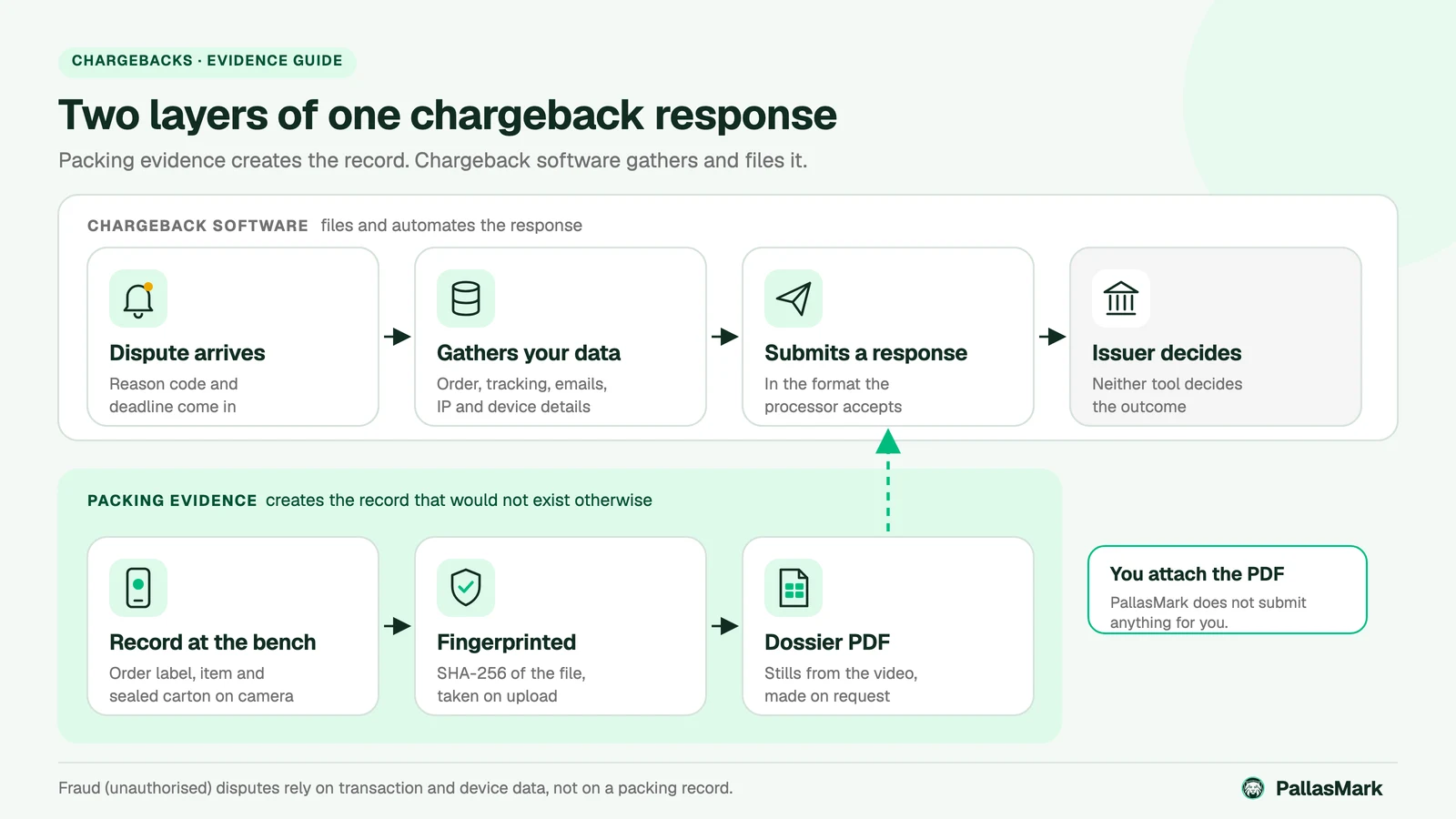
A chargeback response has two ingredients: evidence and submission. Evidence is the material that shows what happened. Submission is getting that material, in the right format, against the right reason code, to the right place before the deadline.
| Chargeback software | Packing evidence | |
|---|---|---|
| Main job | Assemble and submit dispute responses, often automatically | Create a record of what was packed for a specific order |
| Where its data comes from | Your payment processor, store platform, shipping and customer data | Your packing bench: a phone or webcam recording, photos, timestamps |
| When it does its work | After a dispute or alert arrives | Before the parcel leaves, on every order you choose to record |
| Fraud (unauthorised) disputes | Can compile transaction and device data | Not relevant: it records goods, not payments |
| Goods disputes (not received, not as described) | Uses whatever evidence exists in connected systems | Adds a record that otherwise would not exist |
| Typical pricing model | Share of recovered amount, per-alert fees, or custom contracts | Subscription |
The important line is "adds a record that otherwise would not exist". Chargeback software is very good at gathering what your systems already hold: order details, tracking, customer emails, IP addresses. What none of those systems hold is a picture of the item going into the box. If that record was never made, no amount of automation can retrieve it later.
What chargeback software does
Below is how three well-known products describe themselves. We are summarising their own pages as of October 2026, not reviewing them, and none of them is a PallasMark partner.
Chargeflow describes an automation product that collects and enriches data from connected sources, organises it into evidence, and submits responses on time, with an option to hold submissions for your review. It also offers alerts intended to stop disputes before they become chargebacks, and says it has 100+ native integrations with payment and e-commerce platforms. Its pricing page listed automation at 25% per recovered chargeback (excluding the dispute fee), alerts at $29 per deflected chargeback, and a free insights dashboard.
Disputifier describes automated chargeback responses, alert-based deflection, pre-shipment fraud screening and delivery tracking alerts, with 30+ integrations. Its pricing page listed chargeback responses at 20% of recovered revenue, capped at $250 per recovery, charged only on won chargebacks. Its homepage does not describe packing or fulfilment video evidence.
Chargebacks911 is a chargeback management company. We could not find a published price list on its site; a third-party listing on Capterra shows a starting price, which you should confirm with them directly.
What these products have in common is the direction of work: they start from a dispute and move outward to find evidence. That is exactly what you want at volume, where assembling responses by hand is slow and error-prone. It also means their output can only be as good as the evidence that exists in the systems they connect to.
What packing evidence does
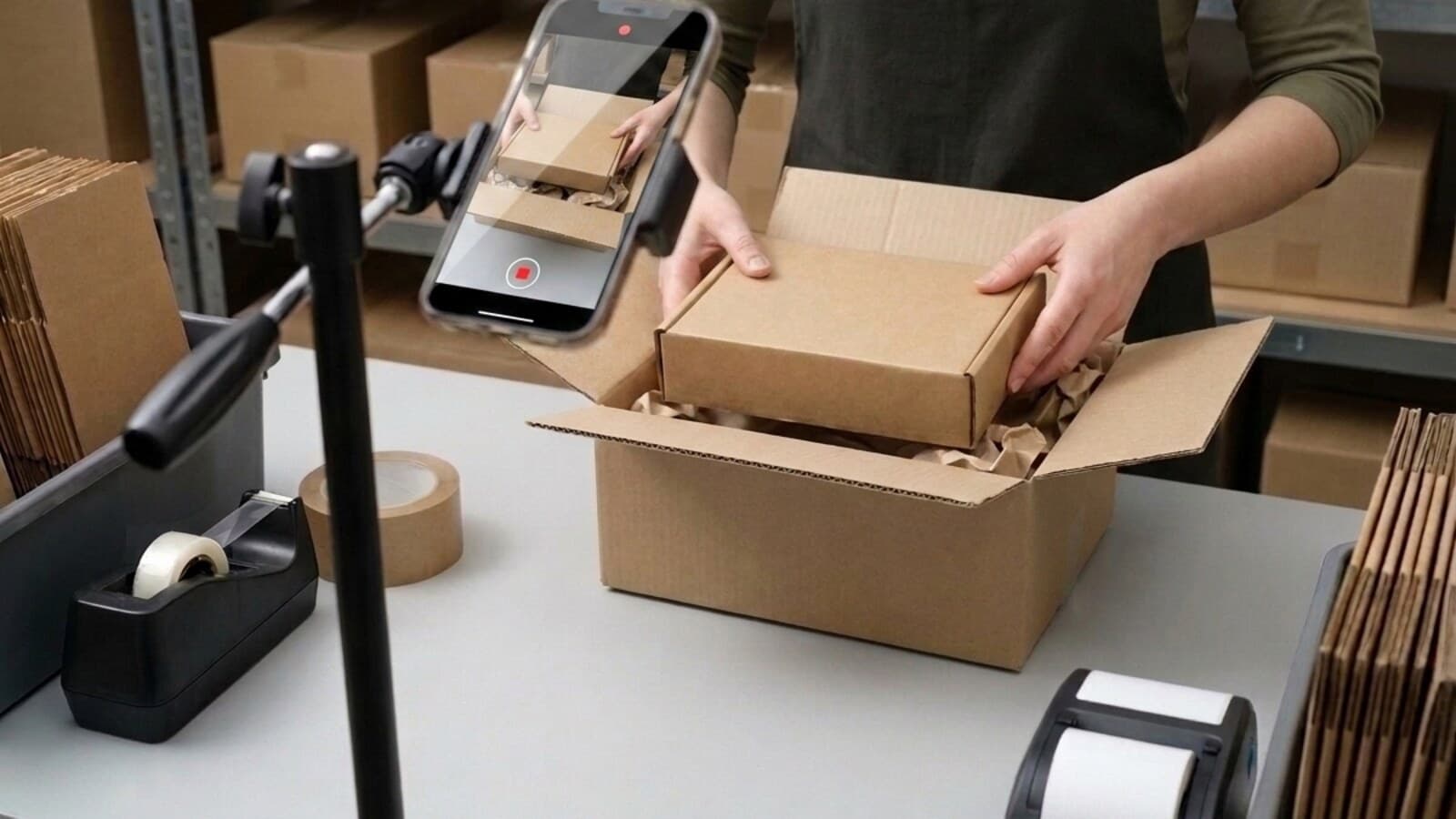
Packing evidence starts from the other end. Before anyone is arguing, someone at the bench records the order: the order reference, each item going into the carton, and the carton being sealed. The output is a record tied to one order, made at a time when nobody had a reason to shape it.
That timing is the whole value. A seller's written statement made after a complaint is, to a reviewer, a claim. A recording made before the parcel left is a record. It cannot show what happened in transit or on the buyer's doorstep, but it can show the moment the dispute is usually about: what went in the box.
For that record to be worth anything in a dispute, a stranger has to be able to answer two questions about it:
- Which order is this? The order reference should be visible in the recording, and the file should be bound to the order in a system that logged when.
- Has the file changed since? A fingerprint of the original file, taken when it was uploaded, lets anyone check later that what they are looking at is what was recorded.
The capture side is covered in detail in what makes a packing video count as evidence, and the category itself in packing video proof. The rest of this article is about the part most packing video marketing skips: getting that record in front of a bank in a form the bank will actually take.
Card disputes run on documents, not video
Here is the uncomfortable fact for anyone who sells packing video as "chargeback protection": card dispute channels are built around documents and images, not video.
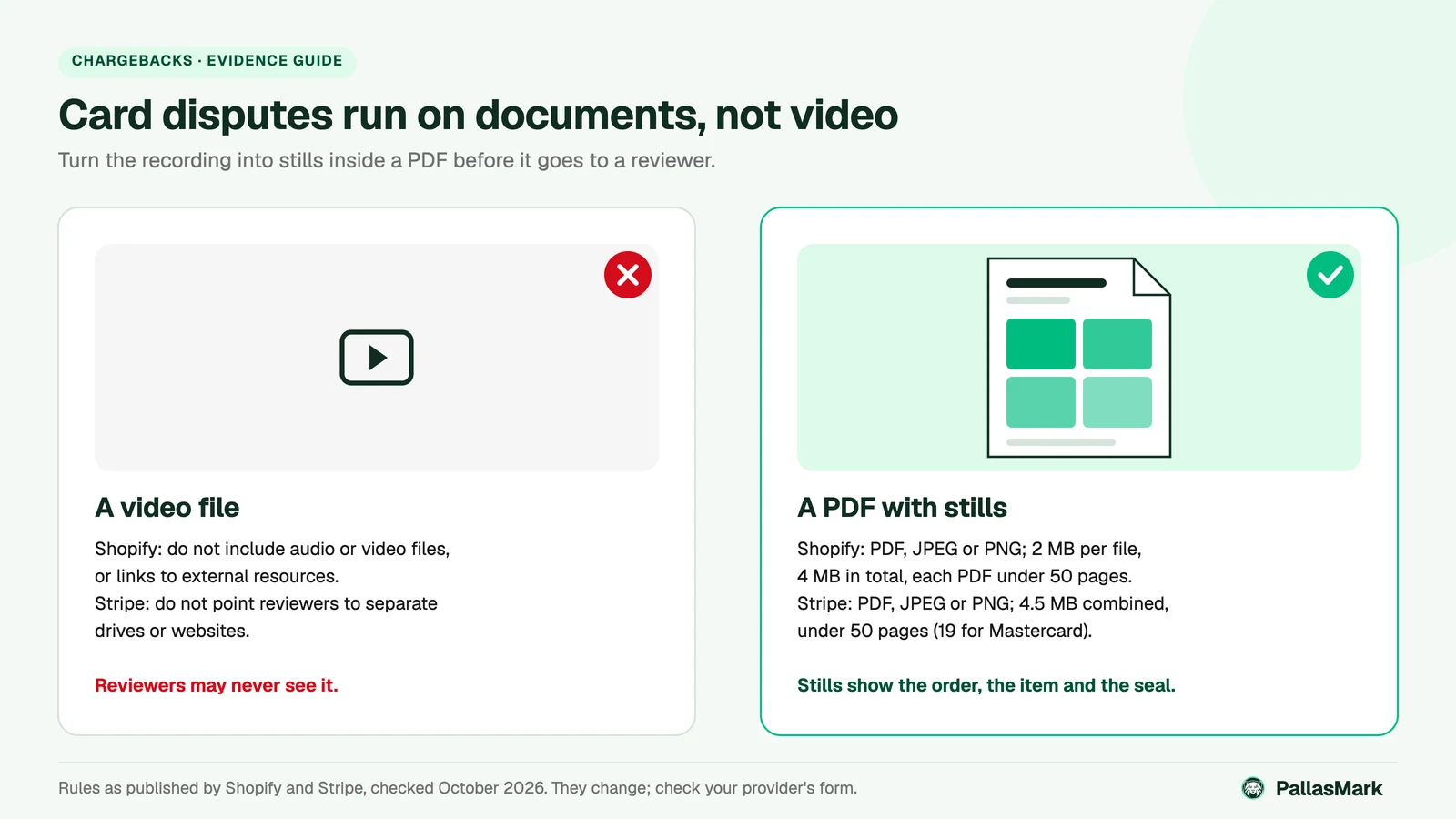
Shopify says it plainly. Its chargeback instructions say not to include audio or video files or links to external resources, accept only PDF, JPEG or PNG, and limit each file to 2 MB and the combined evidence to 4 MB, with each PDF under 50 pages. Its general chargeback guidance adds that images should be high-contrast and readable without zooming, because many banks still receive evidence by fax.
Stripe's dispute evidence best practices say the same thing in different words: only PDF, JPEG or PNG; a combined limit of 4.5 MB; fewer than 50 pages in total, and 19 pages for Mastercard; and do not point the reviewer to content on separate drives or websites.
The consumer side shows the same wall from the other direction. In a 2024 UK Financial Ombudsman decision, a buyer said a parcel worth £1,499.99 contained a brick and offered a video of himself opening it. According to the decision, the merchant had already defended the chargeback, saying it had delivered the correct item and that the buyer had sent a brick back to it. The bank told the buyer, when he kept pressing his video, that Visa does not allow video evidence in the chargeback process and asked for the evidence in another format, such as PDF or JPG images. He sent nothing further by the deadline, the bank said it could not authenticate his evidence and did not pursue the claim, and the ombudsman did not uphold his complaint. The video was a buyer's unboxing, not a seller's packing record, but the format rule applied the same way.
So the practical question is not "should I send the video?" It is "how do I turn the video into a document that survives a fax machine?"
From recording to a document a reviewer can read
A recording becomes usable in a card dispute when it is translated into something a reviewer can scan in under a minute:
- Stills from the recording, chosen to show the order reference, the item and the sealed carton, with the time offset printed under each.
- Order details: order number, date, items, shipping address, carrier and tracking number.
- A short timeline: when the order was placed, packed, shipped and delivered, and when the buyer was in contact.
- Anything the buyer confirmed before shipping, such as an approval of photos or video of their item.
- An integrity note: the fingerprint of the original file, so the reviewer knows the stills came from an unaltered recording.
That is the shape Stripe recommends anyway: evidence in chronological order, grouped by type, with a short explanation of what each piece shows. A PDF built this way is also exactly what chargeback software can attach to a response, which is where the two layers meet.
How PallasMark handles it: the Evidence Dossier
PallasMark's answer is a single record per order that we call the Evidence Dossier. It gathers the order, the packing recordings and photos, the buyer's approval or response, the carrier and tracking number read from your store, and a timeline, in one place. From that record you can produce two things, and only when you ask for them.
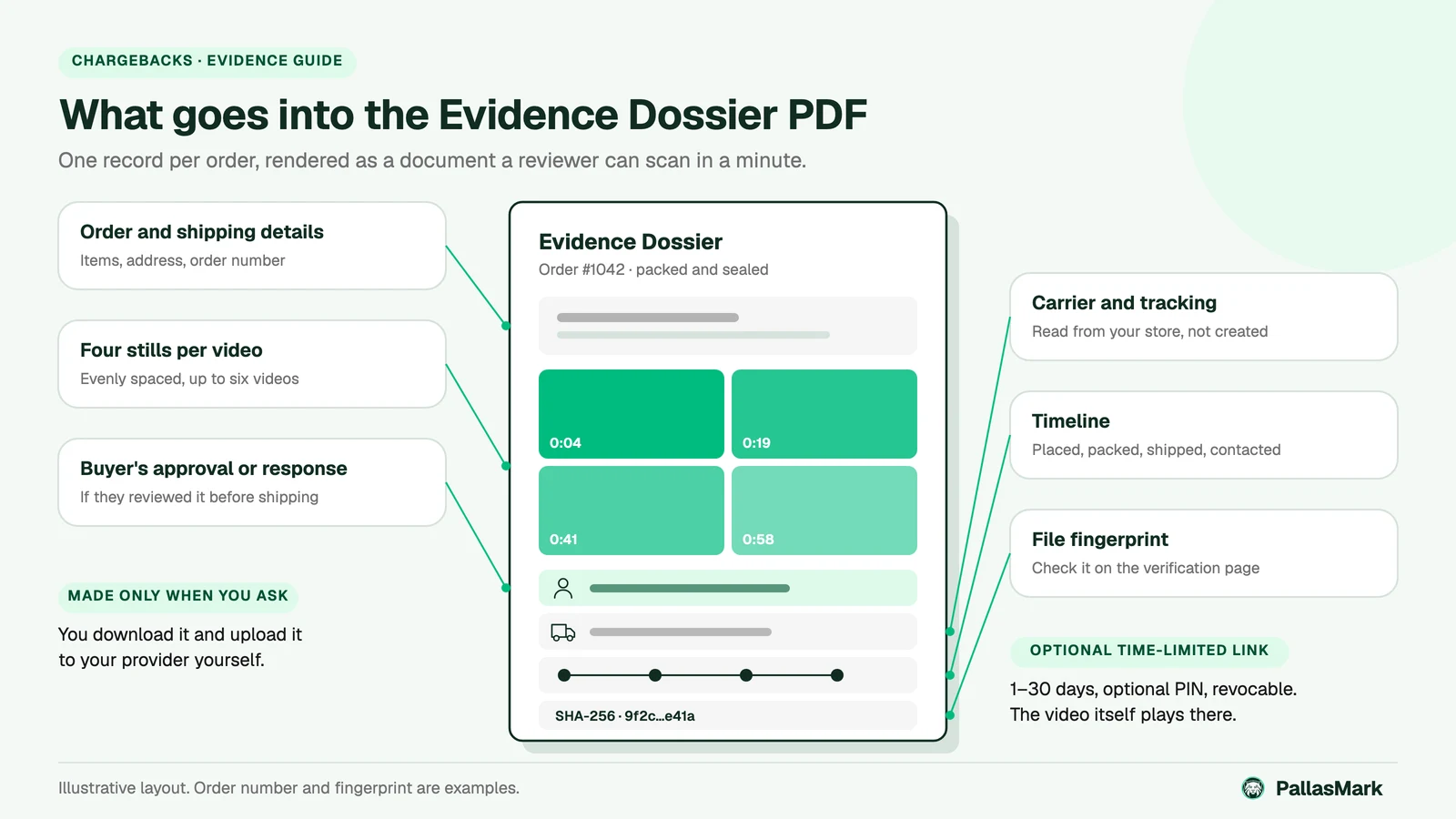
A PDF. Generated on demand from the order page. It includes four evenly spaced stills from each recorded video (up to six videos per PDF; further videos appear as a single cover image), the photos (up to twelve), the order and shipping details, the timeline and the verification details. Every PDF you generate is kept with a fingerprint of the file and who created it, and creating or downloading one is logged. The PDF is the version meant for a bank, a processor or an insurer.
A time-limited link. Also on demand. You choose how long it stays open, from one to 30 days, can add a PIN, and can revoke it at any time. Openings are counted. On the link the buyer's personal details are partly masked; the PDF carries them in full because the bank needs them. The link is where the video itself plays, which is useful for a buyer conversation or a marketplace case that accepts links.
Here is the part we want to be completely clear about:
We made that choice deliberately. Dispute forms, reason codes and file limits vary by provider and change without notice, and a response is something the merchant should look at before it goes out. What we can do reliably is make sure the record exists and is in a format the form will accept. Check the PDF's size against your provider's limit before uploading, especially for orders with many photos.
Anyone holding the original file can also check it against its fingerprint on our public verification page. How verification works explains what that check proves and what it does not.
Where packing evidence does not help
Being honest about the limits matters more here than anywhere, because the cost of a misfiled dispute is the dispute.
Fraud disputes. If the reason code says the cardholder did not authorise the payment, the question is about who paid, not what shipped. A packing recording does not answer it, and attaching one can make a response look like it missed the point. For Visa card-absent fraud, the relevant mechanism is Compelling Evidence 3.0, which relies on prior undisputed transactions and matching device or IP data. We cover that in full in which disputes packing video can support, and which need CE 3.0, so we will not repeat it here.
Item not received. If the buyer says the parcel never arrived, the primary evidence is the carrier's delivery record. A packing recording shows the parcel existed and was sealed; it does not show it reached the door.
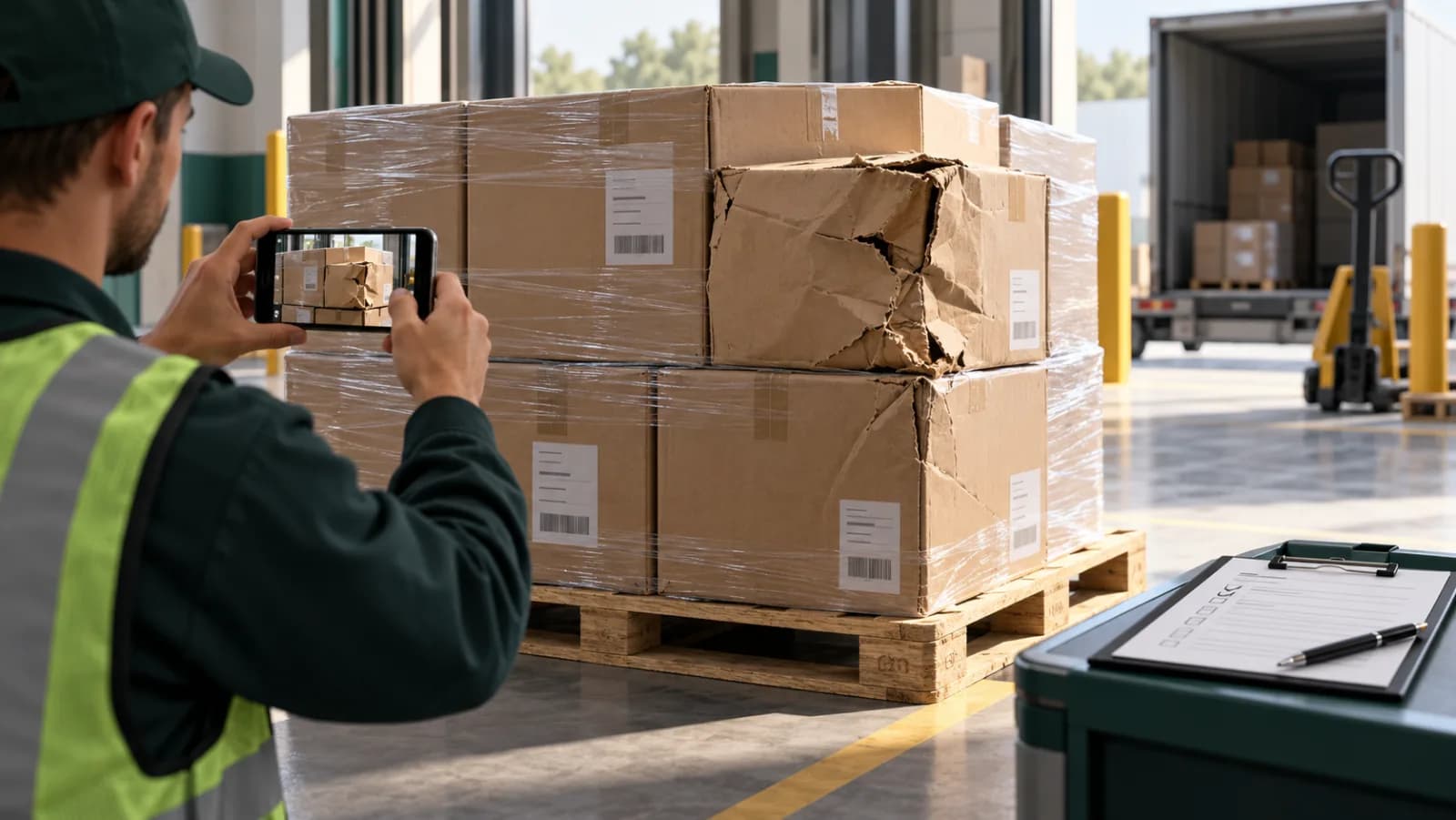
Problems after the bench. Damage in transit, theft from a parcel, a box opened and resealed by someone else: the recording ends where your custody ends. It can help show the item left in good condition, but not what happened next.
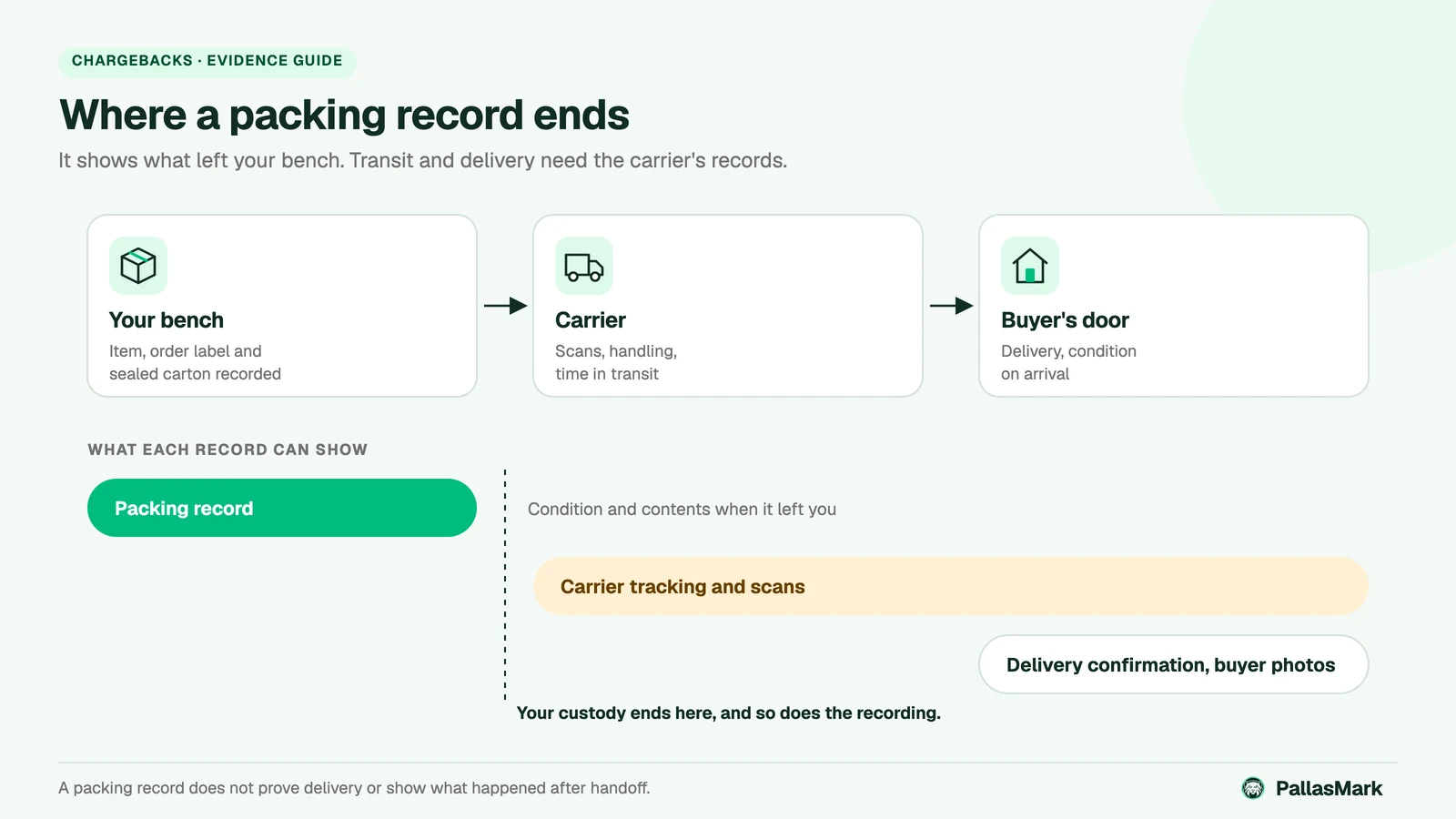
Orders you did not record. Evidence cannot be created after the fact. If an order was not recorded, both layers have only your other systems to work with.
| Dispute type | Packing record | What else you need |
|---|---|---|
| Not as described, wrong item, missing item | Directly relevant | Listing as it stood, buyer messages, any buyer approval before shipping |
| Damaged on arrival | Shows condition at packing | Carrier records, photos from the buyer |
| Not received | Shows the parcel was packed and sealed | Carrier tracking and delivery confirmation with the full address |
| Fraud / unauthorised | Not relevant | Transaction history, AVS/CVC, device and IP data (CE 3.0) |
| Subscription or cancellation | Not relevant | Terms shown at checkout, cancellation records |
Using both layers together
For a merchant with enough disputes to justify chargeback software, the two layers combine without much friction:
For a smaller merchant who handles a handful of disputes a year by hand, the dispute tool is often unnecessary. The same steps work with the processor's own form: read the reason, generate the PDF, upload it with the tracking and a short plain explanation.
What to ask a vendor on either side
Whichever layer you are evaluating, these questions sort out marketing from mechanics:
For chargeback software:
- Can I attach my own supporting documents, such as a PDF from another system, to a response?
- Can I review a response before it is submitted?
- How is the fee calculated: on the disputed amount, the recovered amount, or per alert? Is the dispute fee included?
- Which processors and marketplaces do you actually submit to, and which only send alerts?
For packing evidence software:
- What does a bank receive: a video file, a link, or a document they can read without playing anything?
- Is the recording tied to a specific order in a way that is logged, or just named after it?
- Can someone outside the company check that the file has not changed since it was recorded?
- Does it submit disputes for me? If it says yes, to which providers, and does it respect their file rules?
A packing evidence vendor that promises it "wins chargebacks" is overselling, and so is any tool that claims a win rate without telling you which dispute reasons and which merchants it is measured on. The issuer decides, and the strongest record in the world still loses if it is filed under the wrong reason code or in a format the form rejects.
The short version
Chargeback software and packing evidence answer different questions. One asks, "how do I respond to this dispute efficiently?" The other asks, "will I have anything to show when I do?" If you already pay for a dispute tool, packing evidence fills the one gap it cannot fill on its own: a record of what went in the box, turned into a document a bank will accept. If you do not, the same document goes straight into your processor's form.
PallasMark records packing on a phone (iOS or Android) or the web, connects to Shopify and WooCommerce, and runs on flat annual plans: Free, Pro at $348 a year and Business at $1,188 a year, with the Evidence Dossier available on every plan. See pricing for current limits, or start with packing video proof to see how the record is made.
Frequently asked questions
Is packing video software a replacement for chargeback software?
No. They do different jobs. Chargeback software such as Chargeflow or Disputifier connects to your payment and store data, assembles a response and submits it on your behalf, usually for a share of what is recovered. Packing evidence software creates a record of what physically went into the box. One produces evidence; the other packages and files it. Many merchants who need both will use both.
Do banks accept video as chargeback evidence?
Generally not as a video file. Shopify's chargeback instructions say not to include audio or video files or links to external resources, and accept only PDF, JPEG or PNG. Stripe likewise accepts only PDF, JPEG or PNG and advises against links to content hosted elsewhere. In a 2024 UK Financial Ombudsman decision, a bank told a consumer that Visa does not allow video evidence and asked for PDF or JPG images instead. The practical answer is to turn the recording into stills inside a PDF.
Does PallasMark submit disputes to Stripe or Shopify for me?
No. PallasMark builds an evidence dossier for the order on request: a PDF that includes four stills from each recorded video (up to six videos per PDF), and an optional time-limited link. You download the PDF and upload it to your payment provider, or hand it to whatever chargeback tool you use. There is no automatic submission to Stripe, Shopify Payments, PayPal or any other provider.
Will packing video help with a fraud chargeback?
Not with the question being asked. A card-not-present fraud dispute asks whether the cardholder authorised the payment, and a recording of your packing bench says nothing about that. Those disputes need transaction history and device or IP data, which is what Visa Compelling Evidence 3.0 is built on.
How much does chargeback software cost compared with packing evidence?
Pricing models differ. When we checked in October 2026, Chargeflow's automation listed 25% of each recovered chargeback, and Disputifier listed 20% of recovered revenue capped at $250 per recovery. PallasMark is a flat annual plan: Free, Pro at $348 a year and Business at $1,188 a year. They are not alternatives on price because they are not doing the same job.
Can I send a link to the packing video instead of a PDF?
Usually not into the dispute itself. Both Shopify and Stripe say not to rely on links to outside content in the response, and an issuer reviewer may never click one. A time-limited link is useful for a buyer conversation, a marketplace case that accepts links, or your own team. The bank-facing copy should be the PDF.
- chargebacks
- chargeback software
- dispute evidence
- packing video
- evidence dossier