What really happened01
Review the pack, not someone's memory
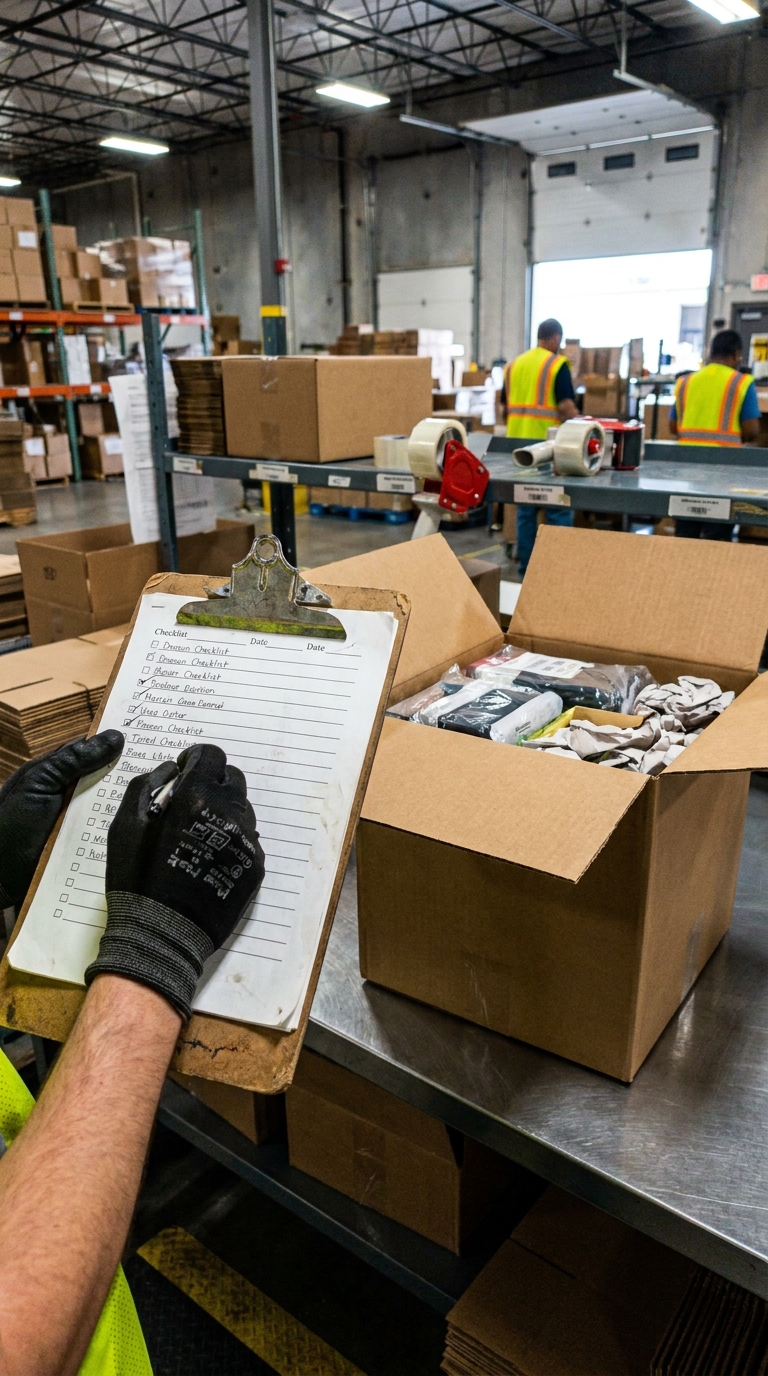
Each order's recording shows the items going in, with the time and the team member who packed it.
Use case · Packing QA
Record every order at the packing station. When something is wrong or missing, see exactly what happened instead of guessing.
What changes at the packing station
Each order's recording shows the items going in, with the time and the team member who packed it.
Patterns in the footage show where the process breaks — wrong bin, missed insert, rushed sealing.
When the customer is mistaken, the packing video shows the correct item going into the box.
02 — The record
Nothing here is a mock-up: every screen is the app as it ships, and every frame is the same bench, in order.
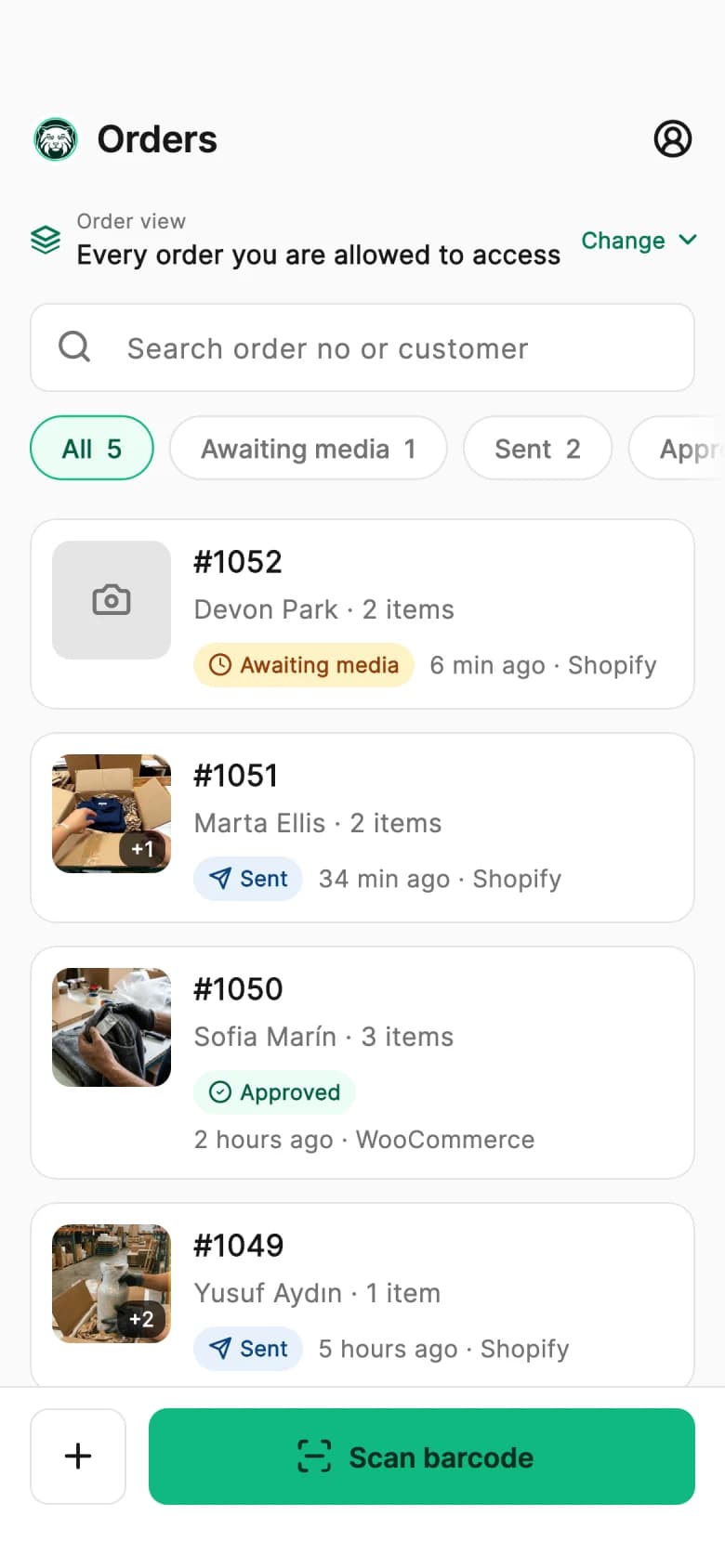
Orders come in from Shopify or WooCommerce and land in the list, with the ones still waiting for a recording marked. Nobody retypes an order number at the bench.
The barcode on the slip opens the right order directly. That is the moment the recording is bound to an order — before anything is filmed, not after.
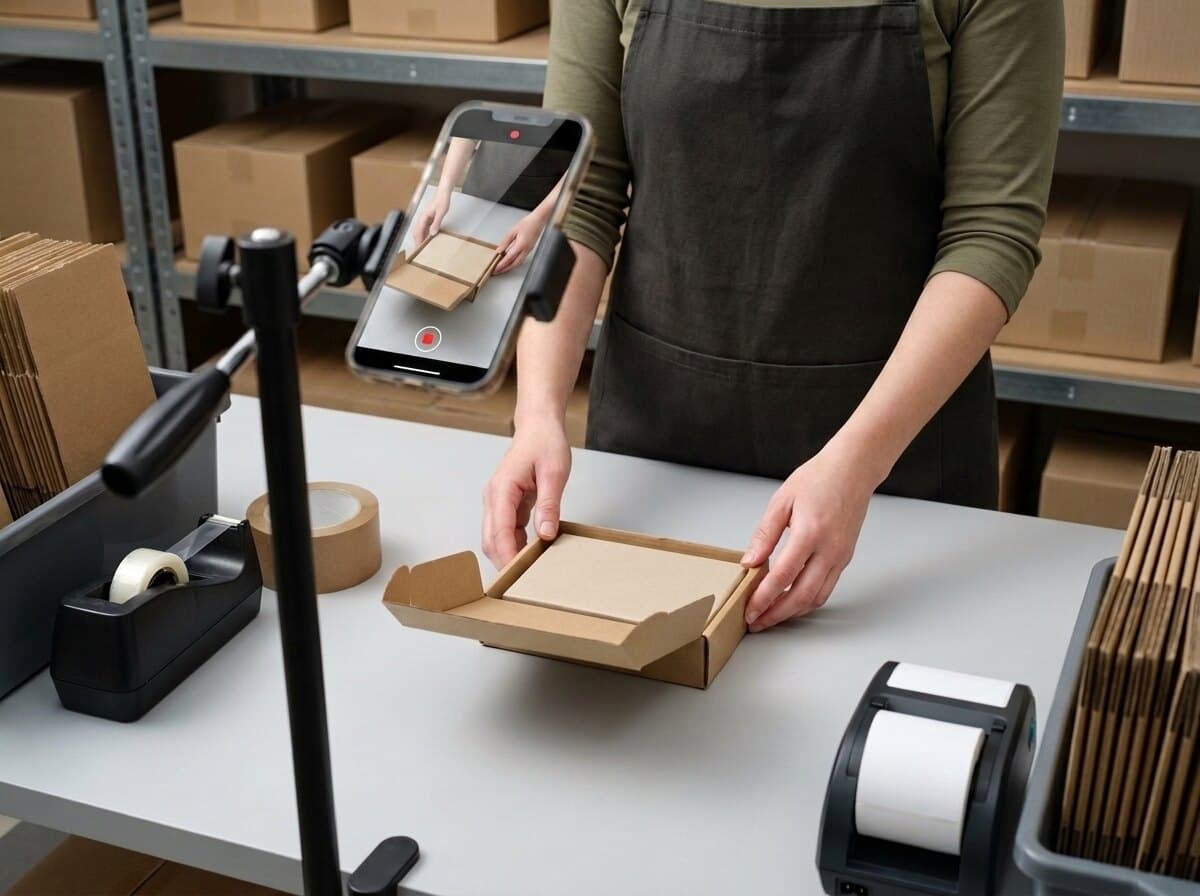
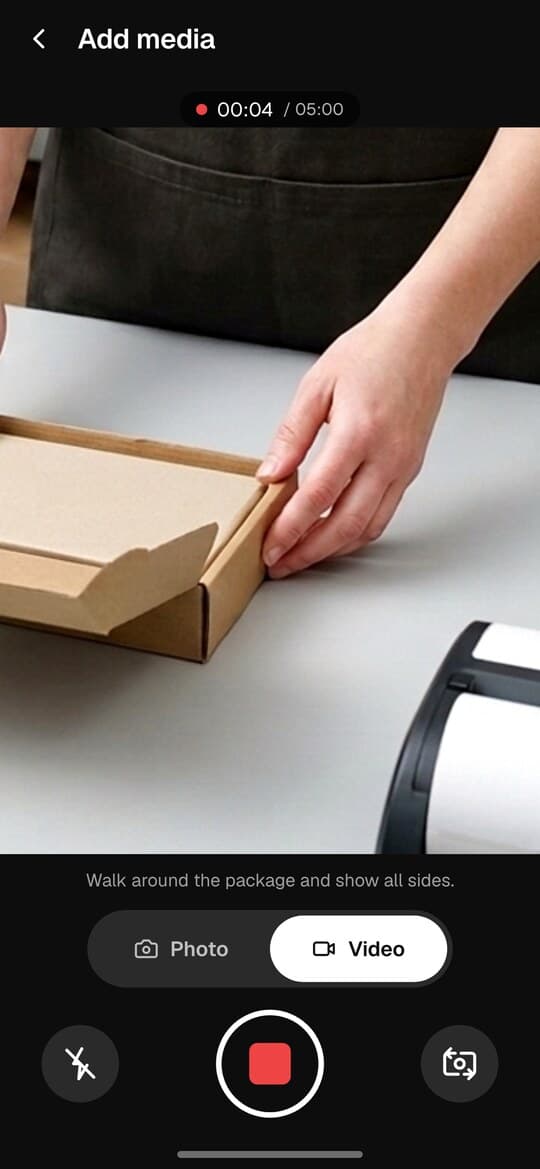
The take opens on the item itself: what it is, what condition it is in, that it is the right one. The phone is already in the room; there is no camera to mount.
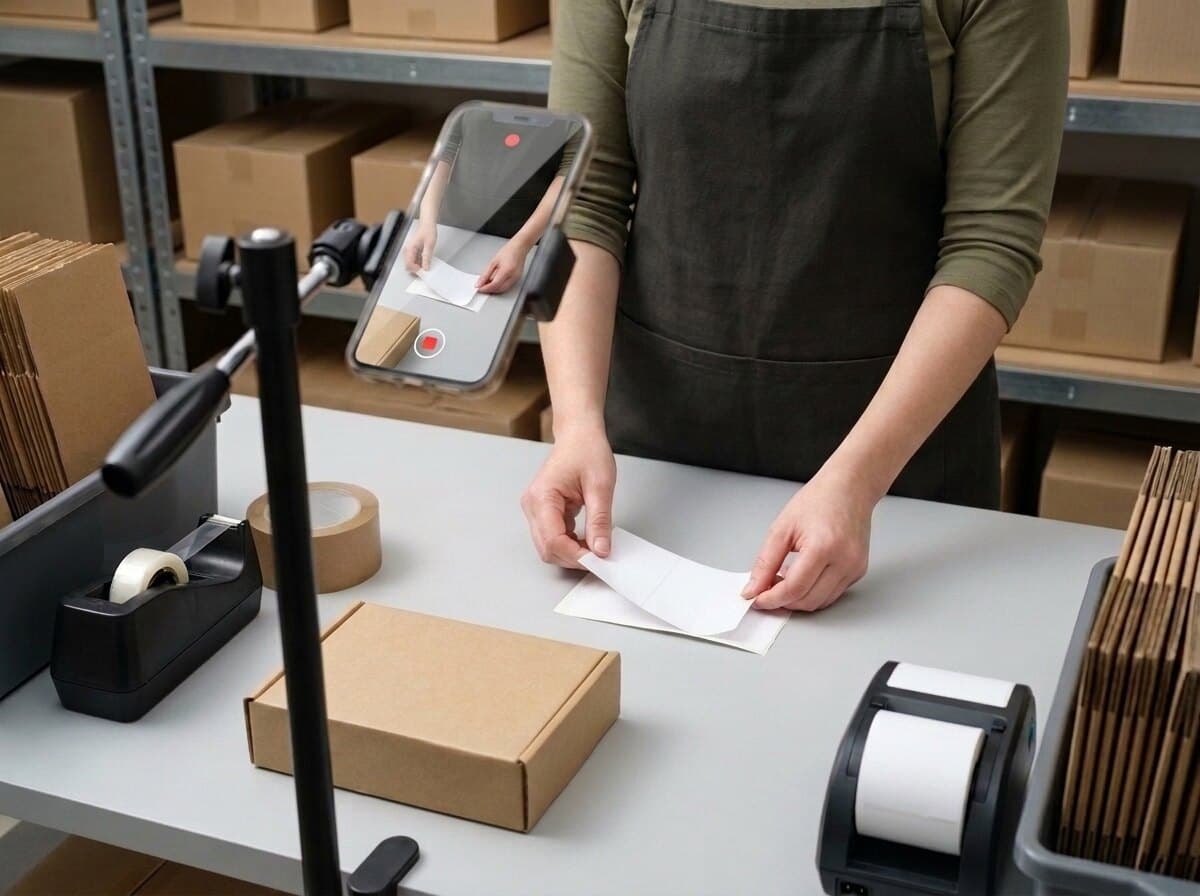
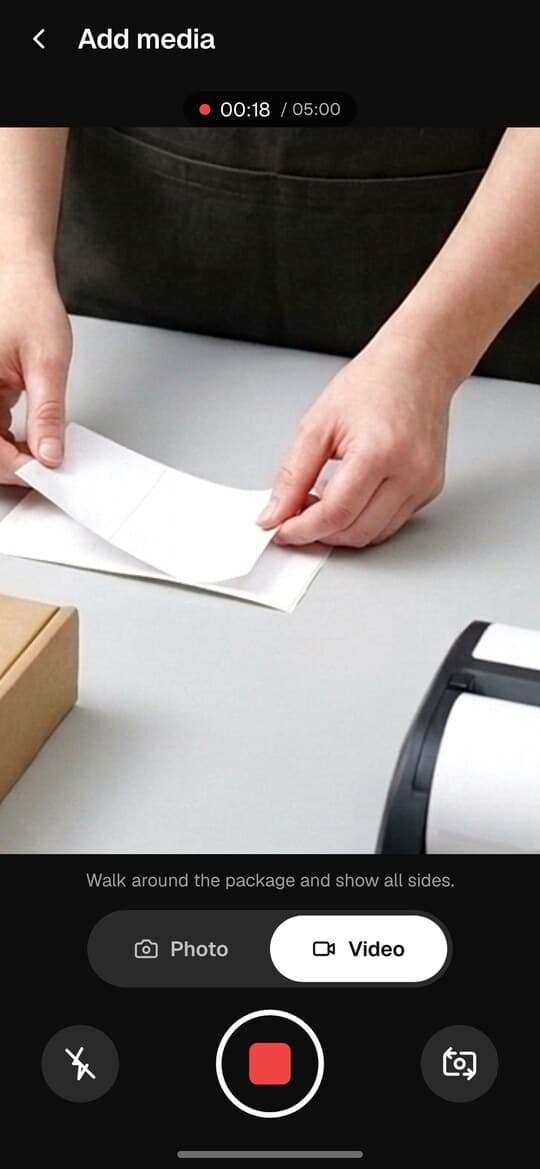
The label goes on camera before it goes on the box. From this frame on the parcel is not any parcel — it is this order, and that link is what a dispute turns on.
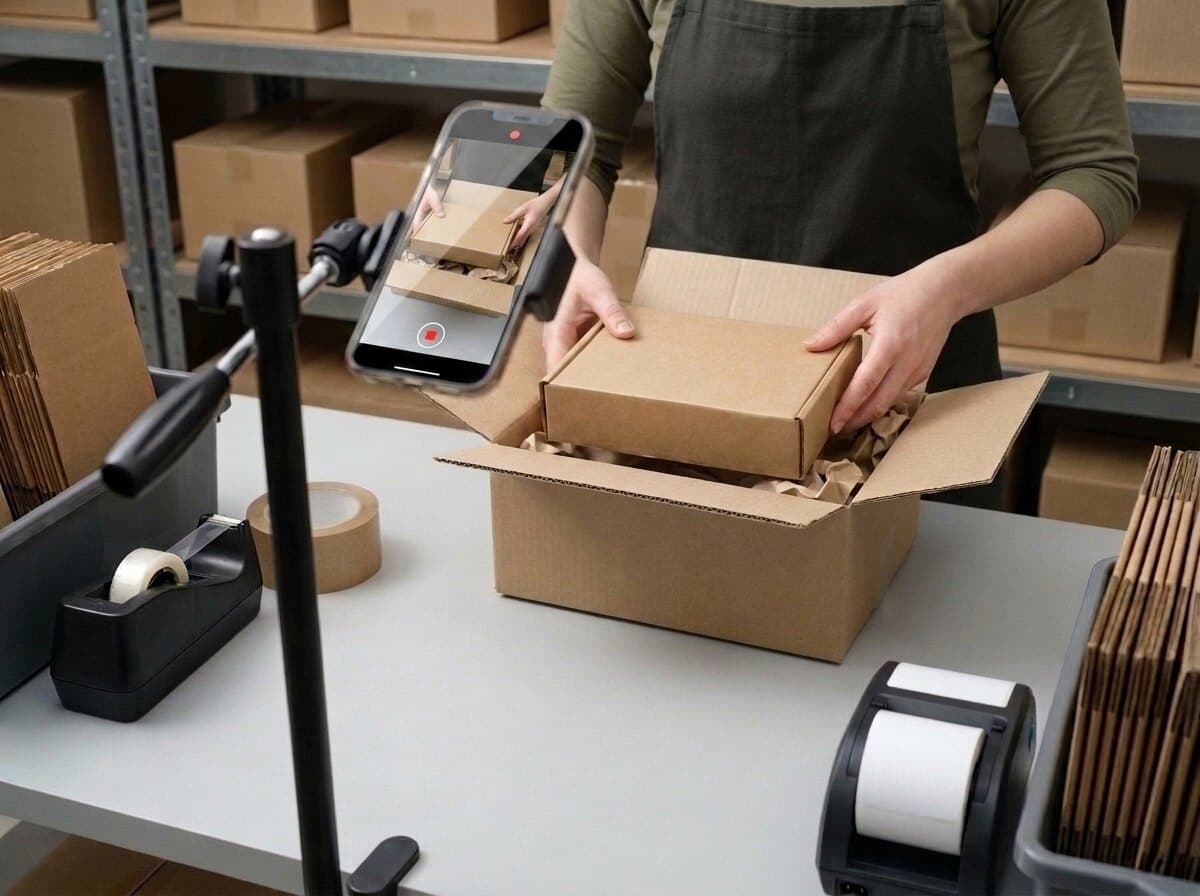
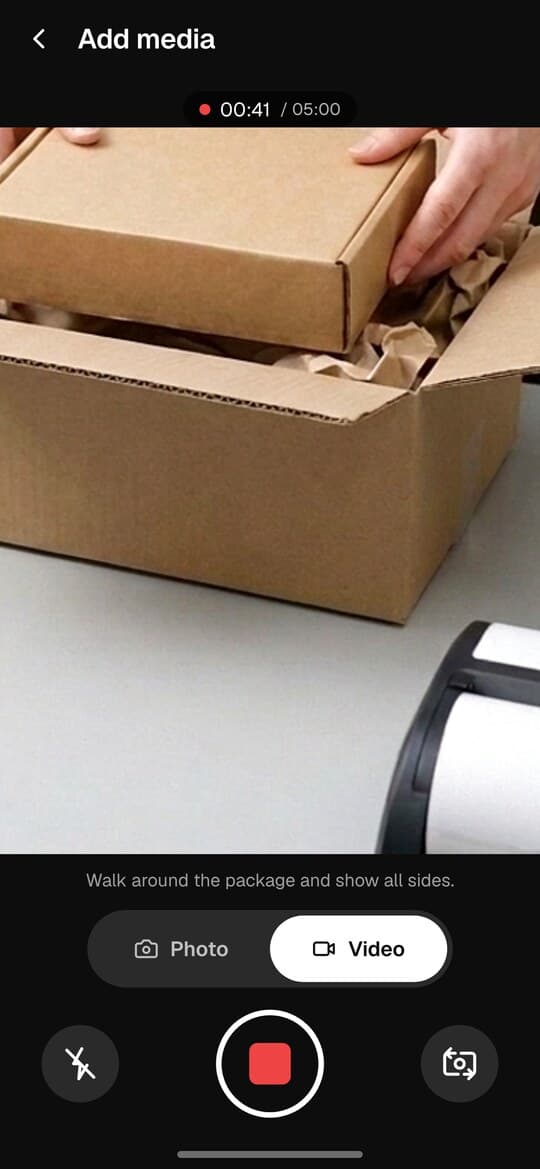
Padding, placement, the inner box closing — all inside the same unbroken take. A cut is a place a reviewer can imagine something happening off camera.
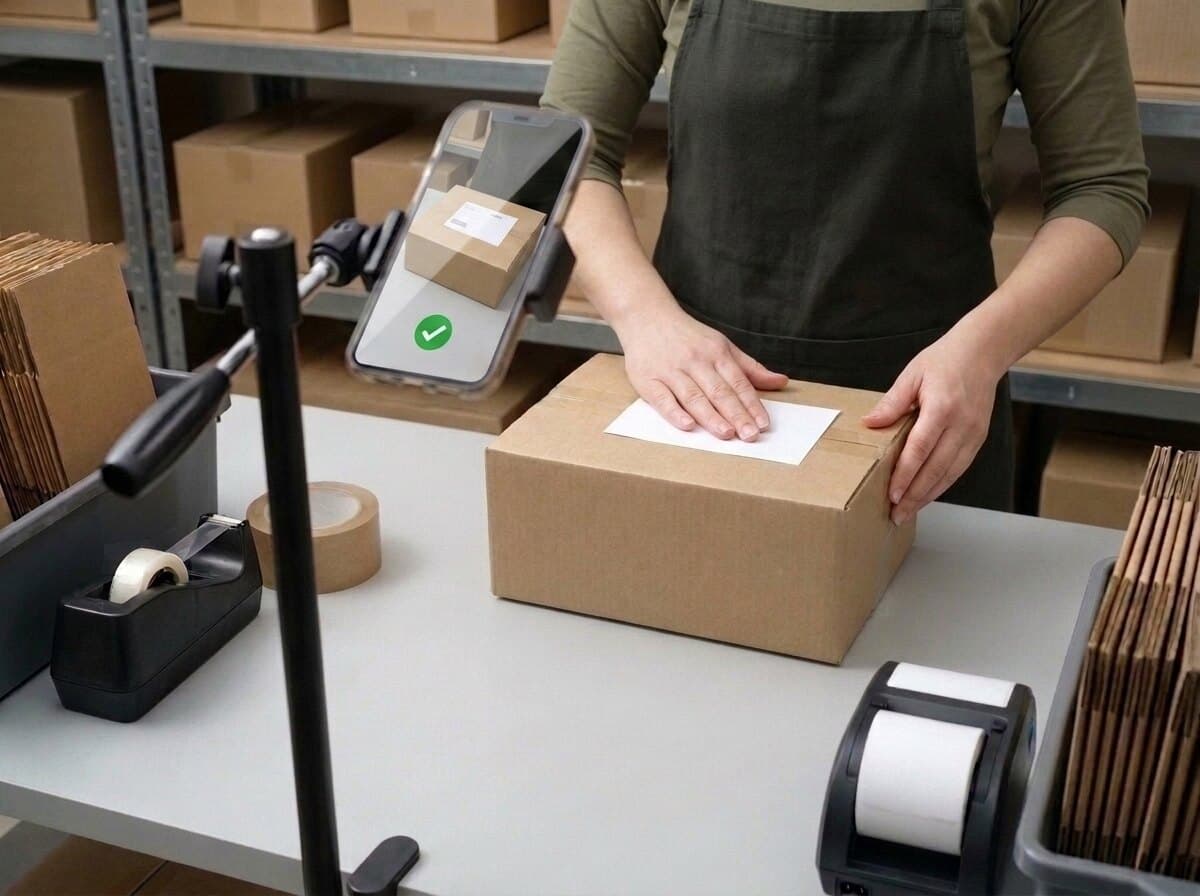
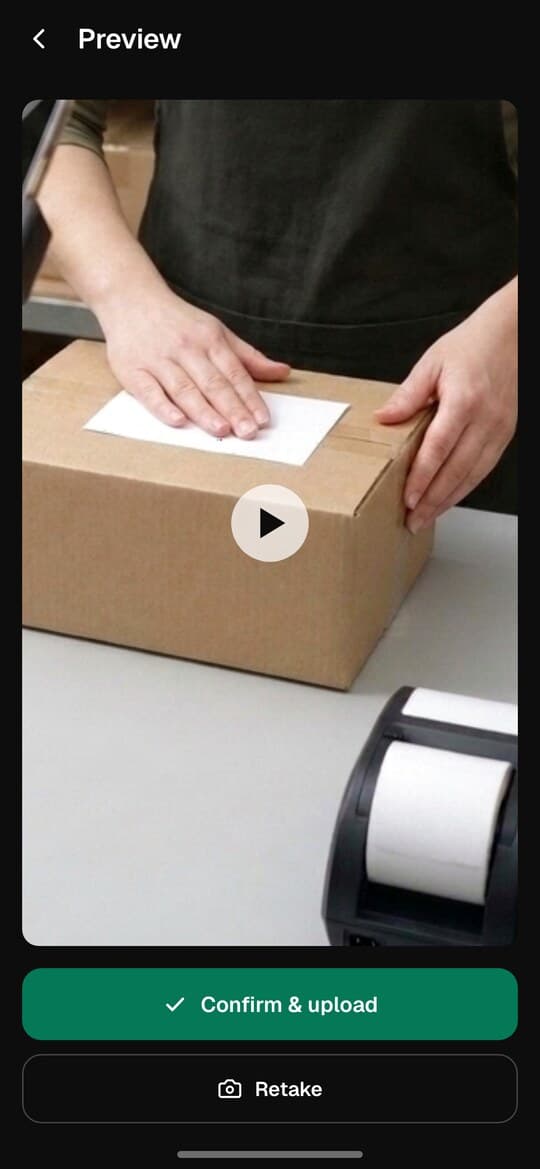
The take ends when the parcel does. One look at what was captured, one tap, and the file is uploading — it finishes on its own even if the signal drops.
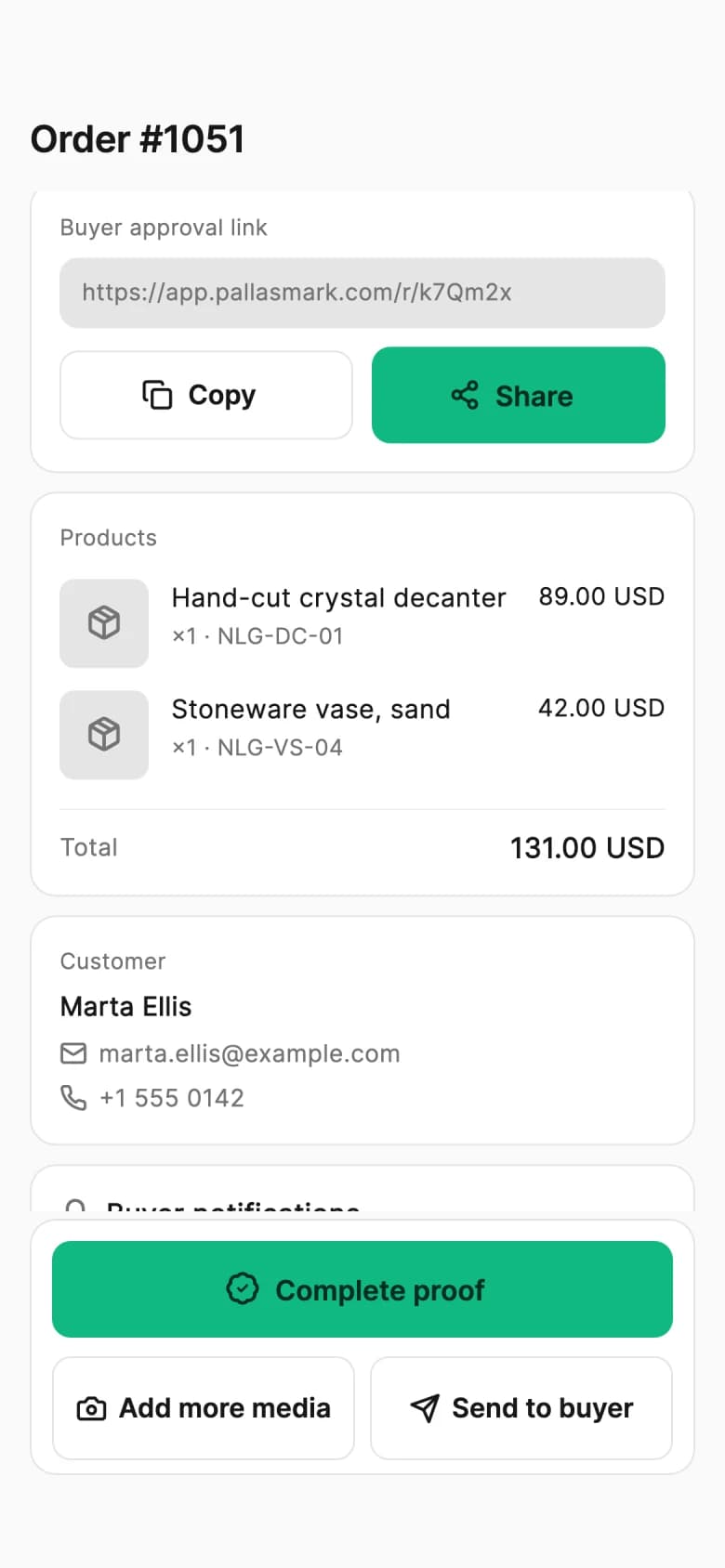
The recording lands on the order itself, beside the customer and the items, with who added it and when. The buyer gets a link that opens with no account.
Not a sample and not a video of the product — your own clip, through the real pipeline, ending on a real verification page you can send to anyone.
Takes about a minute. Nothing is installed and no card is involved.
02 — The seal
The recording becomes a single proof file and locks: no one can change it afterward, not even you. Anyone who opens the link sees exactly the same record.
Once sealed, the link always opens the same record — so the buyer can trust what they see.
What's it based on
04 — The outcome
This is the moment you open the file and show it: the item, the process and the sealed package, all in one place.
05 — The math
Every wrong shipment means a return label, a reship and an unhappy customer. See it with your own numbers.
Wrong-shipment cost
$400 /mo
Cost avoided (est.)
$160 /mo
Cost = orders x AOV x error rate x cost-per-error share
Estimate — enter your own numbers; rates are assumptions.
Prevent your monthly loss with proof
Start free, no card required06 — Setup
Setting up the same flow in your own store takes four simple steps.


Connect your store
Shopify or WooCommerce, takes just a few minutes.
Set your rule
Require the record on the orders that matter most.
Create the first record
Film the item and its packing right before it ships.
Invite your team
Your shipping team captures the record as part of their own flow.
07 — Coverage
Not just one station — the same flow works across your whole packing team.
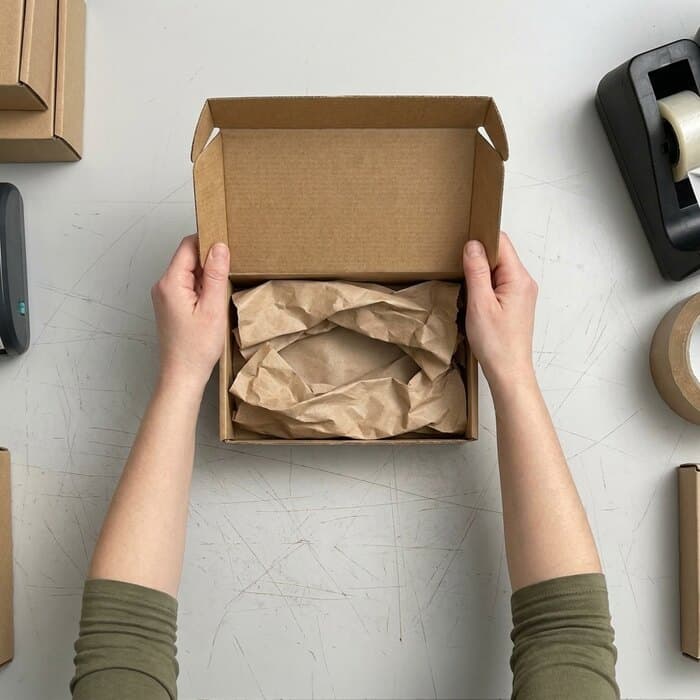

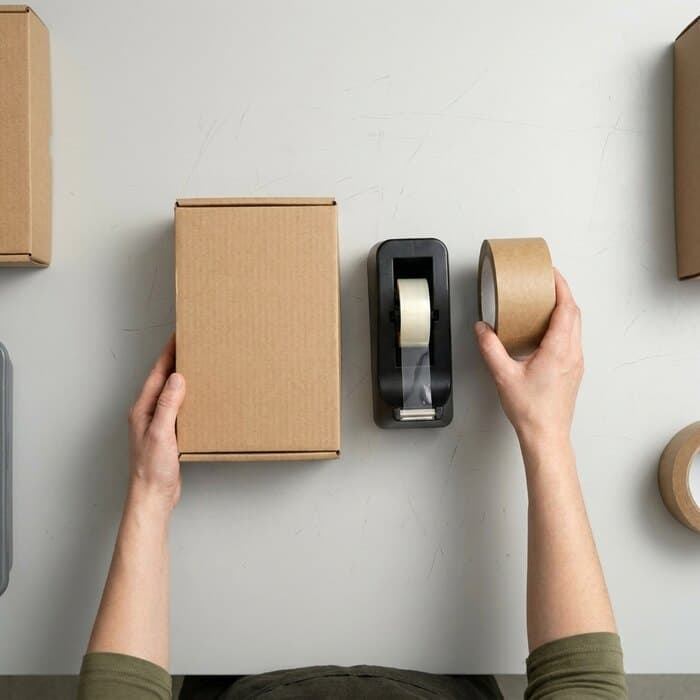
A few seconds per parcel; it becomes a habit quickly.
Record all of them, or a sample.
It adds seconds, not minutes — the phone is mounted, the take starts once and ends when the box is sealed. The comparison worth making is not against zero, it is against the time a single wrong shipment costs you: the support thread, the return label, the replacement and the refund.
Yes — each recording stores who added it, with a timestamp. Use it carefully. Attribution is genuinely useful for training and for finding a process problem; used as a disciplinary tool it turns a quality system into a surveillance one, and staff stop cooperating with it.
You can, and for pure quality control sampling is a reasonable design — you are looking for a pattern, not a specific parcel. The catch is that a sampled programme is a quality tool and not an evidence one: the disputed order is almost never the one you happened to sample.
Less than you expect if two things are true: the camera is framed on the bench rather than on faces, and the purpose is stated honestly as parcel evidence rather than performance monitoring. Where it goes wrong is when a quality recording quietly becomes a productivity metric.
How to prove an item was shipped correctly: what PayPal, eBay, Amazon, Etsy, Shopify and Stripe actually look at
What each platform weighs when a buyer says the item was wrong or not as described, and a practical checklist to prove what was in the package.
How a warehouse records packing proof: pallets, phones and label reading
Recording one order is easy. Recording every pallet across shifts, benches and languages is a process problem. Here is what solving it looks like.
How to record packing video proof on Shopify
Shopify has no shortage of packing video apps. The question is where the proof ends up and whether a stranger can verify it. Here is how to set it up properly.
How to record packing video proof on WooCommerce
Every packing video tool assumes you run Shopify. Here is how WooCommerce sellers record order proof that survives a dispute — including without a plugin.
They wore it, then returned it: what you can actually do about wardrobing
Record item condition before dispatch and request return evidence to compare. Shipping records support a review but cannot show use after delivery.
Packing video software compared: what each tool actually records, and what it proves
An honest comparison of packing video tools: phone or fixed camera, watermark or cryptographic seal, and whether the buyer ever approves what you recorded.
Customer says you sent the wrong item: how to prove which unit went in the box
Wrong item, wrong variant, missing unit, 'not authentic' — every version is about identity, not condition. The evidence that actually answers it.
Customer says it arrived damaged: what packing evidence can show
How a packing record documents item condition and protective materials before handoff, and why delivery photos and carrier scans are still needed.
The customer says the box was empty: what packing evidence can show
Record the item, order reference and sealing, then pair that footage with package weight, carrier and delivery records. No single record guarantees an outcome.
How to record packing video that actually counts as evidence
Seven checks that link a packing recording to its order: show the item and label, record continuously, keep the seal visible and retain shipment records.
Evidence rules
Buyer review above an order value, return evidence for the reasons you choose, sector templates.
Store integrations
Orders arrive on their own, and the proof link goes back into the store order you already use.
Warehouse & pallet proof
Scan the pallet label, record its condition and share one link — AI label reading on Scale.
API & webhooks
Scoped keys and HMAC-signed webhooks so your WMS or ERP can read and write proof safely.
How order-linked packing video proof works
Set up in 5 minutes and record your first pack.
Start free, no card required