Part of the Industry guides guide
Trading Card Shipping Protection: Proof for Graded Slabs and Raw Cards

On this page
Card sellers ship small, valuable, easily swapped objects in thin envelopes, and two claims follow from that: "it never arrived" and "it arrived cracked". Both are about one specific card. A tracking number answers neither; a recording that shows that card, intact, going into the package that carried that tracking number answers both.
This guide covers what Whatnot, eBay and TCGplayer actually require, how the AI-edited damage photo works and how to answer it, a recording routine for graded and raw cards, and copy-ready replies. It is part of our hub on packing proof by industry.
What reviewers check when a card claim lands
Reviewers check whether you can show that specific card leaving you intact, inside the package that carried the tracking number. Each platform asks that question in its own way.
- Whatnot Trust & Safety asks for clear, legible video showing the missing card being packed and the package sealed on camera, plus the shipping label with the tracking number and buyer name visible, according to its High-Value Card Protection page. Without valid fulfillment proof, a seller may have to reimburse the buyer the full market value of the card, not just what the break spot sold for.
- eBay's Authenticity Guarantee sends eligible cards to PSA, which checks the card against the listing and inspects a graded card's sealed plastic holder for signs of tampering, per eBay's trading card page. If a holder is fake or tampered with, PSA deactivates its certificate.
- TCGplayer decides missing-package disputes mostly on tracking. Its shipping guidelines state that a seller who skips the required tracking or signature waives the ability to win a dispute when the buyer says the package did not arrive.
- Card issuers, for sales through your own store, read documents. Stripe says banks will not review audio or video files or links in dispute evidence, so footage has to become still frames in a PDF.
The AI cracked-slab claim
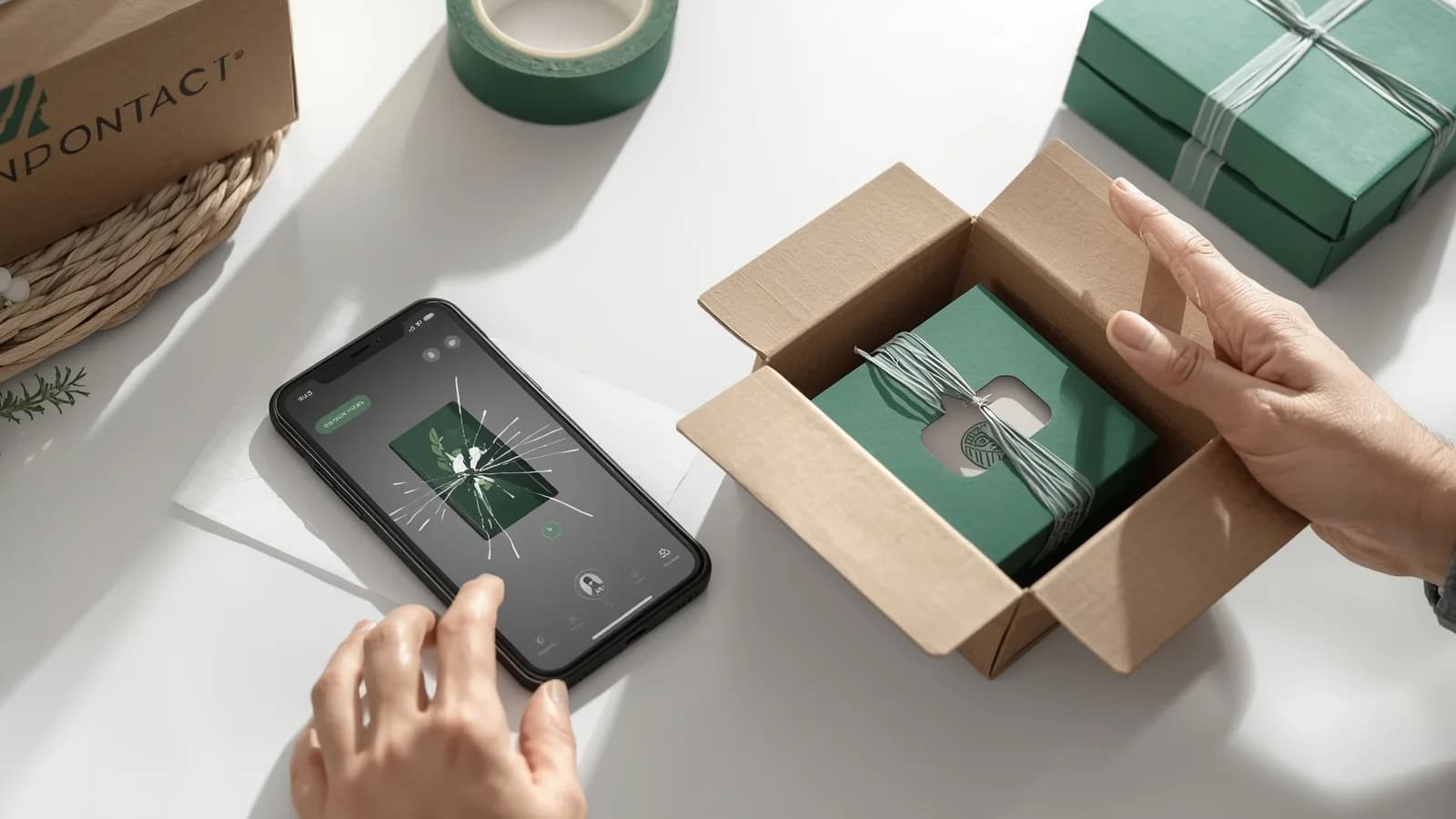
A newer card claim is a fabricated photo. In January 2026, Value Added Resource reported eBay card sellers receiving AI-edited images of graded slabs supposedly shattered in transit. The buyers messaged sellers directly asking for refunds instead of opening an Item Not As Described claim, and other sellers replied that they had received the same kind of claim, in some cases from the same buyer. One seller spotted the fake because, in his words, the edit "removed the serial number" and changed other details in the photo.
That pattern suggests the defense, in order:
- Move it to the formal channel. A refund sent from a direct message skips every protection the platform gives you. Ask the buyer to open a return or claim through the platform, with photos from several angles.
- Compare details with your record. The cert number, the label layout, the grade, the holder's edges, the sleeve and the team bag. An edited photo has to reproduce all of them; your recording already shows the real ones.
- Ask for the item back before refunding where the platform's process allows it.
- Keep the comparison factual. Point to the differences and the verification link; do not accuse.
We cover the wider pattern, including how sellers in other categories handle it, in AI-generated damage photos and refund fraud.
The rules by platform
Whatnot is the most specific about footage, eBay about condition on return, and TCGplayer about tracking. Here are the rules as each platform states them on its own help pages, checked October 2026. Thresholds change, so confirm the current figure on the linked page.
| Platform | Applies to | What the seller must do | Deadlines and limits |
|---|---|---|---|
| Whatnot, High-Value Card Protection | High-value cards from Card Breaks and Surprise Sets that are lost or never arrive | Film the cards being packed, the package sealed and the label with tracking applied, in one continuous shot; keep it at least 75 days; photos not accepted; in the US, items over $20 may not ship as First Class letters | Buyers file within 30 days of purchase; respond to Trust & Safety within 2 calendar days |
| Whatnot, all orders | Every order, per its seller protection policy | Ship within 2 business days with valid drop-off proof (in-app drop-off photo, manifest or carrier acceptance) | Since March 2, 2026, US sellers bear refund costs on late shipments without valid drop-off confirmation; each refund decision can be appealed once |
| eBay Authenticity Guarantee | Raw and graded single cards at $200 or more; graded by PSA, SGC, CGC or BGS | Ship to PSA for authentication against the listing | Damaged on arrival: the buyer can request a return within 3 calendar days of delivery, even on a final-sale card; returns are re-verified within 2 business days |
| TCGplayer | All orders | Sleeve, top loader and team bag recommended; tracking mandatory over $49.99, signature over $250 | Respond to a missing-package inquiry within 2 business days; buyers have up to 30 calendar days after the estimated delivery date, per its missing package guide |
| Card disputes (your own store) | Visa, Mastercard and other card disputes via Stripe and similar processors | Submit documents and images; no audio, video or links | One submission; Stripe limits evidence to a combined 4.5 MB |
Two lines stand out. Whatnot's high-value rule spells out both the shot list and the retention period, which makes it a sound standard to record against even when you sell elsewhere. And eBay's three-calendar-day damage window means a cracked-slab claim can reach a final-sale card; the authenticator's re-check is your ally, but only your record shows the slab before PSA ever saw it.
Step-by-step: recording a card shipment
One take per package. For a multi-card order, show each high-value card on its own before it goes into the stack.
Big hits: let the buyer see it first
For a card worth more than you would want to argue about, sold through your own store, hold the package and send the buyer the sealed recording before it ships. A buyer who watched their slab go into the team bag intact, and tapped Approve, has already answered the cracked-slab question. On Whatnot and eBay, keep buyer communication inside the platform's own messaging; Whatnot specifically asks sellers to communicate about missing items only within the app. More on how approval works in photo approval before shipping.
Copy-ready replies
Each reply states what the record shows and where to check it, and nothing else. Swap in your own order details.
How PallasMark handles card shipments
PallasMark turns the phone on your bench into the continuous, checkable record card platforms ask for, without a mounted camera or a PC.
One take, bound to the order. Scanning the order's label opens that order in the app, so the recording belongs to it before the first frame. Orders flow in automatically from Shopify, WooCommerce, ShipStation, ShipHero and Amazon; manual orders work for anything else.
Sealed and checkable by anyone. Every stored file gets a SHA-256 fingerprint, and there is no edit button for recordings anywhere in the product. The public verification page re-hashes the stored file and shows whether it still matches, so a Trust & Safety agent, an eBay reviewer or a buyer can check it with no account. That is the difference between a clip and tamper-proof video.
Cert numbers you can search. Add a custom field for the cert number or grade, so "the PSA 10 from last Tuesday's break" is a search, not an hour of scrubbing.
Retention that covers the rule. Proofs are kept for 90 days by default on every plan, beyond Whatnot's 75-day footage requirement, and orders with an open dispute, chargeback or return are never purged.
Approval and returns. For own-store sales, buyer approval sends the sealed recording with one tap and records the buyer's decision and watch time. When a return opens, the buyer can be asked to film the slab before posting it back, so a swapped or damaged card is visible before it reaches you.
One PDF for the dispute. On request, the evidence dossier puts four stills from each video, the order details and the fingerprints into a PDF that fits how processors review disputes. You upload it yourself.
Free plan, no card, nothing to install at the bench. See pricing for plan details.
For the full live-selling rules, see Whatnot packing video requirements. Resale sellers of sneakers, bags and watches face the same identity question in luxury resale seller protection, and the hub on packing proof by industry covers every other vertical. For how a recording becomes evidence in general, see the packing video evidence checklist, and for buyer-facing trust beyond cards, buyer trust.
Frequently asked questions
Does Whatnot accept photos as proof for a missing high-value card?
No. Whatnot's High-Value Card Protection page says photos will not be accepted as sufficient evidence. It asks for clear video showing the missing cards being packed and the package being sealed on camera, plus the shipping label with the tracking number and buyer name visible, all in one continuous shot.
How long do I need to keep packing footage for Whatnot?
Whatnot asks sellers to store high-value fulfillment footage for at least 75 days. Buyers can file a missing-card request within 30 days of purchase, and Trust & Safety expects a response within 2 calendar days once they contact you, so the footage needs to be findable quickly, not just kept.
What should a graded card packing video show?
The order reference, the slab label with the grade and cert number, the back of the slab, all four edges and corners of the holder intact, the slab going into its protection, the mailer being sealed and the tracking label, in one continuous take. The edges are the frame that answers a cracked-slab claim; the cert number is what ties the footage to that specific card.
What is eBay's Authenticity Guarantee threshold for trading cards?
eBay's trading card Authenticity Guarantee page lists raw and graded cards sold for $200 or more, excluding tax and shipping, with PSA as the authenticator. Graded cards must be graded by PSA, SGC, CGC or BGS, and PSA inspects the plastic holder for signs of tampering.
When does TCGplayer require tracking or signature confirmation?
TCGplayer's shipping guidelines say orders over $20 should include tracking for the seller's protection, orders over $49.99 must ship with tracking or delivery confirmation, and orders over $250 must ship with signature confirmation. Sellers who skip these waive their ability to win a dispute if the buyer says the package did not arrive.
A buyer messaged me a photo of a cracked slab. What should I do?
Ask them to open the claim through the platform's own process, with photos from several angles, so it can be reviewed properly, and do not refund from a direct message alone. Then compare their photo with your packing record: the cert number, the label, the edges of the holder and the packaging. AI-edited photos often get small details wrong, and your sealed recording shows the slab intact as it left you.
Can a buyer approve a big hit before I ship it?
Yes, for cards you sell and ship from your own store. With PallasMark you hold the parcel and send the buyer the sealed recording with one tap; they choose Approve or Report an issue on a link with no app or account, and the record keeps their decision and watch time. On Whatnot and eBay, keep buyer communication inside the platform.
- trading cards
- graded cards
- card shipping
- whatnot
- ebay
- seller protection