Topic guide · Warehouse and 3PL evidence
3PL Evidence Playbook: Proof of Fulfillment From Dock to Dock


On this page
A 3PL sits in the middle of everyone else's paperwork. The supplier's packing list says 1,200 units shipped. The carrier's delivery receipt says the load arrived in good order. The brand's store says the customer ordered two items. The retailer's routing guide says the pallet label belonged on two sides. When any of those documents disagrees with what physically happened, the question lands at the 3PL, because the 3PL is usually the last party that touched the goods.
That is why 3PL evidence is not really a camera question. It is a chain-of-custody question: at which moments do you take custody of goods or hand them over, who will later dispute what happened at that moment, and what record would answer them?
This playbook maps those moments, the disputes each one settles and the reference each record should carry. Every section below links to a deeper guide in this cluster. It is written for warehouse and 3PL operations managers, and for brands deciding what to ask of their 3PL.
What a 3PL evidence program covers
A 3PL evidence program covers every point where custody of a client's inventory changes hands or is measured: inbound receiving, storage and counts, outbound picking and packing, loadout to a carrier, and returns. It does not replace the WMS. It adds the record the WMS cannot hold: what the goods looked like and how many there were, at a known time, under a known reference.
Warehouse evidence management is the discipline of capturing, storing and sharing those records so that each one can be found by the other party's reference and checked by someone who has no reason to trust you. Three properties separate warehouse evidence from photos on somebody's phone:
- Bound to a reference. A photo of a pallet is a picture. A photo of pallet 004 on BOL 88213 with the seal number legible is evidence, because a stranger can match it to their own paperwork.
- Captured as routine. Records made on every shipment, before anyone complains, carry more weight than records made after a claim arrives. They also exist for the incident nobody saw coming.
- Checkable by a stranger. The reviewer on the other side, a brand's operations lead, a carrier's claims desk or a retailer's compliance team, has to be able to see that the file was not edited after the fact.
The legal backdrop explains why this matters. Under UCC § 7-204, a warehouse is liable for loss or damage caused by its failure to exercise reasonable care, and the warehouse receipt or storage agreement may limit the amount of that liability. Contracts take that invitation seriously: Uber Freight's standard warehouse contract terms (last modified March 25, 2025, checked October 2026) cap liability at $0.50 per pound, with a maximum of $50 per lot or $500 per shipment, and apply that limit to inventory shortage and mysterious disappearance claims. The contract decides the ceiling. Evidence decides which side of the custody line an incident sits on.
The master table: five moments, the disputes they settle
Each custody moment settles a different kind of dispute, raised by a different party, and needs a different reference in the frame. This table is the core of the playbook.
| Moment | Dispute it settles | Who usually disputes | What to capture | Reference to tie it to |
|---|---|---|---|---|
| Receiving | "It arrived short or damaged" versus "you lost or broke it after receipt" | Supplier, inbound carrier, brand client | Trailer or container with doors open and seal, full load before unloading, labels, each damaged carton in context, counted quantity against the ASN | PO, ASN, BOL or PRO number, container and seal number |
| Storage and cycle counts | Count variance, shrinkage, "damaged in your racks" | Brand client | Damaged units where found, quarantine location, bin before and after an adjustment, count sheet | SKU, lot or batch, bin location, adjustment or count ID |
| Pick-pack | Mispick, missing item, wrong variant, empty box | Brand client, on behalf of its customer or a marketplace | Order barcode scan, each item at the bench, contents before the carton closes, sealed carton with label | Order number, shipping label or tracking number |
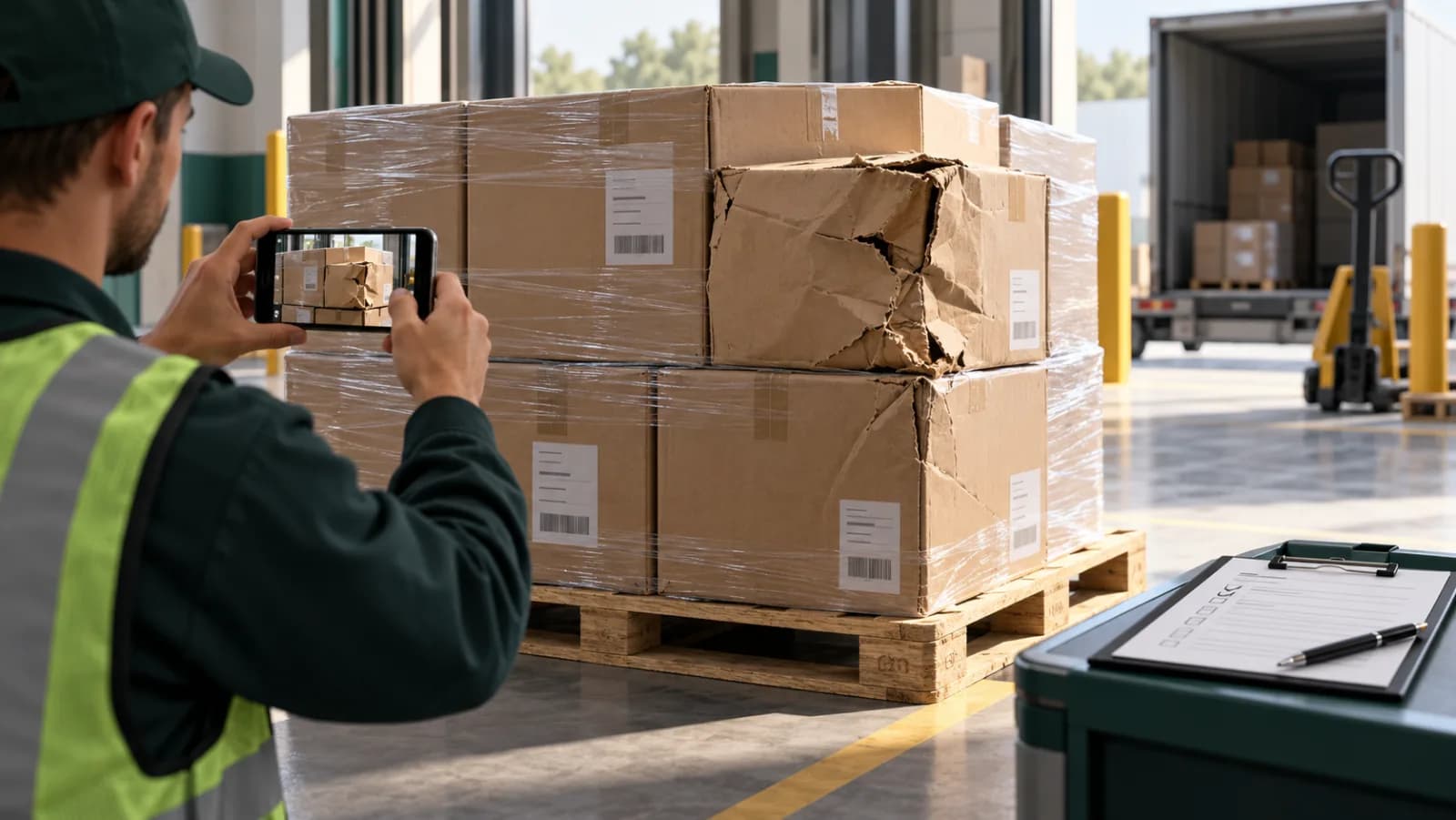
| Loadout and handoff | Pallet condition, short pallet, concealed damage, retailer compliance chargeback | Carrier, consignee, retailer, brand client | Each pallet on all sides, wrap and corner boards, labels, position in trailer, doors closed, seal applied and legible, signed BOL with piece count | BOL, PRO, pallet ID or SSCC, seal number, load ID |
| Returns | Grade disputes, "your warehouse damaged the return," marketplace reimbursement | Brand client, marketplace, end customer | Parcel and label as received, contents as unboxed, defects close up, grade decision | RMA, original order number, return tracking number |
Who disputes what
Brand clients dispute the things they pay for: picks, counts and grades. Their claims usually arrive as a customer complaint forwarded with a request for credit. They need a record they can show their own customer or marketplace.
Carriers dispute condition and count at the handoff. Their question is narrow: what did the freight look like, and how many pieces were there, when custody passed?
Suppliers dispute inbound shortages and damage. Their position is usually that the goods left their dock complete, which makes your receiving record the only independent account.
Retailers dispute compliance: labels, pallet build, ASN accuracy, ship windows. Their deductions arrive weeks later and flow down the contract chain, which is why the brand will ask you for the record.
Receiving freight damage: document before anyone signs
Receiving is the first custody boundary, and the record made there decides whether inbound damage or shortage belongs to the supplier, the carrier or you. Once a delivery receipt is signed clean and the load is broken down into stock, a later discrepancy looks like it happened in your building.
The practical rule is to record identity and condition before anything moves: the trailer and seal, the full load, labels, each affected carton, and the count against the ASN. 3PL Center's guide to damaged or short freight puts the stakes plainly: a receipt signed without exceptions can make a later carrier claim much harder to support, and sealed cartons that arrive intact but short may point back to the supplier.
Our full receiving procedure, from dock safety to OS&D notes and the 49 CFR Part 370 claim rule, is in how to document freight damage at warehouse receiving.
Receiving discrepancies: a report the supplier can't argue with
A receiving discrepancy report turns a dock observation into a claim a supplier or brand can act on: expected versus counted quantity, the source of the expected number, and a photo reference for every line. Without it, the variance gets keyed as an adjustment and quietly becomes shrinkage on your account.
Larger 3PLs have made this a product. ShipMonk's Quality Guard attaches photo evidence to the ASN for shipments that arrive over, under or mislabeled, before the receiving workflow continues (checked October 2026). That is the bar brands now compare everyone else against.
Use the receiving discrepancy report template to standardize the fields, and keep each photo tied to the same PO and ASN the supplier will look up.
Inbound containers: inspect before you unstuff
An inbound container needs its own record before the doors open: container number, seal number and seal condition, door hardware, and the first view of the load. Once unstuffing starts, nobody can reconstruct how the cargo was stowed or whether the seal matched the documents.
U.S. Customs and Border Protection's CTPAT Minimum Security Criteria describe a seal check known as VVTT: view the seal and locking mechanisms, verify the seal number against shipment documents, tug the seal, and twist and turn a bolt seal. The same criteria call for a seven-point inspection of empty containers before stuffing. Even if you are not a CTPAT member, VVTT is a good shot list for the receiving side.
The step-by-step version is in the inbound container inspection checklist.
Damaged inventory: quarantine with photos, then decide
Damaged stock found in storage needs a photo at the moment it is flagged, a quarantine location that keeps it out of pick paths, and a recorded disposition: return to vendor, repair, sell as-is or scrap. Each step is a moment someone will later ask about, usually when the write-off appears on an invoice.
Racklify's encyclopedia entry on how warehouses flag and process damaged inventory recommends requiring images for any damaged-item transaction, alongside the reporter, time, SKU, quantity and damage code (updated September 18, 2026). The photo is what lets a brand approve a write-off without walking your floor.
Our damaged inventory quarantine SOP turns that into a one-page procedure with the photos required at each step.
Shrinkage allowance: what's normal and how to investigate variance
A shrinkage allowance is the share of inventory loss a brand agrees to absorb before the 3PL pays. It is the single number in a 3PL contract that most directly converts missing evidence into money.
Red Stag Fulfillment's shrinkage benchmark page cites a 1.44% average shrinkage rate across 150 U.S. 3PLs (Warehousing & Fulfillment data for 2024), puts typical contractual allowances at 0.5% to 1%, and says anything above 2% signals poor controls and should be renegotiated (checked October 2026). When a variance crosses the line, the investigation runs backward through receiving, adjustment, pick-pack and returns records to find where units actually went.
The benchmarks, a sample clause and the investigation procedure are in 3PL shrinkage allowance benchmarks.
Liability for lost or damaged inventory: who pays
Who pays for lost or damaged inventory depends on where custody was when it happened and what the contract says: the carrier for transit, the supplier for what was never shipped, the 3PL for failures of reasonable care in its own building, up to the agreed cap.
For U.S. interstate motor carriers, 49 U.S.C. § 14706 says a carrier may not allow less than nine months to file a claim. Warehouse terms are usually shorter; the Uber Freight terms above require written claims within 60 days. Cleverence's guide to 3PL liability for lost or damaged goods lists the cap types you will meet, per occurrence, per pallet per day and annual aggregate, and recommends outbound photos at the dock to counter "it was fine when it left" disputes.
The responsibility table by scenario, contract limits and the three proof points are in 3PL liability for lost or damaged inventory.
Mispicks: settle "items missing" claims per order
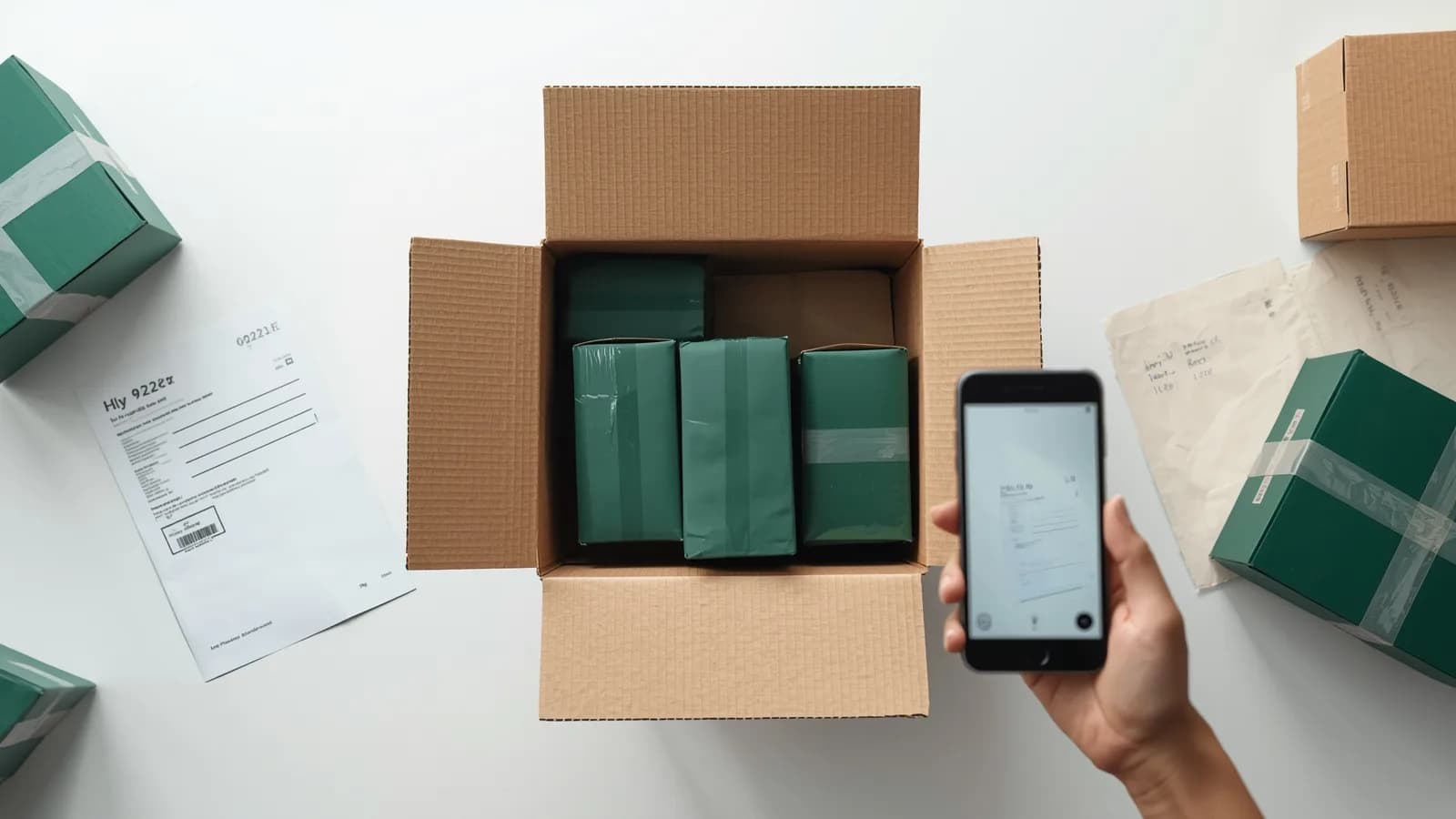
A mispick claim is settled by a record of that one order's contents at the moment the carton closed, tied to the order number. A WMS scan log shows what was scanned. A pre-seal frame shows what went in the box.
Some 3PLs publish their claim rules. Hive, a European fulfillment provider, asks its merchants to send the end customer's photos of the shipping label, the outer packaging and the inner packaging, within four business days of delivery, and credits €10 on the next invoice when it finds a possible fulfillment mistake (Hive help center, checked October 2026). Every one of those photos is taken by the customer. The 3PL's own record of the pack is the missing half.
The per-order procedure, the reply templates and a cost comparison with pack-station camera systems are in 3PL mispick dispute evidence. If you are weighing a fixed-camera system, the Rabot alternative comparison covers the trade-off.
Packing proof at warehouse scale
Recording one order is easy; recording every order across benches, shifts, languages and peak weeks is a process design problem. The process that holds is the one a tired packer completes on the fourth pallet of the afternoon without supervision: the job opens on the device already in hand, the reference is scanned rather than typed, and the record seals itself.
That is the subject of how a warehouse records packing proof, which also covers multi-site operation and why location is a supporting signal rather than proof. For the capture standard that makes any packing recording count as evidence, see the packing video evidence checklist.
Subscription box QC: kit-level proof
Subscription and kitting work multiplies the mispick problem: every box contains several SKUs, often with inserts and variants, assembled at speed for a ship window. The evidence unit is the kit, so the record has to show the full contents of one box against that box's pick list before it closes.
The practical answer is a sampled or full pre-seal photo per box, tied to the box or order ID, plus a first-article record at the start of each kitting run so the brand can approve the build before thousands are assembled.
The checklist, sampling approach and photo standard are in the subscription box QC checklist.
Freight loadout photos: proof of loading for LTL and FTL
Loadout photos are the outbound mirror of receiving: each pallet, its wrap and labels, its position in the trailer, the closed doors and the seal number, tied to the BOL. They are what you show when a consignee reports a crushed pallet or a retailer charges back a non-compliant load.
The standard moved this year. ShipMonk announced on March 3, 2026 that every LTL and FTL shipment leaving its facilities is photographed during loadout, at no charge, with staging and truck-loading images on the order page, and that it uses them when auditing chargeback claims. Brands that see that offer will ask their own 3PL for the same.
The shot list, the proof-of-loading app landscape and how to answer a pallet condition dispute are in freight loadout photos.
Retail compliance chargebacks: evidence for flowdown
Retailers deduct compliance chargebacks from the brand's invoices for late shipments, label errors, ASN mismatches and pallet build problems, and more 3PL contracts now pass those deductions down to the 3PL. When they do, the 3PL needs a record of how each shipment was actually built and labeled.
A Terms.Law analysis of retail chargeback flowdown in 3PL SLAs describes set-off clauses that let the brand deduct substantiated chargebacks from 3PL fees, and fault allocation that separates 3PL misses from brand and carrier misses. It does not define what substantiation looks like. A labeled pallet photo tied to the PO and BOL is the most direct answer.
Disputing a deduction with evidence is covered in retail compliance chargebacks evidence.
Returns inspection and grading
A returns grade is a decision the brand pays for, either as restocked inventory or as a write-off, so every grade below "like new" needs a photo the brand can review. Returns are also where marketplace reimbursements are won or lost.
Claimlane's guide to 3PL returns management describes an A to D grading scale, says the brand rather than the 3PL should define the grading criteria, and recommends photographing every returned item during inspection (updated July 10, 2026). Marketplaces often keep no images of their own: Walmart's WFS returns reimbursement and dispute guide states that Walmart does not capture or maintain pictures of damaged returns, so the evidence for a dispute has to come from you and your 3PL.
The grading standard with required photos per grade, and how to use the buyer's own return video, are in 3PL returns inspection and grading. For the fraud side of returns, see the return fraud evidence playbook.
The contract evidence clause
Most 3PL agreements define service levels and remedies but not the evidence that proves either side right. An evidence clause fixes that: which moments are recorded, what each record must show, which reference it carries, how long it is kept and how the other party can verify it.
Cleverence's guide to essential 3PL contract clauses recommends giving every SLA metric a measurement method, a data source and a reporting cadence. An evidence clause is the data-source part, written down before the first dispute rather than negotiated during it.
Sample wording is in the 3PL contract evidence clause guide.
Switching 3PLs: transfer inventory without losing the count
A 3PL-to-3PL move is two custody boundaries at once: transfer-out at the old warehouse and receiving at the new one. Any unit that goes missing in between becomes an argument between two providers, each holding half the paperwork.
The protection is symmetrical evidence: pallet, carton and seal records at the outgoing dock, and receiving records for the same pallets and lots at the incoming dock, both under the same transfer reference. Reconciliation then compares two records instead of two opinions.
The full sequence is in the switching 3PL inventory transfer checklist.
Common mistakes in 3PL evidence
The most common 3PL evidence mistakes are process failures, not image quality: recording too late, filing by date, typing references, and sharing too much.
- Recording only after a complaint. A record made after the claim cannot cover the moment in dispute. The only useful evidence exists before anyone asks.
- Filing by date instead of reference. A folder of Tuesday's dock photos cannot be matched to BOL 88213 three weeks later. File by the reference the other party will quote.
- Typing long references by hand. A transposed character in a pallet ID attaches good evidence to the wrong record. Scan the barcode wherever there is one.
- Shared logins. "Warehouse" as the author of every record erases who did what, which is the follow-up question every dispute asks.
- Photographing the finished state only. A wrapped pallet at rest proves a pallet existed. The contents before wrap, or the carton before seal, prove what was in it.
- Mixing clients in one shared drive. Sending a brand a folder link that shows another brand's freight is a confidentiality problem. Share single records.
- Keeping evidence shorter than the claim window. Carrier and warehouse claim windows run to months. Evidence deleted on a 30-day cycle cannot answer a claim filed on day 60.
- Assuming a notation is a claim. Under 49 CFR § 370.3, damage notations and inspection reports standing alone do not meet the minimum filing requirements for a carrier claim. The photo supports the written claim; it does not replace it.
How PallasMark covers the 3PL evidence chain
PallasMark is the evidence layer for all five moments, running on the phones a 3PL team already has. There are no cameras to install, no fixed stations and no per-station fees; any iPhone, Android device or browser records.
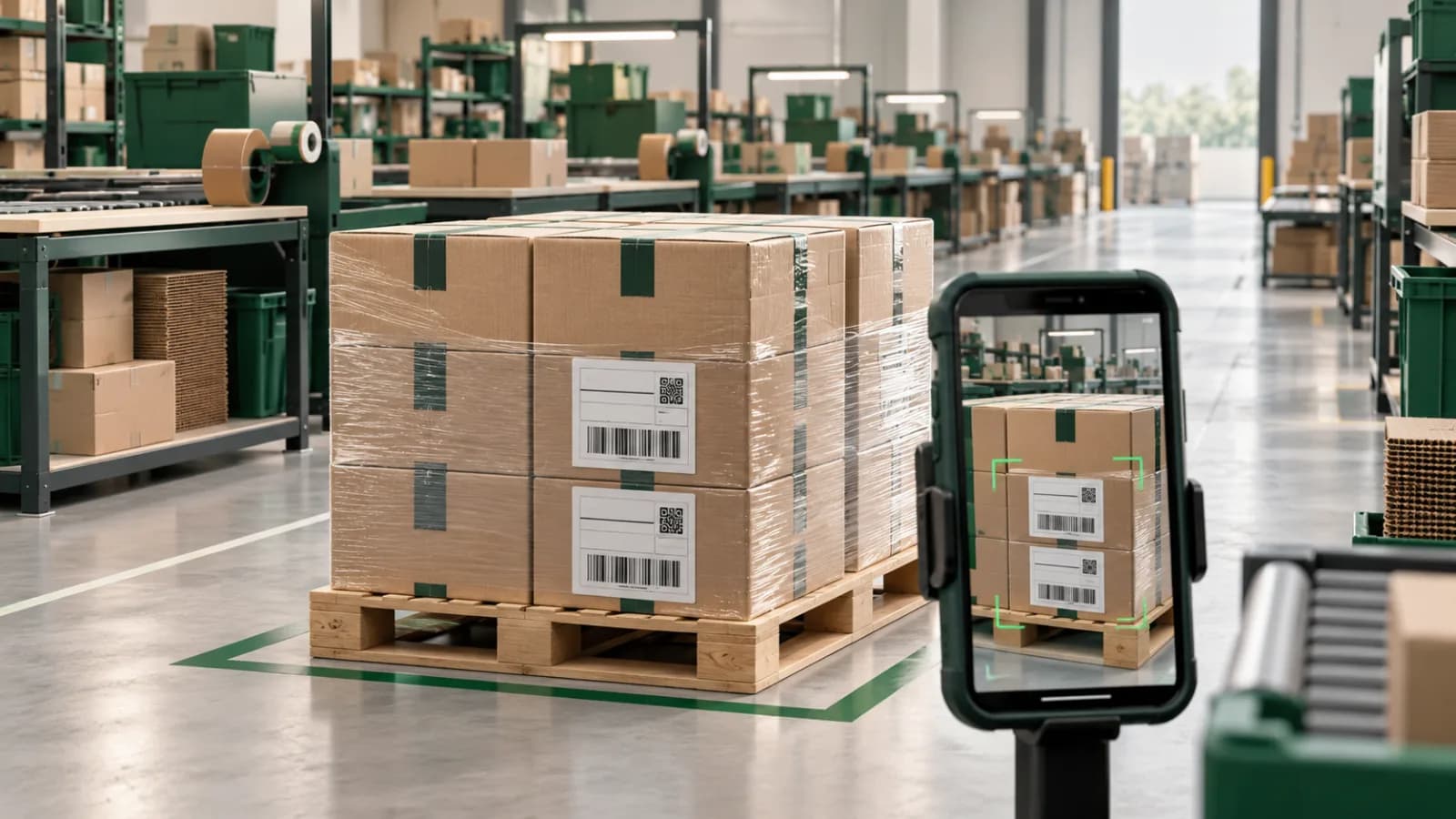
Receiving, storage, loading and dispatch. Warehouse records are tied to a shipment, pallet or lot reference, a facility and, for 3PLs, a client brand. The operator scans the label and the record opens under that reference; custom fields hold the PO, seal number, SKU or lot. On the Scale plan, AI label reading fills supplier, batch or lot, quantity, location, condition and your custom fields from a photo of the label into an editable form the operator reviews, and a scanned barcode always wins. Standalone records work with no store connection at all.
Pick-pack. Orders arrive on their own from ShipHero, ShipStation, Shopify, WooCommerce and Amazon Seller Central once connected. The packer scans the picking slip or shipping label, the app opens that order, and the recording is bound to it before the first frame.
Returns. When a return opens, the end customer can be asked to film the item and its packaging through a link before the parcel reaches your returns table. Shopify and ShipHero returns trigger the request automatically. See return evidence.
Sealed and checkable. Every stored file gets a SHA-256 fingerprint, and every proof has a public verification page that re-hashes the stored file on the spot. A brand, carrier or retailer opens it with no account and no login. There is no edit button for recordings anywhere in the product. How verification works explains the check.
Multi-client by design. Each record carries its client and facility. Team roles include an operator role for warehouse staff, and access follows assigned facilities and clients, so a packer working for one brand does not browse another's records. Records can be searched by facility, client, date, condition, creator and custom fields, and each capture records whether it was made inside the facility area, outside it, or not checked.
One record, one link. Share a specific pallet, shipment or order record with a client brand, carrier or supplier through a link with an expiry, an optional PIN and download settings, revocable at any time. They see that record and nothing else. For orders, PallasMark also builds an evidence dossier PDF on request, with four stills from each video, photos, fingerprints and the order details, that the brand can upload to a marketplace, processor or carrier itself. See chargeback evidence.
Into your own systems. Business and Scale plans add an API with scoped keys and HMAC-SHA256 signed webhooks with automatic retries, for 3PLs that want evidence events flowing into their own client portal or WMS.
Start with the moment that costs you most. Most 3PLs begin with one disputing client's orders or one dock door for a month, then expand. The 3PL fulfillment solution and warehouse proof pages show the workflow; the free plan needs no card, and current plans are on the pricing page.
Frequently asked questions
What is 3PL proof of fulfillment?
3PL proof of fulfillment is a record, made at the time, that shows a specific order or shipment was handled correctly: the right items packed, the right count loaded, the right condition at handoff. It is tied to the order number, pallet or BOL the other party already uses, and it is stored so a brand, carrier or retailer can check it was not changed later. A WMS scan log shows what was scanned; a visual record shows what physically happened.
Which evidence points matter most for a 3PL?
Five: receiving, storage and cycle counts, pick-pack, loadout to the carrier, and returns. Each is a moment where custody changes or is measured, and each has a different party likely to dispute it. If you can only start with one, start where your disputes come from today, which for most 3PLs is either pick-pack (brand clients reporting missing or wrong items) or receiving (suppliers and carriers).
Does a 3PL need to install cameras at every pack station?
No. Fixed cameras cover the stations they are mounted on and nothing else, and most 3PL evidence moments happen away from a bench: at the dock door, in the racks, at the trailer, at the returns table. A phone-based workflow records at every one of those points with the devices the team already carries, with no hardware to buy and no per-station fees.
How can a 3PL share evidence with one brand client without exposing other clients?
Share a single record rather than a folder or a portal login. In PallasMark, one pallet, shipment or order record can be shared through a link with an expiry date, an optional PIN and download settings, and the link can be revoked. The client sees that record and nothing else in the warehouse, and needs no account.
How long should a 3PL keep warehouse evidence?
At least as long as the longest claim window your clients, carriers and retailers can use. U.S. interstate carriers must allow at least nine months to file a loss or damage claim, and warehouse terms set their own windows. PallasMark keeps proofs for 90 days by default on every plan, Scale contracts set 365 days or longer to match your clients' windows, and records tied to an open dispute, chargeback or return are never purged.
Does PallasMark connect to our WMS or order system?
Orders flow in automatically from ShipHero, ShipStation, Shopify, WooCommerce and Amazon Seller Central once connected, and the packer's barcode scan opens the right order. Warehouse records for receiving, loading and dispatch also work standalone, with no store connection. Business and Scale plans add an API with scoped keys and HMAC-signed webhooks for 3PLs that want evidence events in their own client portal or systems.
Is a photo enough to decide who pays for damaged inventory?
A photo shows condition and count at a known time under a known reference. Liability itself is set by the contract and the law that applies to that leg, for example the warehouse's duty of reasonable care in storage or the carrier's liability in transit. What the record does is place the incident on one side of a custody boundary, which is usually the question everyone is actually arguing about.
- 3pl
- warehouse evidence
- proof of fulfillment
- warehouse photo documentation
- order accuracy
- chain of custody