Part of the Industry guides guide
Furniture damaged in shipping: how sellers file the claim and prove the packing


On this page
Furniture is different from parcels: the piece rides LTL freight or with a white-glove crew, the receipt is signed at a front door by a buyer who has never heard the word "exception," and the damage often sits under wrap until the crew has left. This guide is for the seller who has to put the claim together afterwards.
Who claims against whom
In most seller-paid shipments, the seller is the carrier's customer and files the claim. The buyer's job is narrower but decisive: the note on the receipt, the photos and the kept packaging.
| Delivery type | Who usually files | Where the claim goes | What decides it |
|---|---|---|---|
| Oversize parcel | Seller (the shipper of record) | The parcel carrier's claim process | The carrier's own window and packaging rules; see shipping damage claims by carrier |
| LTL freight | Seller, with the buyer's receipt note | The freight carrier's cargo claims desk | The bill of lading, the carrier's tariff and federal claim rules |
| White-glove crew | Seller or retailer, under the delivery contract | The delivery company named in that contract | The crew's terms, which vary by retailer and provider |
The legal frame matters too. U.S. law defines "household goods" as dwelling property on a move and excludes property moving from a factory or store, unless the householder bought it, asked for the transport and paid the carrier (49 U.S.C. § 13102(10)). A store shipping a sofa to a customer is commercial freight, not a household-goods move, so mover valuation rules such as released value per pound don't describe your shipment.
If you sell through a marketplace with its own large-item program, its supplier rules sit on top of all this. Check them in your seller account before you ship.
The rules that apply to furniture freight
For interstate U.S. motor freight, the Carmack Amendment (49 U.S.C. § 14706) makes the carrier liable for actual loss or damage and bars carriers from giving less than nine months to file a claim. The rest of the frame is set by federal claim rules and the carrier's tariff, checked October 2026:
| Rule | What it says | Source |
|---|---|---|
| Carrier liability | Liable for "the actual loss or injury to the property"; can be limited to a value the shipper declares in writing or electronically | 49 U.S.C. § 14706 |
| Filing window | No less than 9 months to file a claim; no less than 2 years to sue after a written disallowance | § 14706(e) |
| What a claim is | Written; identifies the shipment; asserts liability; asks for a specified or determinable amount. Receipt notes alone are not a claim | 49 CFR 370.3 |
| Carrier response | Acknowledge within 30 days; pay, decline or offer within 120 days | 49 CFR 370.5, 370.9 |
| Concealed damage notice | Examples: TForce "within 5 business days of the delivery date"; Estes "within five days of receipt," a "condition precedent to recovery" | TForce Freight, Estes |
| Oversize parcel | The carrier's own claim window and packaging rules | Carrier master table |
Your carrier's tariff and BOL control the exact window. Read them before you ship, not after.
Five steps that protect a furniture claim
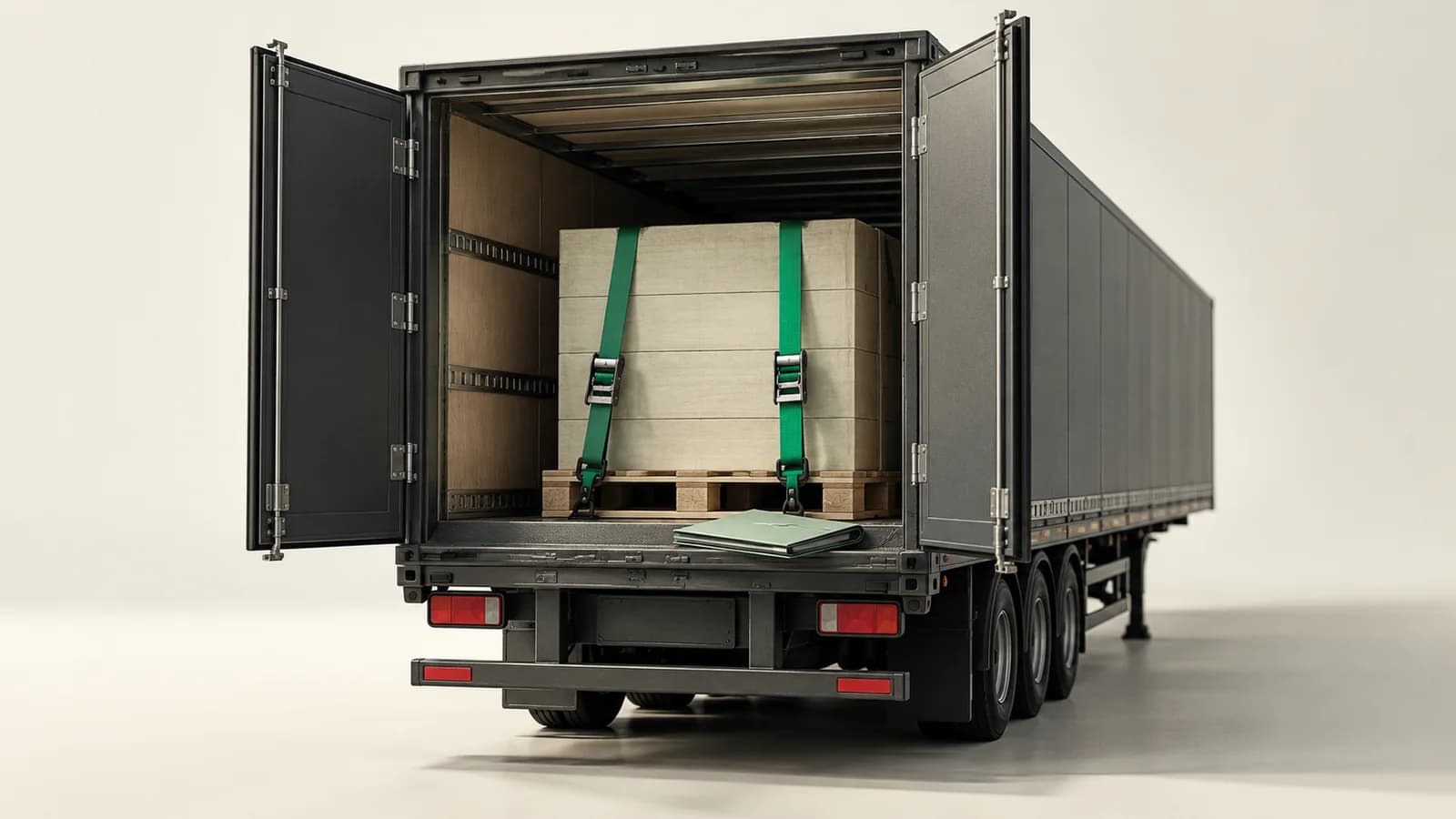
Five steps protect a furniture claim, three before the truck leaves and two after it arrives:
Packaging that survives a claim review
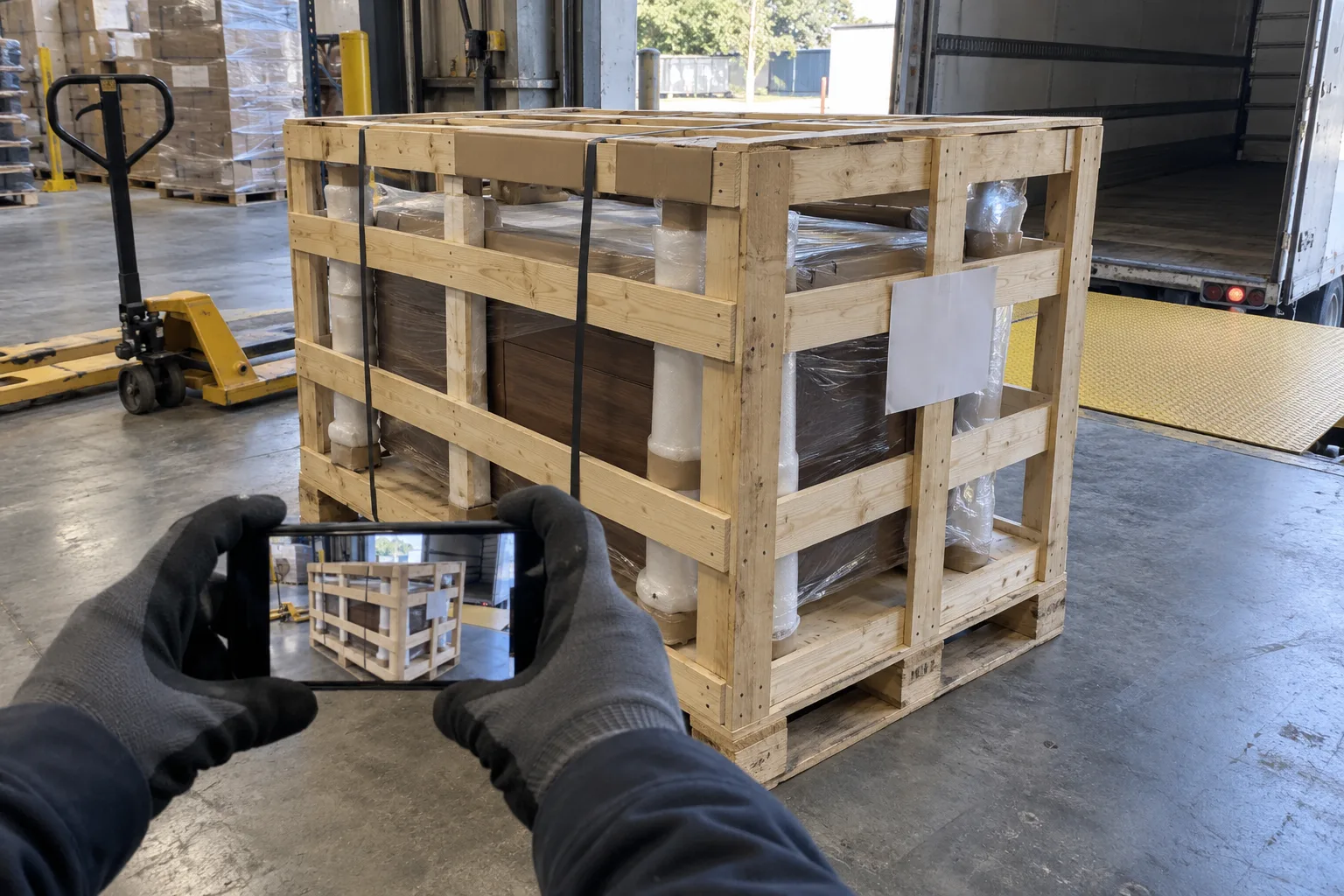
A carrier reviewing a furniture claim asks first whether the piece was packed for freight. Naming a recognized test helps: ISTA 2C is "a partial simulation test for individual packaged furniture products transported in a container (Case Goods)." Amazon's 2021 vendor drop-test SOP lets vendors self-drop-test only non-fragile items under 50 lb, so fragile and heavier pieces still go through the full ISTA 6-Amazon.com-SIOC test.
Whatever the test, reviewers look for these protections:
- Corners and edges covered.
- Legs, feet and glass protected, or removed and bagged.
- Drawers and doors secured so they can't slide open.
- Hardware bagged, labeled and attached to the piece.
- A crate or skid for heavy case goods.
- "Do not stack" agreed with the carrier, where it is offered.
If a claim has already been refused on packaging grounds, shipping insurance claim denied for packaging explains how to answer it.
The pre-dispatch photo set
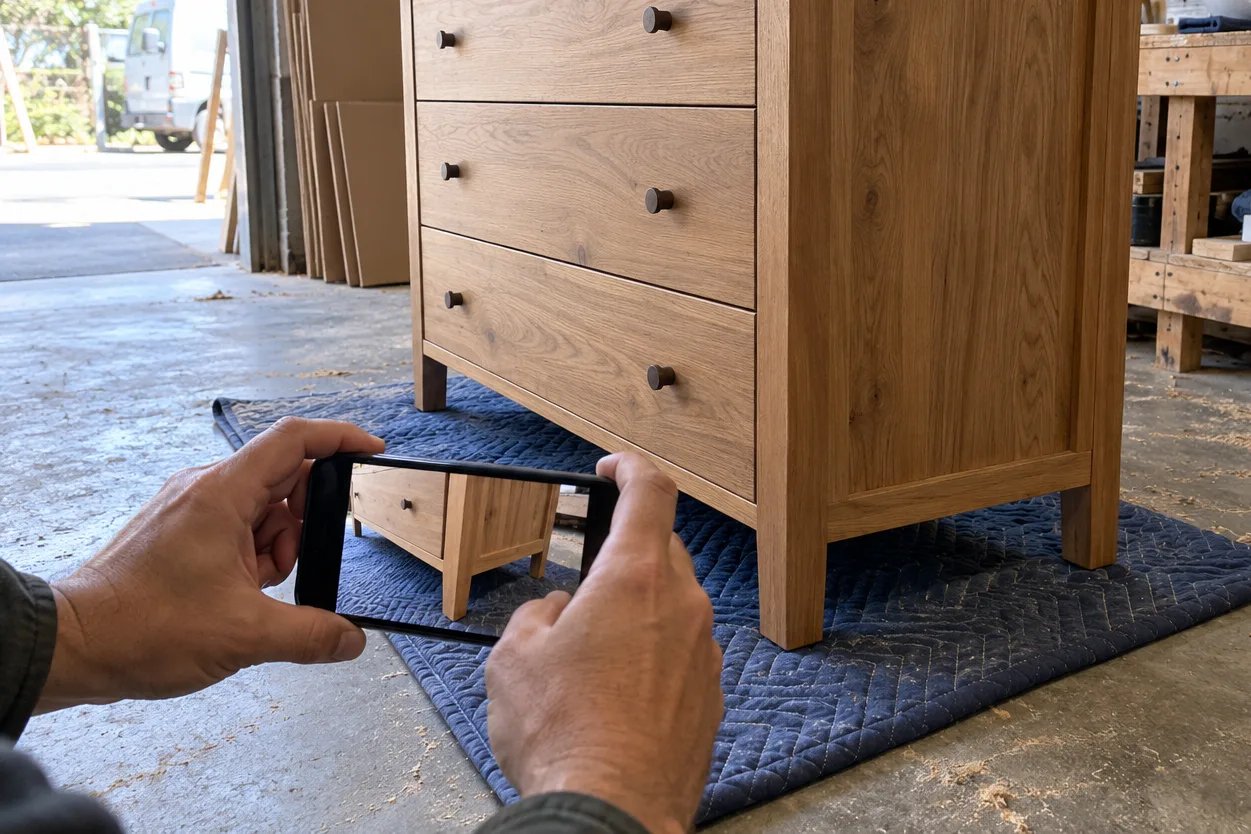
The pre-dispatch photo set is the record that shows the piece left you whole and packed properly. Take it at the bench and at the dock, against the order number, before the crate closes:
For the dock side of a multi-pallet load, freight loadout photos has the full shot list. For crating technique on high-value pieces, the artwork condition report covers the same discipline.
At the door: what the buyer should write
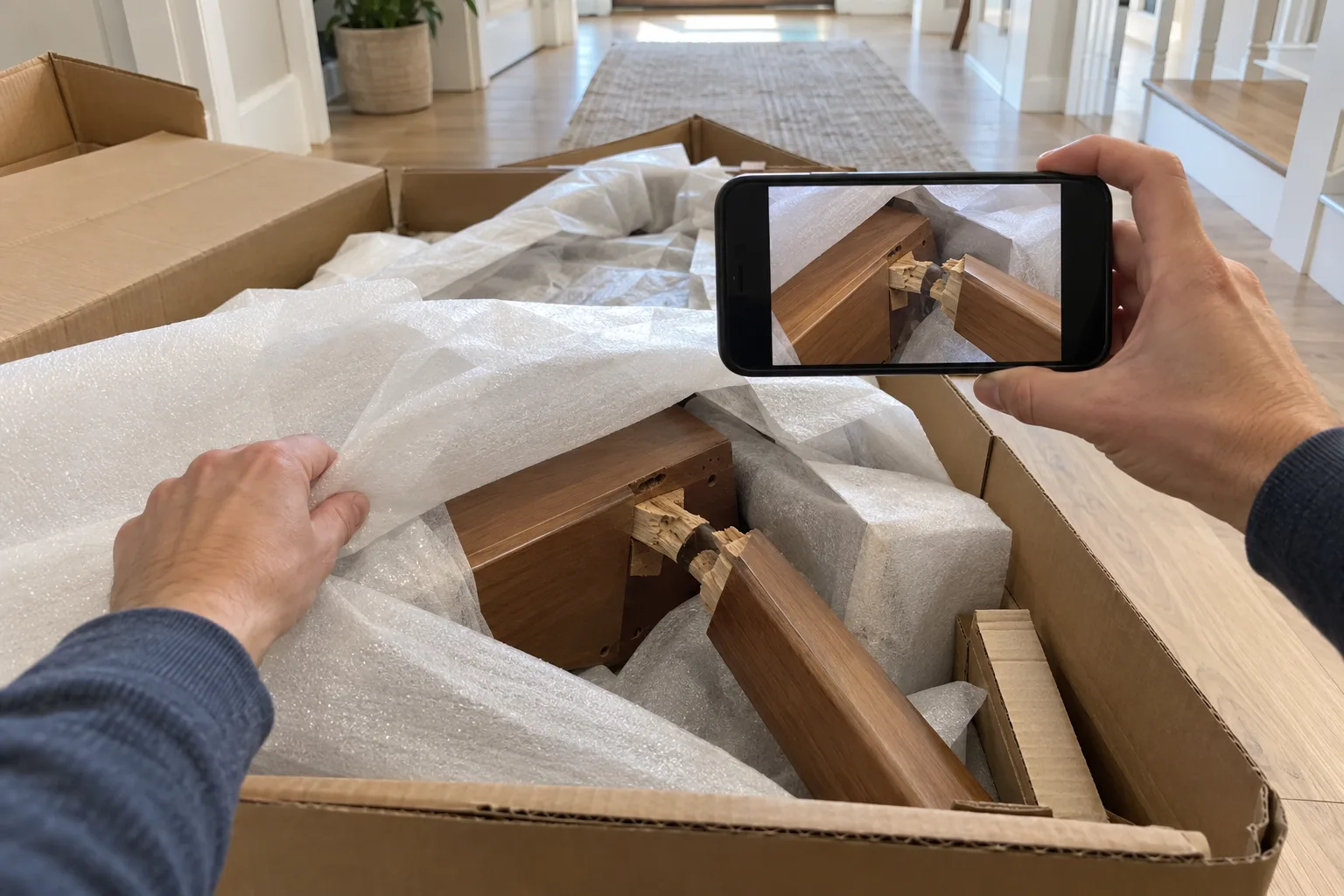
The buyer should inspect before signing and write exactly what is wrong on the receipt. Send them a short instruction with the delivery appointment, because most buyers have never signed for freight.
The instruction covers five things: unwrap enough to see every side; write specific exceptions; photograph the piece and the packaging before the crew leaves; keep all cartons, foam and the crate; and report anything found later to you the same day. Refusal is for a piece with no remaining value. California's state purchasing manual gives its own receivers the same advice: accept a partially damaged shipment and note exceptions, refuse only what "no longer has a value" (SAM § 3861). White-glove terms vary, so match the instruction to your crew's process.
When the damage only shows after the crew leaves, it is concealed damage, and the clock is the carrier's notice window. For the reply to a buyer who reports damage, see customer says item arrived damaged.
Copy-ready templates for furniture claims
Three short texts cover the whole claim.
The letter carries the elements 49 CFR 370.3 lists, and the enclosures match what carriers such as TForce and Estes ask for. For U.S. interstate motor freight, carriers must allow at least nine months to file (49 U.S.C. § 14706); file as early as you can.
How PallasMark handles furniture orders
PallasMark turns the pre-dispatch photo set into a sealed record the carrier's claims desk can check on its own. It runs on the phones your team already has.
The packer scans the order's barcode and the app opens that order, so every photo and video of the wrapping and crating belongs to it. Photos carry the company name, order number and upload time (UTC) inside the image. Every stored file gets a SHA-256 fingerprint and a public verification page anyone can open with no account, so the claims adjuster can check for themselves that the file hasn't changed since upload.
At the dock, warehouse records for packing and loading hold the pallet reference and custom fields such as PRO, BOL or seal number. For a high-value piece, the team can send the buyer the sealed recording with one tap and have them approve the exact piece before the crate ships, so condition questions are settled before the truck. When a claim starts, the evidence PDF gathers, on request, stills from each video, the photos, fingerprints, any buyer approval and the carrier and tracking number read from your store, ready to attach to the claim letter. See carrier and insurance claims and PallasMark for online stores.
For every other vertical's version of this record, start at the hub: packing proof by industry. The shipping damage glossary defines every term used above.
Frequently asked questions
Who files the claim when furniture is damaged in freight shipping?
Usually the party that hired and paid the carrier, which for most online furniture orders is the seller. The buyer supports the claim with the receipt note, photos and the kept packaging. White-glove crews and marketplaces may have their own process, so check the delivery terms.
How long do I have to report concealed damage on a furniture delivery?
It depends on the carrier's tariff. TForce Freight asks for notice within 5 business days of the delivery date and Estes within five days of receipt. Report it the day it is found and request an inspection.
How long do I have to file the freight claim itself?
For U.S. interstate motor freight, a carrier cannot allow less than nine months to file a claim under 49 U.S.C. 14706. The claim must be written, identify the shipment, assert the carrier's liability and ask for a specific amount. File as early as you can.
Should the buyer refuse a damaged furniture delivery?
Usually not. Accepting with specific exceptions written on the receipt keeps the claim simple, and refusal is mainly for a piece with no remaining value. The buyer should follow the seller's instructions, because a refusal can trigger return and storage charges.
What photos prove furniture was packed properly?
The bare piece with every corner and leg, each protective layer as it goes on, the closed carton or crate on its pallet from two sides, and the label in frame. Recording them against the order number makes them easy to match to the claim later.
Does the Carmack Amendment apply to furniture I ship to a customer?
For interstate motor freight in the U.S., the Carmack Amendment at 49 U.S.C. 14706 governs carrier liability for loss and damage. A store's shipment to a customer is generally commercial freight rather than a household-goods move. This is general information, not legal advice.
- furniture shipping
- freight claims
- concealed damage
- ltl freight
- carmack amendment
- packing photos