Part of the Warehouse and 3PL evidence guide
3PL Contract Clauses for Evidence: Chargebacks, Set-Off and Claims

On this page
Printable resource
3PL Contract Evidence Clause Pack
Three pages of sample clause language: evidence record definition, substantiation, chargeback flowdown, set-off, claims windows, fault allocation, retention and disputes.
When to use these clauses
Use them when you negotiate a new 3PL agreement, renew one, or add retail (B2B) channels, before the first deduction shows up on a remittance.
The legal structure is well described elsewhere. Terms.Law's guide to retail chargeback flowdown in 3PL SLAs, by attorney Sergei Tokmakov, walks through back-to-back indemnity, incorporating each retailer's routing guide, fault allocation, set-off and carving chargebacks out of the general liability cap. It treats substantiation as how a chargeback is documented and contested, without saying what the documentation should be; neither do the other guides we reviewed. Cleverence's list of essential 3PL contract clauses (December 2025) covers liability caps, notice periods and audit log retention without an evidence standard. Cart.com's July 2026 checklist of what apparel brands should demand from a 3PL contract flags as a red flag any contract that makes the brand financially responsible for all chargebacks regardless of cause.
That gap is what the clauses below fill.
| Contract term | What it decides | What it usually leaves open |
|---|---|---|
| Retail chargeback flowdown | Who pays retailer fines the 3PL caused | How cause is proven |
| Set-off or holdback | Whether the brand can deduct from 3PL invoices | What proof is needed before deducting |
| Claims window | The deadline to raise a claim | What record has to exist by then |
| Mispick and damage allocation | 3PL vs brand vs carrier | Which moment's record decides |
| Record retention | How long records are kept | In what form, and who may see them |
The sample clauses
Bracketed values are placeholders. Section numbers refer to the clauses below; renumber them to fit your agreement.
How to fill in the brackets
The numbers are where the clause meets real deadlines, so set them backward from the strictest one you face.
- Brand notice windows must be shorter than retailer dispute windows. If the brand tells the 3PL about a chargeback after the retailer's dispute window has closed, the 3PL's evidence arrives too late to reverse it. Retailer windows vary; see retail compliance chargebacks for what is published.
- Retention must outlast the longest claim window. For motor carrier shipments under 49 U.S.C. 14706, subsection (e) bars carriers from setting less than nine months to file a claim. Set retention from that claim calendar, and tie it to open disputes, so no record expires while it can still be needed.
- Caps need carve-outs. Under UCC section 7-204, a warehouse is liable for loss or damage caused by its failure to exercise reasonable care, and damages may be limited by a term in the warehouse receipt or storage agreement. Terms.Law calls a general cap that swallows chargeback indemnity the most common drafting failure; decide on purpose whether flowdown sits inside or outside it.
- Shrink allowances interact with Section 6(b). Cleverence notes that many contracts land between 0.1% and 0.5% of throughput or average inventory value. Benchmarks and sample wording are in 3PL shrinkage allowance benchmarks.
- Name the capture points that match your risk. Every order in disputed channels; value thresholds and retail shipments elsewhere.
Some 3PLs already price this in. ShipMonk's Perfect Order Program credits merchants for retail chargebacks caused by its own errors, such as GS1-128 label placement, unit shortages or overages and SKU errors, for managed merchants on certified retail integrations, and asks for chargebacks to be reported ideally within 30 days. A contract clause gives every 3PL relationship the same footing.
Turning the clause into evidence on the floor
The clause only works if the warehouse records the moments it names.
| Moment | Record | What it settles |
|---|---|---|
| Receiving | Pallet and carton photos against PO and ASN; count-on-open video for short cartons | Shortages and damage that arrived before custody began; see the receiving discrepancy report |
| Storage incident | Quarantine record from flag to disposition | Damage while in the warehouse |
| Pack-out | Order packing video or photos | Mispicks and missing items; see 3PL mispick dispute evidence |
| Retail carton and pallet build | Carton labels, pallet sides, wrap, ASN reference | Label, carton and pallet compliance chargebacks |
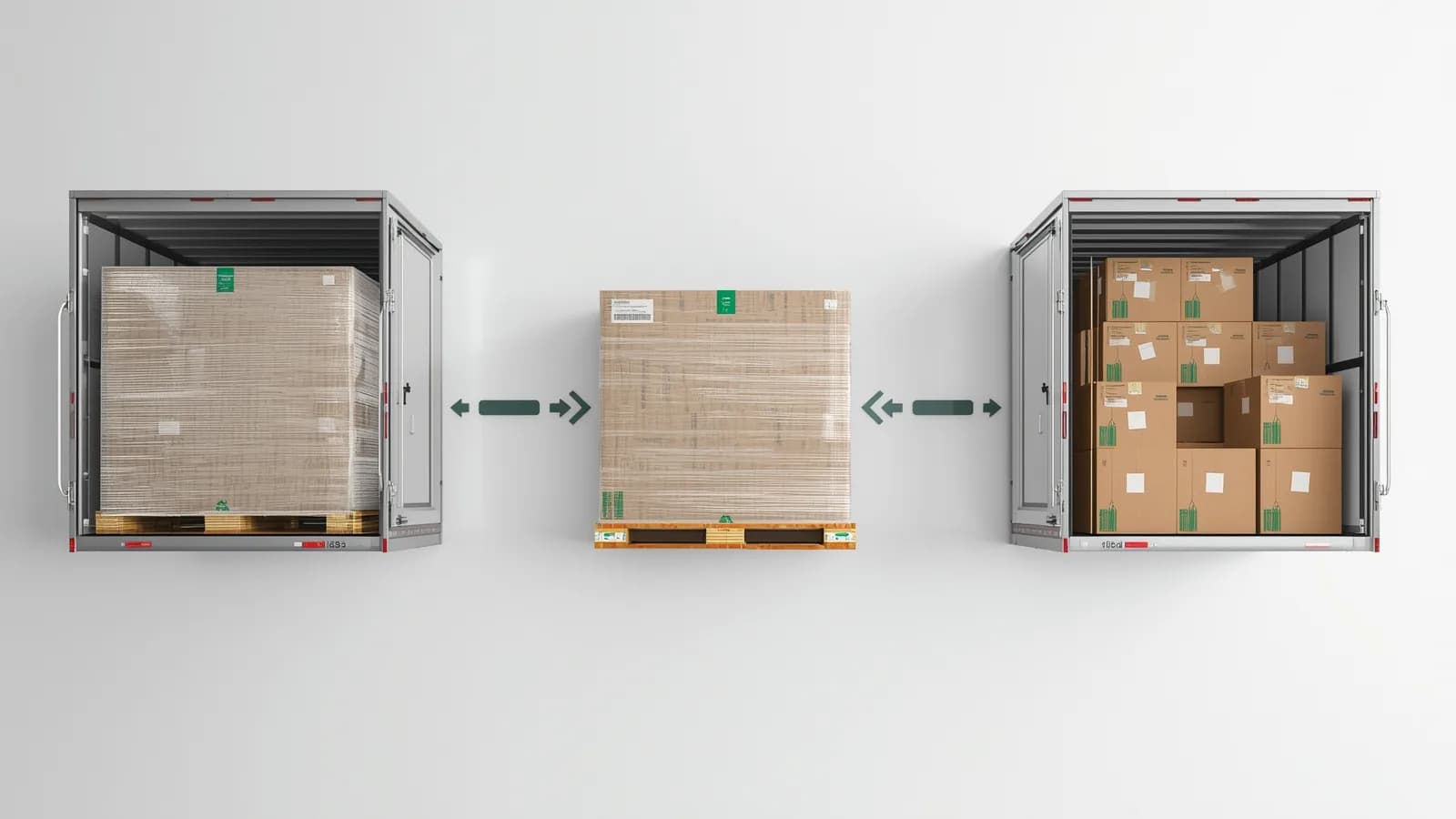
| Loadout | Pallets in the trailer, door, seal number | Shortage or damage after pickup; see freight loadout photos |
| Returns | Condition photos at intake | Grading disputes |
How PallasMark supports an evidence clause
PallasMark gives a 3PL an Evidence Record at every moment in that table, on the phones the team already has, and gives the brand a way to check it without logging in to anything.
- Pack-out tied to the order. Orders arrive from Shopify, WooCommerce, ShipStation, ShipHero and Amazon. Scanning the label or picking slip opens the order, so the packing video is bound to the order before the first frame.
- Receiving, pallets and loadout tied to the shipment. Warehouse records cover receiving, packing, loading and dispatch, under the shipment, pallet or lot reference, the facility and the client brand. Custom fields hold PO, ASN, seal number or lot.
- Meets the definition in Section 1. Every file gets a SHA-256 fingerprint, each record shows who created it and when, a location check records whether it was captured inside the facility area, and there is no edit button for recordings.
- Sharing as Section 7 describes. Share one record with the brand, a retailer, a carrier or an insurer through a link with an expiry, optional PIN and download settings, revocable at any time. For an order, the evidence dossier builds a PDF with stills from each video, because dispute portals want documents.
- Client separation. The operator role is built for warehouse staff, and access follows the facilities and clients each person is assigned, so one brand never sees another's records.
See PallasMark for 3PL fulfillment and Warehouse proof. There is a free plan with no card; see pricing.
Related reading
These clauses belong to the 3PL evidence playbook. For who carries the loss when inventory goes missing, read 3PL liability for lost or damaged inventory.
Frequently asked questions
What is retail chargeback flowdown in a 3PL contract?
It is a clause that passes retailer chargebacks, fines and deductions through to the 3PL when the 3PL's performance caused them, such as a mislabeled carton, a wrong pallet build or an ASN mismatch. The brand is charged by the retailer first and then recovers from the 3PL by reimbursement or set-off. Without a defined evidence standard, every flowed-down chargeback becomes an argument about who caused it.
What does substantiation mean for a 3PL chargeback?
Substantiation is the proof a party must give before a chargeback or claim counts against the other side. Many agreements require chargebacks to be substantiated without saying what that means. A useful definition names the documents required, such as the retailer's deduction notice with PO and reason code, and lets the 3PL rebut it with a photo or video record of the shipment at tender.
Should a brand be allowed to set off chargebacks against 3PL invoices?
Set-off is common and practical, but it works best when it is limited to substantiated amounts, follows written notice, and pauses while the 3PL produces a rebutting record. Uncapped, unconditional set-off tends to push 3PLs into disputing every deduction, which slows both businesses down.
How long should a 3PL keep photo and video records?
At least as long as the longest claim or dispute window the records might be needed for, and in any case until any open claim, chargeback or dispute is closed. Write the retention period and the trigger events into the contract, together with how records are shared with the brand, a retailer, a carrier or an insurer.
Can I use these sample 3PL contract clauses as they are?
Treat them as a starting point to review with your counsel. Contract law, warehouse receipts, retailer agreements and insurance terms differ by deal and jurisdiction, and the bracketed numbers need to match your volumes, your retailers' dispute windows and your carriers' claim rules.
How does PallasMark help a 3PL meet an evidence clause?
PallasMark records the moments the clause refers to, receiving, pack-out, carton and pallet build and loadout, on the phones the team already has. Each record is tied to the order, pallet or shipment reference and client brand, every file carries a SHA-256 fingerprint, and a single record can be shared with the brand, retailer, carrier or insurer through a link that needs no account.
- 3pl contract
- retail chargebacks
- sla
- set-off
- evidence standard