Part of the Warehouse and 3PL evidence guide
Receiving Discrepancy Report Template (OS&D) with Photo Fields

On this page
Printable resource
Receiving Discrepancy Report (OS&D)
A two-page OS&D report: shipment references, dock checks, a line-by-line discrepancy table with photo references, a sealed-carton count section and a notification log.
When to use a receiving discrepancy report
Use it whenever an inbound shipment differs from its paperwork in quantity, identity or condition. Each type of discrepancy points to a different party, and the report's job is to keep them apart so each one can be sent where it belongs.
| Discrepancy | What it looks like | Usually points to | Evidence that answers it |
|---|---|---|---|
| Overage | More cartons or units than the ASN or PO | Supplier | Count, carton labels, photo of the extra cartons kept apart |
| Visible shortage | Fewer pallets or cartons than the BOL | Carrier, if noted at delivery; otherwise supplier | BOL piece count, exception on the delivery receipt, pallet photos |
| Concealed shortage | Carton intact, units missing inside | Supplier, typically | Intact carton and tape on camera, count-on-open video, case-pack label |
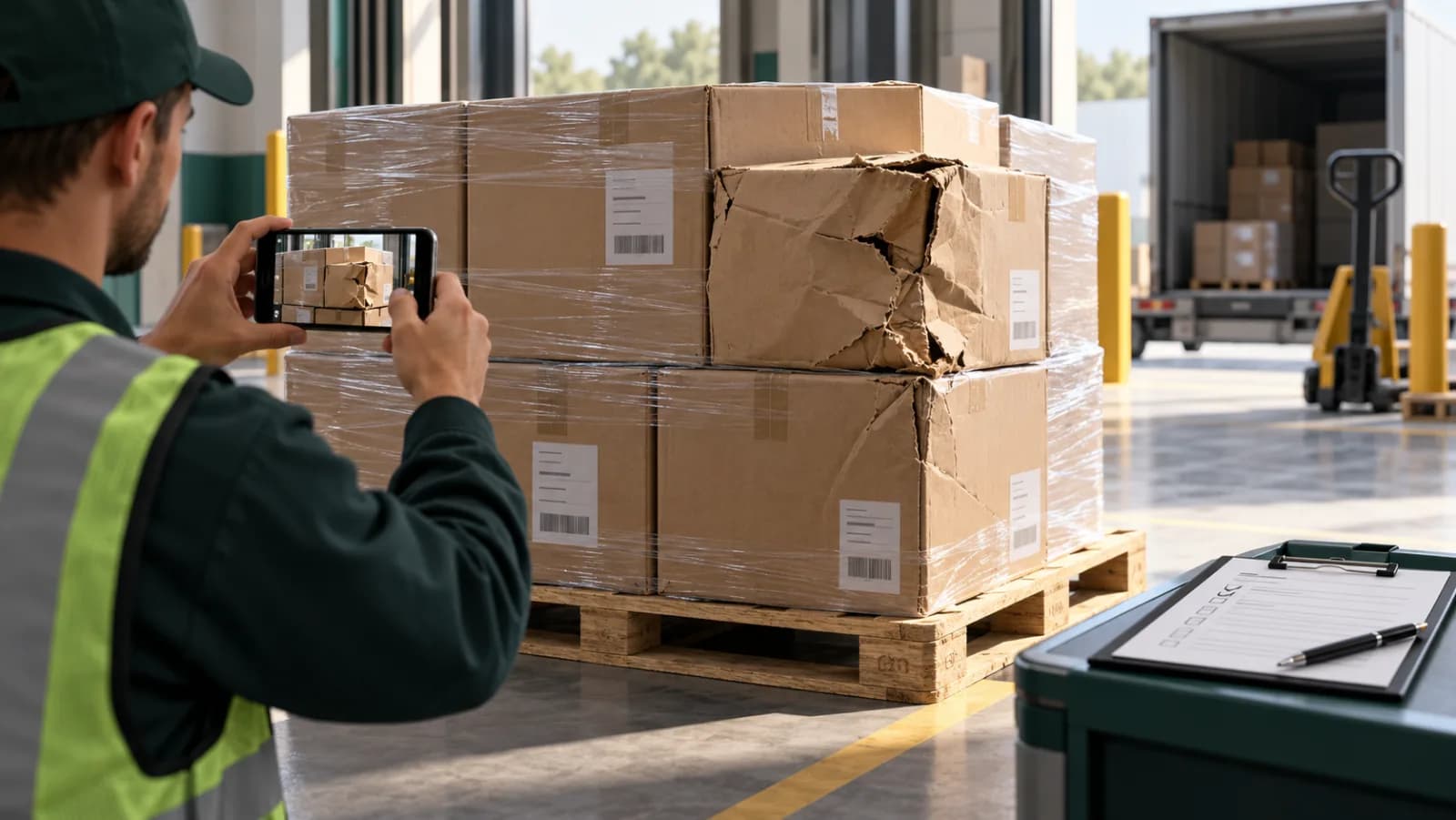
| Damage | Crushed, wet or broken packaging or product | Carrier or supplier packaging | Photos before moving the load; see freight damage at receiving |
| Wrong item or lot | SKU, variant or lot differs from the PO | Supplier | Label photo next to the PO line |
The concealed shortage is the one that catches teams out. As 3PL Center puts it in its July 2026 guide to freight that arrives damaged or short, a shipment "can be intact while the internal count is wrong," and the bill of lading does not always prove the unit count inside a sealed carton. The carton count matched, the driver left, and the shortage only appears at breakdown. Without a record of the carton being opened, the supplier can fairly ask whether the units went missing in your building.
Large 3PLs have started to treat this as standard service. ShipMonk's Quality Guard attaches photo evidence to the ASN when a shipment is over, under or mislabeled. That is now the bar brands compare every warehouse against, and this template lets any team meet it with a phone.
The receiving discrepancy report template
The report has a header that identifies the shipment and a line table that holds the findings. Copy the header into your form tool or print the PDF.
Then one line per finding:
| Line | SKU / description | Expected (source) | Received | Variance | Type (O / S / D / W) | Carton or pallet ID | Photo ref |
|---|---|---|---|---|---|---|---|
| 1 | SKU-4471 Ceramic mug, white | 240 (ASN) | 228 | -12 | S (concealed) | CTN 18 of 40 | RDR-0311-01 to -04 |
| 2 | SKU-4475 Ceramic mug, blue | 120 (ASN) | 120 | 0, 6 broken | D | CTN 33 of 40 | RDR-0311-05 to -07 |
| 3 | SKU-4480 Mug gift box | 0 | 24 | +24 | O | Pallet 3, unlabeled carton | RDR-0311-08 |
"Expected (source)" matters: an ASN, a PO and a packing list can disagree with each other, and the supplier will want to know which one you counted against.
How to fill it in
Fill the report in the order the freight comes off the truck, so nothing is counted, moved or thrown away before it is recorded.
Sealed cartons, missing units: the supplier short-shipment claim
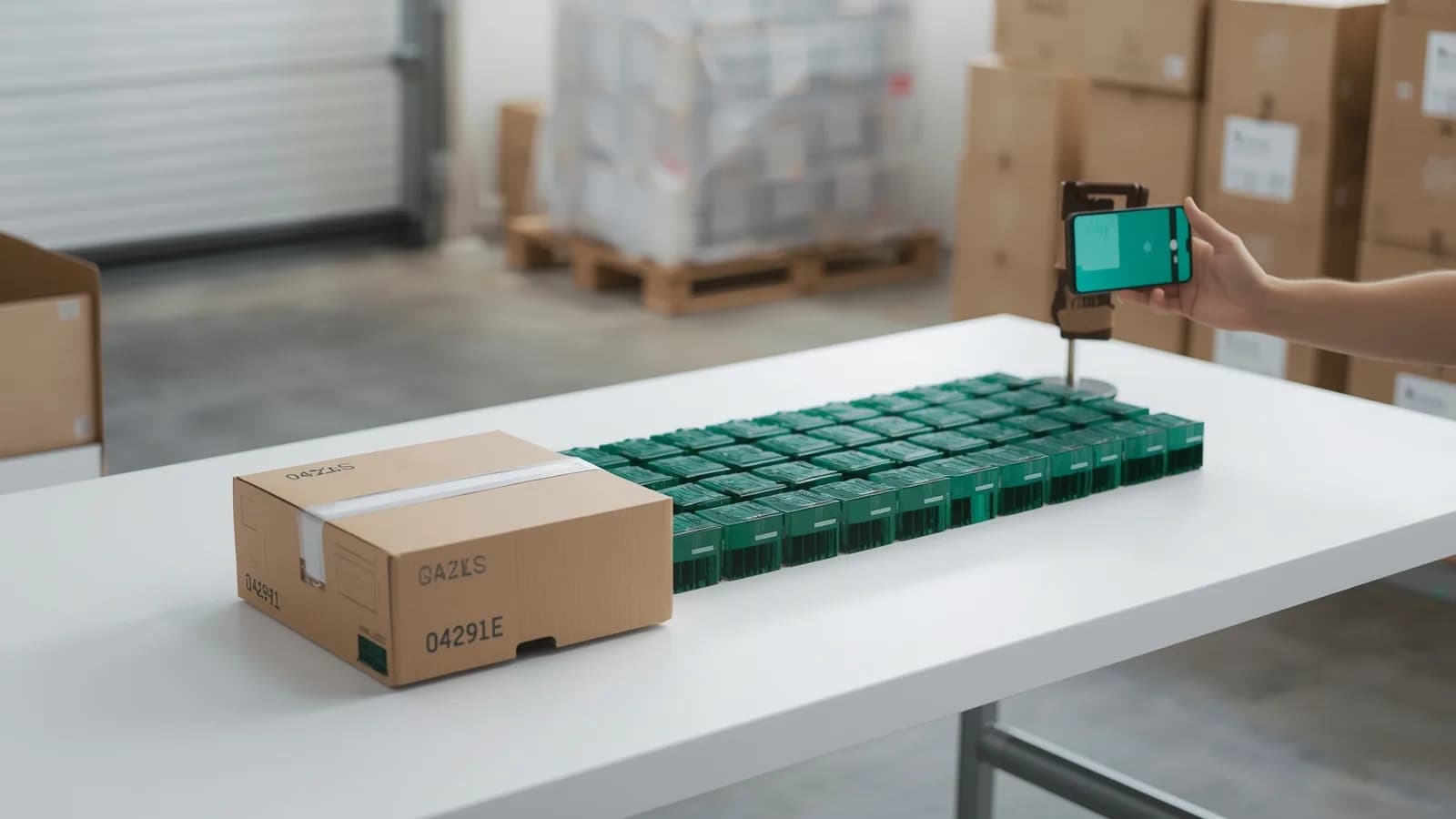
A concealed shortage is a claim against the supplier, and it lives or dies on the moment the carton was opened. Film it.
The count-on-open video, in one continuous take:
- The carton on the table, all six sides turned slowly, tape intact, case-pack label legible.
- The report number and carton ID written on a card in frame.
- The tape being cut and the flaps opened.
- Units counted out one by one into rows, then the empty carton shown to the camera.
Then notify the supplier quickly. Your purchase order or supplier agreement may set a specific window. Where it does not, UCC section 2-607(3)(a) requires a buyer who has accepted goods to notify the seller of a breach within a reasonable time after discovering it, or be barred from any remedy. A dated report with video is the cleanest notice you can send.
Who gets the report, and what turns it into a claim
The report is evidence; a claim is a separate communication with its own rules, and each party has its own.
| Party | When | What turns the report into a claim |
|---|---|---|
| Carrier | Visible shortage or damage at delivery | For claims under 49 CFR Part 370, a written claim that identifies the shipment, asserts liability and asks for a specified or determinable amount. Section 370.3 says shortage or damage notations standing alone are not sufficient. |
| Supplier | Concealed shortage, overage, wrong item or lot | Notice under your PO terms, and in any case within a reasonable time under UCC 2-607 |
| Brand (3PL client) | Any discrepancy on the brand's inbound | The process in your warehouse agreement; share the record before adjusting stock |
For motor carrier shipments covered by 49 U.S.C. 14706, subsection (e) bars carriers from setting less than nine months to file a claim. That is a floor, not a reason to wait: notice requirements in your contract or the carrier's tariff, and the evidence itself, both age quickly.
Turning the report into evidence
A report line is only as strong as the files behind it. Three habits make the files hold up:
- The reference is in the frame. Report number, PO or carton ID on a card or label, visible in the photo or the first seconds of the video.
- Wide, then close. Show where the carton sits on the pallet, then the detail.
- Continuous, not stitched. A count-on-open video with cuts invites the question of what happened between them.
A good photo name or record reference ties each file to one line, for example RDR-0311-01. When a supplier, carrier or brand asks about line 1, you should be able to answer with one link, not a folder.
How PallasMark digitizes the report
PallasMark turns each received pallet or carton into a record filed under the PO, ASN or BOL reference, with the photos and videos inside it.
- Scan the label, open the record. The operator scans the pallet label with the PallasMark app on iPhone or Android, and the receiving record opens for that facility and client brand. Standalone records work without any store connection.
- Fields that match your report. Custom fields hold seal number, SKU, lot, expected and received quantities and the report number. On the Scale plan, AI label reading fills supplier, batch or lot, quantity and your custom fields from a photo of the label, and the operator confirms each value before saving.
- Count-on-open video that can be checked. Every photo and video gets a SHA-256 fingerprint, so any edit is detectable, and a location check records whether the capture happened inside the facility area. There is no edit button for recordings.
- One link per discrepancy. Share a single record with the supplier, carrier or brand through a link with an expiry, optional PIN and download settings. They open it in a browser without an account, see that record only, and can confirm on the verification page that the files have not changed. You can revoke the link at any time.
- Find it when the credit is late. Filter records by facility, client, date, condition, creator and custom fields, so a supplier dispute three weeks later starts with a search, not a hunt through phones.
See Warehouse proof for the receiving workflow and PallasMark for warehouses for multi-facility teams. Damage claims against carriers are covered in carrier insurance and damage evidence. The free plan needs no card; see pricing.
Related reading
This report is part of the 3PL evidence playbook. For containers, start one step earlier with the inbound container inspection checklist; for stock you receive when changing providers, use the 3PL to 3PL inventory transfer checklist.
Frequently asked questions
What is a receiving discrepancy report?
It is the record a warehouse makes when what arrives does not match what was expected on the purchase order, advance ship notice or packing list. It lists each overage, shortage, damaged unit or wrong item line by line, with quantities, the carton or pallet involved and photo references. It is also called an OS&D report, short for over, short and damage.
Is an OS&D report the same as a freight claim?
No. The report documents what you found. For claims covered by 49 CFR Part 370, a carrier claim is a written communication that identifies the shipment, asserts liability and asks for a specified or determinable amount, and section 370.3 says shortage or damage notations standing alone are not enough. Use the report as the backbone of the claim, not as the claim.
Who is responsible when sealed cartons arrive intact but short?
Usually the supplier, because an intact carton suggests the units were never packed. The carrier is the first stop when the shortage or damage was visible and noted at delivery. Your strongest evidence is a continuous video of the intact carton being opened and counted, alongside the case-pack label and the packing list.
How quickly should I notify a supplier of a short shipment?
As soon as you find it, and within whatever window your purchase order or supplier agreement sets. Under UCC section 2-607(3)(a), a buyer who has accepted goods must notify the seller of a breach within a reasonable time after discovering it or be barred from any remedy. Prompt notice with photos keeps the claim alive.
What photos should a receiving discrepancy report include?
A wide shot of the load as delivered, each pallet label, each damaged or short carton before it is moved, the seal and container or trailer number, and for concealed shortages a continuous video of the carton being opened and counted. Keep the reference number visible in the frame so every file can be matched to its report line.
How does PallasMark handle receiving discrepancies?
The operator scans the pallet label and the receiving record opens under that PO, ASN or BOL reference, at the right facility and for the right client brand. Photos and count-on-open videos are fingerprinted, custom fields hold seal number, SKU, lot and quantities, and one record can be shared with the supplier, carrier or brand through a link that needs no account. On the Scale plan, AI label reading fills the fields from a label photo.
- receiving discrepancy
- os&d report
- short shipment
- warehouse receiving
- supplier claims