Freight damage proof for furniture and bulky items
Film each piece, every box and the wrapped pallet before the truck leaves. When a table arrives cracked, a box goes missing or the hardware bag is “not there”, you show what was loaded, and when.

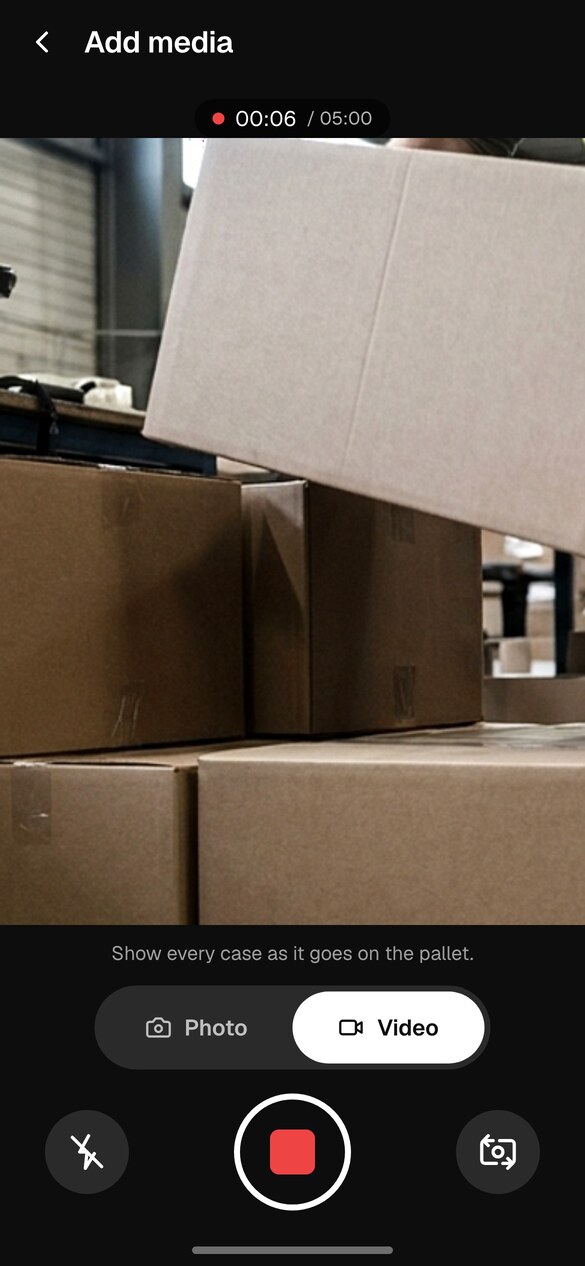
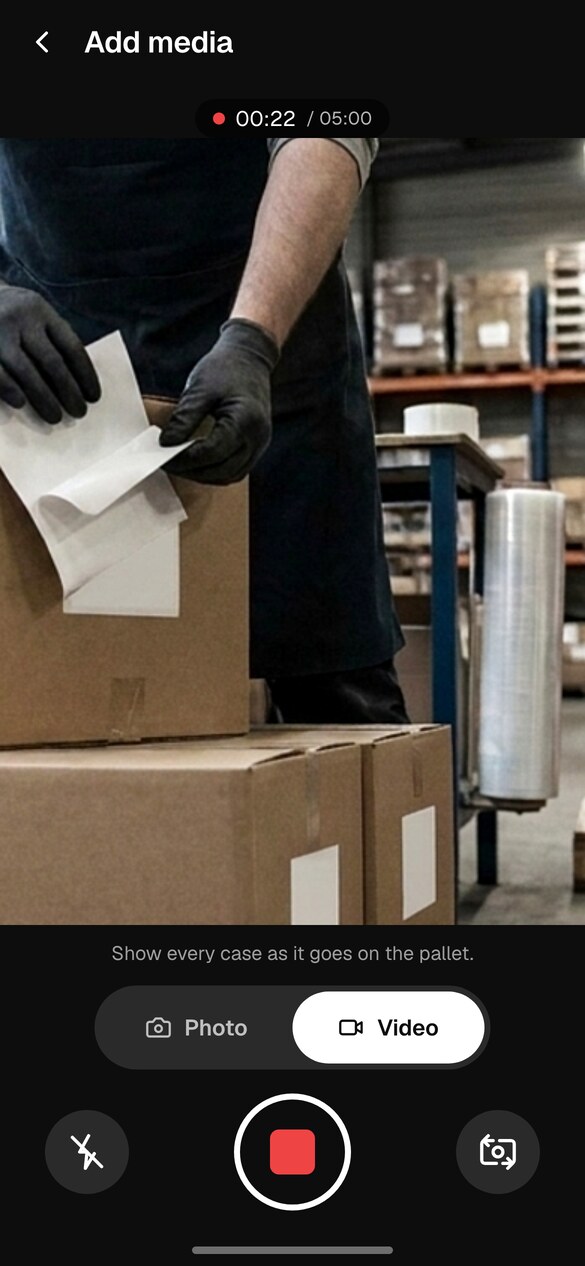
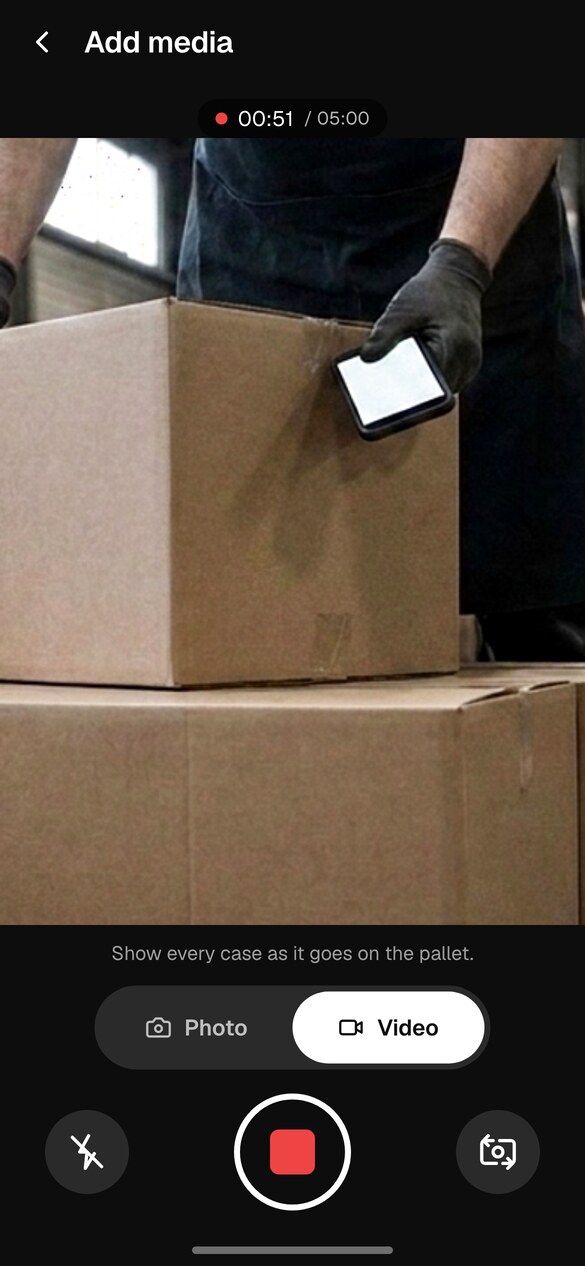
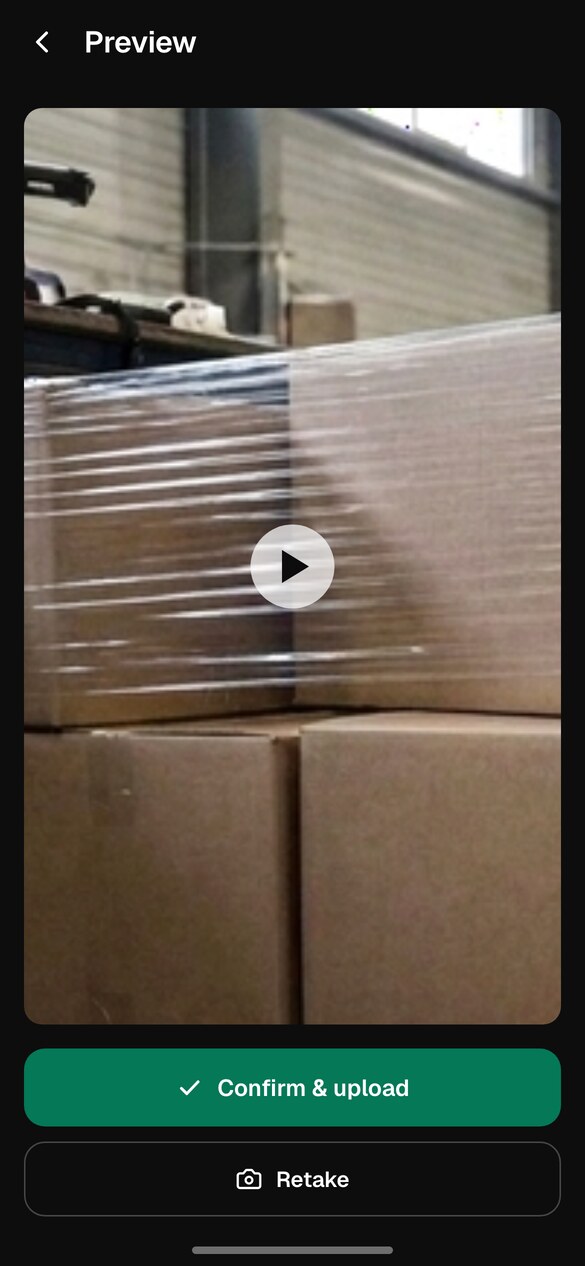
- Every box counted on camera
- Pallet and label filmed at pickup
- One file for the freight claim
“On freight, the claim is decided by what happened at the dock, not at the front door.”
How do I prove furniture was not damaged before freight pickup?
Record its condition and its packing at the dock, against the order number. PallasMark films the piece, each carton, the hardware bag and the labelled, stretch-wrapped pallet, then seals every file with a SHA-256 fingerprint, a digital seal that shows if the file is ever edited, and keeps the carrier and tracking number on the same record. A freight claim starts by showing the goods were handed over in good condition, and that is exactly what the record shows.
Last reviewed
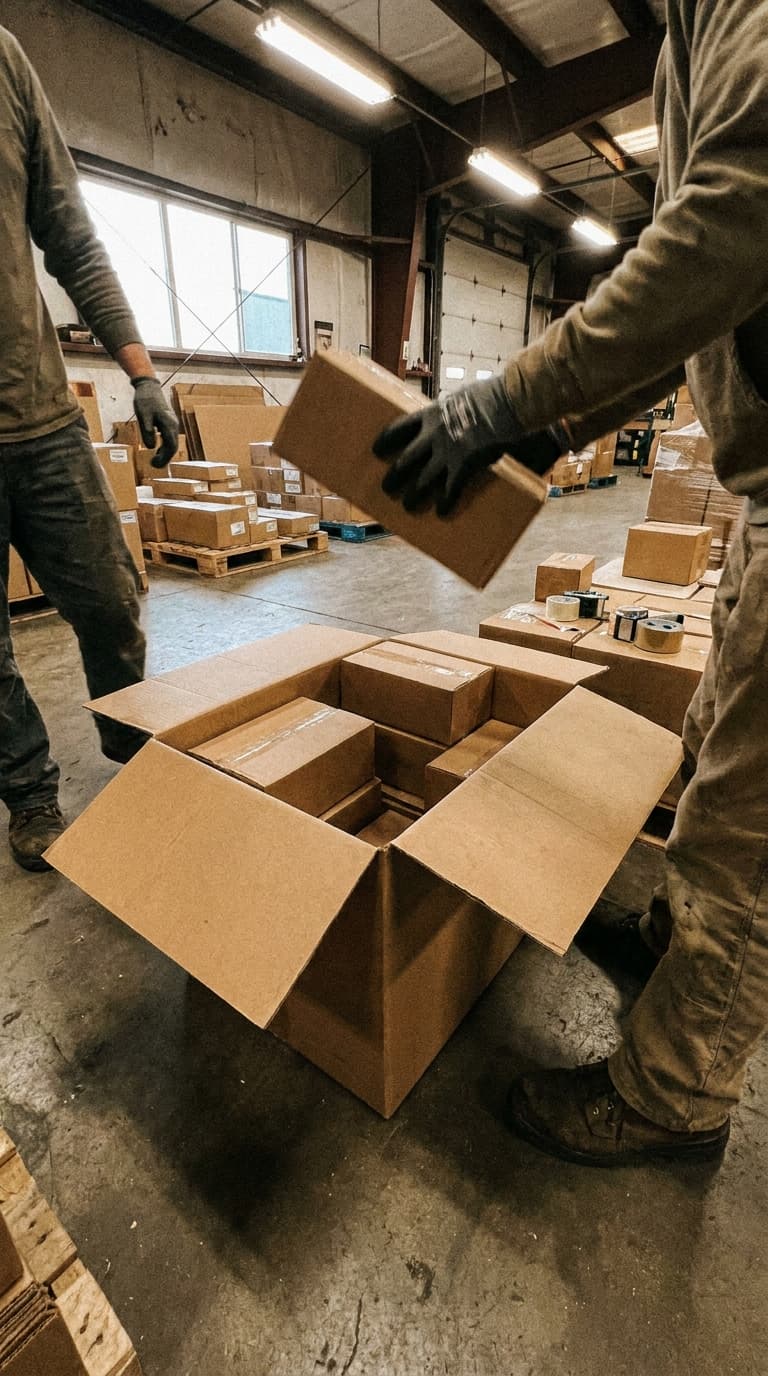
What a furniture freight claim turns on
Freight claims are not about whether a truck arrived. They are about what was on the pallet, how it was packed and whether it was intact when the carrier took it.
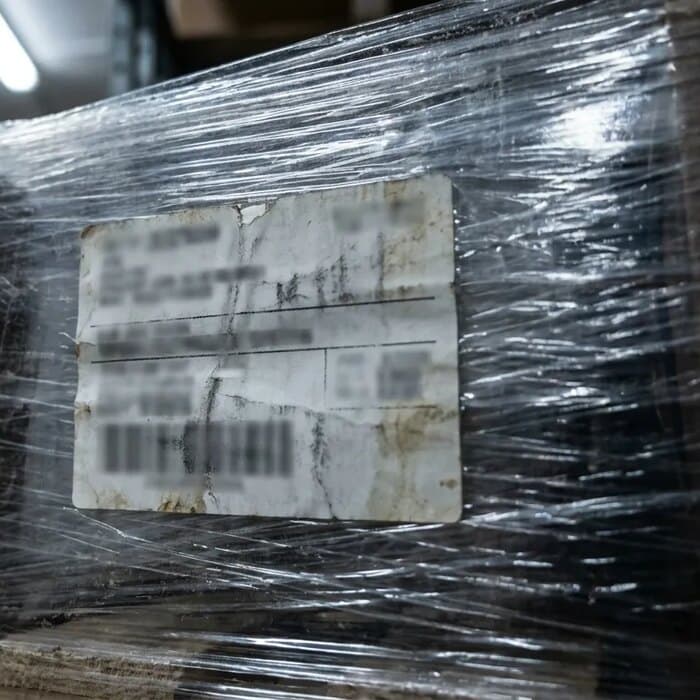
Which pallet is this order?
Label under the wrap
The shipping label filmed on the pallet, under the stretch wrap, ties every box on it to the order and the bill of lading.
Warehouse proof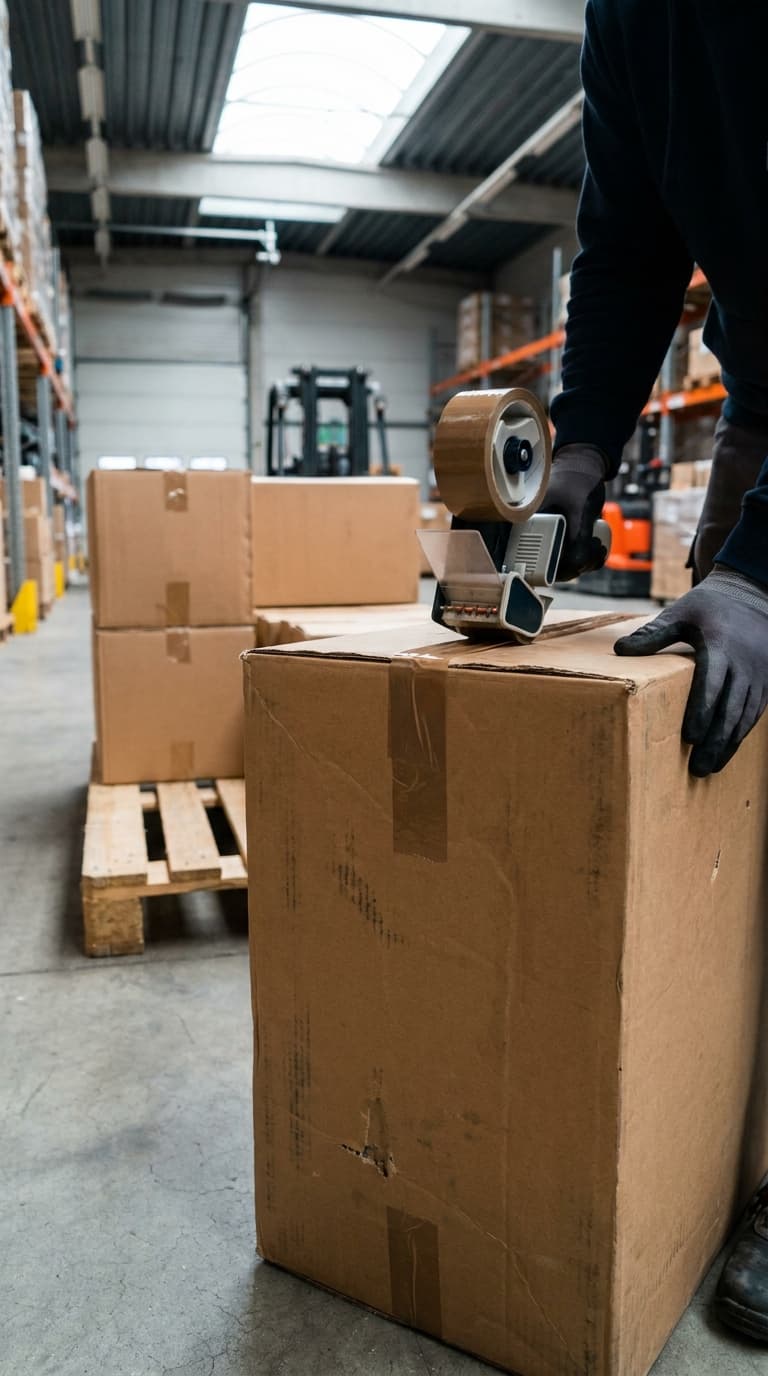
Was every box complete and closed?
Each carton packed on camera
Parts, hardware bag and instructions shown going in, then the tall carton taped shut, box by box, on the same order.
The recording appCan the carrier check the video?
A fingerprint anyone can verify
Every file carries a SHA-256 fingerprint. A claims desk opens the public verification page and confirms it, with no account.
Tamper-proof video


From the packing line to the freight claim
Four steps on one order record, from the first panel into its carton to the pallet leaving the dock.
Film each piece and every box as it is packed
Scan the order, show the piece on every face and corner, then pack each carton on camera: panels, legs, the hardware bag and the instructions. Photos carry your company name, the order number and the time burned into the image.
- Multi-box orders filmed box by box
- Hardware bag shown before the carton closes
- Team member, device and time on every file
Film the pallet before the truck takes it
Warehouse proofEach carton goes onto the pallet with its label on camera, then the stacked load and the stretch wrap. The carrier and tracking number are read from your store, so pickup sits in the same timeline.
The buyer sees it packed before it ships
Buyer approvalSend the buyer a private link with your logo to watch their order being packed and approve it. “It was already scratched” or “a part was never in the box” then has an answer from both sides.
Back the freight claim with one file
The order's evidence file puts condition frames, every carton, the pallet, fingerprints, the buyer's approval and tracking into one PDF or secure link, ready to attach to your written claim.
- Four still frames per video for claims reviewers
- Link expires in 1 to 30 days, optional PIN
- You file the claim; PallasMark never decides it
What the camera has to show for a freight damage claim
A freight claim turns on what was loaded and how. This is one order's pallet, filmed from the first carton to the wrap.
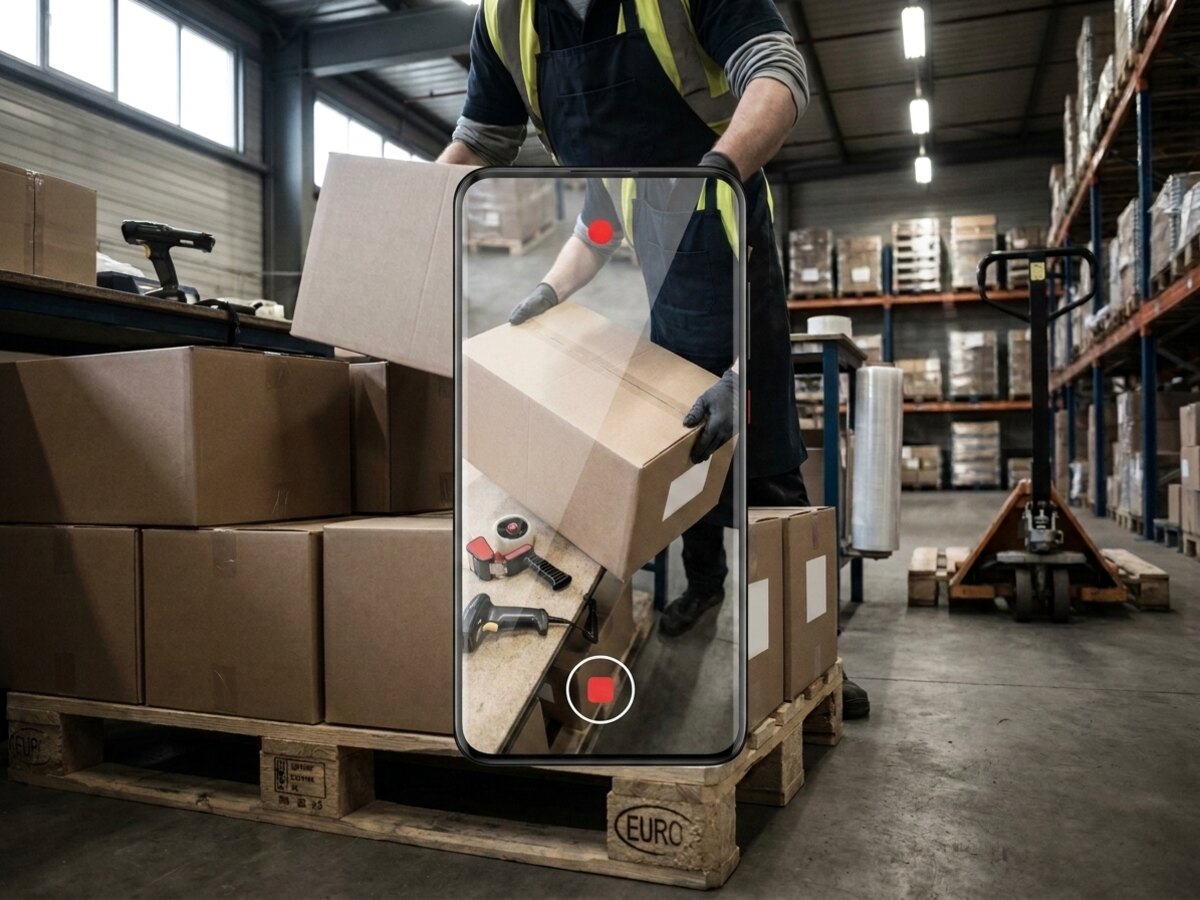
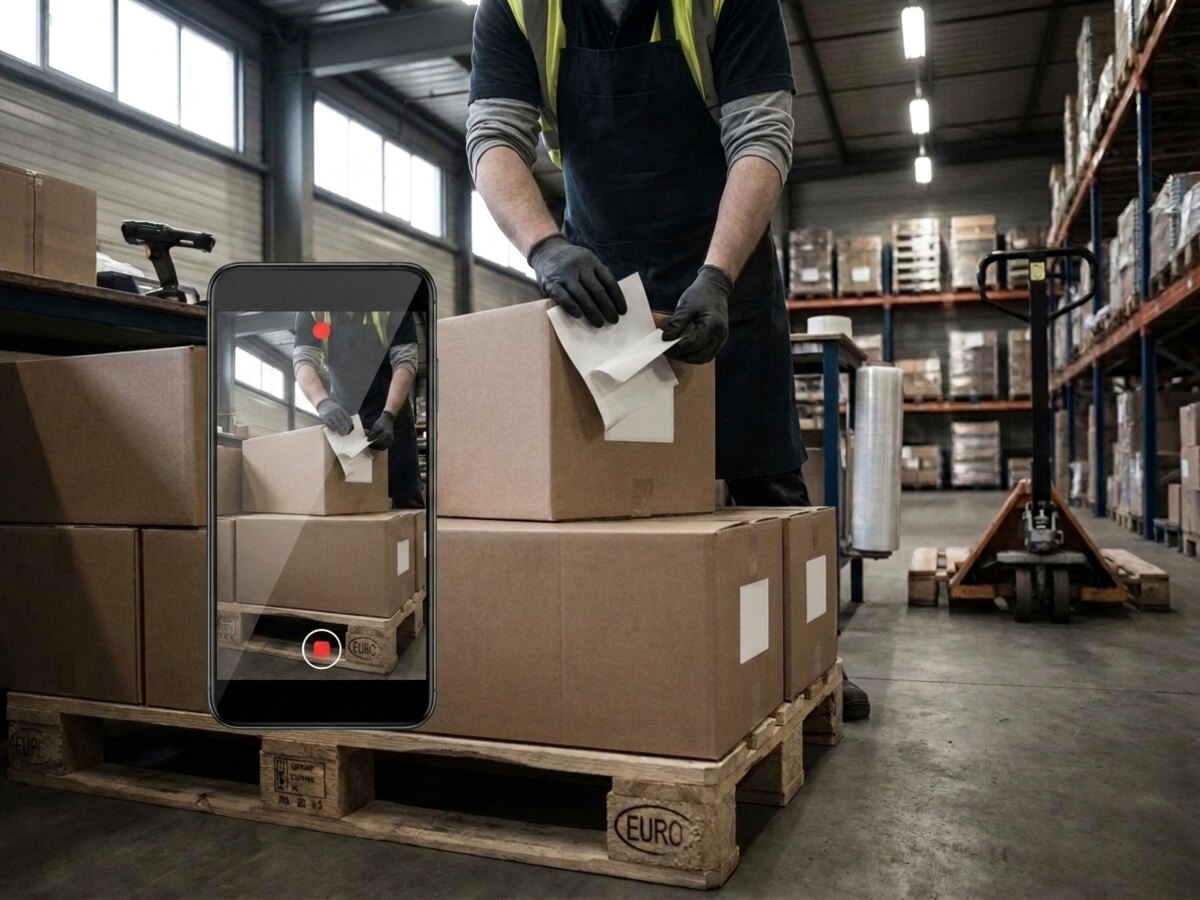
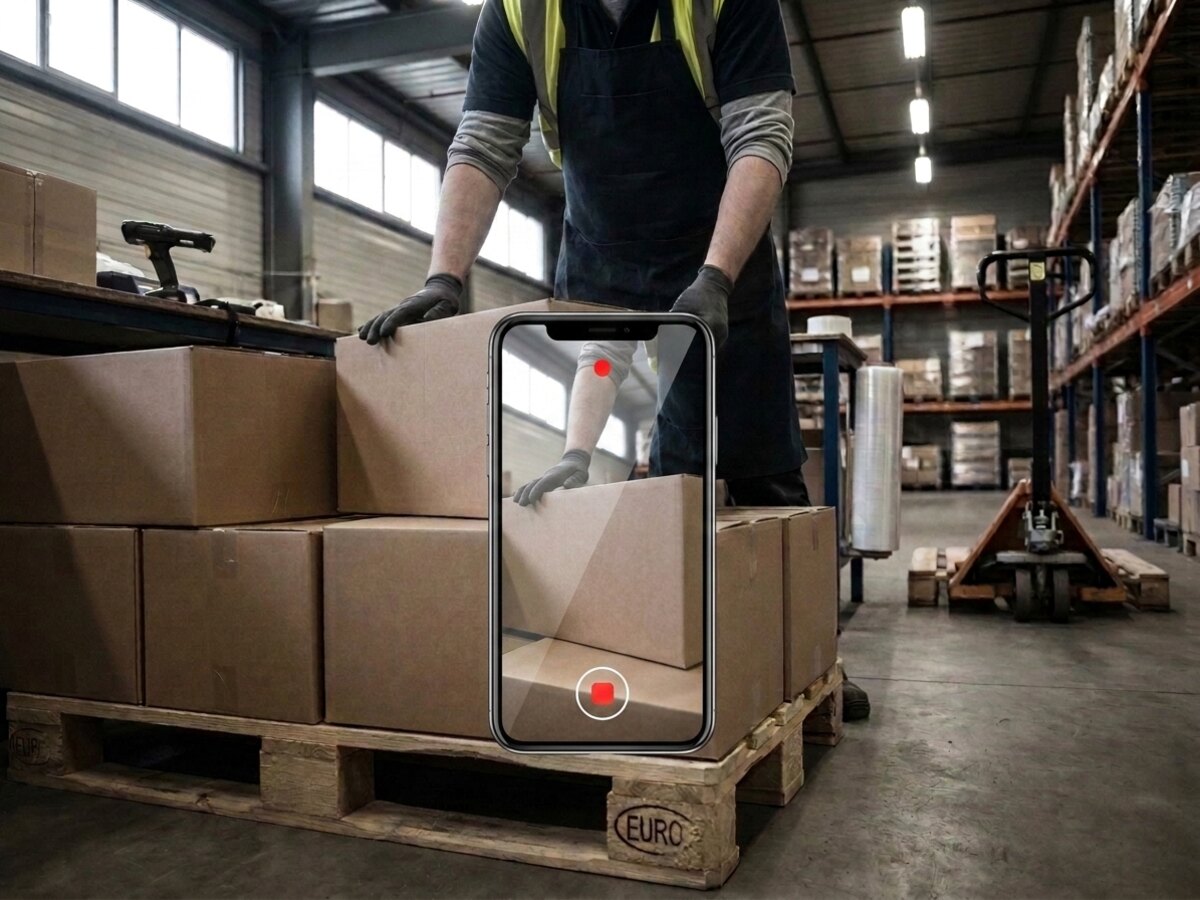
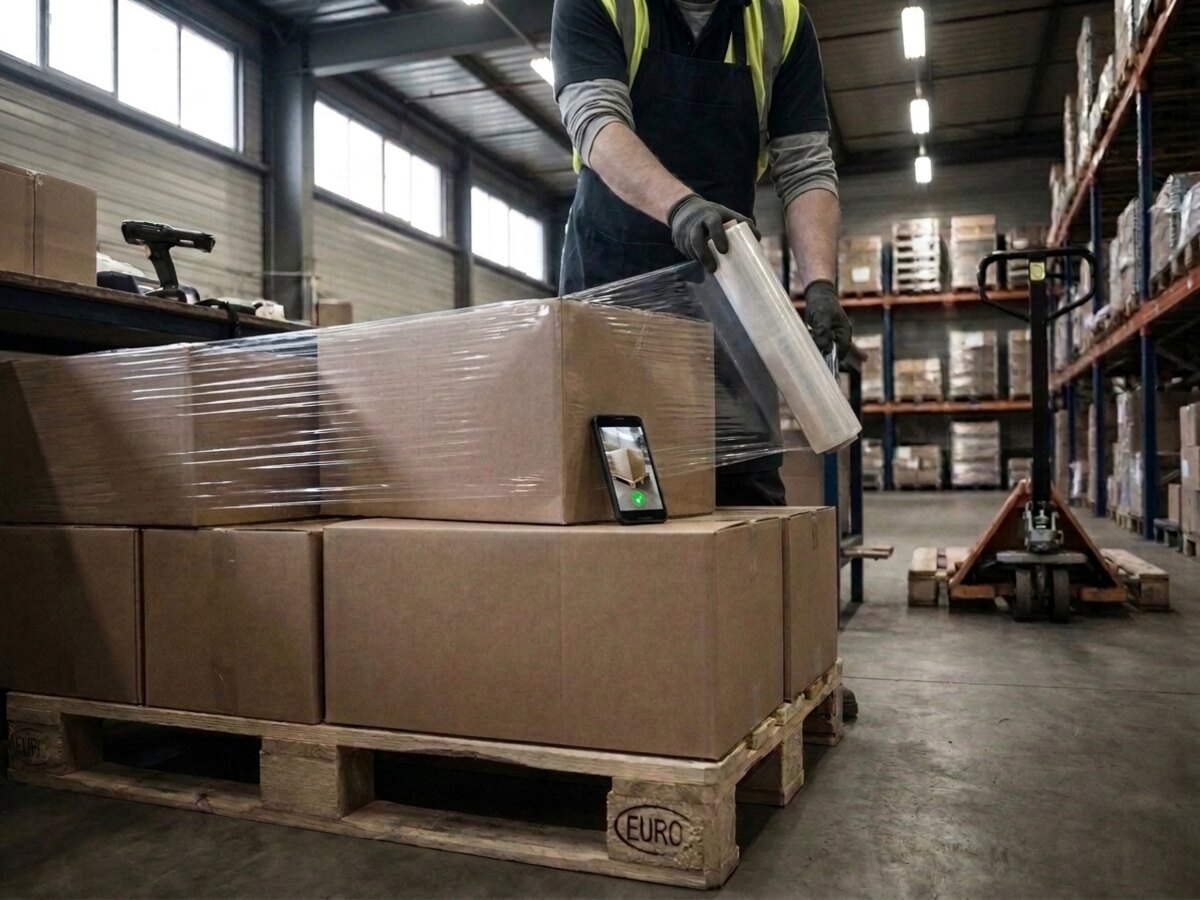 0:06
Each box is placed on camera, so the piece count on the record matches the bill of lading.
“It arrived damaged”, with and without a record
A sideboard ships LTL in two cartons on one pallet. The buyer signs for it, unwraps it the next day and finds a cracked top panel. You file a freight claim.
Without a record
Claim declined- The receipt was signed clean, so the carrier asks what proves good condition at pickup.
- You have a bill of lading, an invoice and a photo of the product page.
- None of them shows that panel, in that carton, on the day it was loaded.
- The claim is declined and you replace the sideboard yourself.
With PallasMark
Claim filed with proof- The top panel was filmed intact, wrapped and boxed, against the order number.
- Both cartons were filmed on the pallet with labels, then stretch-wrapped.
- You report the concealed damage the day it is found, with the record's link.
- Your written claim goes in with one PDF. Good condition at pickup is shown.
What a furniture freight record contains
Stored with the order automatically, so the claim file is ready the day the buyer finds the damage.
- Condition and packing video
- Each piece, every carton and the stretch-wrapped pallet, recorded against the order number before pickup.
- Stamped photos
- Photos carry your company name, the order number and the upload time burned into the image.
- SHA-256 fingerprint
- Of every stored file, plus the original upload; anyone can re-check it on a public page.
- Buyer approval
- Decision time, watch time, device details and the exact media shown; location only with consent.
- Carrier and tracking
- Read from your store's fulfilment and shown in the timeline next to the recording.
- Evidence file
- Order, items, shipments, packing frames, fingerprints, the buyer's approval and a full timeline, as a PDF or expiring link.
The freight rules furniture claims run on
Furniture usually travels as freight, not parcels, and freight claims follow their own law and each carrier's tariff. Most of it comes back to what you can show about the load at pickup.
US freight claims: at least 9 months
49 U.S.C. § 14706 (Cornell LII)Under the Carmack Amendment, a carrier may not give a shipper less than 9 months to file a loss or damage claim, or less than 2 years to sue after a claim is declined.
The case starts with good condition
Missouri Pacific R. Co. v. Elmore & Stahl, 377 U.S. 134 (1964)Under US common-carrier law the shipper first shows delivery to the carrier in good condition, arrival damaged and the amount of the loss. A dock recording documents the first of those.
A receipt note is not a claim
49 CFR § 370.3 (Cornell LII)Federal claim rules say damage or shortage notes on delivery receipts are not a claim on their own. A claim is written, identifies the shipment, asserts liability and asks for a specific amount.
Concealed damage: report within days
TForce Freight, cargo claims informationCarriers ask for concealed damage to be reported quickly; TForce Freight, for example, asks for 5 business days, with the claim and its documents filed within 9 months of delivery.
Shipper's load and count
49 U.S.C. § 80113 (Cornell LII)When the shipper loads the freight and the bill of lading says “shipper's weight, load, and count”, the carrier is not liable for the count. Then your own record of each box is the proof.
EU road freight: 7 days for hidden loss
UNECE, CMR Convention, Articles 8 and 30Under the CMR convention the carrier checks the number of packages when it takes over the goods. A loss or damage that is not apparent must be reported in writing within 7 days of delivery.
Shipping furniture by freight, defined
- LTL freight
- Less-than-truckload: your pallet shares a truck with other shippers' freight and is handled at several terminals on the way.
- Bill of lading (BOL)
- The shipping document the carrier signs at pickup, listing what it took, how many pieces and where it goes.
- Exception
- A note of damage or shortage written on the delivery receipt before signing, such as “top cracked, box 2 crushed”.
- Concealed damage
- Damage found after delivery inside packaging that looked fine, which carriers ask to be reported within days.
- Carmack Amendment
- The US law (49 U.S.C. § 14706) that makes interstate freight carriers liable for actual loss or damage to goods.
- White-glove delivery
- A delivery service where a crew carries the item in, unpacks it and often assembles it, under its own terms.
Furniture, appliances and anything that ships on a pallet
Wherever a crushed corner or a missing carton decides who pays, the same recording shows what was loaded.

Boxed appliances
Housing and moulded inserts on camera, so a dent can be dated.
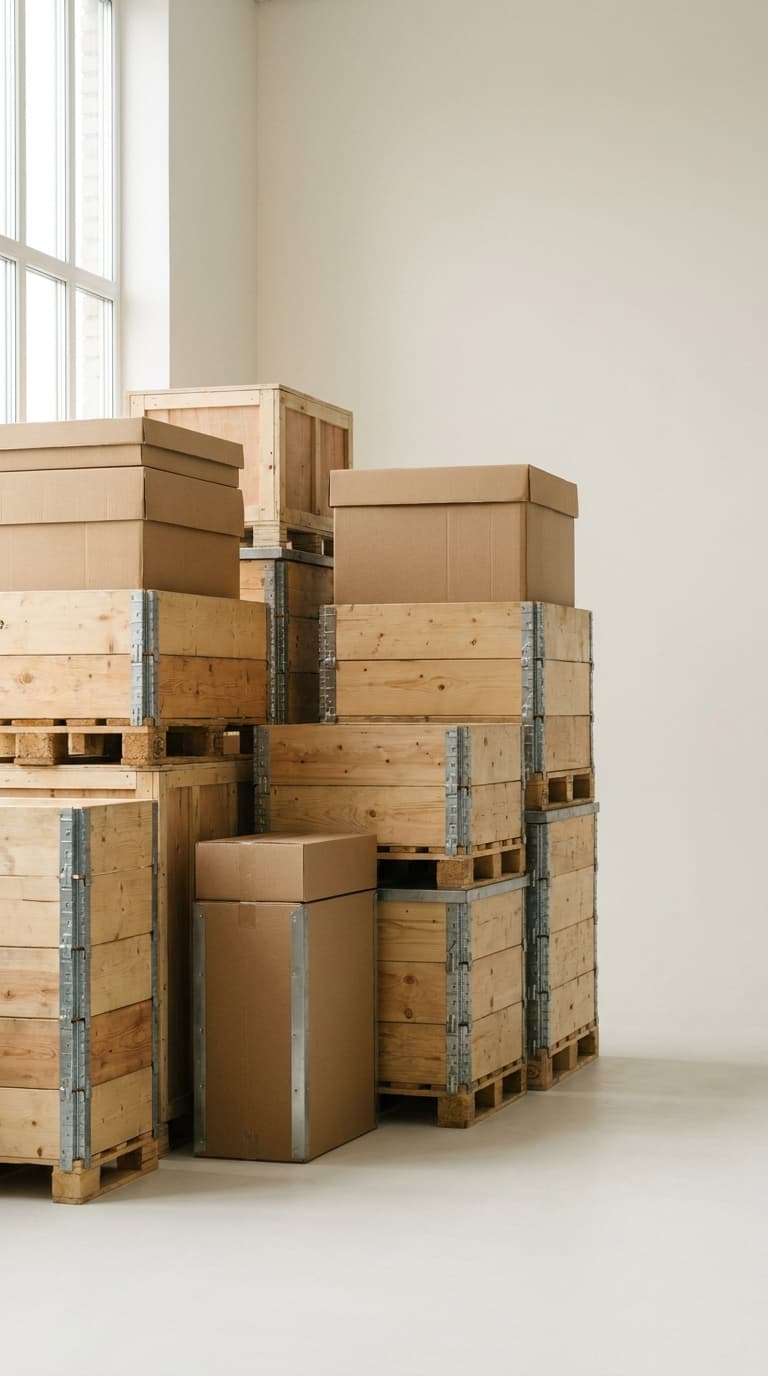
Multi-box orders
Every crate and carton counted and labelled, so “one box missing” has an answer.
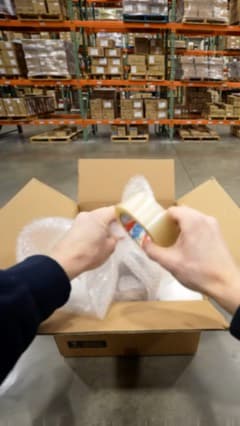
Planters and outdoor decor
Heavy, awkward pieces shown wrapped and seated in their carton.
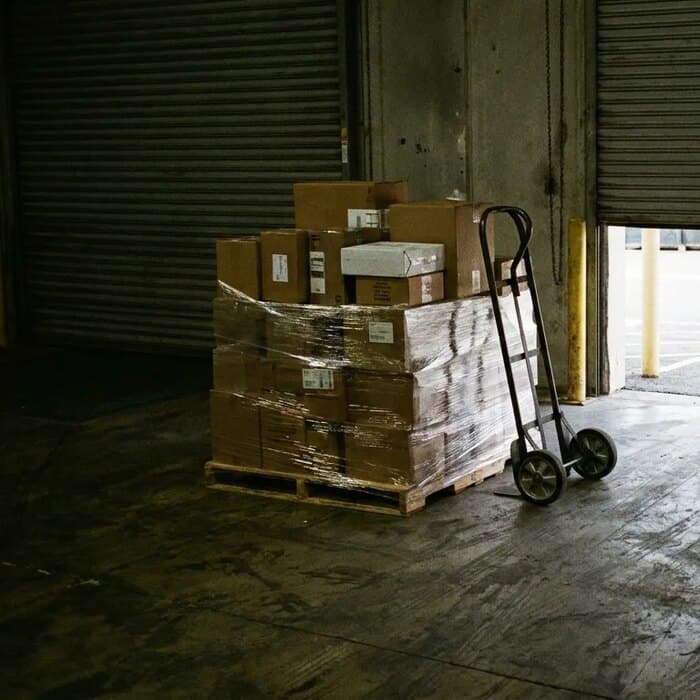
Palletised freight
The wrapped pallet filmed at the dock, right before the carrier loads it.
Make the link your next freight claim will need
Record a short clip on your own phone. It goes through the real pipeline and ends on a real verification page, the link a carrier's claims desk would open.
- Scan the code that appears and the recording screen opens on your phone.
- Film any box or piece of furniture near you for a few seconds.
- You get the sealed record and its public verification link.
Takes about a minute. Nothing to install and no card needed.


Furniture freight damage claims, answered
Who files the freight claim when furniture arrives damaged?
Usually the party that hired and paid the carrier, which for most online furniture orders is the seller. The buyer supports the claim with the note on the delivery receipt, photos and the kept packaging. White-glove providers and marketplaces may have their own process, so check the delivery terms.
How long do I have to report concealed damage on an LTL delivery?
Only days, set by the carrier's tariff. TForce Freight, for example, asks for notice within 5 business days of delivery. Report it the day it is found, ask for an inspection and keep all packaging. In EU road freight under the CMR convention, hidden damage must be reported in writing within 7 days.
How long do I have to file a freight damage claim in the US?
At least nine months. Under the Carmack Amendment (49 U.S.C. § 14706) a carrier may not set a shorter period for filing a claim, or less than two years to sue after it declines one. File as early as you can, while the evidence is fresh.
Is a damage note on the delivery receipt enough to claim?
No. Federal claim rules (49 CFR § 370.3) say receipt notes alone are not a claim. You still send a written claim that identifies the shipment, says the carrier is liable and asks for a specific amount. The note helps, and so does a PallasMark record of the load at pickup.
A buyer says one box of a multi-box order never arrived. What proves it shipped?
A recording of every box going onto the pallet with its label, then the wrapped load. That count sits on the order next to the carrier and tracking number. It matters most when the shipper loaded and counted the freight, because then the carrier is not liable for the count.
How do I answer “the hardware bag was missing” on flat-pack furniture?
Show the hardware bag and instructions going into the carton before it is taped shut. PallasMark keeps that take on the order, and the buyer can watch and approve it before dispatch, so a missing-parts complaint is answered with a frame, not a guess.
What should my buyer write on the delivery receipt if furniture looks damaged?
Specific damage, written before signing: “top panel cracked”, “box 2 of 3 crushed”, not a vague “subject to inspection”. They should photograph it and keep all packaging. Specific exceptions keep the freight claim simple.
Can a warehouse or 3PL use this at the loading dock?
Yes. Any team member records on a phone at the dock, against the order number, and each file carries their name, the device and the time. The same record works for your own orders and for the brands you ship for.
Ship your next pallet with its proof
Connect your store and film the next furniture order box by box, before the freight carrier collects it.
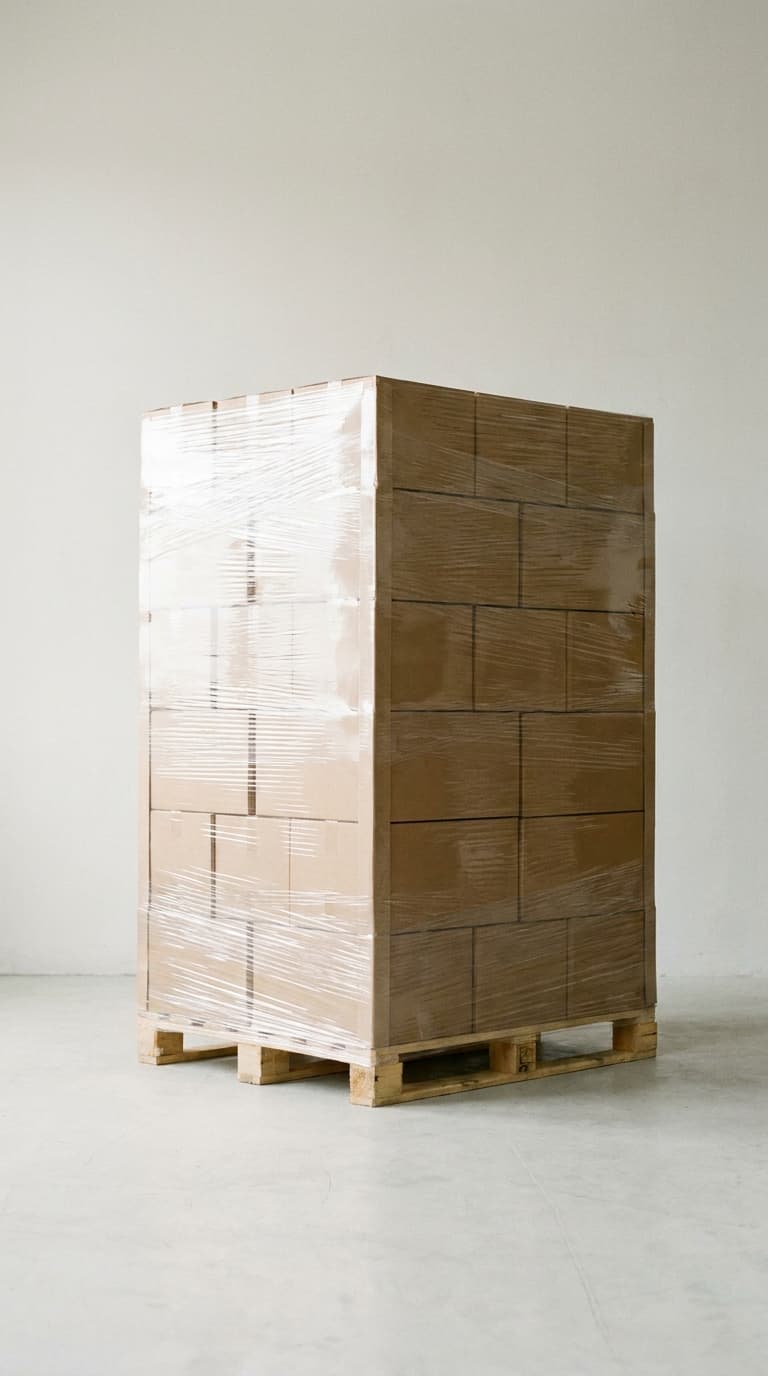
More claims and industries the same recording covers
One packing video per order answers every one of these. What changes is which part of it you show, and to whom.
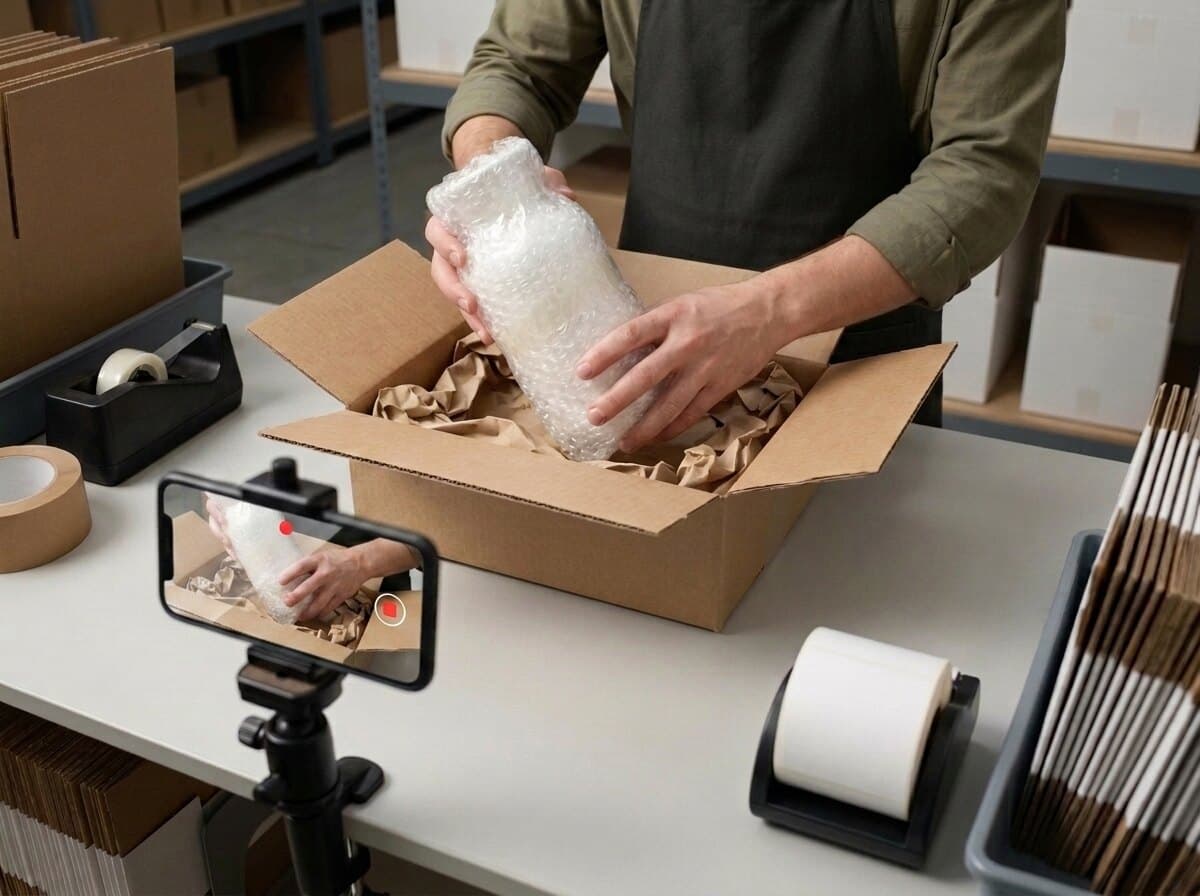 Carrier and insuranceShow the carrier and insurer how the item left you: intact and properly packed.
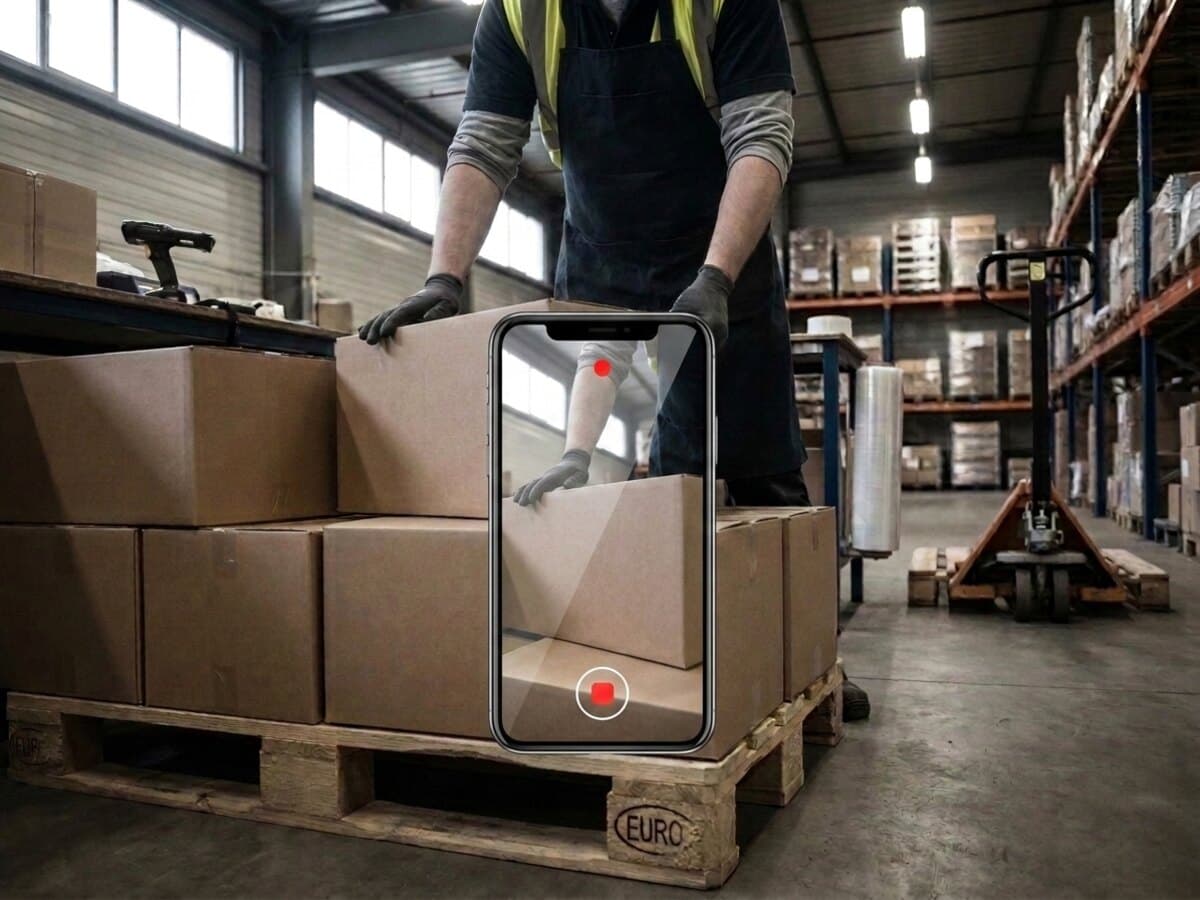 B2B shipmentsFilm the count and labels of every carton and pallet against shortage claims.
 Packing QARecord every packing station so you can see how mistakes happen and fix them.
 Fashion and apparelFilm tags, size and colour before it ships, then compare with the buyer's return video.
 Sneakers and footwearFilm the box label, size tags and soles so a returned replica meets the real pair.
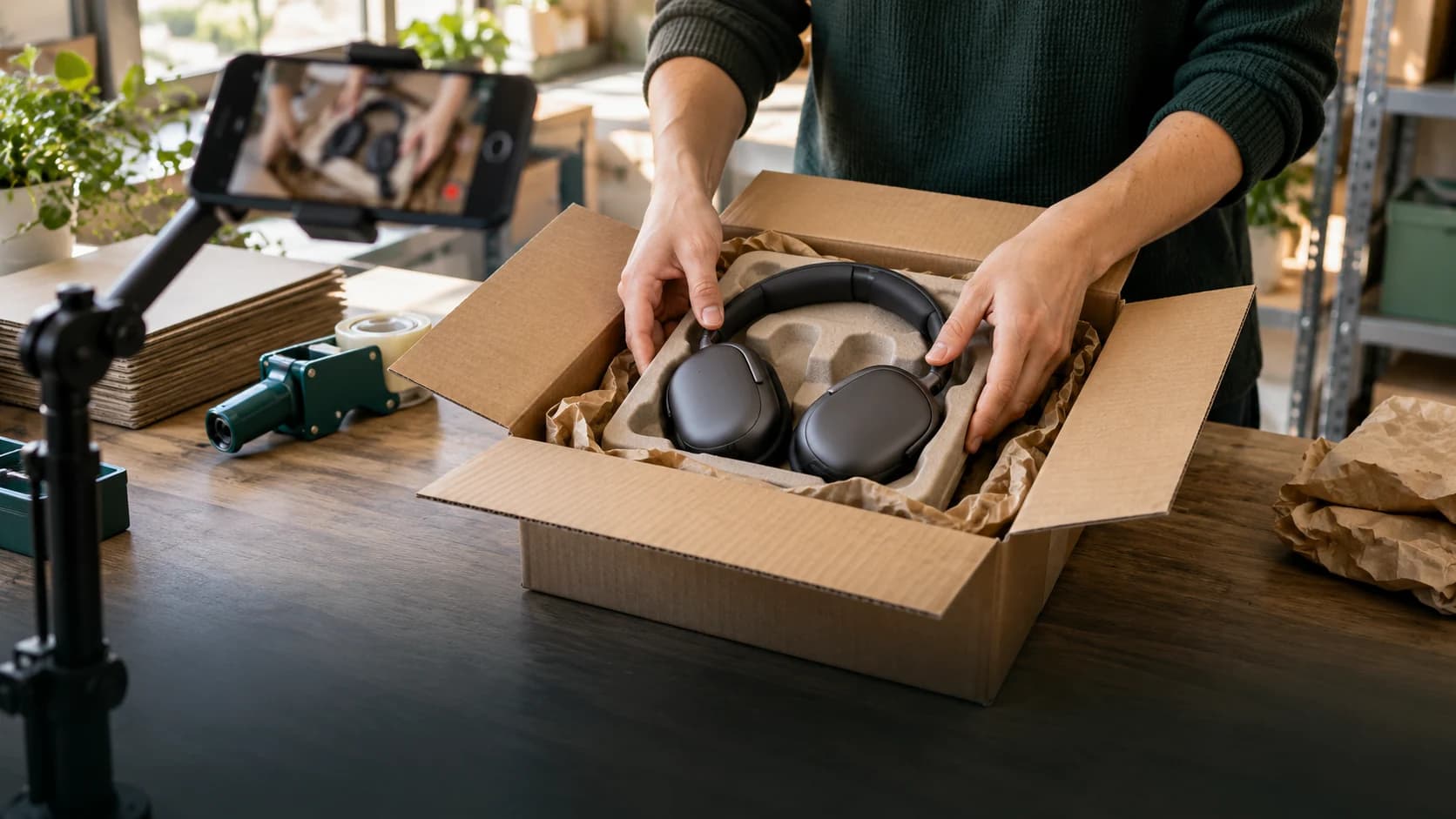 Consumer electronicsFilm the serial, the seal and the accessories so swaps and empty-box claims meet a record.
 Watches and luxury goodsFilm the watch, its serial and papers in one take before a luxury order ships.
 Beauty and skincareFilm seals, shrink wrap and every kit item before beauty orders ship.
 Perfume and fragranceFilm the seal, batch code and fill level of every perfume bottle before it ships.
 Ceramics, glass and home decorFilm vases, glassware and framed art whole and packed, before any crack can be claimed.
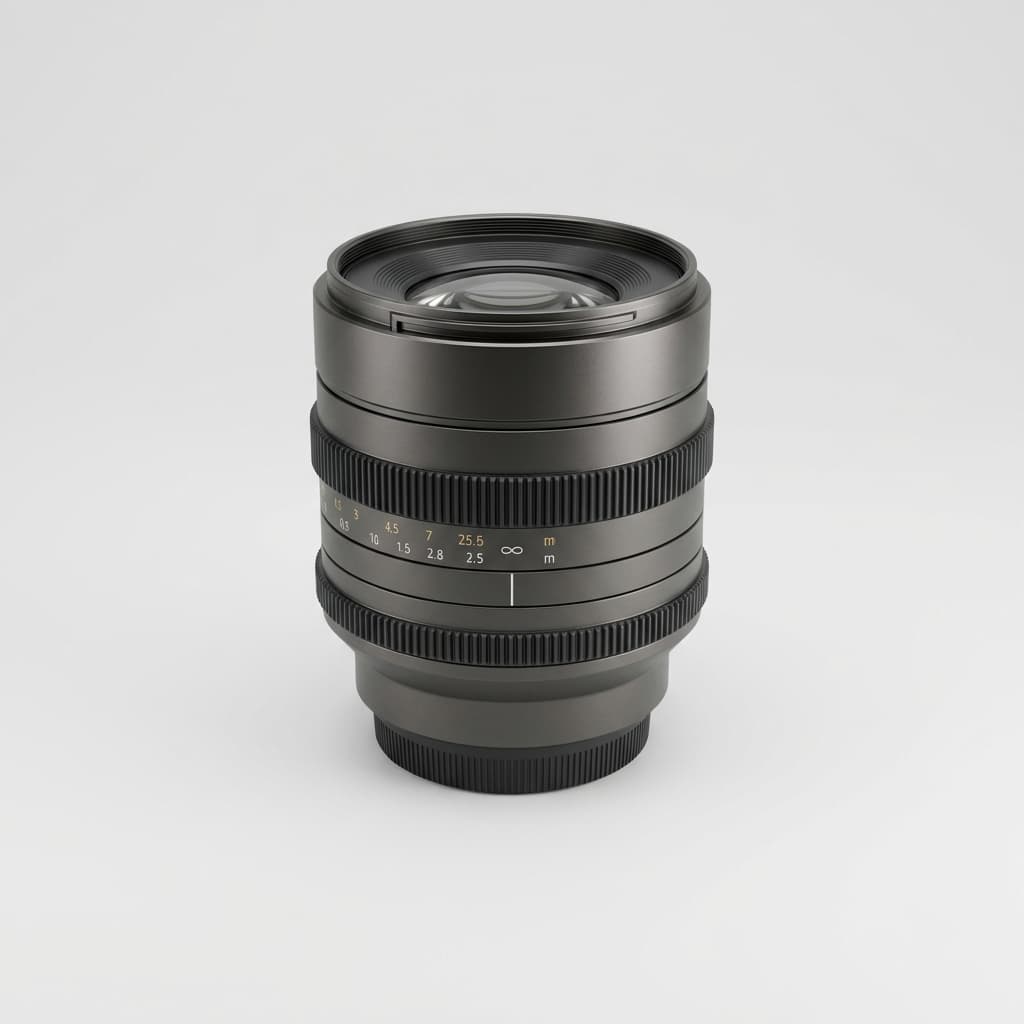 Cameras and photo gearFilm the lens serial, glass and accessories so swaps and condition claims meet a record.
 Handmade and giftsLet buyers approve personalised pieces before they ship, and answer cases with one file.
What makes it work
- Tamper-proof videoEvery recording gets a SHA-256 fingerprint and a public link anyone can use to check it.
- Buyer approvalThe buyer sees the packing video before dispatch and approves or reports a problem — on record.
- Chargeback evidence fileA dispute alert, then one click to a PDF or secure link with the video frames, buyer answer and timeline.
- Warehouse & pallet proofScan the pallet label, record its condition and share one link — AI label reading on Scale.
Guides
- Packing video proof: how a recording becomes evidence
- Shipping damage claims by carrier: deadlines, photos and packaging rules
- Blimp alternative: warehouse photo proof that clients can verify
- Furniture damaged in shipping: how sellers file the claim and prove the packing
- Shipping and warehouse damage glossary: freight, returns and dispute terms
- Artwork condition report before shipping: free template with photo steps
- Cargosnap alternative: warehouse photo proof tied to orders and pallets
- Dimensional Weight Adjustment Disputes: UPS and FedEx Charge Corrections
- Faire damaged item reports: what brands should capture and how to dispute