Part of the Tools compared guide
Warehouse photo documentation apps compared: Cargosnap, Blimp and more

On this page
Competitor details are taken from their public pages, checked October 2026.
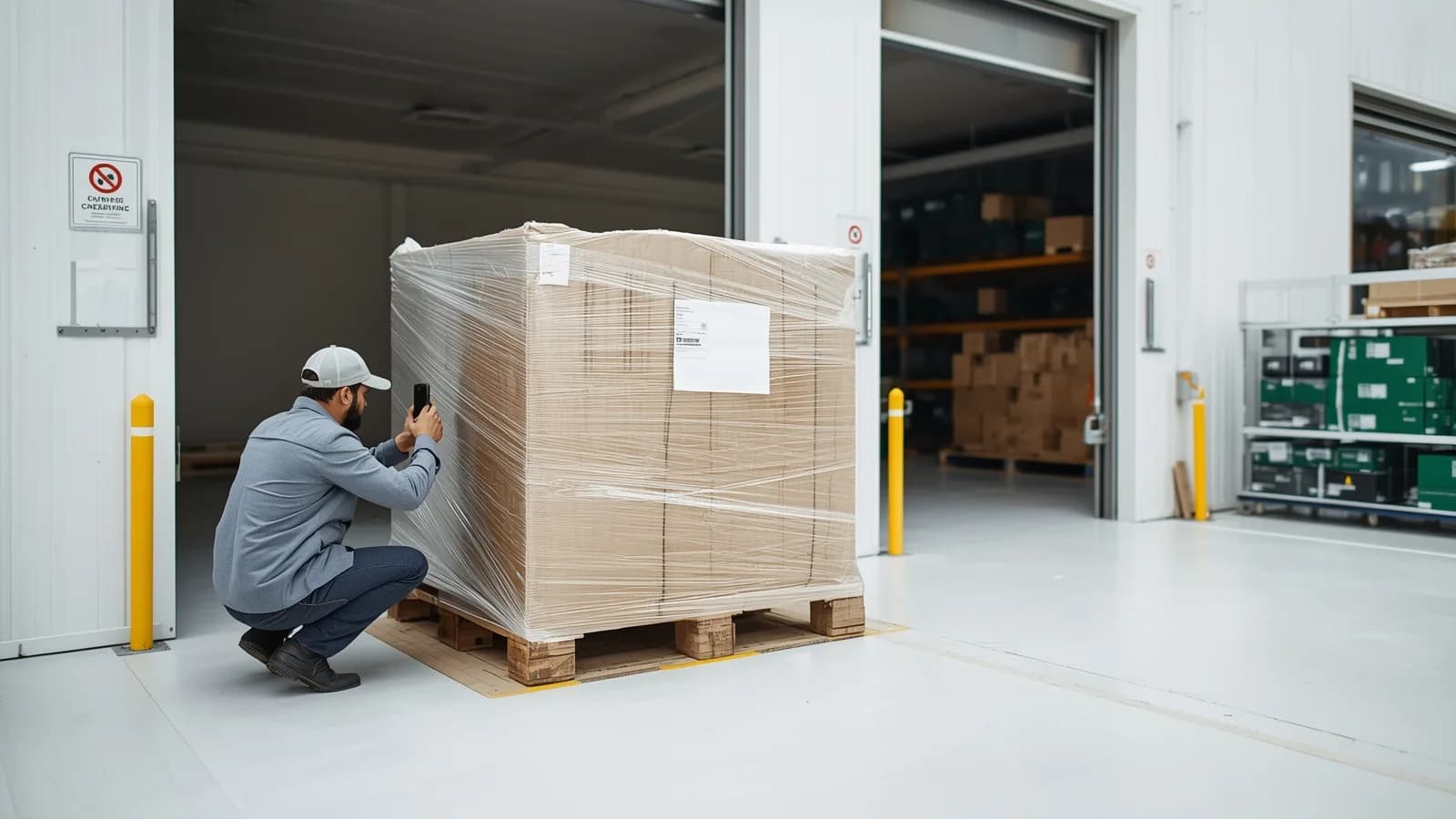
Every warehouse already takes photos. The trouble starts weeks later, when a client, a carrier or a supplier disputes a pallet and somebody has to find the right picture, show which shipment it belongs to and convince the other side it was not taken afterwards. Warehouse photo documentation apps exist to close that gap, and they close different parts of it.
This comparison reads each vendor's own pages, prices a realistic setup and shows where a complete evidence system goes further. For the packing side of the same problem, see our packing video software comparison.
What each warehouse photo documentation app does
Each of these tools is strong at one kind of handoff. Here is what each one describes on its own site.
Cargosnap: inspection workflows, priced per device
Cargosnap calls itself a material handling platform for logistics service providers and shippers. Its homepage says photos, videos, temperatures and checks are tied to the exact workflow step where they happen, and it positions itself alongside existing systems: "Cargosnap does not replace your WMS, ERP, or TMS. It completes them." Its integrations page describes WMS, TMS and ERP links, a REST API and webhooks. Every plan on its pricing page includes custom workflows, digital forms, scanners, a customer portal, offline mode, AI features and unlimited users; price scales with devices.
Blimp: barcode-sorted photo reports
Blimp is a photo documentation app for warehouse and logistics teams. Its homepage says each photo is linked to the right shipment reference by scanning a barcode or QR code, that the app works offline on shared devices with a personal PIN, and that reports export as a PDF or a shareable link. Its pricing page lists tamper-proof timestamping on every plan, video uploads and GPS metadata from Business up, and ERP or system integrations only on Enterprise. Report storage runs 2 years on Basic, 5 on Business and 10 on Enterprise.
Cordstrap Proof of Loading: guided container photos
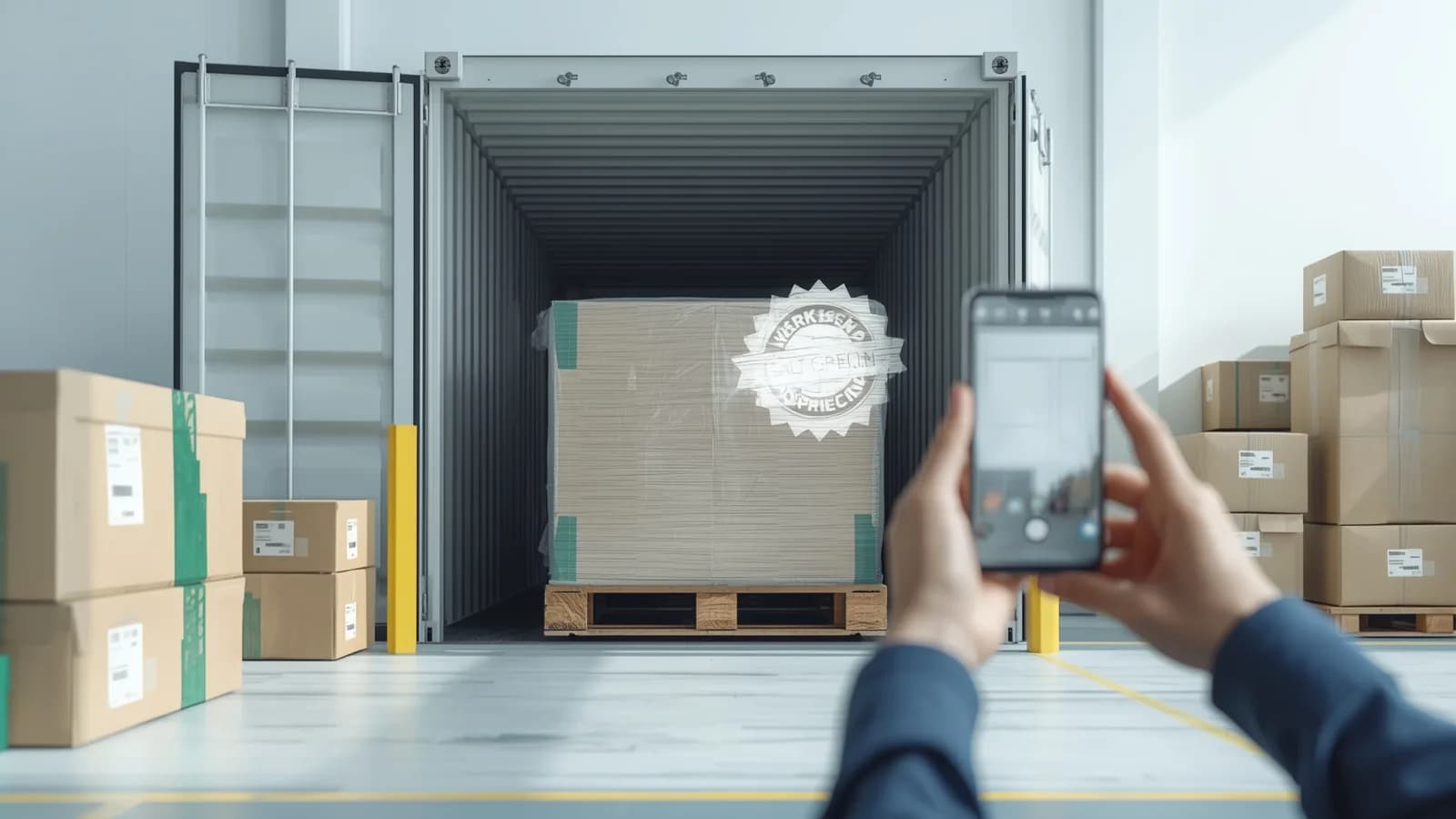
Cordstrap's Proof of Loading app is built for container and truck loading. The crew takes the required photos on their phones, the app reads container and seal numbers from the images, and a branded PDF goes to the customer in one tap. It ships standard procedures for container outbound, container inbound and truck loading, and lets you build your own. The page offers a demo; no price is published.
Tiliter: AI checks on operational photos
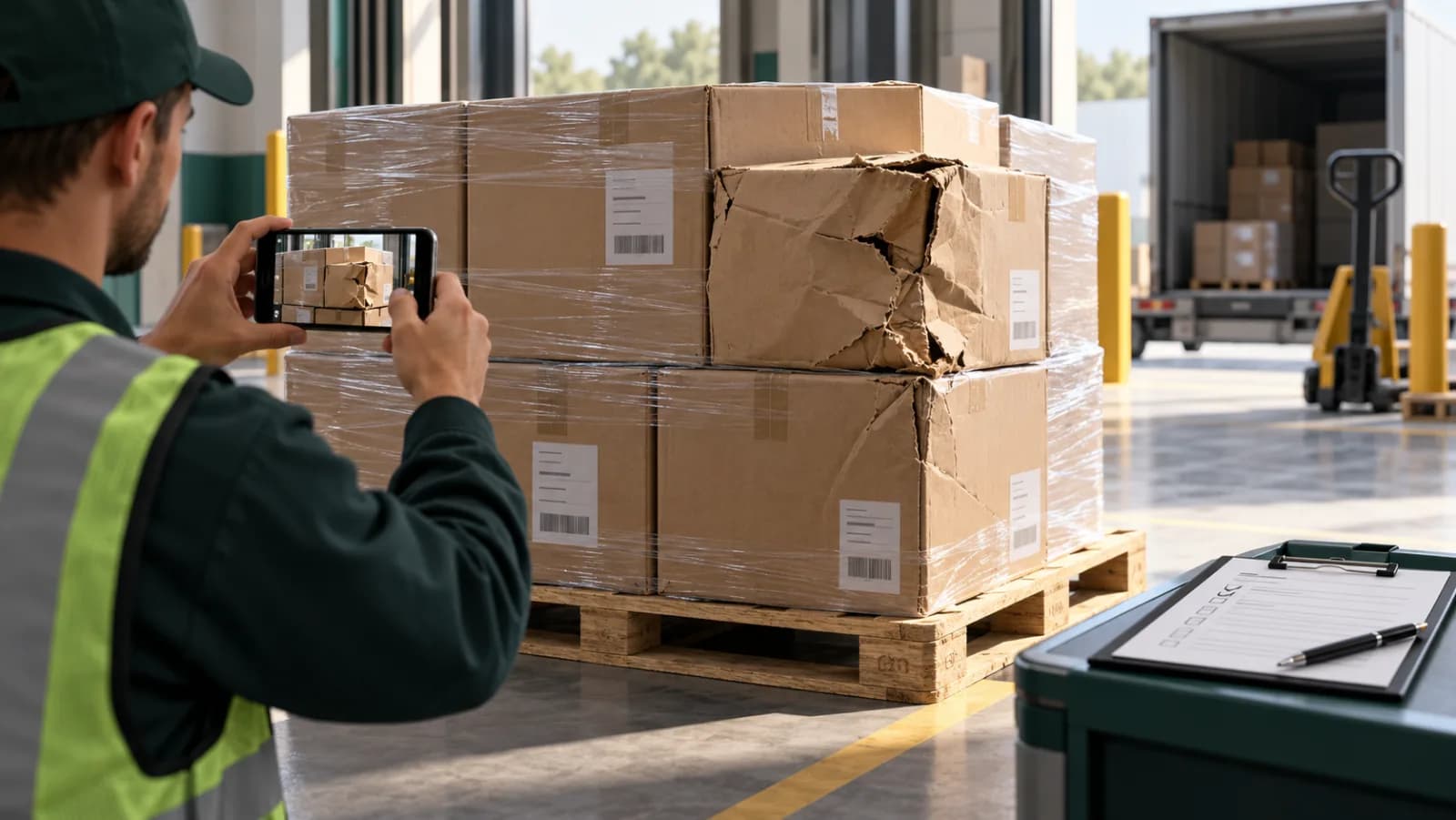
Tiliter sells AI image verification workflows. Its homepage describes vision agents that count objects, detect damage, validate labels and extract text, and route issues by email or WhatsApp. In its post Whose damage is it?, a receiving workflow photographs the pallet, checks for crushed corners, torn wrap and broken straps, reads shipment numbers and verifies the expected pallet count, linking each result to the shipment. The site offers a free image checker; we found no public price list.
Item.com: a receiving module inside a WMS
Item.com lists receiving photo documentation as a module of its warehouse management system: staff photograph damage at receipt on mobile devices, the system generates a damage report, a manager reviews it and inventory records update. The page lists an average capture time of 30 seconds per image and 90 days of image retention, and says the feature integrates with existing ERP systems. It is part of Item.com's own platform rather than a standalone app.
Warehouse photo apps side by side
All five tools capture photos on a phone and tie them to some reference. The differences show up in video, in what a third party can verify and in how far the record reaches beyond the warehouse.
| Capability | Cargosnap | Blimp | Cordstrap PoL | Tiliter | Item.com module | PallasMark |
|---|---|---|---|---|---|---|
| Phone capture | ✓ | ✓ iOS, Android | ✓ Any phone | ✓ Web, mobile | ✓ Mobile devices | ✓ iOS, Android, browser |
| Video | ✓ | Business plan and up | Not listed | Not listed | Not listed | ✓ |
| Tied to a reference | Workflow step, scanned reference | Barcode or QR | Container and seal no. read from photo | OCR of shipment numbers | WMS receipt | Shipment, pallet, lot or order; barcode scan |
| AI on images | ✓ AI features | Not listed | ✓ Number reading | ✓ Core product | Not listed | ✓ AI label reading (Scale) |
| Report or PDF | Digital file | ✓ Branded PDF | ✓ Report | ✓ Report | ✓ Evidence PDF per order, share link per record | |
| Tamper evidence | Not listed | ✓ Tamper-proof timestamping | Timestamp per photo | Not listed | Not listed | ✓ SHA-256 on every file |
| Anyone can verify the file, no account | Not listed | Not listed | Not listed | Not listed | Not listed | ✓ Public verification page |
| Share one record with a client | ✓ Customer portal | ✓ Link, PDF, guest accounts | Notifications | Not listed | ✓ Link with expiry, PIN, revocable | |
| Location on the record | Not listed | GPS metadata (Business) | Not listed | ✓ | Not listed | ✓ Inside or outside the facility |
| Facilities and client brands | Teams, roles, locations | Multiple warehouses | Not listed | Multi-site | Not listed | ✓ Facilities and 3PL clients |
| Store order sync | Not listed (WMS, TMS, ERP, API) | Enterprise integrations | Not listed | Not listed | Inside Item.com | ✓ Shopify, WooCommerce, ShipStation, ShipHero, Amazon |
| Buyer approves before dispatch | Not listed | Not listed | Not listed | Not listed | Not listed | ✓ |
| End customer films the return | Not listed | Not listed | Not listed | Not listed | Not listed | ✓ |
| API and webhooks | ✓ | Enterprise | Not listed | ✓ API | ERP integration | ✓ Signed webhooks (Business, Scale) |
"Not listed" means we did not find the capability on the vendor's own pages in October 2026.
What it costs per year for a realistic warehouse
Pricing in this category runs per device, per plan tier or by quote, so here is one realistic operation priced from published lists: one facility, 12 people capturing at receiving, packing and loading, on phones.
| Tool | What the published price buys | Yearly cost |
|---|---|---|
| Cargosnap | 12 devices need the 20-device plan at €698 a month (10 shared devices: €349 a month) | €8,376 (or €4,188 with 10 devices) |
| Blimp | Basic from €100 a month billed annually, photos only; video needs Business from €200 a month; integrations need Enterprise | From €1,200 photos only, from €2,400 with video |
| Cordstrap Proof of Loading | Demo only | Not published |
| Tiliter | Free image checker; workflows by arrangement | Not published |
| Item.com receiving module | Part of Item.com WMS; module price not stated | Depends on WMS plan |
PallasMark: free plan with no card, no hardware to buy and no per-device or per-station fees; every phone on the team records. The verification page, evidence PDF and buyer approval are included from the first order. Paid plans are billed yearly; see pricing.
The device line is what grows. A per-device tool charges again every time a seasonal hire, a second shift or a new dock needs a phone. A per-device bill also stops at the warehouse wall: none of these prices includes binding the record to the end customer's order or getting that customer's approval.
Where PallasMark goes further: one flow from dock to doorstep
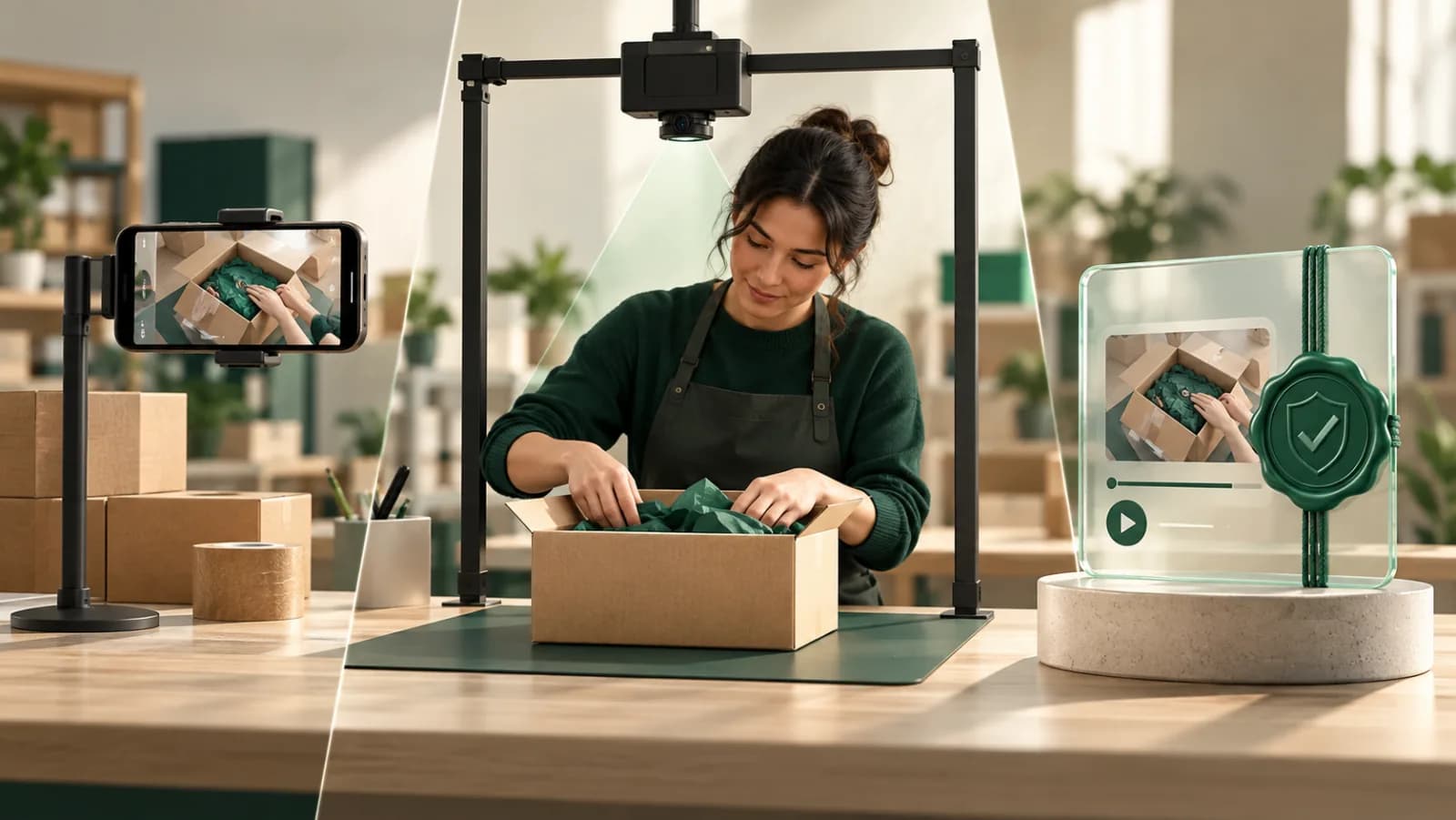
PallasMark goes further by treating receiving, packing, loading and returns as one evidence trail, then extending it to the people outside the warehouse who have to accept it.
- Every handoff, one system. Warehouse records for receiving, packing, loading and dispatch, tied to a shipment, pallet or lot reference, a facility and, for 3PLs, a client brand. Custom fields carry PO, seal number, SKU or lot. Search and filter by facility, client, date, condition, creator and custom fields. See warehouse proof.
- Sealed and checkable by strangers. Every file gets a SHA-256 fingerprint and every record a public verification page that re-hashes the file on the spot. A client, carrier or insurer opens it with no account. See how verification works.
- Location on every record. Each record shows whether it was captured inside the facility area, outside it, or not checked.
- Share one record, nothing else. Send a specific record to a client brand, carrier or supplier through a link with expiry, optional PIN and download settings, and revoke it at any time.
- Labels read for you. When a scanned code matches no order, the app can read the package label. On Scale, AI label reading fills supplier, batch or lot, quantity, location, condition and your own fields from a label photo for the operator to review; a scanned barcode always wins.
- Bound to the end customer. Shopify, WooCommerce, ShipStation, ShipHero and Amazon orders arrive on their own, so packing video is tied to the exact order. For high-value orders, the buyer approves the sealed recording before dispatch, and on returns the buyer films what is coming back. See return evidence.
- A dispute file on request. One PDF per order with stills from each video, photos, fingerprints, approval and return evidence, which you download and send to the client, carrier or payment provider yourself.
- Built for floor teams. An operator role for warehouse staff, access that follows assigned facilities and clients, native iPhone and Android apps in seven languages, and signed webhooks for your own systems on Business and Scale.
How this runs for a multi-client operation is covered on warehouses and 3PL fulfillment.
Which handoffs a warehouse should document
A warehouse should document every point where responsibility for goods changes hands, because that is where claims land. The evidence each handoff needs is different.
| Handoff | What you will be asked to prove | What to capture | Guide |
|---|---|---|---|
| Inbound container or truck | Condition, seal and count on arrival | Seal number, doors, pallets before unloading, damage close-ups | Inbound container inspection checklist |
| Receiving into stock | What arrived damaged or short, and whose loss it is | Pallet label, wrap, damage, unit count against the PO | Receiving freight damage |
| Pick and pack | What went into a specific customer's box | One continuous video tied to the order | Warehouse packing video proof |
| Loading and dispatch | How the load left and under which seal | Load pattern, securing, seal number, trailer | Freight loadout photos |
| Returns | What came back and in what condition | Buyer's own footage plus your receiving inspection | 3PL returns inspection and grading |
Most tools on this page cover one or two rows. A 3PL carries liability on all five, which is why one record system across them pays off at the first disputed pallet. The 3PL evidence playbook maps the contracts and claims behind each row.
Switch to PallasMark in an afternoon
Moving to PallasMark takes an afternoon because there is no hardware to install and standalone records need no integration.
Related reading
If Cargosnap is the tool you are replacing, the Cargosnap alternative goes deeper on that single comparison. Store-side tools are covered in Shopify packing video apps compared, and the full category hub is our packing video software comparison.
Frequently asked questions
What is the best warehouse photo documentation app?
For a warehouse or 3PL that has to prove condition at more than one handoff, PallasMark covers receiving, packing, loading and returns in one flow, ties each record to a shipment, pallet, lot, facility and client, fingerprints every file with SHA-256 and gives each record a public verification page. It runs on the phones your team already has and starts on a free plan with no card. Cargosnap, Blimp, Cordstrap, Tiliter and Item.com each cover part of that picture.
How much does Cargosnap cost?
As listed on Cargosnap's pricing page in October 2026: 349 euros a month for 10 devices, 698 euros a month for 20 devices and 1,047 euros a month for 30 devices, with custom pricing above 30 devices. Inspections and users are unlimited; you pay per device. A 10-device plan therefore costs 4,188 euros a year.
What is a proof of loading app?
A proof of loading app documents how cargo was loaded before it leaves the dock: container or trailer condition, the load itself, the securing and the seal number, each photo timestamped and tied to the container or shipment reference. Cordstrap's Proof of Loading app guides the loader through required photos and reads container and seal numbers from the image. PallasMark records loading and dispatch as warehouse records with photos and video, custom fields such as seal number, a location check and a fingerprint on every file.
Can a warehouse photo app read labels and seal numbers automatically?
Some can. Cordstrap reads container and seal numbers from the photo, and Tiliter extracts shipment numbers with OCR as part of its AI checks. PallasMark's AI label reading, on the Scale plan, fills supplier, batch or lot, quantity, location, condition and your own custom fields such as serial number or PO from a photo of the label into a form the operator reviews before saving. A scanned barcode always wins over the AI reading.
How do I prove warehouse photos were not edited?
Look for an integrity check someone outside your company can run. Blimp lists tamper-proof timestamping on every plan. PallasMark fingerprints every stored file with SHA-256 and gives each record a public verification page that re-hashes the file on the spot, so a client, carrier or insurer can confirm it still matches without an account.
Can a 3PL share evidence with one client without exposing the rest of the warehouse?
With PallasMark, yes. You share one specific record with a client brand, carrier or supplier through a link with an expiry, an optional PIN and download settings, and you can revoke it at any time. The link gives no access to anything else in the warehouse, and staff access follows the facilities and clients assigned to them.
Do I need a WMS or store connection to use PallasMark in a warehouse?
No. Standalone warehouse records work without any store connection. If you do connect Shopify, WooCommerce, ShipStation, ShipHero or Amazon, orders arrive on their own and packing proof is bound to the end customer's order.
- warehouse photo documentation
- proof of loading
- logistics photo report
- warehouse inspection app
- freight damage
- 3pl